Brincelet mavumnkal biju
Anemia in elderly
Geriatrics
Introduction
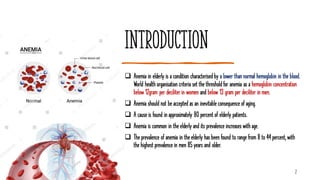
❑ Anemia in elderly is a condition characterised by a lower than normal hemoglobin in the blood.
World health organisation criteria set the threshold for anemia as a hemoglobin concentration
below 12gram per deciliter in women and below 13 gram per deciliter in men.
❑ Anemia should not be accepted as an inevitable consequence of aging.
❑ A cause is found in approximately 80 percent of elderly patients.
❑ Anemia is common in the elderly and its prevalence increases with age.
❑ The prevalence of anemia in the elderly has been found to range from 8 to 44 percent, with
the highest prevalence in men 85 years and older.
2
Clinical presentation
❑The onset of symptoms and signs is usually insidious.
❑Typical symptoms of anemia, such as fatigue, weakness
and dyspnea, are not specific and in elderly patient
tend to be attributed to advancing age.
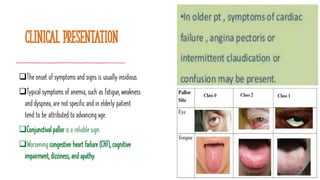
❑Conjunctival pallor is a reliable sign.
❑Worsening congestive heart failure (CHF), cognitive
impairment, dizziness, and apathy.
EVALUATION
• Anemia in the elderly is evaluated in a manner similarto
that in younger adults, includingan assessment for signs of
gastrointestinalblood loss, hemolysis, nutritional
deficiencies, malignancy, chronic infections,renal or hepatic
disease, and other chronic diseases.
• In patients without evidence of an underlying disease, the
initial laboratoryevaluation should include a complete blood
count, red blood cell indices, a reticulocyte count and
peripheral blood smear.
4
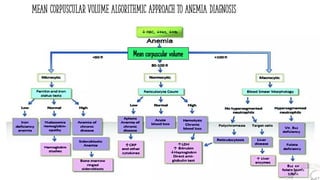
Mean corpuscular volume algorithmic approach to anemia diagnosis
5
Mean corpuscular volume
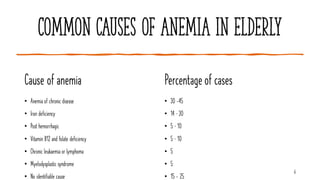
Common causes of anemia in elderly
Cause of anemia Percentage of cases
• 30 -45
• 14 – 30
• 5 – 10
• 5 – 10
• 5
• 5
• 15 - 25
6
• Anemia of chronic disease
• Iron deficiency
• Post hemorrhagic
• Vitamin B12 and folate deficiency
• Chronic leukaemia or lymphoma
• Myelodysplastic syndrome
• No identifiable cause
Differentiation of anemia of chronic disease and iron
deficiency anemia
7
8
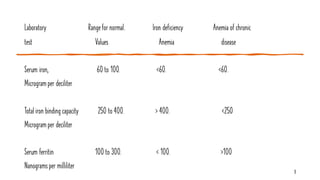
Laboratory Rangefor normal. Iron deficiency Anemia of chronic
test Values Anemia disease
Serum iron, 60 to 100. <60. <60.
Microgramper deciliter
Total iron binding capacity 250 to 400. > 400. <250
Microgramper deciliter
Serum ferritin 100 to 300. < 100. >100
Nanogramsper milliliter
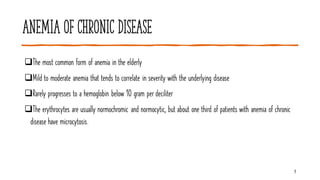
Anemia of chronic disease
9
❑The most common form of anemia in the elderly
❑Mild to moderate anemia that tends to correlate in severity with the underlying disease
❑Rarely progresses to a hemoglobin below 10 gram per deciliter
❑The erythrocytes are usually normochromic and normocytic, but about one third of patients with anemia of chronic
disease have microcytosis.
10
Diseases associated with anemia of chronic disease
1. Acute infections
2. Chronic infections:- Tuberculosis, infective endocarditis ,chronic urinary tract infection ,chronic fungal infection.
3. Chronic inflammatory disorders.
4. Osteoarthritis
5. Rheumatoid disease 10. Malignancy
6. Collagen vascular disease 11. Protein energy malnutrition
7. Poly myalgia rheumatica
8. Acute and chronic hepatitis
9. Decubitus ulcer
Pathogenesis
❑Decreased release of iron from macrophages to plasma
because of raised serum hepcidin levels.
❑Reduced cell lifespan.
❑Inadequate erythropoietin response to anemia caused
by cytokines such as interleukin 1 and Tumour necrosis
factor.
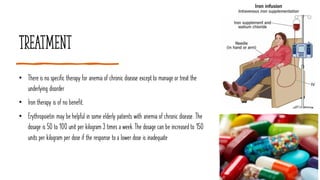
Treatment
• There is no specific therapy for anemia of chronic disease exceptto manage or treat the
underlying disorder
• Iron therapy is of no benefit.
• Erythropoietin may be helpful in some elderly patients with anemia of chronic disease. The
dosage is 50 to 100 unit per kilogram 3 times a week.The dosage can be increased to 150
units per kilogram per dose if the response to a lower dose is inadequate
Iron deficiency anemia
❑The second most common cause of anemia in the elderly
❑Usually results from chronic gastrointestinal blood loss caused by non steroidal anti inflammatory drug induced
gastritis, ulcer, colon cancer, diverticula, angiodysplasia.
❑Chronic blood loss from genitourinary tract cancer, chronic hemoptysis and bleeding disorders may result in iron
deficiency but are much less common causes.
❑Older patients may become iron deficient because of inadequate intake or inadequate absorption of iron. Without
blood loss, anemia takes several years to develop.
12
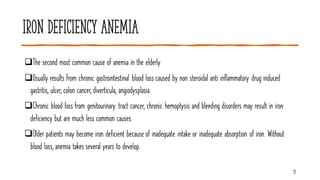
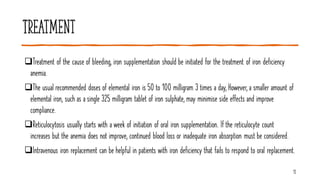
Treatment
❑Treatment of the cause of bleeding, iron supplementation should be initiated for the treatment of iron deficiency
anemia.
❑The usual recommended doses of elemental iron is 50 to 100 milligram 3 times a day, However, a smaller amount of
elemental iron, such as a single 325 milligram tablet of iron sulphate, may minimise side effects and improve
compliance.
❑Reticulocytosis usually starts with a week of initiation of oral iron supplementation. If the reticulocyte count
increases but the anemia does not improve, continued blood loss or inadequate iron absorption must be considered.
❑Intravenous iron replacement can be helpful in patients with iron deficiency that fails to respond to oral replacement.
13
Vitamin B12 deficiency
• Vitamin B12(cobalamin)
deficiency is the cause
of anemia in 5 to 10
percent of elderly
patients, the actual
prevalence of vitamin
B12 deficiency is likely
to be much higher in
the elderly.
14
Causes of vitamin B12 deficiency
❑Vitamin B12 deficiency rarelyis the result of inadequateintake, except in persons who
are strict vegans.
❑A common cause is reducedintestinal absorption of vitamin B12. Perniciousanemia is
a classic example of a disorderthat causes reducedintestinal absorption of vitamin
B12.
❑With pernicious anemia,the lack of intrinsic factor resultsfrom destruction of the
gastric parietal cells by autoimmuneantibodies.
❑Inadequateabsorption of vitamin B12 occurs in 10 to 20 percent of patients who have
had a partial gastrectomy.
❑It also may occur in patients with small bowel disordersand bacterial overgrowth.The
prevalenceof many of these conditions increaseswith age.
Folate deficiency
❑Develops as a result of inadequate dietary intake.
❑The body stores very little folate, onlyenough to last four to six hours.
❑Classicallycauses macrocytic anemia.
❑The red cell folate concentration is more reliable than the serum level and should be considered.
❑Identification of vitamin B12 deficiency is important: anemia secondary to vitamin B12 deficiency improves with folate
therapy,but folatetherapy does not reverse the neurologicaldamage caused by vitamin B12 deficiency. For this reason, it is
importantto ensure thatvitamin B12 deficiency is not alsopresent.
❑Folate deficiency is treated with oral folic acid, 1 milligramdaily.
15
Myelodysplastic syndrome
❑Uncommon cause of anemia
❑More common cause in the elderly people.
❑Characterised by a defect in the developmental of one of the marrow cell lines, limitingthe release of functioningcells.
❑Anemia results when the red cell lines are affected.
❑Myelodysplasticsyndrome should be a diagnostic consideration when white cell or platelet abnormalitiesaccompany the
anemia.
❑The diagnosis by bone marrow biopsy.
❑Myelodysplasia is treated supportivelywith transfusions.
16
Summary
17
• Anemia in elderly patients often presents with fatigue,weakness,shortnessof breath.
• pale skin, dizziness and cold hands or feet can be indicative of reduced red blood cell count
• Cognitiveissues such as difficulty concentratingor memory problems may also be present.
• Chronicdiseases like kidney disease, inflammatorydisorders, or cancer can contribute to anemia.
• Nutritionaldeficiencies particularlyof iron,vitamin B12 or folate are common in elderly patients.
• Medications such as certain blood thinnersor chemotherapy drugs,also leads to anemia.
• Blood tests including complete blood count and peripheral blood smear help determine the type and severity of anemia in
elderly patients
• Serum ferritin,,vit B12 and folate levels aid in underlying nutritionaldeficiencies.
• Treatingthe underlyingcause, such as managingchronic illness or adjusting medications,is crucial.
Conclusion
•Approaching elderly people with anemia ;-
• conduct a thorough medical history,,consideringchronic diseases and medication usage.
• Performa comprehensivephysical examination,focusing on signs of anemia and potential contributing
factors.
• Communication is the key,ensuringelderlypatients understandthe importance of adherenceto
prescribedtreatments and regularfollow ups,
18
• Anemia in elderly poses a substantial biomedical and public health concern
• Diagnostic complexity: defined by world health organisation criteria,it’s diverse types require nuanced diagnostic and
treatment
• Health impact :correlates with increased comorbidities and heightened hospitalisation risks
• Impacting hospitalisation risks,impacting mortality and quality of life
• Bridging research gaps and refining diagnostics are cured for effective intervention and improved outcomes in geriatric
anemia
19
Thank you
Brincelet m biju
20

ANEMIA IN ELDERLY slideshare ppt

  • 1.
    Brincelet mavumnkal biju Anemiain elderly Geriatrics
  • 2.
    Introduction ❑ Anemia inelderly is a condition characterised by a lower than normal hemoglobin in the blood. World health organisation criteria set the threshold for anemia as a hemoglobin concentration below 12gram per deciliter in women and below 13 gram per deciliter in men. ❑ Anemia should not be accepted as an inevitable consequence of aging. ❑ A cause is found in approximately 80 percent of elderly patients. ❑ Anemia is common in the elderly and its prevalence increases with age. ❑ The prevalence of anemia in the elderly has been found to range from 8 to 44 percent, with the highest prevalence in men 85 years and older. 2
  • 3.
    Clinical presentation ❑The onsetof symptoms and signs is usually insidious. ❑Typical symptoms of anemia, such as fatigue, weakness and dyspnea, are not specific and in elderly patient tend to be attributed to advancing age. ❑Conjunctival pallor is a reliable sign. ❑Worsening congestive heart failure (CHF), cognitive impairment, dizziness, and apathy.
  • 4.
    EVALUATION • Anemia inthe elderly is evaluated in a manner similarto that in younger adults, includingan assessment for signs of gastrointestinalblood loss, hemolysis, nutritional deficiencies, malignancy, chronic infections,renal or hepatic disease, and other chronic diseases. • In patients without evidence of an underlying disease, the initial laboratoryevaluation should include a complete blood count, red blood cell indices, a reticulocyte count and peripheral blood smear. 4
  • 5.
    Mean corpuscular volumealgorithmic approach to anemia diagnosis 5 Mean corpuscular volume
  • 6.
    Common causes ofanemia in elderly Cause of anemia Percentage of cases • 30 -45 • 14 – 30 • 5 – 10 • 5 – 10 • 5 • 5 • 15 - 25 6 • Anemia of chronic disease • Iron deficiency • Post hemorrhagic • Vitamin B12 and folate deficiency • Chronic leukaemia or lymphoma • Myelodysplastic syndrome • No identifiable cause
  • 7.
    Differentiation of anemiaof chronic disease and iron deficiency anemia 7
  • 8.
    8 Laboratory Rangefor normal.Iron deficiency Anemia of chronic test Values Anemia disease Serum iron, 60 to 100. <60. <60. Microgramper deciliter Total iron binding capacity 250 to 400. > 400. <250 Microgramper deciliter Serum ferritin 100 to 300. < 100. >100 Nanogramsper milliliter
  • 9.
    Anemia of chronicdisease 9 ❑The most common form of anemia in the elderly ❑Mild to moderate anemia that tends to correlate in severity with the underlying disease ❑Rarely progresses to a hemoglobin below 10 gram per deciliter ❑The erythrocytes are usually normochromic and normocytic, but about one third of patients with anemia of chronic disease have microcytosis.
  • 10.
    10 Diseases associated withanemia of chronic disease 1. Acute infections 2. Chronic infections:- Tuberculosis, infective endocarditis ,chronic urinary tract infection ,chronic fungal infection. 3. Chronic inflammatory disorders. 4. Osteoarthritis 5. Rheumatoid disease 10. Malignancy 6. Collagen vascular disease 11. Protein energy malnutrition 7. Poly myalgia rheumatica 8. Acute and chronic hepatitis 9. Decubitus ulcer Pathogenesis ❑Decreased release of iron from macrophages to plasma because of raised serum hepcidin levels. ❑Reduced cell lifespan. ❑Inadequate erythropoietin response to anemia caused by cytokines such as interleukin 1 and Tumour necrosis factor.
  • 11.
    Treatment • There isno specific therapy for anemia of chronic disease exceptto manage or treat the underlying disorder • Iron therapy is of no benefit. • Erythropoietin may be helpful in some elderly patients with anemia of chronic disease. The dosage is 50 to 100 unit per kilogram 3 times a week.The dosage can be increased to 150 units per kilogram per dose if the response to a lower dose is inadequate
  • 12.
    Iron deficiency anemia ❑Thesecond most common cause of anemia in the elderly ❑Usually results from chronic gastrointestinal blood loss caused by non steroidal anti inflammatory drug induced gastritis, ulcer, colon cancer, diverticula, angiodysplasia. ❑Chronic blood loss from genitourinary tract cancer, chronic hemoptysis and bleeding disorders may result in iron deficiency but are much less common causes. ❑Older patients may become iron deficient because of inadequate intake or inadequate absorption of iron. Without blood loss, anemia takes several years to develop. 12
  • 13.
    Treatment ❑Treatment of thecause of bleeding, iron supplementation should be initiated for the treatment of iron deficiency anemia. ❑The usual recommended doses of elemental iron is 50 to 100 milligram 3 times a day, However, a smaller amount of elemental iron, such as a single 325 milligram tablet of iron sulphate, may minimise side effects and improve compliance. ❑Reticulocytosis usually starts with a week of initiation of oral iron supplementation. If the reticulocyte count increases but the anemia does not improve, continued blood loss or inadequate iron absorption must be considered. ❑Intravenous iron replacement can be helpful in patients with iron deficiency that fails to respond to oral replacement. 13
  • 14.
    Vitamin B12 deficiency •Vitamin B12(cobalamin) deficiency is the cause of anemia in 5 to 10 percent of elderly patients, the actual prevalence of vitamin B12 deficiency is likely to be much higher in the elderly. 14 Causes of vitamin B12 deficiency ❑Vitamin B12 deficiency rarelyis the result of inadequateintake, except in persons who are strict vegans. ❑A common cause is reducedintestinal absorption of vitamin B12. Perniciousanemia is a classic example of a disorderthat causes reducedintestinal absorption of vitamin B12. ❑With pernicious anemia,the lack of intrinsic factor resultsfrom destruction of the gastric parietal cells by autoimmuneantibodies. ❑Inadequateabsorption of vitamin B12 occurs in 10 to 20 percent of patients who have had a partial gastrectomy. ❑It also may occur in patients with small bowel disordersand bacterial overgrowth.The prevalenceof many of these conditions increaseswith age.
  • 15.
    Folate deficiency ❑Develops asa result of inadequate dietary intake. ❑The body stores very little folate, onlyenough to last four to six hours. ❑Classicallycauses macrocytic anemia. ❑The red cell folate concentration is more reliable than the serum level and should be considered. ❑Identification of vitamin B12 deficiency is important: anemia secondary to vitamin B12 deficiency improves with folate therapy,but folatetherapy does not reverse the neurologicaldamage caused by vitamin B12 deficiency. For this reason, it is importantto ensure thatvitamin B12 deficiency is not alsopresent. ❑Folate deficiency is treated with oral folic acid, 1 milligramdaily. 15
  • 16.
    Myelodysplastic syndrome ❑Uncommon causeof anemia ❑More common cause in the elderly people. ❑Characterised by a defect in the developmental of one of the marrow cell lines, limitingthe release of functioningcells. ❑Anemia results when the red cell lines are affected. ❑Myelodysplasticsyndrome should be a diagnostic consideration when white cell or platelet abnormalitiesaccompany the anemia. ❑The diagnosis by bone marrow biopsy. ❑Myelodysplasia is treated supportivelywith transfusions. 16
  • 17.
    Summary 17 • Anemia inelderly patients often presents with fatigue,weakness,shortnessof breath. • pale skin, dizziness and cold hands or feet can be indicative of reduced red blood cell count • Cognitiveissues such as difficulty concentratingor memory problems may also be present. • Chronicdiseases like kidney disease, inflammatorydisorders, or cancer can contribute to anemia. • Nutritionaldeficiencies particularlyof iron,vitamin B12 or folate are common in elderly patients. • Medications such as certain blood thinnersor chemotherapy drugs,also leads to anemia. • Blood tests including complete blood count and peripheral blood smear help determine the type and severity of anemia in elderly patients • Serum ferritin,,vit B12 and folate levels aid in underlying nutritionaldeficiencies. • Treatingthe underlyingcause, such as managingchronic illness or adjusting medications,is crucial.
  • 18.
    Conclusion •Approaching elderly peoplewith anemia ;- • conduct a thorough medical history,,consideringchronic diseases and medication usage. • Performa comprehensivephysical examination,focusing on signs of anemia and potential contributing factors. • Communication is the key,ensuringelderlypatients understandthe importance of adherenceto prescribedtreatments and regularfollow ups, 18
  • 19.
    • Anemia inelderly poses a substantial biomedical and public health concern • Diagnostic complexity: defined by world health organisation criteria,it’s diverse types require nuanced diagnostic and treatment • Health impact :correlates with increased comorbidities and heightened hospitalisation risks • Impacting hospitalisation risks,impacting mortality and quality of life • Bridging research gaps and refining diagnostics are cured for effective intervention and improved outcomes in geriatric anemia 19
  • 20.