Livestock and Fish Gender Theme Updates
Kathleen Colverson
Livestock and Fish Annual Review and Planning Meeting
May 20-22, 2013
Addis Ababa, Ethiopia
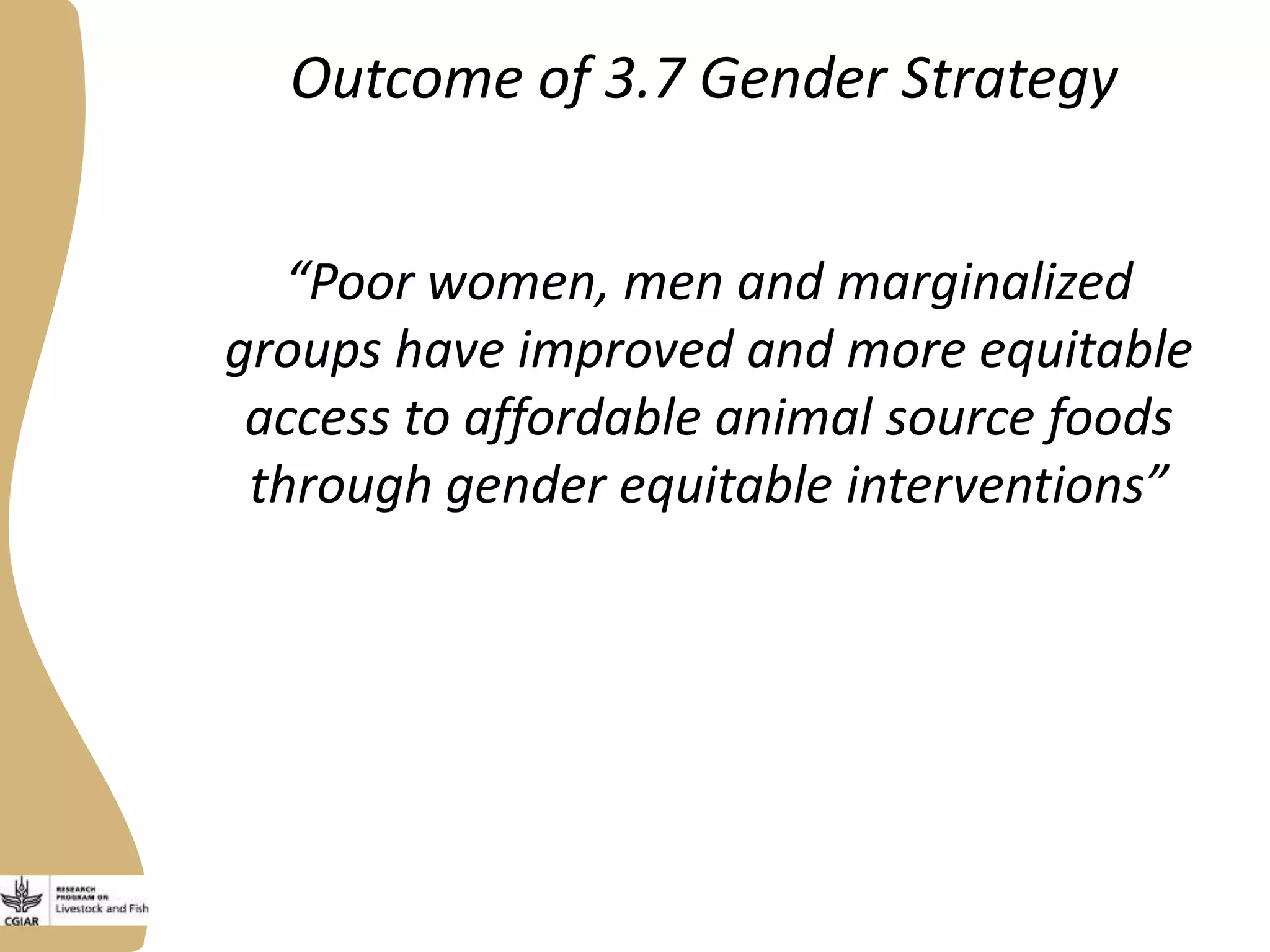
Outcome of 3.7 Gender Strategy
“Poor women, men and marginalized
groups have improved and more equitable
access to affordable animal source foods
through gender equitable interventions”
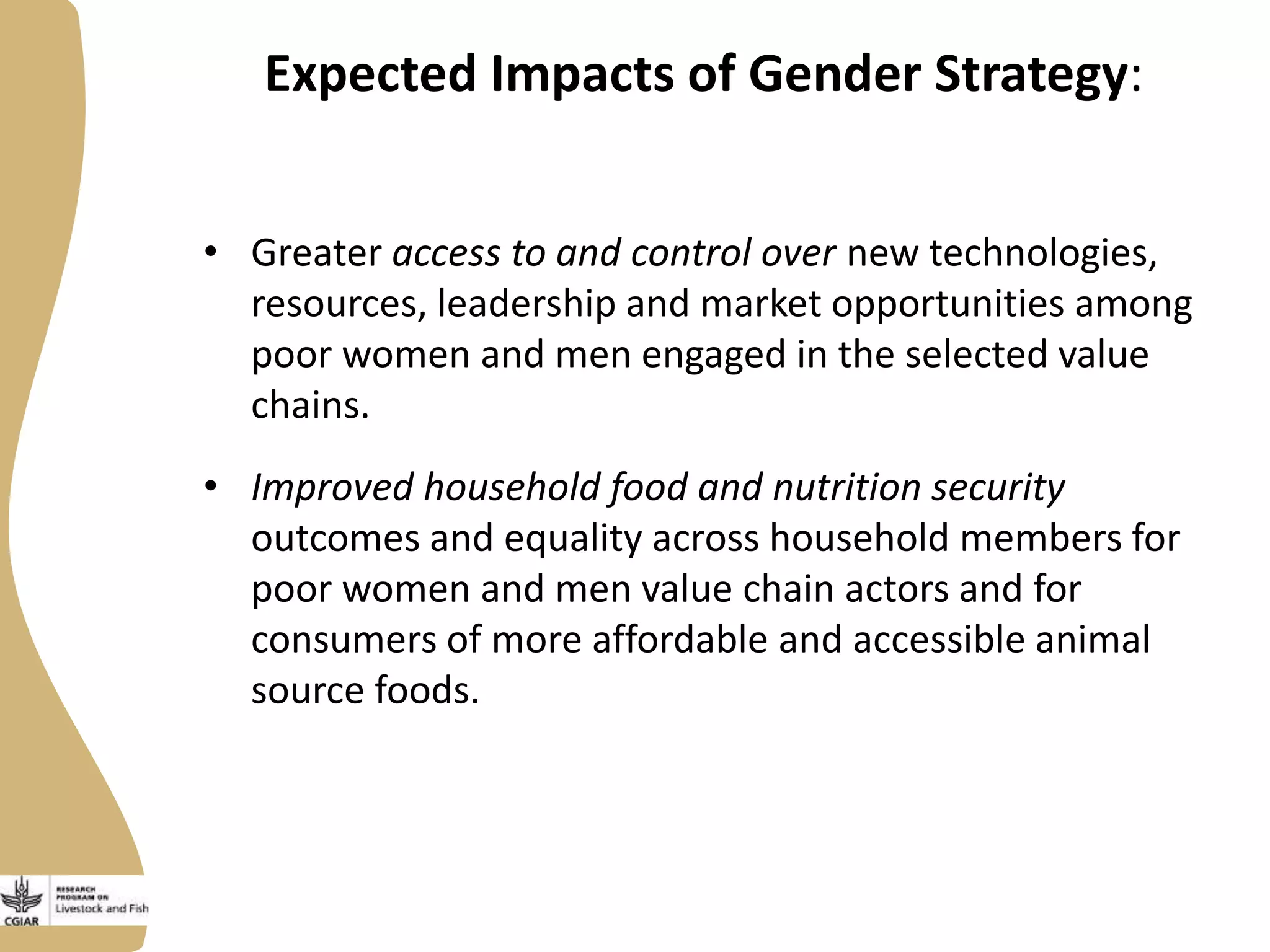
Expected Impacts of Gender Strategy:
• Greater access to and control over new technologies,
resources, leadership and market opportunities among
poor women and men engaged in the selected value
chains.
• Improved household food and nutrition security
outcomes and equality across household members for
poor women and men value chain actors and for
consumers of more affordable and accessible animal
source foods.
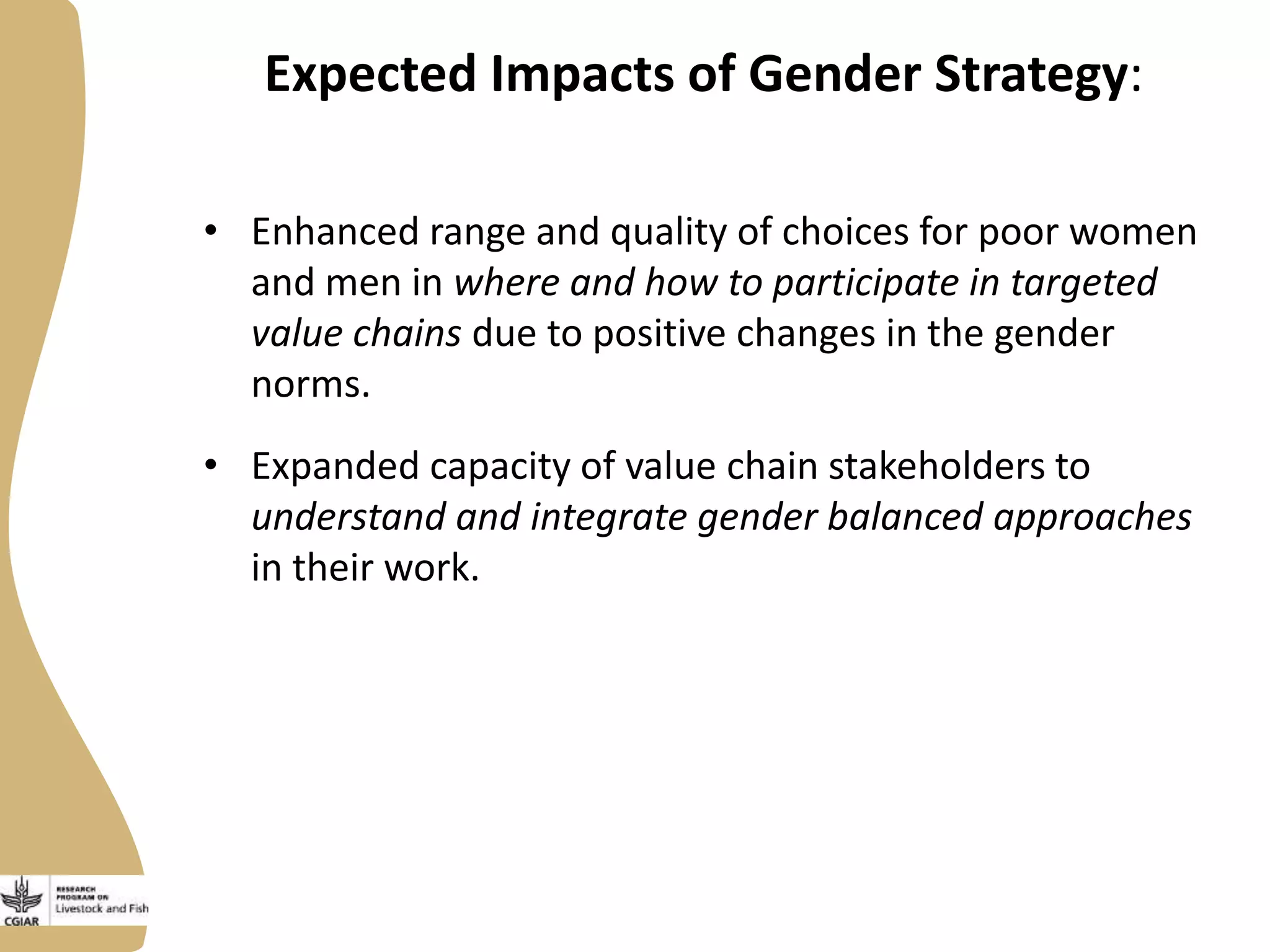
Expected Impacts of Gender Strategy:
• Enhanced range and quality of choices for poor women
and men in where and how to participate in targeted
value chains due to positive changes in the gender
norms.
• Expanded capacity of value chain stakeholders to
understand and integrate gender balanced approaches
in their work.
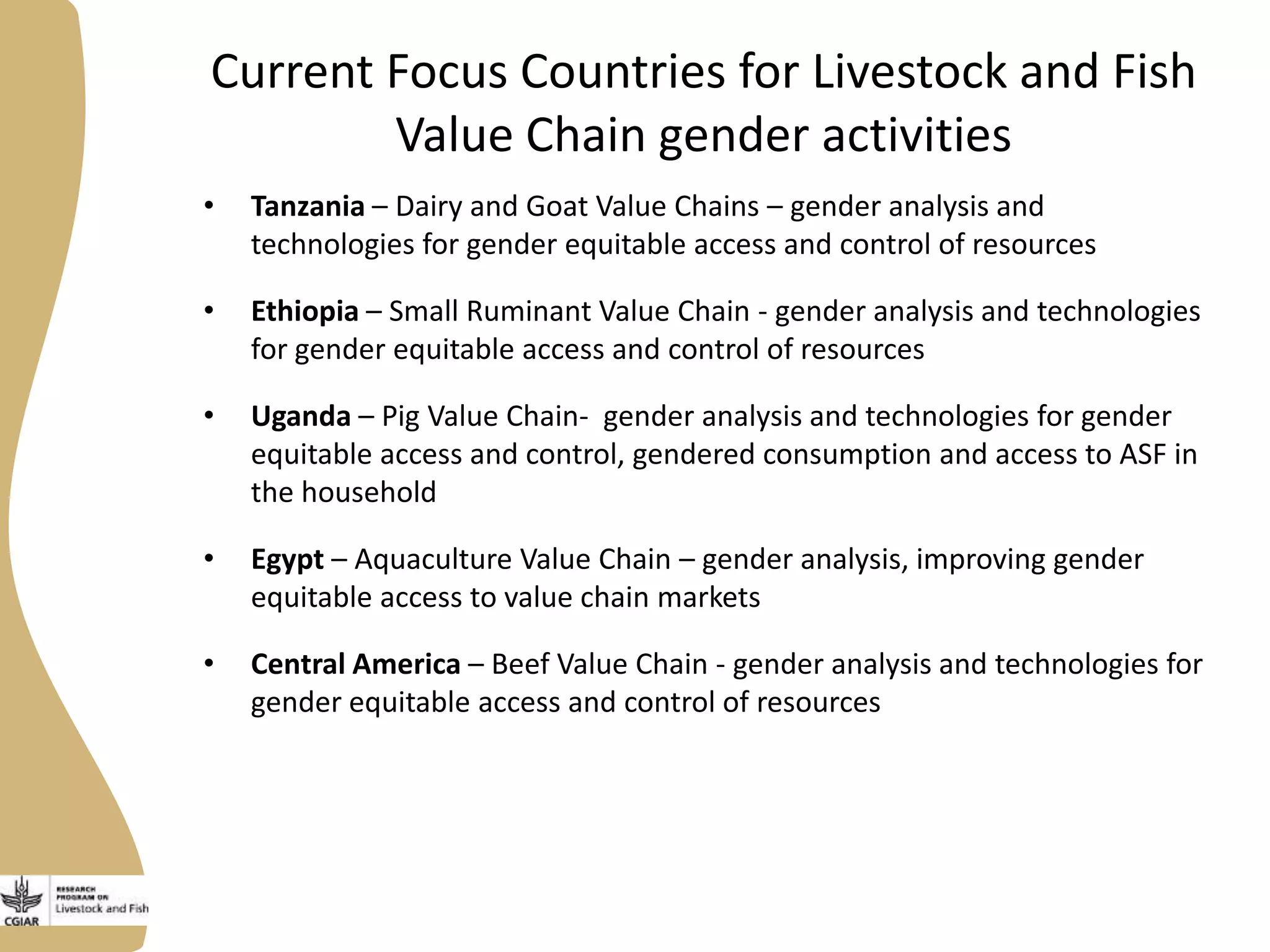
Current Focus Countries for Livestock and Fish
Value Chain gender activities
• Tanzania – Dairy and Goat Value Chains – gender analysis and
technologies for gender equitable access and control of resources
• Ethiopia – Small Ruminant Value Chain - gender analysis and technologies
for gender equitable access and control of resources
• Uganda – Pig Value Chain- gender analysis and technologies for gender
equitable access and control, gendered consumption and access to ASF in
the household
• Egypt – Aquaculture Value Chain – gender analysis, improving gender
equitable access to value chain markets
• Central America – Beef Value Chain - gender analysis and technologies for
gender equitable access and control of resources
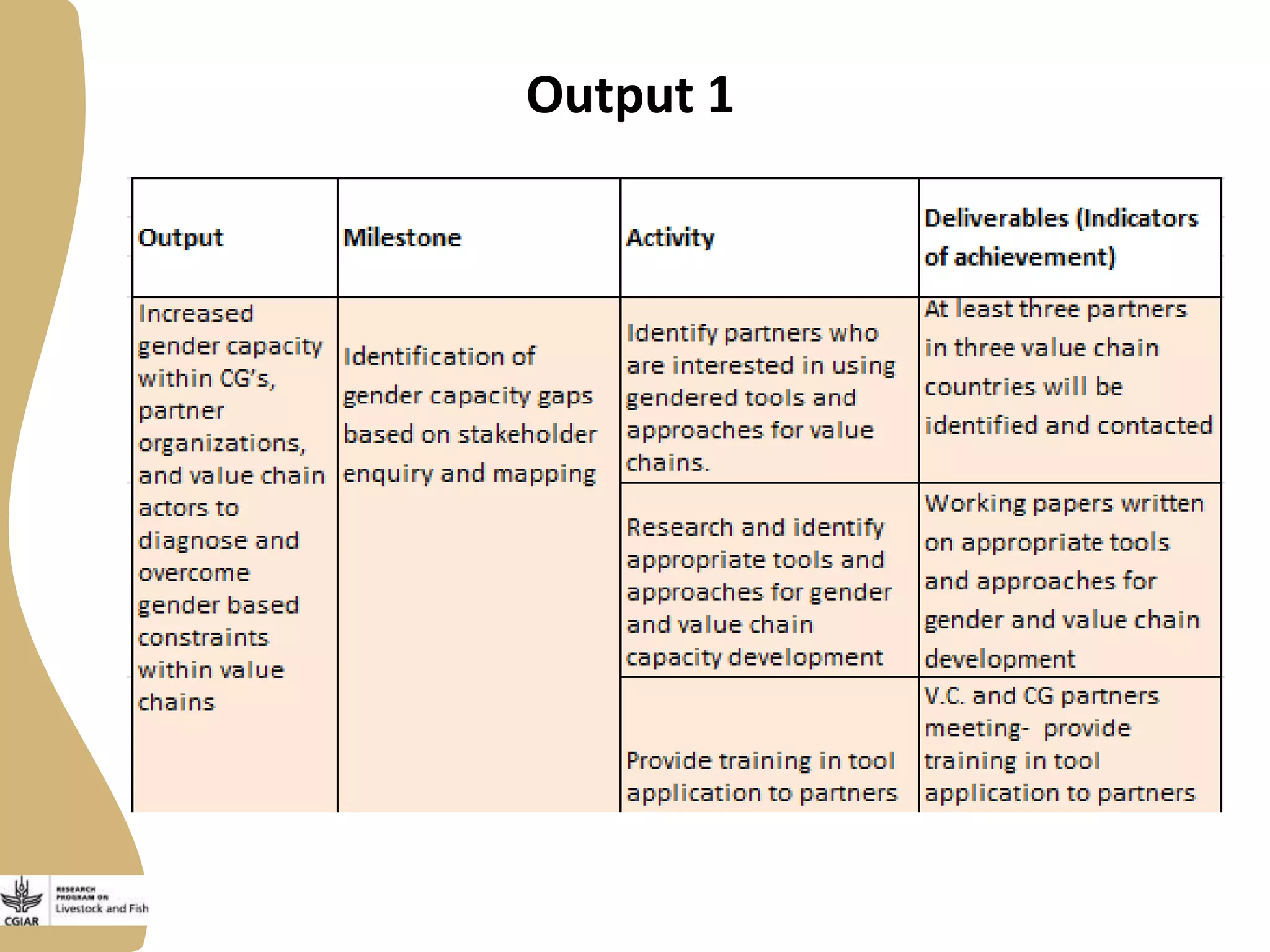
Output 1
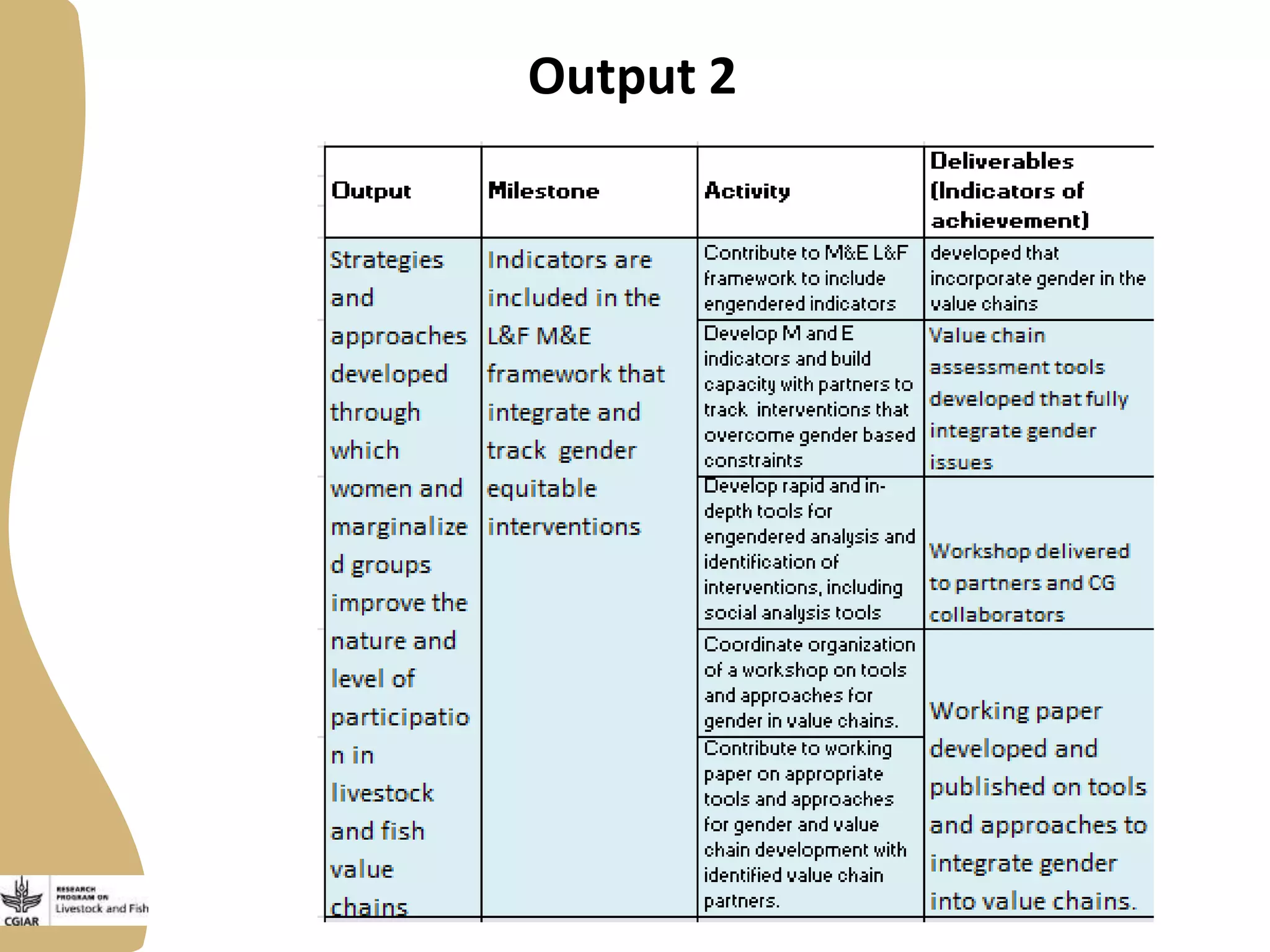
Output 2
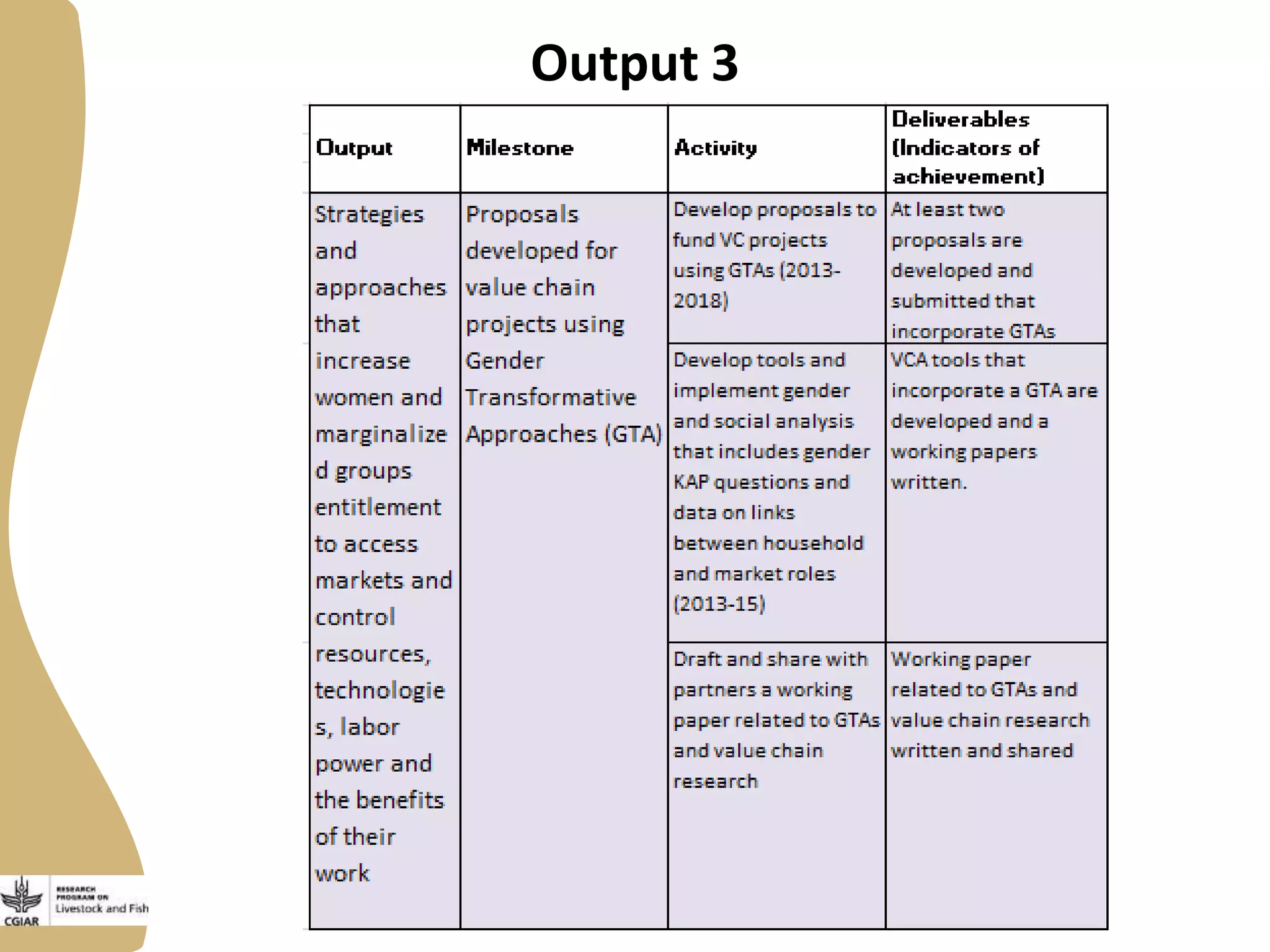
Output 3
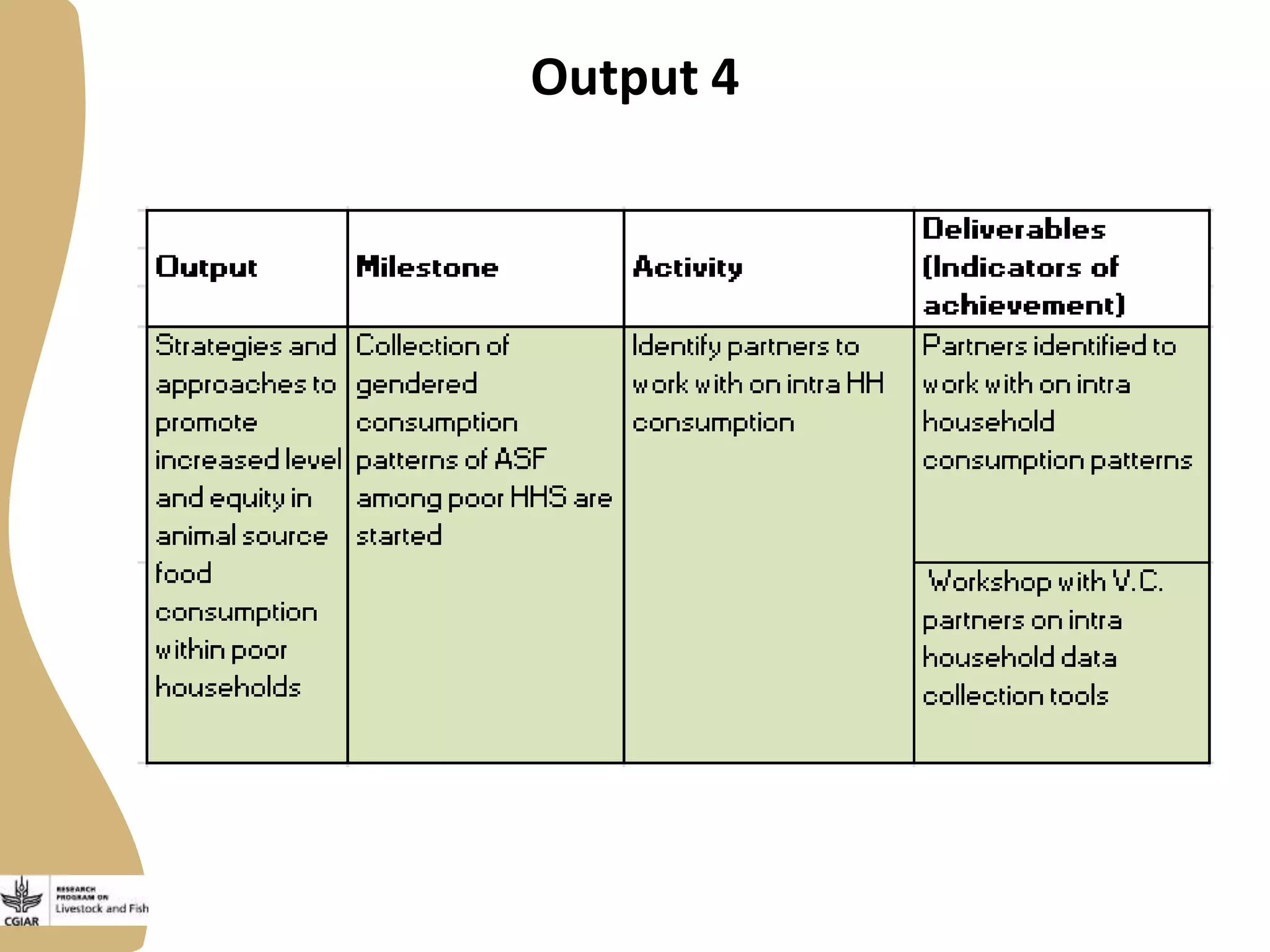
Output 4
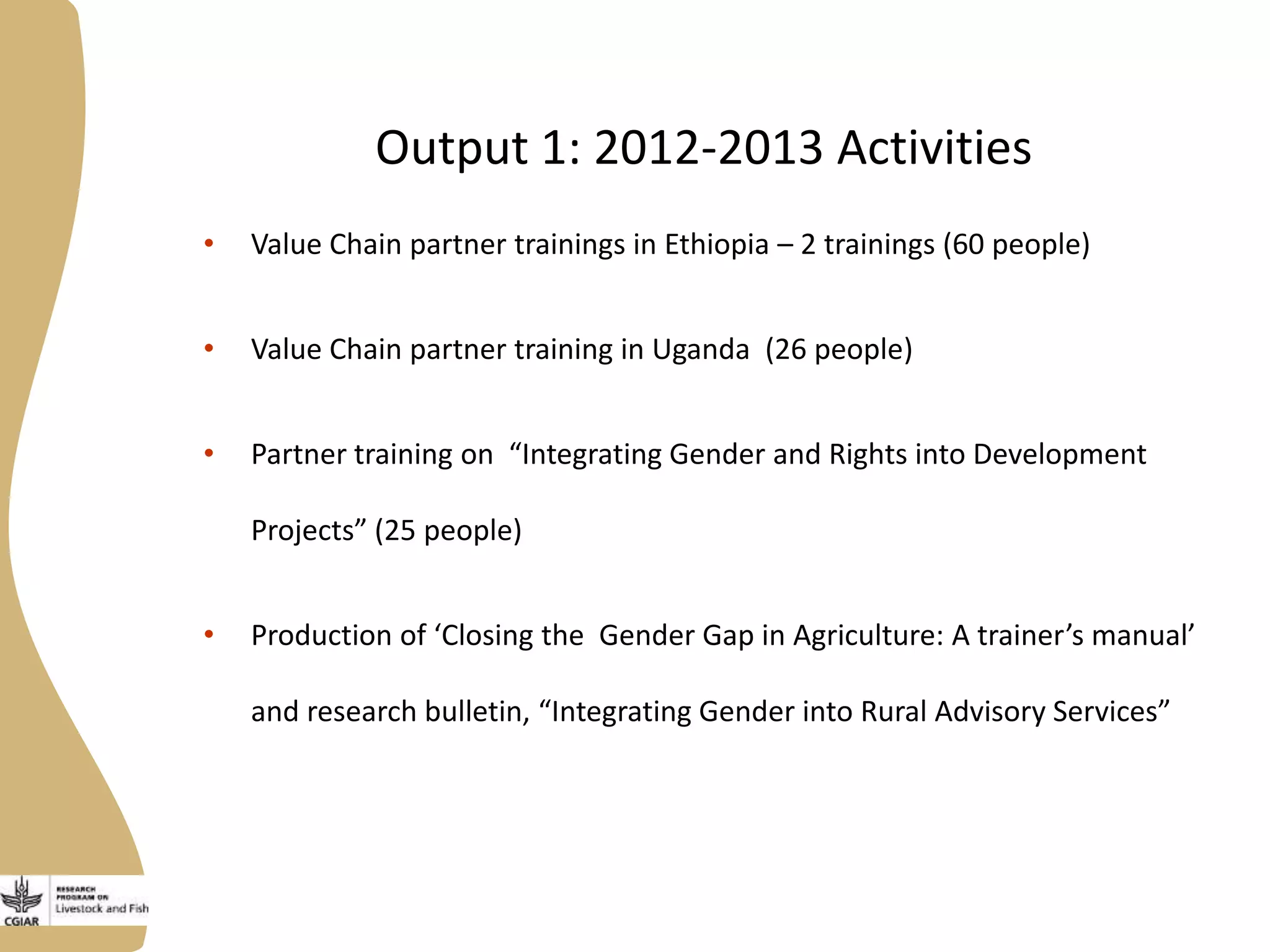
Output 1: 2012-2013 Activities
• Value Chain partner trainings in Ethiopia – 2 trainings (60 people)
• Value Chain partner training in Uganda (26 people)
• Partner training on “Integrating Gender and Rights into Development
Projects” (25 people)
• Production of ‘Closing the Gender Gap in Agriculture: A trainer’s manual’
and research bulletin, “Integrating Gender into Rural Advisory Services”
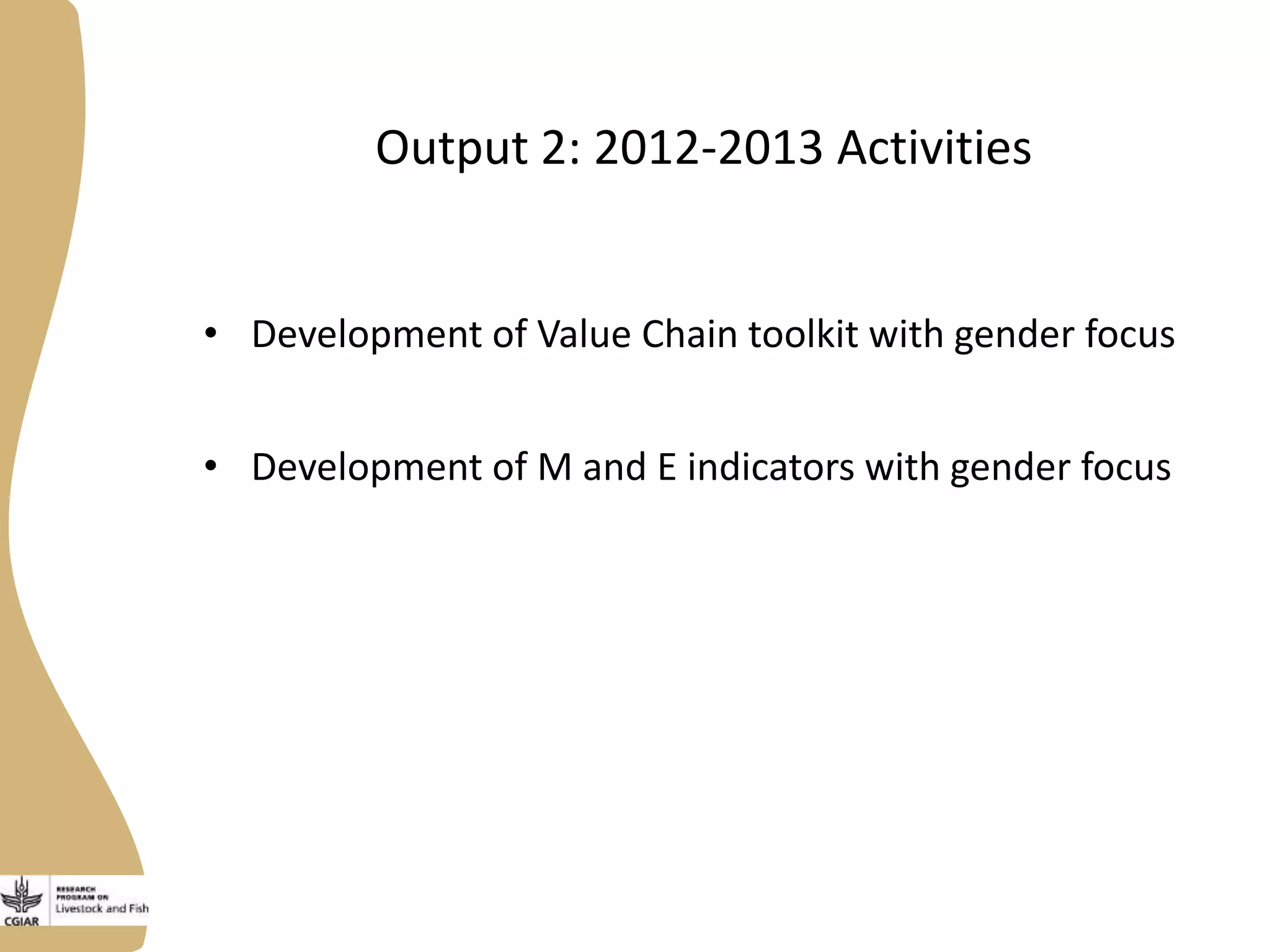
Output 2: 2012-2013 Activities
• Development of Value Chain toolkit with gender focus
• Development of M and E indicators with gender focus
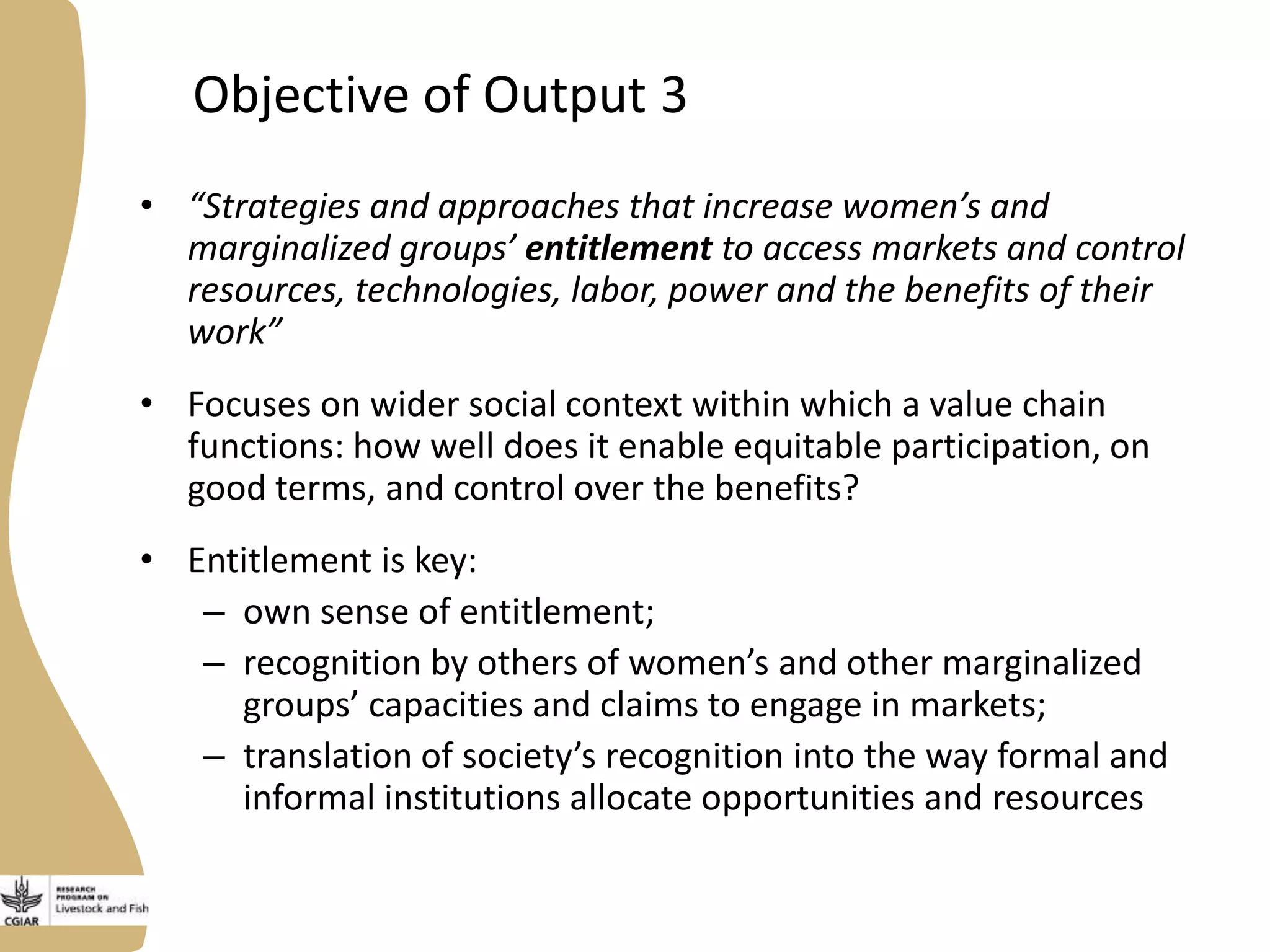
Objective of Output 3
• “Strategies and approaches that increase women’s and
marginalized groups’ entitlement to access markets and control
resources, technologies, labor, power and the benefits of their
work”
• Focuses on wider social context within which a value chain
functions: how well does it enable equitable participation, on
good terms, and control over the benefits?
• Entitlement is key:
– own sense of entitlement;
– recognition by others of women’s and other marginalized
groups’ capacities and claims to engage in markets;
– translation of society’s recognition into the way formal and
informal institutions allocate opportunities and resources
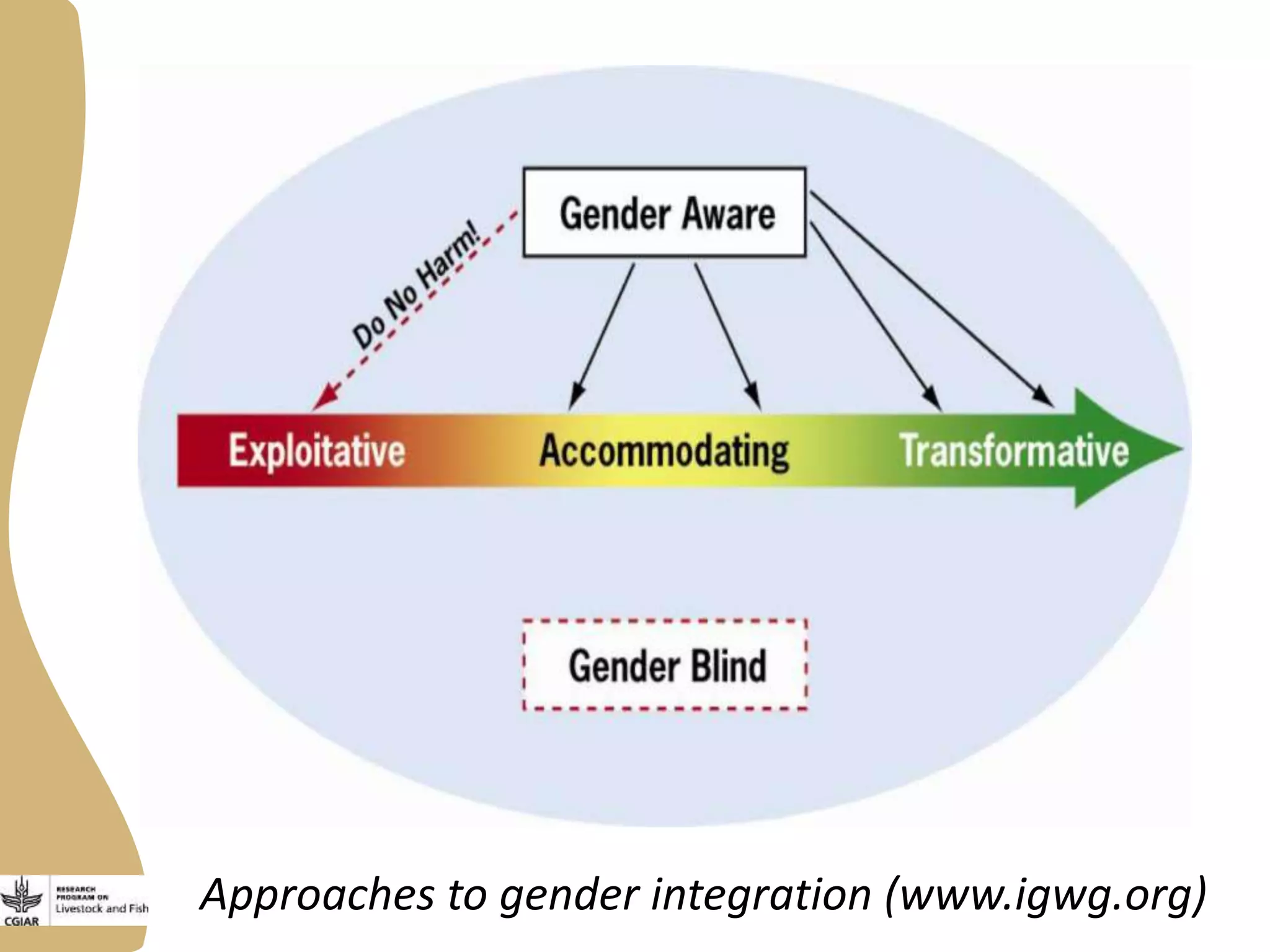
Approaches to gender integration (www.igwg.org)
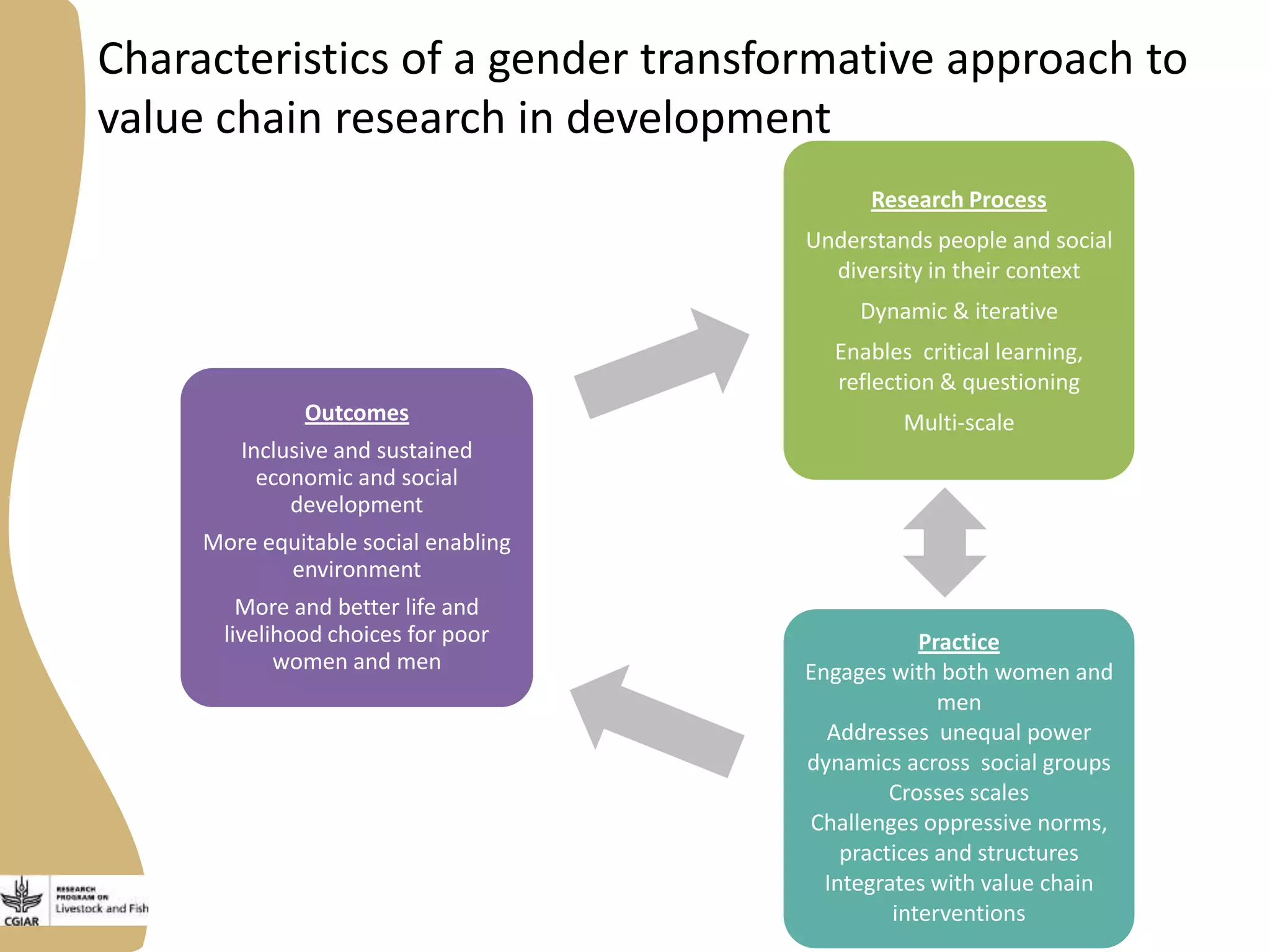
Research Process
Understands people and social
diversity in their context
Dynamic & iterative
Enables critical learning,
reflection & questioning
Multi-scale
Practice
Engages with both women and
men
Addresses unequal power
dynamics across social groups
Crosses scales
Challenges oppressive norms,
practices and structures
Integrates with value chain
interventions
Outcomes
Inclusive and sustained
economic and social
development
More equitable social enabling
environment
More and better life and
livelihood choices for poor
women and men
Characteristics of a gender transformative approach to
value chain research in development
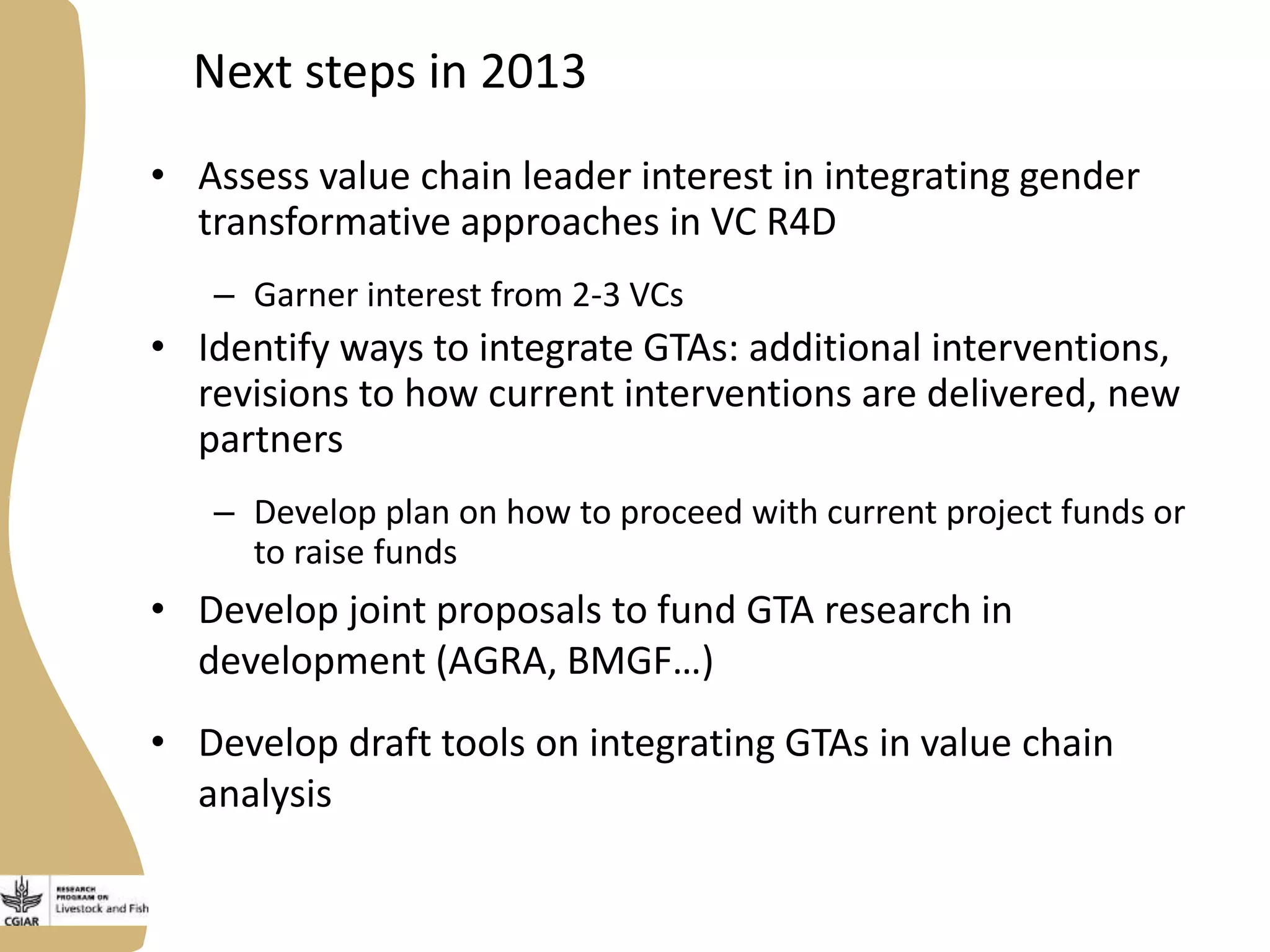
Next steps in 2013
• Assess value chain leader interest in integrating gender
transformative approaches in VC R4D
– Garner interest from 2-3 VCs
• Identify ways to integrate GTAs: additional interventions,
revisions to how current interventions are delivered, new
partners
– Develop plan on how to proceed with current project funds or
to raise funds
• Develop joint proposals to fund GTA research in
development (AGRA, BMGF…)
• Develop draft tools on integrating GTAs in value chain
analysis
Output 4: 2012- 2013 Activities
Exploring shared post-doc position to “Conduct research on diets,
consumption patterns and health of women and children and the relationship
of these with selected livestock value chains” with multiple partners (CRP 4.3,
Royal Veterinary College, London School of Tropical Medicine)
Additional accomplishments for Gender Strategy
• First meeting of 3.7 Gender Working group to draft strategy
• Hired gender scientists to conduct research in TZ, Ethiopia, Central
America
• Completed Gender Strategy and submitted to CG consortium for approval
• Aligned existing projects with 3.7 Gender strategy and L&F proposal
• Completed and submitted 2012 Gender Theme report to L&F
CGIAR is a global partnership that unites organizations engaged in research for a food secure future. The CGIAR
Research Program on Livestock and Fish aims to increase the productivity of small-scale livestock and fish systems
in sustainable ways, making meat, milk and fish more available and affordable across the developing world.
CGIAR Research Program on Livestock and Fish
livestockfish.cgiar.org

Livestock and Fish Gender Theme updates

  • 1.
    Livestock and FishGender Theme Updates Kathleen Colverson Livestock and Fish Annual Review and Planning Meeting May 20-22, 2013 Addis Ababa, Ethiopia
  • 2.
    Outcome of 3.7Gender Strategy “Poor women, men and marginalized groups have improved and more equitable access to affordable animal source foods through gender equitable interventions”
  • 3.
    Expected Impacts ofGender Strategy: • Greater access to and control over new technologies, resources, leadership and market opportunities among poor women and men engaged in the selected value chains. • Improved household food and nutrition security outcomes and equality across household members for poor women and men value chain actors and for consumers of more affordable and accessible animal source foods.
  • 4.
    Expected Impacts ofGender Strategy: • Enhanced range and quality of choices for poor women and men in where and how to participate in targeted value chains due to positive changes in the gender norms. • Expanded capacity of value chain stakeholders to understand and integrate gender balanced approaches in their work.
  • 5.
    Current Focus Countriesfor Livestock and Fish Value Chain gender activities • Tanzania – Dairy and Goat Value Chains – gender analysis and technologies for gender equitable access and control of resources • Ethiopia – Small Ruminant Value Chain - gender analysis and technologies for gender equitable access and control of resources • Uganda – Pig Value Chain- gender analysis and technologies for gender equitable access and control, gendered consumption and access to ASF in the household • Egypt – Aquaculture Value Chain – gender analysis, improving gender equitable access to value chain markets • Central America – Beef Value Chain - gender analysis and technologies for gender equitable access and control of resources
  • 6.
  • 7.
  • 8.
  • 9.
  • 10.
    Output 1: 2012-2013Activities • Value Chain partner trainings in Ethiopia – 2 trainings (60 people) • Value Chain partner training in Uganda (26 people) • Partner training on “Integrating Gender and Rights into Development Projects” (25 people) • Production of ‘Closing the Gender Gap in Agriculture: A trainer’s manual’ and research bulletin, “Integrating Gender into Rural Advisory Services”
  • 11.
    Output 2: 2012-2013Activities • Development of Value Chain toolkit with gender focus • Development of M and E indicators with gender focus
  • 12.
    Objective of Output3 • “Strategies and approaches that increase women’s and marginalized groups’ entitlement to access markets and control resources, technologies, labor, power and the benefits of their work” • Focuses on wider social context within which a value chain functions: how well does it enable equitable participation, on good terms, and control over the benefits? • Entitlement is key: – own sense of entitlement; – recognition by others of women’s and other marginalized groups’ capacities and claims to engage in markets; – translation of society’s recognition into the way formal and informal institutions allocate opportunities and resources
  • 13.
    Approaches to genderintegration (www.igwg.org)
  • 14.
    Research Process Understands peopleand social diversity in their context Dynamic & iterative Enables critical learning, reflection & questioning Multi-scale Practice Engages with both women and men Addresses unequal power dynamics across social groups Crosses scales Challenges oppressive norms, practices and structures Integrates with value chain interventions Outcomes Inclusive and sustained economic and social development More equitable social enabling environment More and better life and livelihood choices for poor women and men Characteristics of a gender transformative approach to value chain research in development
  • 15.
    Next steps in2013 • Assess value chain leader interest in integrating gender transformative approaches in VC R4D – Garner interest from 2-3 VCs • Identify ways to integrate GTAs: additional interventions, revisions to how current interventions are delivered, new partners – Develop plan on how to proceed with current project funds or to raise funds • Develop joint proposals to fund GTA research in development (AGRA, BMGF…) • Develop draft tools on integrating GTAs in value chain analysis
  • 16.
    Output 4: 2012-2013 Activities Exploring shared post-doc position to “Conduct research on diets, consumption patterns and health of women and children and the relationship of these with selected livestock value chains” with multiple partners (CRP 4.3, Royal Veterinary College, London School of Tropical Medicine)
  • 17.
    Additional accomplishments forGender Strategy • First meeting of 3.7 Gender Working group to draft strategy • Hired gender scientists to conduct research in TZ, Ethiopia, Central America • Completed Gender Strategy and submitted to CG consortium for approval • Aligned existing projects with 3.7 Gender strategy and L&F proposal • Completed and submitted 2012 Gender Theme report to L&F
  • 18.
    CGIAR is aglobal partnership that unites organizations engaged in research for a food secure future. The CGIAR Research Program on Livestock and Fish aims to increase the productivity of small-scale livestock and fish systems in sustainable ways, making meat, milk and fish more available and affordable across the developing world. CGIAR Research Program on Livestock and Fish livestockfish.cgiar.org

Editor's Notes

  • #14 Integrate women into the existing social contextTechnical versus political orientation underlie their popularityGender as characteristic of individuals vs of society, institutions…sex disaggreg; gap fillingGTAs:Address the causes of gender inequality and not just the symptomsSocial context something to act on vs within; more complex understanding of gender: indiv, interactions, institutions
  • #15 Sustained outcomes: hypothesis to test…get at causes of problems (poverty, gender inequality) so solns hopefully longer lasting.How to chg gender norms etc, what package of interventions, is key res Q for GTAs in VC RinD, as well as link to outcomes.