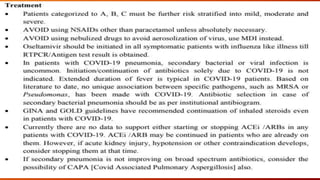
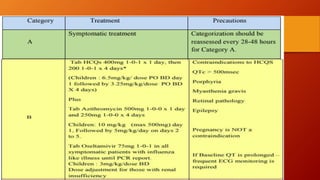
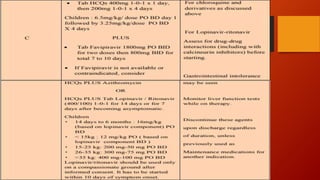
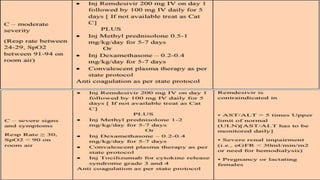

COVID 19 THERAPY
KERALA STATE GUIDELINES AUG 2020
DR AMITH SREEDHARAN
CONSULTANT PULMONARY/CRITICAL CARE MEDICINE
ASTER MIMS KANNUR
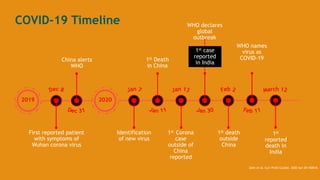
COVID-19 Timeline
2019 2020
First reported patient
with symptoms of
Wuhan corona virus
China alerts
WHO
Identification
of new virus
1st Death
in China
1st Corona
case
outside of
China
reported
WHO declares
global
outbreak
1st death
outside
China
WHO names
virus as
COVID-19
1st
reported
death in
India
1st case
reported
in India
Zaim et al. Curr Probl Cardiol. 2020 Apr 28:100618.
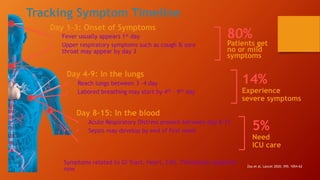
Tracking Symptom Timeline
Zou et al. Lancet 2020; 395: 1054-62
Day 1-3: Onset of Symptoms
 Fever usually appears 1st day
 Upper respiratory symptoms such as cough & sore
throat may appear by day 3
Day 4-9: In the lungs
 Reach lungs between 3 -4 day
 Labored breathing may start by 4th - 9th day
Day 8-15: In the blood
 Acute Respiratory Distress present between day 8-15
 Sepsis may develop by end of first week
80%
Patients get
no or mild
symptoms
14%
Experience
severe symptoms
5%
Need
ICU care
Symptoms related to GI Tract, Heart, CNS, Thrombosis reported
now
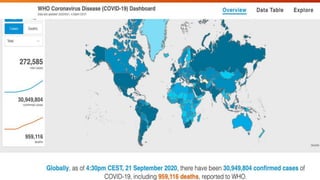
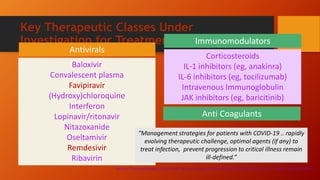
Key Therapeutic Classes Under
Investigation for Treatment of COVID-19
Barlow. Pharmacotherapy. 2020;40:416. McCreary. Open Forum Infect Dis. 2020;7:ofaa105. Sanders. JAMA. 2020;323:1824.
Antivirals
Immunomodulators
Baloxivir
Convalescent plasma
Favipiravir
(Hydroxy)chloroquine
Interferon
Lopinavir/ritonavir
Nitazoxanide
Oseltamivir
Remdesivir
Ribavirin
Corticosteroids
IL-1 inhibitors (eg, anakinra)
IL-6 inhibitors (eg, tocilizumab)
Intravenous Immunoglobulin
JAK inhibitors (eg, baricitinib)
“Management strategies for patients with COVID-19 .. rapidly
evolving therapeutic challenge, optimal agents (if any) to
treat infection, prevent progression to critical illness remain
ill-defined.”
Anti Coagulants
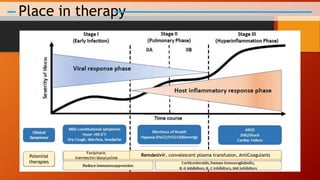
Potential
therapies
Favipiravir,
Ivermectin/doxycycline
Remdesivir, convalescent plasma transfusion, AntiCoagulants
Place in therapy
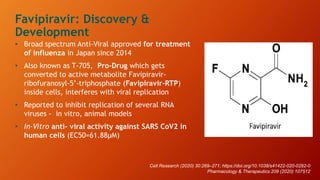
• Broad spectrum Anti-Viral approved for treatment
of influenza in Japan since 2014
• Also known as T-705, Pro-Drug which gets
converted to active metabolite Favipiravir-
ribofuranosyl-5’-triphosphate (Favipiravir-RTP)
inside cells, interferes with viral replication
• Reported to inhibit replication of several RNA
viruses - in vitro, animal models
• In-Vitro anti- viral activity against SARS CoV2 in
human cells (EC50=61.88µM)
Favipiravir: Discovery &
Development
Cell Research (2020) 30:269–271; https://doi.org/10.1038/s41422-020-0282-0
Pharmacology & Therapeutics 209 (2020) 107512
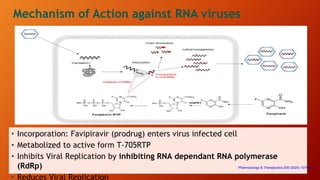
Mechanism of Action against RNA viruses
• Incorporation: Favipiravir (prodrug) enters virus infected cell
• Metabolized to active form T-705RTP
• Inhibits Viral Replication by inhibiting RNA dependant RNA polymerase
(RdRp)
• Reduces Viral Replication
Pharmacology & Therapeutics 209 (2020) 107512
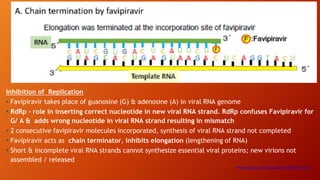
Inhibition of Replication
• Favipiravir takes place of guanosine (G) & adenosine (A) in viral RNA genome
• RdRp – role in inserting correct nucleotide in new viral RNA strand. RdRp confuses Favipiravir for
G/ A & adds wrong nucleotide in viral RNA strand resulting in mismatch
• 2 consecutive favipiravir molecules incorporated, synthesis of viral RNA strand not completed
• Favipiravir acts as chain terminator, inhibits elongation (lengthening of RNA)
• Short & incomplete viral RNA strands cannot synthesize essential viral proteins; new virions not
assembled / released
Pharmacology & Therapeutics 209 (2020) 107512
Studies on Use of Favipiravir in Covid 19
LPV/RTV: Lopinavir/Ritonavir
Cai et al; Engineering (2020), doi: https://doi.org/10.1016/j.eng.2020.03.007
Favipiravir vs Lopinavir/Ritonavir for COVID-19:
Prospective, Randomized, Controlled, Open-Label Study
from China
16–75 yrs age, laboratory confirmed diagnosis; disease onset to enrolment < 7 dt
Favipiravir (200 mg / tablet); 1600 mg bd on D1; 600 mg bd D 2−14 OR
• LPV/RTV (200 mg/50 mg per tablet); LPV 400 mg/RTV 100 mg bd till D14
• Both FPV & LPV/RTV continued until viral clearance confirmed/ 14 d
• Both groups IFN-α1b 60 μg (30 μg per ampule) bd by aerosol inhalation for 14d
• SOC - oxygen inhalation, oral/ IV rehydration, electrolyte correction, antipyretics,
analgesics, antiemetic drugs
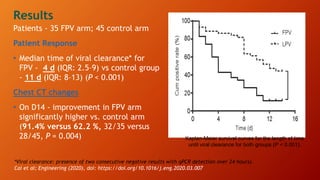
Patients - 35 FPV arm; 45 control arm
Patient Response
• Median time of viral clearance* for
FPV - 4 d (IQR: 2.5–9) vs control group
- 11 d (IQR: 8–13) (P < 0.001)
Chest CT changes
• On D14 - improvement in FPV arm
significantly higher vs. control arm
(91.4% versus 62.2 %, 32/35 versus
28/45, P = 0.004)
*Viral clearance: presence of two consecutive negative results with qPCR detection over 24 hours).
Cai et al; Engineering (2020), doi: https://doi.org/10.1016/j.eng.2020.03.007
Kaplan-Meier survival curves for the length of time
until viral clearance for both groups (P < 0.001).
Results
• All Patients – Favipiravir not associated with < AOT, NMV, Dyspnea,
Respiratory Failure, ICU admission, all-cause Mortality
• Common AE - raised Uric Aid levels (16/116); OR: 5.52 (p< 0.0014)
• No differences in ALT/AST elevations
AOT: auxiliary oxygen therapy
NMV: Non-invasive mechanical Ventilation
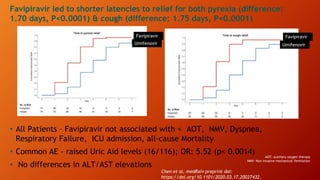
Favipiravir led to shorter latencies to relief for both pyrexia (difference:
1.70 days, P<0.0001) & cough (difference: 1.75 days, P<0.0001)
Umifenovir Umifenovir
Favipiravir Favipiravir
Chen et al, medRxiv preprint doi:
https://doi.org/10.1101/2020.03.17.20037432.
• Mild – No O2, Moderate – O2, Severe – MV/ ECMO
• Patients - 45% Mild; 43.9% Moderate; 10.9% Severe
• 49.2% = Co Morbidities; 41.6% added Ciclesonide
• 52% > 60 yrs; 67% Male Patients
• Gout, Skin Rash & > LFT – most frequent Side Effect
• 1.8% Mortality in < 59 yrs; 20.8% Mortality > 60 yrs
Data from Japanese Registry
• 2,158 cases; 407 hospitals; Retrospective Analysis from Compassionate Use
• 92.8% of patients given favipiravir - 1800 mg bd D1, 800 mg bd subsequently
• Median treatment duration 11 days
• Median from positive PCR test to - hospital admission & initiation of Favipiravir
2 & 1 days, respectively
The Japanese Society of Infectious Diseases
http://www.kansensho.or.jp/modules/en/index.php?content_i
d=3
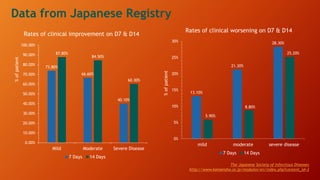
Data from Japanese Registry
13.10%
21.30%
28.30%
5.90%
8.80%
25.20%
0%
5%
10%
15%
20%
25%
30%
mild moderate severe disease
7 Days 14 Days
Rates of clinical worsening on D7 & D14
%
of
patient
73.80%
66.60%
40.10%
87.80%
84.50%
60.30%
0.00%
10.00%
20.00%
30.00%
40.00%
50.00%
60.00%
70.00%
80.00%
90.00%
100.00%
Mild Moderate Severe Disease
7 Days 14 Days
Rates of clinical improvement on D7 & D14
%
of
patient
The Japanese Society of Infectious Diseases
http://www.kansensho.or.jp/modules/en/index.php?content_id=3
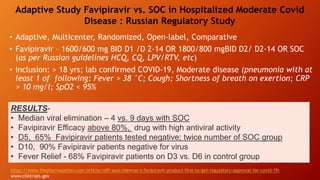
• Adaptive, Multicenter, Randomized, Open-label, Comparative
• Favipiravir – 1600/600 mg BID D1 /D 2-14 OR 1800/800 mgBID D2/ D2-14 OR SOC
(as per Russian guidelines HCQ, CQ, LPV/RTV, etc)
• Inclusion: > 18 yrs; lab confirmed COVID-19, Moderate disease (pneumonia with at
least 1 of following: Fever > 38 °C; Cough; Shortness of breath on exertion; CRP
> 10 mg/l; SpO2 < 95%
Adaptive Study Favipiravir vs. SOC in Hospitalized Moderate Covid
Disease : Russian Regulatory Study
RESULTS-
• Median viral elimination – 4 vs. 9 days with SOC
• Favipiravir Efficacy above 80%, drug with high antiviral activity
• D5, 65% Favipiravir patients tested negative; twice number of SOC group
• D10, 90% Favipiravir patients negative for virus
• Fever Relief - 68% Favipiravir patients on D3 vs. D6 in control group
https://www.thepharmaletter.com/article/rdif-and-chemrar-s-favipiravir-product-first-to-get-regulatory-approval-for-covid-19;
www.clintrials.gov
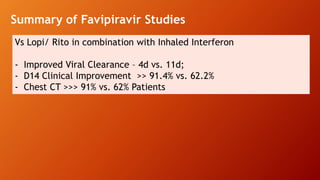
Vs Lopi/ Rito in combination with Inhaled Interferon
- Improved Viral Clearance – 4d vs. 11d;
- D14 Clinical Improvement >> 91.4% vs. 62.2%
- Chest CT >>> 91% vs. 62% Patients
Summary of Favipiravir Studies
medRxiv preprint doi: https://doi.org/10.1101/2020.06.24.20133249.this version posted July 13, 2020
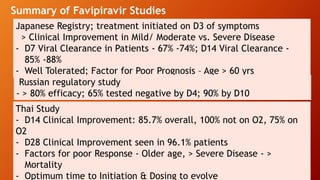
Japanese Registry; treatment initiated on D3 of symptoms
> Clinical Improvement in Mild/ Moderate vs. Severe Disease
- D7 Viral Clearance in Patients - 67% -74%; D14 Viral Clearance -
85% -88%
- Well Tolerated; Factor for Poor Prognosis – Age > 60 yrs
Thai Study
- D14 Clinical Improvement: 85.7% overall, 100% not on O2, 75% on
O2
- D28 Clinical Improvement seen in 96.1% patients
- Factors for poor Response - Older age, > Severe Disease - >
Mortality
- Optimum time to Initiation & Dosing to evolve
Russian regulatory study
- > 80% efficacy; 65% tested negative by D4; 90% by D10
Adverse Events
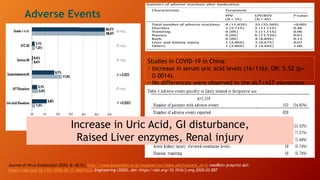
Studies in COVID-19 in China:
• Increase in serum uric acid levels (16/116); OR: 5.52 (p<
0.0014).
• No differences were observed in the ALT/AST elevations
Increase in Uric Acid, GI disturbance,
Raised Liver enzymes, Renal injury
Journal of Virus Eradication 2020; 6: 45–51; http://www.kansensho.or.jp/modules/en/index.php?content_id=3; medRxiv preprint doi:
https://doi.org/10.1101/2020.03.17.20037432; Engineering (2020), doi: https://doi.org/10.1016/j.eng.2020.03.007
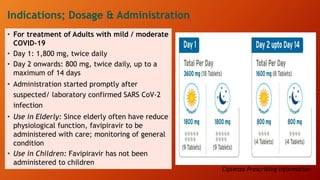
Indications; Dosage & Administration
• For treatment of Adults with mild / moderate
COVID-19
• Day 1: 1,800 mg, twice daily
• Day 2 onwards: 800 mg, twice daily, up to a
maximum of 14 days
• Administration started promptly after
suspected/ laboratory confirmed SARS CoV-2
infection
• Use in Elderly: Since elderly often have reduce
physiological function, favipiravir to be
administered with care; monitoring of general
condition
• Use in Children: Favipiravir has not been
administered to children
Ciplenza Prescribing Information
Contraindications
• Boxed Warning - Teratogenic effects of drug
• Pregnancy & Lactation & Women likely to get pregnant
• Confirm Negative Pregnancy before starting drug
• Drug migrates into Semen
• Implementation of extremely effective contraception during
administration & for 7 days after completion of Treatment
• Severe Renal / Hepatic impairment
• Caution in patients with Uric Acid Abnormalities & Gout
• Hypersensitive to Product Ingredients
Ciplenza Prescribing Information
• Limited information on DDI
• Metabolized in liver by aldehyde oxidase (AO)
• Potential DDIs to be monitored with caution:
• In combination with Pyrazinamide, Repaglinide, Theophylline, Famciclovir & Sulindac
• In vitro Potent AO Inhibitors – SERMs (raloxifene, tamoxifen, estradiol), H2 receptor
antagonist cimetidine, calcium channel blockers (felodipine, amlodipine, verapamil), anti-
arrhythmic drug propafenone, TCA amitriptyline
• citalopram, zaleplon, famciclovir, sulindac, metabolized by AO
• DDI between cimetidine, zaleplon reported
• Max daily dose of Acetaminophen when combined with favipiravir, 3 g
(Inhibits acetaminophen sulphate formation; increased systemic levels of
acetamoniphen)
Clin Pharmacol Ther 2020 doi:10.1002/Cpt.1844
Favipiravir Drug- Drug Interactions
• Broad spectrum anti-viral with in-vitro anti-viral activity against SARS-CoV2
• Inhibits enzyme RdRp; halts viral replication
• Improved, > viral clearance on D4; improvement in CT images of Pneumonia
• Higher Viral Clearance on D7, D14 – Patients with/ without O2, MV
• Early Improvement Cough, Fever, Clinical Recovery vs. Umifenovir
• Greater Clinical Improvement - Mild / Moderate disease vs. SOC
• Prompt Administration - suspected / laboratory confirmed SARS CoV-2 in Adults
with mild/ moderate disease
• Commonly SE - >> Uric Acid, GI disturbance, raised Hepatic enzymes, Renal
injury
• Contraindication - severe renal / hepatic impairment, pregnant, lactating women
• Caution in abnormal Uric acid metabolism/ Gout
Favipiravir Summary
Timing of Treatment in Relation to Onset of
Symptoms
JHMI Clinical Recommendations for Available Pharmacologic Therapies for COVID-19. Last updated May 19, 2020.
Optimal timing of therapeutic use unknown; proposed schematic based on medication type, potential
for direct antiviral effect, mitigation of cytokine storm, or nonspecific adjuvant effect
24
0 1 2 3 4 5 6 7 9 10 11 12 13 14 15 16 17 18 19 20 21 22 23
8
Days Since COVID-19 Symptom Onset
Recovery
SARS-CoV-2
RNA
Fever, cough, myalgia,
dyspnea, etc
Hypoxia, respiratory
failure, fever,
hypotension
Acute respiratory
distress syndrome
Antivirals
Convalescent plasma
Immunomodulators
Adjuvants
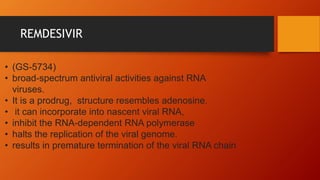
REMDESIVIR
• (GS-5734)
• broad-spectrum antiviral activities against RNA
viruses.
• It is a prodrug, structure resembles adenosine.
• it can incorporate into nascent viral RNA,
• inhibit the RNA-dependent RNA polymerase
• halts the replication of the viral genome.
• results in premature termination of the viral RNA chain
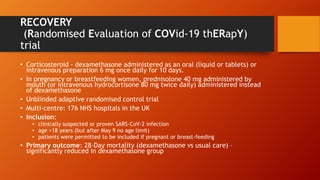
RECOVERY
(Randomised Evaluation of COVid-19 thERapY)
trial
• Corticosteroid - dexamethasone administered as an oral (liquid or tablets) or
intravenous preparation 6 mg once daily for 10 days.
• In pregnancy or breastfeeding women, prednisolone 40 mg administered by
mouth (or intravenous hydrocortisone 80 mg twice daily) administered instead
of dexamethasone
• Unblinded adaptive randomised control trial
• Multi-centre: 176 NHS hospitals in the UK
• Inclusion:
• clinically suspected or proven SARS-CoV-2 infection
• age >18 years (but after May 9 no age limit)
• patients were permitted to be included if pregnant or breast-feeding
• Primary outcome: 28-Day mortality (dexamethasone vs usual care) –
significantly reduced in dexamethasone group
Secondary outcome: (dexamethasone vs usual
care)
• Mechanically ventilated: 28-day mortality – significantly reduced in dexamethasone group
• Patients receiving O2: 28-day mortality – significantly reduced in dexamethasone group
• 21.5% vs 25% [Rate Ratio 0.80; 95% CI 0.70-0.92, p = 0.002]
• Patients not receiving respiratory support: no significant difference
• 17% vs 13.2% [Rate Ratio 1.22; 95% CI 0.93-1.61 p=0.14]
Dexamethasone was associated with a reduction in 28-day mortality among those symptoms for
>7 days but not among those with symptoms for <7 days (test for trend p<0.001)
• Length of hospital stay – significantly reduced in dexamethasone group
Composite secondary outcome of invasive mechanical ventilation and death –
significantly reduced in dexamethasone group
• Rate Ratio 0.91; 95% CI 0.82-1.00, p=0.049
• Use of ventilation – significantly reduced in dexamethasone group
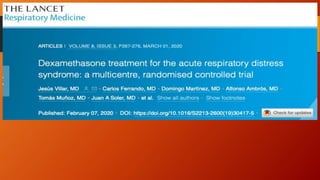
• Rate Ratio 0.76; 95% CI 0.61-0.96, p=0.021
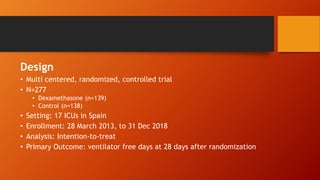
Design
• Multi centered, randomized, controlled trial
• N=277
• Dexamethasone (n=139)
• Control (n=138)
• Setting: 17 ICUs in Spain
• Enrollment: 28 March 2013, to 31 Dec 2018
• Analysis: Intention-to-treat
• Primary Outcome: ventilator free days at 28 days after randomization
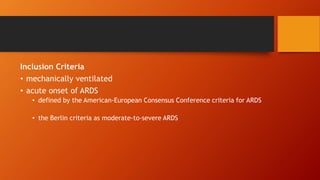
Inclusion Criteria
• mechanically ventilated
• acute onset of ARDS
• defined by the American-European Consensus Conference criteria for ARDS
• the Berlin criteria as moderate-to-severe ARDS
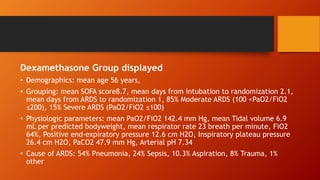
Dexamethasone Group displayed
• Demographics: mean age 56 years,
• Grouping: mean SOFA score8.7, mean days from intubation to randomization 2.1,
mean days from ARDS to randomization 1, 85% Moderate ARDS (100 <PaO2/FiO2
≤200), 15% Severe ARDS (PaO2/FiO2 ≤100)
• Physiologic parameters: mean PaO2/FiO2 142.4 mm Hg, mean Tidal volume 6.9
mL per predicted bodyweight, mean respirator rate 23 breath per minute, FiO2
64%, Positive end-expiratory pressure 12.6 cm H2O, Inspiratory plateau pressure
26.4 cm H2O, PaCO2 47.9 mm Hg, Arterial pH 7.34
• Cause of ARDS: 54% Pneumonia, 24% Sepsis, 10.3% Aspiration, 8% Trauma, 1%
other
Interventions
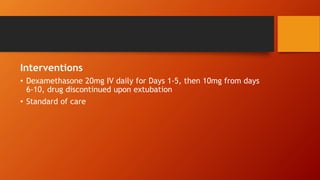
• Dexamethasone 20mg IV daily for Days 1-5, then 10mg from days
6-10, drug discontinued upon extubation
• Standard of care
Primary Outcomes
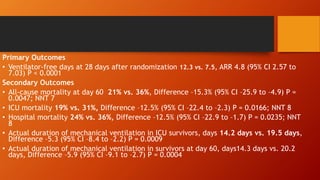
• Ventilator-free days at 28 days after randomization 12.3 vs. 7.5, ARR 4.8 (95% CI 2.57 to
7.03) P < 0.0001
Secondary Outcomes
• All-cause mortality at day 60 21% vs. 36%, Difference –15.3% (95% CI –25.9 to –4.9) P =
0.0047; NNT 7
• ICU mortality 19% vs. 31%, Difference –12.5% (95% CI –22.4 to –2.3) P = 0.0166; NNT 8
• Hospital mortality 24% vs. 36%, Difference –12.5% (95% CI –22.9 to –1.7) P = 0.0235; NNT
8
• Actual duration of mechanical ventilation in ICU survivors, days 14.2 days vs. 19.5 days,
Difference –5.3 (95% CI –8.4 to –2.2) P = 0.0009
• Actual duration of mechanical ventilation in survivors at day 60, days14.3 days vs. 20.2
days, Difference –5.9 (95% CI –9.1 to –2.7) P = 0.0004
Adverse Events
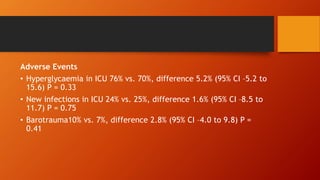
• Hyperglycaemia in ICU 76% vs. 70%, difference 5.2% (95% CI –5.2 to
15.6) P = 0.33
• New infections in ICU 24% vs. 25%, difference 1.6% (95% CI –8.5 to
11.7) P = 0.75
• Barotrauma10% vs. 7%, difference 2.8% (95% CI –4.0 to 9.8) P =
0.41
Thank you

Covid 19 therapeutics

  • 1.
    COVID 19 THERAPY KERALASTATE GUIDELINES AUG 2020 DR AMITH SREEDHARAN CONSULTANT PULMONARY/CRITICAL CARE MEDICINE ASTER MIMS KANNUR
  • 2.
    COVID-19 Timeline 2019 2020 Firstreported patient with symptoms of Wuhan corona virus China alerts WHO Identification of new virus 1st Death in China 1st Corona case outside of China reported WHO declares global outbreak 1st death outside China WHO names virus as COVID-19 1st reported death in India 1st case reported in India Zaim et al. Curr Probl Cardiol. 2020 Apr 28:100618.
  • 6.
    Tracking Symptom Timeline Zouet al. Lancet 2020; 395: 1054-62 Day 1-3: Onset of Symptoms  Fever usually appears 1st day  Upper respiratory symptoms such as cough & sore throat may appear by day 3 Day 4-9: In the lungs  Reach lungs between 3 -4 day  Labored breathing may start by 4th - 9th day Day 8-15: In the blood  Acute Respiratory Distress present between day 8-15  Sepsis may develop by end of first week 80% Patients get no or mild symptoms 14% Experience severe symptoms 5% Need ICU care Symptoms related to GI Tract, Heart, CNS, Thrombosis reported now
  • 30.
    Key Therapeutic ClassesUnder Investigation for Treatment of COVID-19 Barlow. Pharmacotherapy. 2020;40:416. McCreary. Open Forum Infect Dis. 2020;7:ofaa105. Sanders. JAMA. 2020;323:1824. Antivirals Immunomodulators Baloxivir Convalescent plasma Favipiravir (Hydroxy)chloroquine Interferon Lopinavir/ritonavir Nitazoxanide Oseltamivir Remdesivir Ribavirin Corticosteroids IL-1 inhibitors (eg, anakinra) IL-6 inhibitors (eg, tocilizumab) Intravenous Immunoglobulin JAK inhibitors (eg, baricitinib) “Management strategies for patients with COVID-19 .. rapidly evolving therapeutic challenge, optimal agents (if any) to treat infection, prevent progression to critical illness remain ill-defined.” Anti Coagulants
  • 31.
  • 32.
    • Broad spectrumAnti-Viral approved for treatment of influenza in Japan since 2014 • Also known as T-705, Pro-Drug which gets converted to active metabolite Favipiravir- ribofuranosyl-5’-triphosphate (Favipiravir-RTP) inside cells, interferes with viral replication • Reported to inhibit replication of several RNA viruses - in vitro, animal models • In-Vitro anti- viral activity against SARS CoV2 in human cells (EC50=61.88µM) Favipiravir: Discovery & Development Cell Research (2020) 30:269–271; https://doi.org/10.1038/s41422-020-0282-0 Pharmacology & Therapeutics 209 (2020) 107512
  • 33.
    Mechanism of Actionagainst RNA viruses • Incorporation: Favipiravir (prodrug) enters virus infected cell • Metabolized to active form T-705RTP • Inhibits Viral Replication by inhibiting RNA dependant RNA polymerase (RdRp) • Reduces Viral Replication Pharmacology & Therapeutics 209 (2020) 107512
  • 34.
    Inhibition of Replication •Favipiravir takes place of guanosine (G) & adenosine (A) in viral RNA genome • RdRp – role in inserting correct nucleotide in new viral RNA strand. RdRp confuses Favipiravir for G/ A & adds wrong nucleotide in viral RNA strand resulting in mismatch • 2 consecutive favipiravir molecules incorporated, synthesis of viral RNA strand not completed • Favipiravir acts as chain terminator, inhibits elongation (lengthening of RNA) • Short & incomplete viral RNA strands cannot synthesize essential viral proteins; new virions not assembled / released Pharmacology & Therapeutics 209 (2020) 107512
  • 35.
    Studies on Useof Favipiravir in Covid 19
  • 36.
    LPV/RTV: Lopinavir/Ritonavir Cai etal; Engineering (2020), doi: https://doi.org/10.1016/j.eng.2020.03.007 Favipiravir vs Lopinavir/Ritonavir for COVID-19: Prospective, Randomized, Controlled, Open-Label Study from China 16–75 yrs age, laboratory confirmed diagnosis; disease onset to enrolment < 7 dt Favipiravir (200 mg / tablet); 1600 mg bd on D1; 600 mg bd D 2−14 OR • LPV/RTV (200 mg/50 mg per tablet); LPV 400 mg/RTV 100 mg bd till D14 • Both FPV & LPV/RTV continued until viral clearance confirmed/ 14 d • Both groups IFN-α1b 60 μg (30 μg per ampule) bd by aerosol inhalation for 14d • SOC - oxygen inhalation, oral/ IV rehydration, electrolyte correction, antipyretics, analgesics, antiemetic drugs
  • 37.
    Patients - 35FPV arm; 45 control arm Patient Response • Median time of viral clearance* for FPV - 4 d (IQR: 2.5–9) vs control group - 11 d (IQR: 8–13) (P < 0.001) Chest CT changes • On D14 - improvement in FPV arm significantly higher vs. control arm (91.4% versus 62.2 %, 32/35 versus 28/45, P = 0.004) *Viral clearance: presence of two consecutive negative results with qPCR detection over 24 hours). Cai et al; Engineering (2020), doi: https://doi.org/10.1016/j.eng.2020.03.007 Kaplan-Meier survival curves for the length of time until viral clearance for both groups (P < 0.001). Results
  • 38.
    • All Patients– Favipiravir not associated with < AOT, NMV, Dyspnea, Respiratory Failure, ICU admission, all-cause Mortality • Common AE - raised Uric Aid levels (16/116); OR: 5.52 (p< 0.0014) • No differences in ALT/AST elevations AOT: auxiliary oxygen therapy NMV: Non-invasive mechanical Ventilation Favipiravir led to shorter latencies to relief for both pyrexia (difference: 1.70 days, P<0.0001) & cough (difference: 1.75 days, P<0.0001) Umifenovir Umifenovir Favipiravir Favipiravir Chen et al, medRxiv preprint doi: https://doi.org/10.1101/2020.03.17.20037432.
  • 39.
    • Mild –No O2, Moderate – O2, Severe – MV/ ECMO • Patients - 45% Mild; 43.9% Moderate; 10.9% Severe • 49.2% = Co Morbidities; 41.6% added Ciclesonide • 52% > 60 yrs; 67% Male Patients • Gout, Skin Rash & > LFT – most frequent Side Effect • 1.8% Mortality in < 59 yrs; 20.8% Mortality > 60 yrs Data from Japanese Registry • 2,158 cases; 407 hospitals; Retrospective Analysis from Compassionate Use • 92.8% of patients given favipiravir - 1800 mg bd D1, 800 mg bd subsequently • Median treatment duration 11 days • Median from positive PCR test to - hospital admission & initiation of Favipiravir 2 & 1 days, respectively The Japanese Society of Infectious Diseases http://www.kansensho.or.jp/modules/en/index.php?content_i d=3
  • 40.
    Data from JapaneseRegistry 13.10% 21.30% 28.30% 5.90% 8.80% 25.20% 0% 5% 10% 15% 20% 25% 30% mild moderate severe disease 7 Days 14 Days Rates of clinical worsening on D7 & D14 % of patient 73.80% 66.60% 40.10% 87.80% 84.50% 60.30% 0.00% 10.00% 20.00% 30.00% 40.00% 50.00% 60.00% 70.00% 80.00% 90.00% 100.00% Mild Moderate Severe Disease 7 Days 14 Days Rates of clinical improvement on D7 & D14 % of patient The Japanese Society of Infectious Diseases http://www.kansensho.or.jp/modules/en/index.php?content_id=3
  • 41.
    • Adaptive, Multicenter,Randomized, Open-label, Comparative • Favipiravir – 1600/600 mg BID D1 /D 2-14 OR 1800/800 mgBID D2/ D2-14 OR SOC (as per Russian guidelines HCQ, CQ, LPV/RTV, etc) • Inclusion: > 18 yrs; lab confirmed COVID-19, Moderate disease (pneumonia with at least 1 of following: Fever > 38 °C; Cough; Shortness of breath on exertion; CRP > 10 mg/l; SpO2 < 95% Adaptive Study Favipiravir vs. SOC in Hospitalized Moderate Covid Disease : Russian Regulatory Study RESULTS- • Median viral elimination – 4 vs. 9 days with SOC • Favipiravir Efficacy above 80%, drug with high antiviral activity • D5, 65% Favipiravir patients tested negative; twice number of SOC group • D10, 90% Favipiravir patients negative for virus • Fever Relief - 68% Favipiravir patients on D3 vs. D6 in control group https://www.thepharmaletter.com/article/rdif-and-chemrar-s-favipiravir-product-first-to-get-regulatory-approval-for-covid-19; www.clintrials.gov
  • 42.
    Vs Lopi/ Ritoin combination with Inhaled Interferon - Improved Viral Clearance – 4d vs. 11d; - D14 Clinical Improvement >> 91.4% vs. 62.2% - Chest CT >>> 91% vs. 62% Patients Summary of Favipiravir Studies
  • 43.
    Summary of FavipiravirStudies medRxiv preprint doi: https://doi.org/10.1101/2020.06.24.20133249.this version posted July 13, 2020 Japanese Registry; treatment initiated on D3 of symptoms > Clinical Improvement in Mild/ Moderate vs. Severe Disease - D7 Viral Clearance in Patients - 67% -74%; D14 Viral Clearance - 85% -88% - Well Tolerated; Factor for Poor Prognosis – Age > 60 yrs Thai Study - D14 Clinical Improvement: 85.7% overall, 100% not on O2, 75% on O2 - D28 Clinical Improvement seen in 96.1% patients - Factors for poor Response - Older age, > Severe Disease - > Mortality - Optimum time to Initiation & Dosing to evolve Russian regulatory study - > 80% efficacy; 65% tested negative by D4; 90% by D10
  • 44.
    Adverse Events Studies inCOVID-19 in China: • Increase in serum uric acid levels (16/116); OR: 5.52 (p< 0.0014). • No differences were observed in the ALT/AST elevations Increase in Uric Acid, GI disturbance, Raised Liver enzymes, Renal injury Journal of Virus Eradication 2020; 6: 45–51; http://www.kansensho.or.jp/modules/en/index.php?content_id=3; medRxiv preprint doi: https://doi.org/10.1101/2020.03.17.20037432; Engineering (2020), doi: https://doi.org/10.1016/j.eng.2020.03.007
  • 45.
    Indications; Dosage &Administration • For treatment of Adults with mild / moderate COVID-19 • Day 1: 1,800 mg, twice daily • Day 2 onwards: 800 mg, twice daily, up to a maximum of 14 days • Administration started promptly after suspected/ laboratory confirmed SARS CoV-2 infection • Use in Elderly: Since elderly often have reduce physiological function, favipiravir to be administered with care; monitoring of general condition • Use in Children: Favipiravir has not been administered to children Ciplenza Prescribing Information
  • 46.
    Contraindications • Boxed Warning- Teratogenic effects of drug • Pregnancy & Lactation & Women likely to get pregnant • Confirm Negative Pregnancy before starting drug • Drug migrates into Semen • Implementation of extremely effective contraception during administration & for 7 days after completion of Treatment • Severe Renal / Hepatic impairment • Caution in patients with Uric Acid Abnormalities & Gout • Hypersensitive to Product Ingredients Ciplenza Prescribing Information
  • 47.
    • Limited informationon DDI • Metabolized in liver by aldehyde oxidase (AO) • Potential DDIs to be monitored with caution: • In combination with Pyrazinamide, Repaglinide, Theophylline, Famciclovir & Sulindac • In vitro Potent AO Inhibitors – SERMs (raloxifene, tamoxifen, estradiol), H2 receptor antagonist cimetidine, calcium channel blockers (felodipine, amlodipine, verapamil), anti- arrhythmic drug propafenone, TCA amitriptyline • citalopram, zaleplon, famciclovir, sulindac, metabolized by AO • DDI between cimetidine, zaleplon reported • Max daily dose of Acetaminophen when combined with favipiravir, 3 g (Inhibits acetaminophen sulphate formation; increased systemic levels of acetamoniphen) Clin Pharmacol Ther 2020 doi:10.1002/Cpt.1844 Favipiravir Drug- Drug Interactions
  • 48.
    • Broad spectrumanti-viral with in-vitro anti-viral activity against SARS-CoV2 • Inhibits enzyme RdRp; halts viral replication • Improved, > viral clearance on D4; improvement in CT images of Pneumonia • Higher Viral Clearance on D7, D14 – Patients with/ without O2, MV • Early Improvement Cough, Fever, Clinical Recovery vs. Umifenovir • Greater Clinical Improvement - Mild / Moderate disease vs. SOC • Prompt Administration - suspected / laboratory confirmed SARS CoV-2 in Adults with mild/ moderate disease • Commonly SE - >> Uric Acid, GI disturbance, raised Hepatic enzymes, Renal injury • Contraindication - severe renal / hepatic impairment, pregnant, lactating women • Caution in abnormal Uric acid metabolism/ Gout Favipiravir Summary
  • 49.
    Timing of Treatmentin Relation to Onset of Symptoms JHMI Clinical Recommendations for Available Pharmacologic Therapies for COVID-19. Last updated May 19, 2020. Optimal timing of therapeutic use unknown; proposed schematic based on medication type, potential for direct antiviral effect, mitigation of cytokine storm, or nonspecific adjuvant effect 24 0 1 2 3 4 5 6 7 9 10 11 12 13 14 15 16 17 18 19 20 21 22 23 8 Days Since COVID-19 Symptom Onset Recovery SARS-CoV-2 RNA Fever, cough, myalgia, dyspnea, etc Hypoxia, respiratory failure, fever, hypotension Acute respiratory distress syndrome Antivirals Convalescent plasma Immunomodulators Adjuvants
  • 50.
    REMDESIVIR • (GS-5734) • broad-spectrumantiviral activities against RNA viruses. • It is a prodrug, structure resembles adenosine. • it can incorporate into nascent viral RNA, • inhibit the RNA-dependent RNA polymerase • halts the replication of the viral genome. • results in premature termination of the viral RNA chain
  • 55.
    RECOVERY (Randomised Evaluation ofCOVid-19 thERapY) trial • Corticosteroid - dexamethasone administered as an oral (liquid or tablets) or intravenous preparation 6 mg once daily for 10 days. • In pregnancy or breastfeeding women, prednisolone 40 mg administered by mouth (or intravenous hydrocortisone 80 mg twice daily) administered instead of dexamethasone • Unblinded adaptive randomised control trial • Multi-centre: 176 NHS hospitals in the UK • Inclusion: • clinically suspected or proven SARS-CoV-2 infection • age >18 years (but after May 9 no age limit) • patients were permitted to be included if pregnant or breast-feeding • Primary outcome: 28-Day mortality (dexamethasone vs usual care) – significantly reduced in dexamethasone group
  • 56.
    Secondary outcome: (dexamethasonevs usual care) • Mechanically ventilated: 28-day mortality – significantly reduced in dexamethasone group • Patients receiving O2: 28-day mortality – significantly reduced in dexamethasone group • 21.5% vs 25% [Rate Ratio 0.80; 95% CI 0.70-0.92, p = 0.002] • Patients not receiving respiratory support: no significant difference • 17% vs 13.2% [Rate Ratio 1.22; 95% CI 0.93-1.61 p=0.14] Dexamethasone was associated with a reduction in 28-day mortality among those symptoms for >7 days but not among those with symptoms for <7 days (test for trend p<0.001) • Length of hospital stay – significantly reduced in dexamethasone group Composite secondary outcome of invasive mechanical ventilation and death – significantly reduced in dexamethasone group • Rate Ratio 0.91; 95% CI 0.82-1.00, p=0.049 • Use of ventilation – significantly reduced in dexamethasone group • Rate Ratio 0.76; 95% CI 0.61-0.96, p=0.021
  • 58.
    Design • Multi centered,randomized, controlled trial • N=277 • Dexamethasone (n=139) • Control (n=138) • Setting: 17 ICUs in Spain • Enrollment: 28 March 2013, to 31 Dec 2018 • Analysis: Intention-to-treat • Primary Outcome: ventilator free days at 28 days after randomization
  • 59.
    Inclusion Criteria • mechanicallyventilated • acute onset of ARDS • defined by the American-European Consensus Conference criteria for ARDS • the Berlin criteria as moderate-to-severe ARDS
  • 60.
    Dexamethasone Group displayed •Demographics: mean age 56 years, • Grouping: mean SOFA score8.7, mean days from intubation to randomization 2.1, mean days from ARDS to randomization 1, 85% Moderate ARDS (100 <PaO2/FiO2 ≤200), 15% Severe ARDS (PaO2/FiO2 ≤100) • Physiologic parameters: mean PaO2/FiO2 142.4 mm Hg, mean Tidal volume 6.9 mL per predicted bodyweight, mean respirator rate 23 breath per minute, FiO2 64%, Positive end-expiratory pressure 12.6 cm H2O, Inspiratory plateau pressure 26.4 cm H2O, PaCO2 47.9 mm Hg, Arterial pH 7.34 • Cause of ARDS: 54% Pneumonia, 24% Sepsis, 10.3% Aspiration, 8% Trauma, 1% other
  • 61.
    Interventions • Dexamethasone 20mgIV daily for Days 1-5, then 10mg from days 6-10, drug discontinued upon extubation • Standard of care
  • 62.
    Primary Outcomes • Ventilator-freedays at 28 days after randomization 12.3 vs. 7.5, ARR 4.8 (95% CI 2.57 to 7.03) P < 0.0001 Secondary Outcomes • All-cause mortality at day 60 21% vs. 36%, Difference –15.3% (95% CI –25.9 to –4.9) P = 0.0047; NNT 7 • ICU mortality 19% vs. 31%, Difference –12.5% (95% CI –22.4 to –2.3) P = 0.0166; NNT 8 • Hospital mortality 24% vs. 36%, Difference –12.5% (95% CI –22.9 to –1.7) P = 0.0235; NNT 8 • Actual duration of mechanical ventilation in ICU survivors, days 14.2 days vs. 19.5 days, Difference –5.3 (95% CI –8.4 to –2.2) P = 0.0009 • Actual duration of mechanical ventilation in survivors at day 60, days14.3 days vs. 20.2 days, Difference –5.9 (95% CI –9.1 to –2.7) P = 0.0004
  • 63.
    Adverse Events • Hyperglycaemiain ICU 76% vs. 70%, difference 5.2% (95% CI –5.2 to 15.6) P = 0.33 • New infections in ICU 24% vs. 25%, difference 1.6% (95% CI –8.5 to 11.7) P = 0.75 • Barotrauma10% vs. 7%, difference 2.8% (95% CI –4.0 to 9.8) P = 0.41
  • 67.

Editor's Notes

  • #31 CSSE, Center for Systems Science and Engineering.
  • #48 Aldehyde oxidase is thought to have a significant impact on pharmacokinetics. AO is capable of oxidizing many drugs in the liver. AO greatly contributes to the hepatic clearance of drugs and other compounds. Pyrazinamide is a medication used to treat tuberculosis Repaglinide is used alone or with other medications to control high blood sugar along with a proper diet and exercise program. It is used in people with type 2 diabetes. Famciclovir is an antiviral medicine that is used to treat infections caused by herpes viruses, including genital herpes, cold sores, and shingles Sulindac(Clinoril) generic is a non-steroidal anti-inflammatory drug (NSAID),
  • #49 Aldehyde oxidase is thought to have a significant impact on pharmacokinetics. AO is capable of oxidizing many drugs in the liver. AO greatly contributes to the hepatic clearance of drugs and other compounds. Pyrazinamide is a medication used to treat tuberculosis Repaglinide is used alone or with other medications to control high blood sugar along with a proper diet and exercise program. It is used in people with type 2 diabetes. Famciclovir is an antiviral medicine that is used to treat infections caused by herpes viruses, including genital herpes, cold sores, and shingles Sulindac(Clinoril) generic is a non-steroidal anti-inflammatory drug (NSAID),