* Point-leaf (Mexican) Manzanita – Arctostaphylos pungens
(ark-toh-STAF-ih-los PUN-jens )

Family: Ericaceae (Heath Family)
Southwest U.S. and Mexico. In CA inner South Coast Ranges (Monterey, San Benito
cos.), San Gabriel & San Bernardino Mountains, Peninsular Ranges, e Desert Mountains; on rocky
slopes, ridges, in chaparral or coniferous forest from 2,700 feet to 8,000 feet.

Native to:

large woody shrub
mature height: 5-10 ft.
mature width: 5-8 ft.
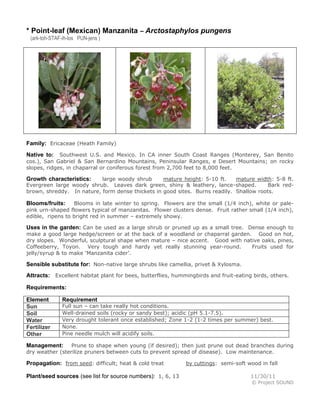
Evergreen large woody shrub. Leaves dark green, shiny & leathery, lance-shaped.
Bark redbrown, shreddy. In nature, form dense thickets in good sites. Burns readily. Shallow roots.

Growth characteristics:

Blooms in late winter to spring. Flowers are the small (1/4 inch), white or palepink urn-shaped flowers typical of manzanitas. Flower clusters dense. Fruit rather small (1/4 inch),
edible, ripens to bright red in summer – extremely showy.

Blooms/fruits:

Uses in the garden: Can be used as a large shrub or pruned up as a small tree. Dense enough to
make a good large hedge/screen or at the back of a woodland or chaparral garden. Good on hot,
dry slopes. Wonderful, sculptural shape when mature – nice accent. Good with native oaks, pines,
Coffeeberry, Toyon. Very tough and hardy yet really stunning year-round.
Fruits used for
jelly/syrup & to make ‘Manzanita cider’.

Sensible substitute for: Non-native large shrubs like camellia, privet & Xylosma.
Attracts: Excellent habitat plant for bees, butterflies, hummingbirds and fruit-eating birds, others.
Requirements:
Element
Sun
Soil
Water
Fertilizer
Other

Requirement

Full sun – can take really hot conditions.
Well-drained soils (rocky or sandy best); acidic (pH 5.1-7.5).
Very drought tolerant once established; Zone 1-2 (1-2 times per summer) best.
None.
Pine needle mulch will acidify soils.

Prune to shape when young (if desired); then just prune out dead branches during
dry weather (sterilize pruners between cuts to prevent spread of disease). Low maintenance.

Management:

Propagation: from seed: difficult; heat & cold treat
Plant/seed sources (see list for source numbers): 1, 6, 13

by cuttings: semi-soft wood in fall
11/30/11
© Project SOUND

Arctostaphylos pungens

  • 1.
    * Point-leaf (Mexican)Manzanita – Arctostaphylos pungens (ark-toh-STAF-ih-los PUN-jens ) Family: Ericaceae (Heath Family) Southwest U.S. and Mexico. In CA inner South Coast Ranges (Monterey, San Benito cos.), San Gabriel & San Bernardino Mountains, Peninsular Ranges, e Desert Mountains; on rocky slopes, ridges, in chaparral or coniferous forest from 2,700 feet to 8,000 feet. Native to: large woody shrub mature height: 5-10 ft. mature width: 5-8 ft. Evergreen large woody shrub. Leaves dark green, shiny & leathery, lance-shaped. Bark redbrown, shreddy. In nature, form dense thickets in good sites. Burns readily. Shallow roots. Growth characteristics: Blooms in late winter to spring. Flowers are the small (1/4 inch), white or palepink urn-shaped flowers typical of manzanitas. Flower clusters dense. Fruit rather small (1/4 inch), edible, ripens to bright red in summer – extremely showy. Blooms/fruits: Uses in the garden: Can be used as a large shrub or pruned up as a small tree. Dense enough to make a good large hedge/screen or at the back of a woodland or chaparral garden. Good on hot, dry slopes. Wonderful, sculptural shape when mature – nice accent. Good with native oaks, pines, Coffeeberry, Toyon. Very tough and hardy yet really stunning year-round. Fruits used for jelly/syrup & to make ‘Manzanita cider’. Sensible substitute for: Non-native large shrubs like camellia, privet & Xylosma. Attracts: Excellent habitat plant for bees, butterflies, hummingbirds and fruit-eating birds, others. Requirements: Element Sun Soil Water Fertilizer Other Requirement Full sun – can take really hot conditions. Well-drained soils (rocky or sandy best); acidic (pH 5.1-7.5). Very drought tolerant once established; Zone 1-2 (1-2 times per summer) best. None. Pine needle mulch will acidify soils. Prune to shape when young (if desired); then just prune out dead branches during dry weather (sterilize pruners between cuts to prevent spread of disease). Low maintenance. Management: Propagation: from seed: difficult; heat & cold treat Plant/seed sources (see list for source numbers): 1, 6, 13 by cuttings: semi-soft wood in fall 11/30/11 © Project SOUND