* Vine Maple – Acer circinatum

(AY-ser ser-sin-AY-tum)

Family: Aceraceae (Maple Family)
Native to: Pacific NW from S. Alaska to N. CA; in pine forests and along shaded streambanks.
woody shrub/vine
mature height: 10-25+ ft. mature width: 20-40 ft.
Winter-deciduous woody vine to small tree or large shrub (form depends on available light; vine-like
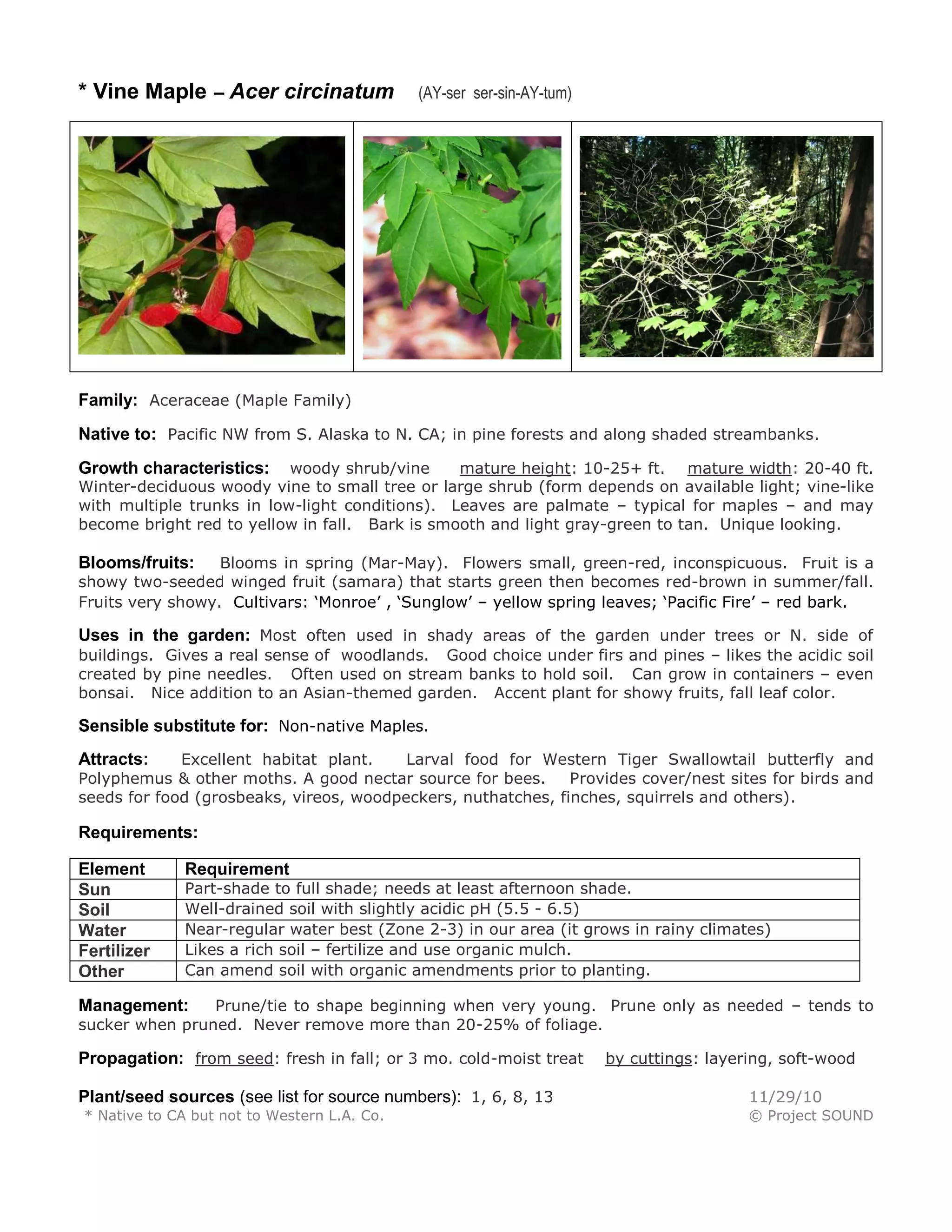
with multiple trunks in low-light conditions). Leaves are palmate – typical for maples – and may
become bright red to yellow in fall. Bark is smooth and light gray-green to tan. Unique looking.

Growth characteristics:

Blooms in spring (Mar-May). Flowers small, green-red, inconspicuous. Fruit is a
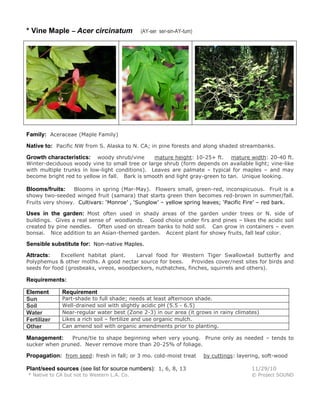
showy two-seeded winged fruit (samara) that starts green then becomes red-brown in summer/fall.
Fruits very showy. Cultivars: ‘Monroe’ , ‘Sunglow’ – yellow spring leaves; ‘Pacific Fire’ – red bark.

Blooms/fruits:

Uses in the garden: Most often used in shady areas of the garden under trees or N. side of
buildings. Gives a real sense of woodlands. Good choice under firs and pines – likes the acidic soil
created by pine needles. Often used on stream banks to hold soil. Can grow in containers – even
bonsai. Nice addition to an Asian-themed garden. Accent plant for showy fruits, fall leaf color.

Sensible substitute for: Non-native Maples.
Excellent habitat plant.
Larval food for Western Tiger Swallowtail butterfly and
Polyphemus & other moths. A good nectar source for bees.
Provides cover/nest sites for birds and
seeds for food (grosbeaks, vireos, woodpeckers, nuthatches, finches, squirrels and others).

Attracts:

Requirements:
Element
Sun
Soil
Water
Fertilizer
Other

Requirement

Part-shade to full shade; needs at least afternoon shade.
Well-drained soil with slightly acidic pH (5.5 - 6.5)
Near-regular water best (Zone 2-3) in our area (it grows in rainy climates)
Likes a rich soil – fertilize and use organic mulch.
Can amend soil with organic amendments prior to planting.

Prune/tie to shape beginning when very young. Prune only as needed – tends to
sucker when pruned. Never remove more than 20-25% of foliage.

Management:

Propagation: from seed: fresh in fall; or 3 mo. cold-moist treat
Plant/seed sources (see list for source numbers): 1, 6, 8, 13
* Native to CA but not to Western L.A. Co.

by cuttings: layering, soft-wood
11/29/10
© Project SOUND

Acer circinatum

  • 1.
    * Vine Maple– Acer circinatum (AY-ser ser-sin-AY-tum) Family: Aceraceae (Maple Family) Native to: Pacific NW from S. Alaska to N. CA; in pine forests and along shaded streambanks. woody shrub/vine mature height: 10-25+ ft. mature width: 20-40 ft. Winter-deciduous woody vine to small tree or large shrub (form depends on available light; vine-like with multiple trunks in low-light conditions). Leaves are palmate – typical for maples – and may become bright red to yellow in fall. Bark is smooth and light gray-green to tan. Unique looking. Growth characteristics: Blooms in spring (Mar-May). Flowers small, green-red, inconspicuous. Fruit is a showy two-seeded winged fruit (samara) that starts green then becomes red-brown in summer/fall. Fruits very showy. Cultivars: ‘Monroe’ , ‘Sunglow’ – yellow spring leaves; ‘Pacific Fire’ – red bark. Blooms/fruits: Uses in the garden: Most often used in shady areas of the garden under trees or N. side of buildings. Gives a real sense of woodlands. Good choice under firs and pines – likes the acidic soil created by pine needles. Often used on stream banks to hold soil. Can grow in containers – even bonsai. Nice addition to an Asian-themed garden. Accent plant for showy fruits, fall leaf color. Sensible substitute for: Non-native Maples. Excellent habitat plant. Larval food for Western Tiger Swallowtail butterfly and Polyphemus & other moths. A good nectar source for bees. Provides cover/nest sites for birds and seeds for food (grosbeaks, vireos, woodpeckers, nuthatches, finches, squirrels and others). Attracts: Requirements: Element Sun Soil Water Fertilizer Other Requirement Part-shade to full shade; needs at least afternoon shade. Well-drained soil with slightly acidic pH (5.5 - 6.5) Near-regular water best (Zone 2-3) in our area (it grows in rainy climates) Likes a rich soil – fertilize and use organic mulch. Can amend soil with organic amendments prior to planting. Prune/tie to shape beginning when very young. Prune only as needed – tends to sucker when pruned. Never remove more than 20-25% of foliage. Management: Propagation: from seed: fresh in fall; or 3 mo. cold-moist treat Plant/seed sources (see list for source numbers): 1, 6, 8, 13 * Native to CA but not to Western L.A. Co. by cuttings: layering, soft-wood 11/29/10 © Project SOUND