* Little Sur Manzanita – Arctostaphylos edmundsii

(ark-toh-STAF-ih-los ed-MUND-see-eye)

Family: Ericaceae (Heath Family)
Native to: Monterey Co., CA; Steep sea bluffs along the Big Sur coast in low-growing scrub sites
with direct exposure to ocean winds.
woody shrub
mature height: 1-3 ft.
mature width: 5-15+ ft.
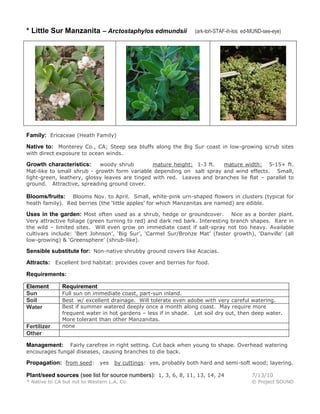
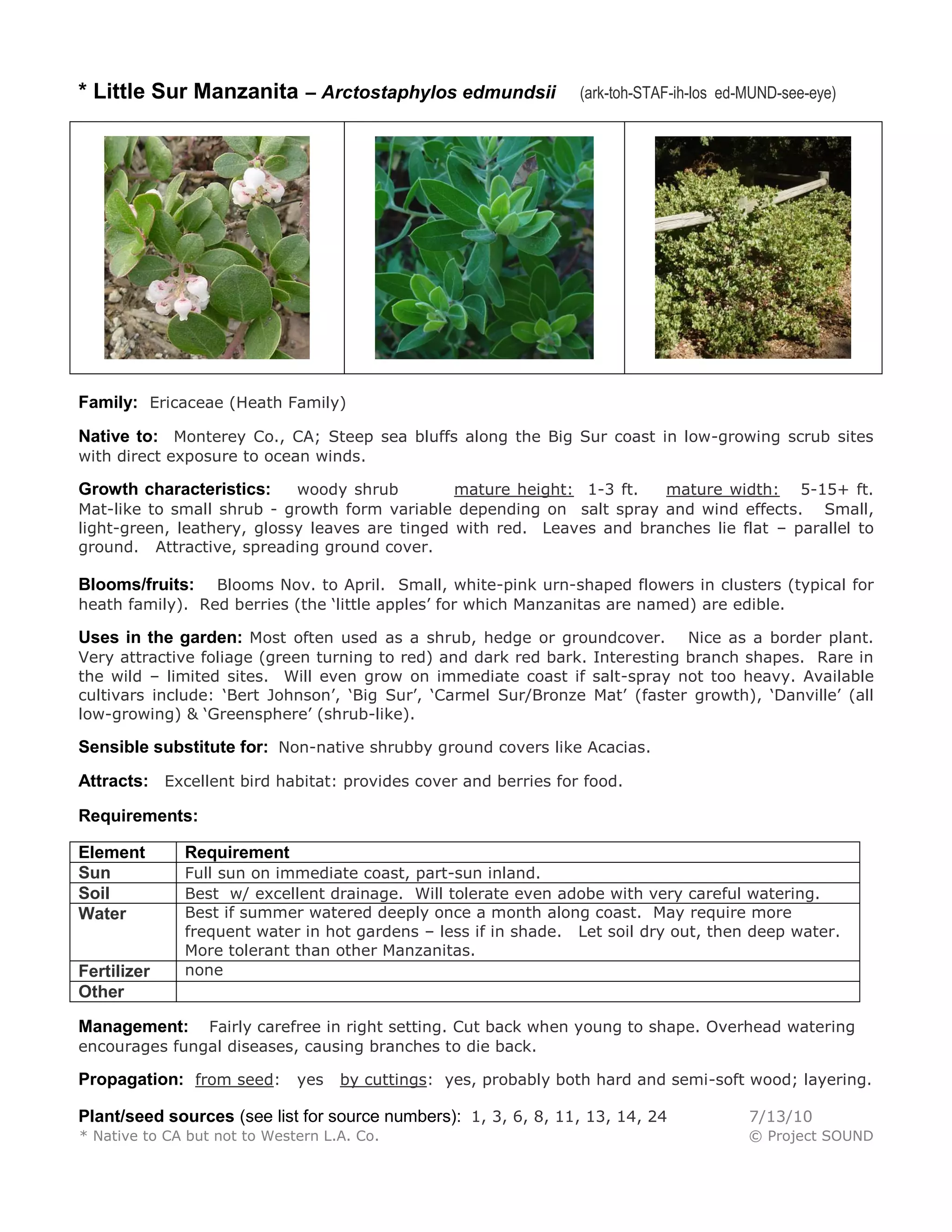
Mat-like to small shrub - growth form variable depending on salt spray and wind effects. Small,
light-green, leathery, glossy leaves are tinged with red. Leaves and branches lie flat – parallel to
ground. Attractive, spreading ground cover.

Growth characteristics:

Blooms Nov. to April. Small, white-pink urn-shaped flowers in clusters (typical for
heath family). Red berries (the ‘little apples’ for which Manzanitas are named) are edible.

Blooms/fruits:

Uses in the garden: Most often used as a shrub, hedge or groundcover.

Nice as a border plant.
Very attractive foliage (green turning to red) and dark red bark. Interesting branch shapes. Rare in
the wild – limited sites. Will even grow on immediate coast if salt-spray not too heavy. Available
cultivars include: ‘Bert Johnson’, ‘Big Sur’, ‘Carmel Sur/Bronze Mat’ (faster growth), ‘Danville’ (all
low-growing) & ‘Greensphere’ (shrub-like).

Sensible substitute for: Non-native shrubby ground covers like Acacias.
Attracts: Excellent bird habitat: provides cover and berries for food.
Requirements:
Element
Sun
Soil
Water
Fertilizer
Other

Requirement
Full sun on immediate coast, part-sun inland.
Best w/ excellent drainage. Will tolerate even adobe with very careful watering.
Best if summer watered deeply once a month along coast. May require more
frequent water in hot gardens – less if in shade. Let soil dry out, then deep water.
More tolerant than other Manzanitas.
none

Fairly carefree in right setting. Cut back when young to shape. Overhead watering
encourages fungal diseases, causing branches to die back.

Management:

Propagation: from seed: yes by cuttings: yes, probably both hard and semi-soft wood; layering.
Plant/seed sources (see list for source numbers): 1, 3, 6, 8, 11, 13, 14, 24

7/13/10

* Native to CA but not to Western L.A. Co.

© Project SOUND

Arctostaphylos edmundsii

  • 1.
    * Little SurManzanita – Arctostaphylos edmundsii (ark-toh-STAF-ih-los ed-MUND-see-eye) Family: Ericaceae (Heath Family) Native to: Monterey Co., CA; Steep sea bluffs along the Big Sur coast in low-growing scrub sites with direct exposure to ocean winds. woody shrub mature height: 1-3 ft. mature width: 5-15+ ft. Mat-like to small shrub - growth form variable depending on salt spray and wind effects. Small, light-green, leathery, glossy leaves are tinged with red. Leaves and branches lie flat – parallel to ground. Attractive, spreading ground cover. Growth characteristics: Blooms Nov. to April. Small, white-pink urn-shaped flowers in clusters (typical for heath family). Red berries (the ‘little apples’ for which Manzanitas are named) are edible. Blooms/fruits: Uses in the garden: Most often used as a shrub, hedge or groundcover. Nice as a border plant. Very attractive foliage (green turning to red) and dark red bark. Interesting branch shapes. Rare in the wild – limited sites. Will even grow on immediate coast if salt-spray not too heavy. Available cultivars include: ‘Bert Johnson’, ‘Big Sur’, ‘Carmel Sur/Bronze Mat’ (faster growth), ‘Danville’ (all low-growing) & ‘Greensphere’ (shrub-like). Sensible substitute for: Non-native shrubby ground covers like Acacias. Attracts: Excellent bird habitat: provides cover and berries for food. Requirements: Element Sun Soil Water Fertilizer Other Requirement Full sun on immediate coast, part-sun inland. Best w/ excellent drainage. Will tolerate even adobe with very careful watering. Best if summer watered deeply once a month along coast. May require more frequent water in hot gardens – less if in shade. Let soil dry out, then deep water. More tolerant than other Manzanitas. none Fairly carefree in right setting. Cut back when young to shape. Overhead watering encourages fungal diseases, causing branches to die back. Management: Propagation: from seed: yes by cuttings: yes, probably both hard and semi-soft wood; layering. Plant/seed sources (see list for source numbers): 1, 3, 6, 8, 11, 13, 14, 24 7/13/10 * Native to CA but not to Western L.A. Co. © Project SOUND