* Calico Monkeyflower – Mimulus pictus

(MIM-yoo-luss PIK-tus )

Family: Phrymaceae (Lopseed Family) ; formerly in Scrophulariaceae (Figwort Family)
Native to: Endemic to southernmost Sierra Nevada and adjacent Tehachapi Mountains (Tulare &

Kern Counties). In bare, sunny areas around shrubs in forest/woodland areas and on rock outcrops
on granitic soils - elevation 300 - 4200 ft.
annual wildflower
mature height: < 6 in.
mature width: < 1 ft.
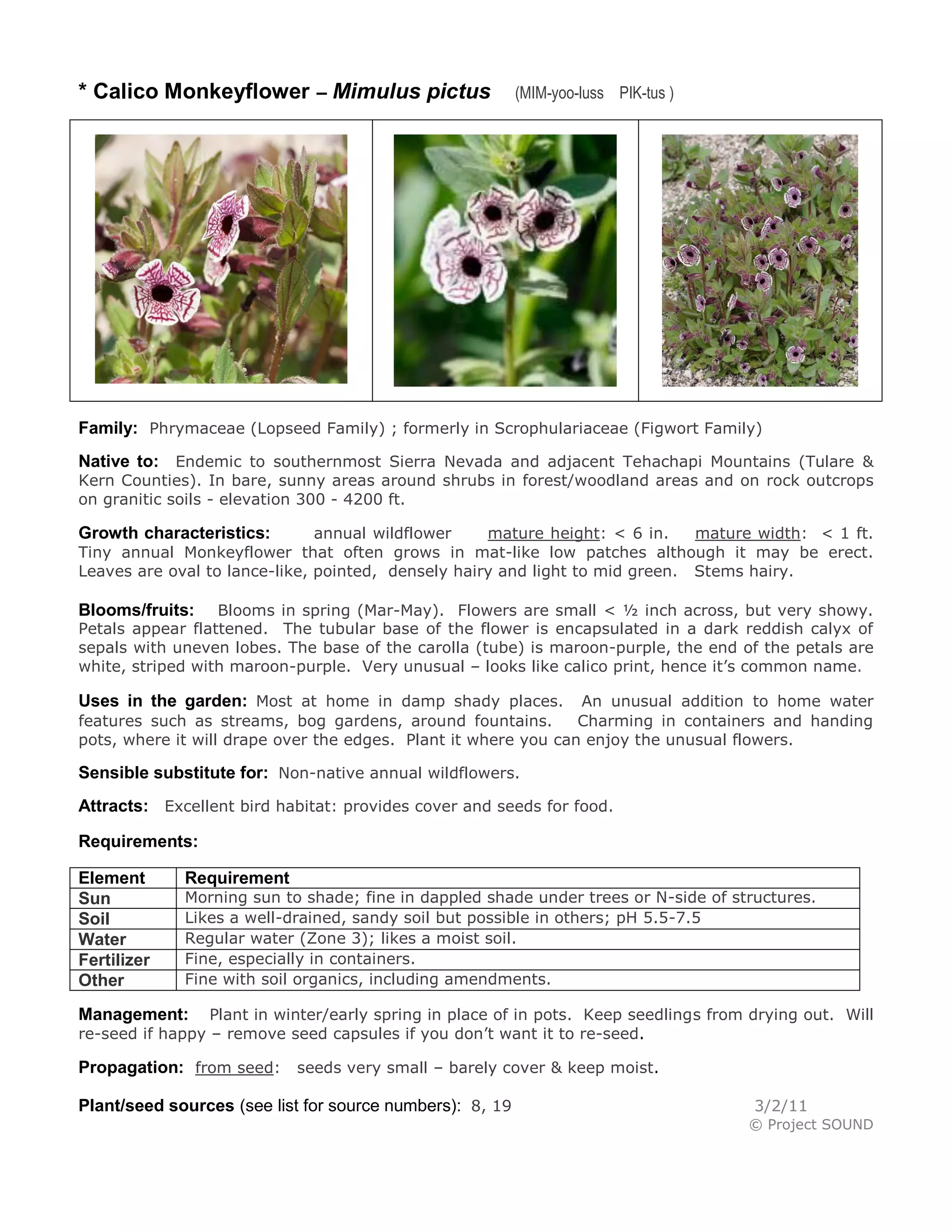
Tiny annual Monkeyflower that often grows in mat-like low patches although it may be erect.
Leaves are oval to lance-like, pointed, densely hairy and light to mid green. Stems hairy.

Growth characteristics:

Blooms in spring (Mar-May). Flowers are small < ½ inch across, but very showy.
Petals appear flattened. The tubular base of the flower is encapsulated in a dark reddish calyx of
sepals with uneven lobes. The base of the carolla (tube) is maroon-purple, the end of the petals are
white, striped with maroon-purple. Very unusual – looks like calico print, hence it’s common name.

Blooms/fruits:

Uses in the garden: Most at home in damp shady places.

An unusual addition to home water
features such as streams, bog gardens, around fountains.
Charming in containers and handing
pots, where it will drape over the edges. Plant it where you can enjoy the unusual flowers.

Sensible substitute for: Non-native annual wildflowers.
Attracts: Excellent bird habitat: provides cover and seeds for food.
Requirements:
Element
Sun
Soil
Water
Fertilizer
Other

Requirement

Morning sun to shade; fine in dappled shade under trees or N-side of structures.
Likes a well-drained, sandy soil but possible in others; pH 5.5-7.5
Regular water (Zone 3); likes a moist soil.
Fine, especially in containers.
Fine with soil organics, including amendments.

Plant in winter/early spring in place of in pots. Keep seedlings from drying out. Will
re-seed if happy – remove seed capsules if you don’t want it to re-seed.

Management:

Propagation: from seed: seeds very small – barely cover & keep moist.
Plant/seed sources (see list for source numbers): 8, 19

3/2/11
© Project SOUND

Mimulus pictus

  • 1.
    * Calico Monkeyflower– Mimulus pictus (MIM-yoo-luss PIK-tus ) Family: Phrymaceae (Lopseed Family) ; formerly in Scrophulariaceae (Figwort Family) Native to: Endemic to southernmost Sierra Nevada and adjacent Tehachapi Mountains (Tulare & Kern Counties). In bare, sunny areas around shrubs in forest/woodland areas and on rock outcrops on granitic soils - elevation 300 - 4200 ft. annual wildflower mature height: < 6 in. mature width: < 1 ft. Tiny annual Monkeyflower that often grows in mat-like low patches although it may be erect. Leaves are oval to lance-like, pointed, densely hairy and light to mid green. Stems hairy. Growth characteristics: Blooms in spring (Mar-May). Flowers are small < ½ inch across, but very showy. Petals appear flattened. The tubular base of the flower is encapsulated in a dark reddish calyx of sepals with uneven lobes. The base of the carolla (tube) is maroon-purple, the end of the petals are white, striped with maroon-purple. Very unusual – looks like calico print, hence it’s common name. Blooms/fruits: Uses in the garden: Most at home in damp shady places. An unusual addition to home water features such as streams, bog gardens, around fountains. Charming in containers and handing pots, where it will drape over the edges. Plant it where you can enjoy the unusual flowers. Sensible substitute for: Non-native annual wildflowers. Attracts: Excellent bird habitat: provides cover and seeds for food. Requirements: Element Sun Soil Water Fertilizer Other Requirement Morning sun to shade; fine in dappled shade under trees or N-side of structures. Likes a well-drained, sandy soil but possible in others; pH 5.5-7.5 Regular water (Zone 3); likes a moist soil. Fine, especially in containers. Fine with soil organics, including amendments. Plant in winter/early spring in place of in pots. Keep seedlings from drying out. Will re-seed if happy – remove seed capsules if you don’t want it to re-seed. Management: Propagation: from seed: seeds very small – barely cover & keep moist. Plant/seed sources (see list for source numbers): 8, 19 3/2/11 © Project SOUND