Holly-leaf/Catalina Cherry – Prunus ilicifolia ssp. ilicifolia & lyonii
(PROO-nus ill-is-i-FO-lee-a ly-OWN-ee-eye)

Family: Rosaceae (Rose Family)
Native to: Central CA coast to Baja (ssp. lyonii on Channel Islands only); along streams (riparian
vegetatin), canyons & north-facing slopes, oak woodland, chaparral, and coastal scrub communities.

Growth characteristics: Woody shrub/tree

mature height: 10-25 ft. mature width: 10-20 ft.
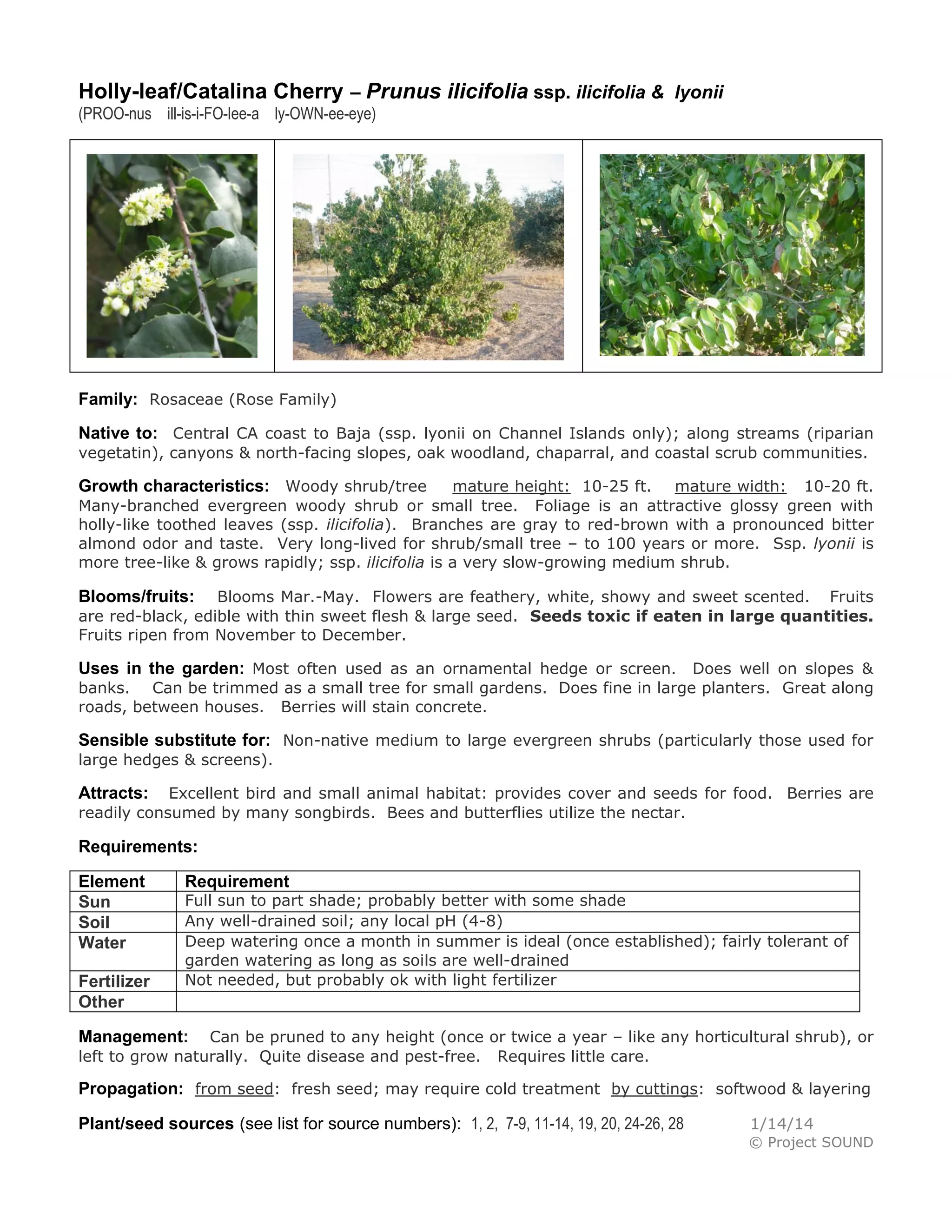
Many-branched evergreen woody shrub or small tree. Foliage is an attractive glossy green with
holly-like toothed leaves (ssp. ilicifolia). Branches are gray to red-brown with a pronounced bitter
almond odor and taste. Very long-lived for shrub/small tree – to 100 years or more. Ssp. lyonii is
more tree-like & grows rapidly; ssp. ilicifolia is a very slow-growing medium shrub.
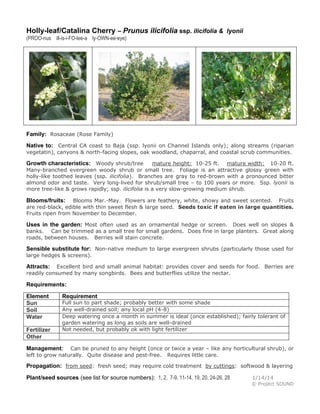
Blooms Mar.-May. Flowers are feathery, white, showy and sweet scented. Fruits
are red-black, edible with thin sweet flesh & large seed. Seeds toxic if eaten in large quantities.
Fruits ripen from November to December.

Blooms/fruits:

Uses in the garden: Most often used as an ornamental hedge or screen. Does well on slopes &
banks. Can be trimmed as a small tree for small gardens. Does fine in large planters. Great along
roads, between houses. Berries will stain concrete.

Sensible substitute for: Non-native medium to large evergreen shrubs (particularly those used for
large hedges & screens).
Excellent bird and small animal habitat: provides cover and seeds for food. Berries are
readily consumed by many songbirds. Bees and butterflies utilize the nectar.

Attracts:

Requirements:
Element
Sun
Soil
Water
Fertilizer
Other

Requirement

Full sun to part shade; probably better with some shade
Any well-drained soil; any local pH (4-8)
Deep watering once a month in summer is ideal (once established); fairly tolerant of
garden watering as long as soils are well-drained
Not needed, but probably ok with light fertilizer

Can be pruned to any height (once or twice a year – like any horticultural shrub), or
left to grow naturally. Quite disease and pest-free. Requires little care.

Management:

Propagation: from seed: fresh seed; may require cold treatment by cuttings: softwood & layering
Plant/seed sources (see list for source numbers): 1, 2, 7-9, 11-14, 19, 20, 24-26, 28

1/14/14
© Project SOUND

Gardening sheet prunus ilicifolia

  • 1.
    Holly-leaf/Catalina Cherry –Prunus ilicifolia ssp. ilicifolia & lyonii (PROO-nus ill-is-i-FO-lee-a ly-OWN-ee-eye) Family: Rosaceae (Rose Family) Native to: Central CA coast to Baja (ssp. lyonii on Channel Islands only); along streams (riparian vegetatin), canyons & north-facing slopes, oak woodland, chaparral, and coastal scrub communities. Growth characteristics: Woody shrub/tree mature height: 10-25 ft. mature width: 10-20 ft. Many-branched evergreen woody shrub or small tree. Foliage is an attractive glossy green with holly-like toothed leaves (ssp. ilicifolia). Branches are gray to red-brown with a pronounced bitter almond odor and taste. Very long-lived for shrub/small tree – to 100 years or more. Ssp. lyonii is more tree-like & grows rapidly; ssp. ilicifolia is a very slow-growing medium shrub. Blooms Mar.-May. Flowers are feathery, white, showy and sweet scented. Fruits are red-black, edible with thin sweet flesh & large seed. Seeds toxic if eaten in large quantities. Fruits ripen from November to December. Blooms/fruits: Uses in the garden: Most often used as an ornamental hedge or screen. Does well on slopes & banks. Can be trimmed as a small tree for small gardens. Does fine in large planters. Great along roads, between houses. Berries will stain concrete. Sensible substitute for: Non-native medium to large evergreen shrubs (particularly those used for large hedges & screens). Excellent bird and small animal habitat: provides cover and seeds for food. Berries are readily consumed by many songbirds. Bees and butterflies utilize the nectar. Attracts: Requirements: Element Sun Soil Water Fertilizer Other Requirement Full sun to part shade; probably better with some shade Any well-drained soil; any local pH (4-8) Deep watering once a month in summer is ideal (once established); fairly tolerant of garden watering as long as soils are well-drained Not needed, but probably ok with light fertilizer Can be pruned to any height (once or twice a year – like any horticultural shrub), or left to grow naturally. Quite disease and pest-free. Requires little care. Management: Propagation: from seed: fresh seed; may require cold treatment by cuttings: softwood & layering Plant/seed sources (see list for source numbers): 1, 2, 7-9, 11-14, 19, 20, 24-26, 28 1/14/14 © Project SOUND