* Arroyo de la Cruz Manzanita – Arctostaphylos cruzensis
(ark-toh-STAF-ih-los cruz-EN-sis )

Family: Ericaceae (Heath Family)
Native to: Endemic to N. CA coast from San Luis Obispo county to Monterey county; on sandy bluffs
below 450' in N. maritime chaparral, coastal scrub, conifer forest, and valley-foothill grassland. Rare.

woody groundcover
mature height: 2-3 ft. mature width: 5-8+ ft.
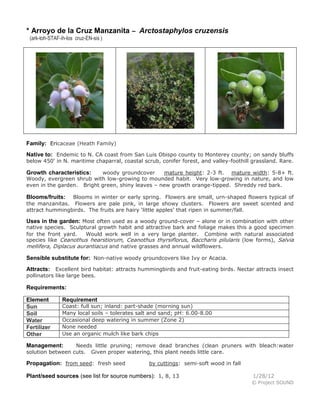
Woody, evergreen shrub with low-growing to mounded habit. Very low-growing in nature, and low
even in the garden. Bright green, shiny leaves – new growth orange-tipped. Shreddy red bark.

Growth characteristics:

Blooms in winter or early spring. Flowers are small, urn-shaped flowers typical of
the manzanitas. Flowers are pale pink, in large showy clusters. Flowers are sweet scented and
attract hummingbirds. The fruits are hairy ‘little apples’ that ripen in summer/fall.

Blooms/fruits:

Uses in the garden: Most often used as a woody ground-cover – alone or in combination with other
native species. Sculptural growth habit and attractive bark and foliage makes this a good specimen
for the front yard.
Would work well in a very large planter. Combine with natural associated
species like Ceanothus hearstiorum, Ceanothus thyrsiflorus, Baccharis pilularis (low forms), Salvia
mellifera, Diplacus aurantiacus and native grasses and annual wildflowers.

Sensible substitute for: Non-native woody groundcovers like Ivy or Acacia.
Attracts: Excellent bird habitat: attracts hummingbirds and fruit-eating birds. Nectar attracts insect
pollinators like large bees.

Requirements:
Element
Sun
Soil
Water
Fertilizer
Other

Requirement

Coast: full sun; inland: part-shade (morning sun)
Many local soils – tolerates salt and sand; pH: 6.00-8.00
Occasional deep watering in summer (Zone 2)
None needed
Use an organic mulch like bark chips

Needs little pruning; remove dead branches (clean pruners with bleach:water
solution between cuts. Given proper watering, this plant needs little care.

Management:

Propagation: from seed: fresh seed

by cuttings: semi-soft wood in fall

Plant/seed sources (see list for source numbers): 1, 8, 13

1/28/12
© Project SOUND

Arctostaphylos cruzensis

  • 1.
    * Arroyo dela Cruz Manzanita – Arctostaphylos cruzensis (ark-toh-STAF-ih-los cruz-EN-sis ) Family: Ericaceae (Heath Family) Native to: Endemic to N. CA coast from San Luis Obispo county to Monterey county; on sandy bluffs below 450' in N. maritime chaparral, coastal scrub, conifer forest, and valley-foothill grassland. Rare. woody groundcover mature height: 2-3 ft. mature width: 5-8+ ft. Woody, evergreen shrub with low-growing to mounded habit. Very low-growing in nature, and low even in the garden. Bright green, shiny leaves – new growth orange-tipped. Shreddy red bark. Growth characteristics: Blooms in winter or early spring. Flowers are small, urn-shaped flowers typical of the manzanitas. Flowers are pale pink, in large showy clusters. Flowers are sweet scented and attract hummingbirds. The fruits are hairy ‘little apples’ that ripen in summer/fall. Blooms/fruits: Uses in the garden: Most often used as a woody ground-cover – alone or in combination with other native species. Sculptural growth habit and attractive bark and foliage makes this a good specimen for the front yard. Would work well in a very large planter. Combine with natural associated species like Ceanothus hearstiorum, Ceanothus thyrsiflorus, Baccharis pilularis (low forms), Salvia mellifera, Diplacus aurantiacus and native grasses and annual wildflowers. Sensible substitute for: Non-native woody groundcovers like Ivy or Acacia. Attracts: Excellent bird habitat: attracts hummingbirds and fruit-eating birds. Nectar attracts insect pollinators like large bees. Requirements: Element Sun Soil Water Fertilizer Other Requirement Coast: full sun; inland: part-shade (morning sun) Many local soils – tolerates salt and sand; pH: 6.00-8.00 Occasional deep watering in summer (Zone 2) None needed Use an organic mulch like bark chips Needs little pruning; remove dead branches (clean pruners with bleach:water solution between cuts. Given proper watering, this plant needs little care. Management: Propagation: from seed: fresh seed by cuttings: semi-soft wood in fall Plant/seed sources (see list for source numbers): 1, 8, 13 1/28/12 © Project SOUND