* Whiteleaf / Common Manzanita – Arctostaphylos manzanita
(ark-toh-STAF-ih-los man-za-NEE-tuh)

Family: Ericaceae (Heath Family)
Native to:

Foothills of the Sierra Nevada and the northern Coast Ranges; on dry, well-drained,

sunny sites in Ponderosa shrub forest, mixed evergreen forest, northern oak woodland, Chaparral.
woody shrub/tree mature height: 10-20 ft. mature width: 10-15 ft.
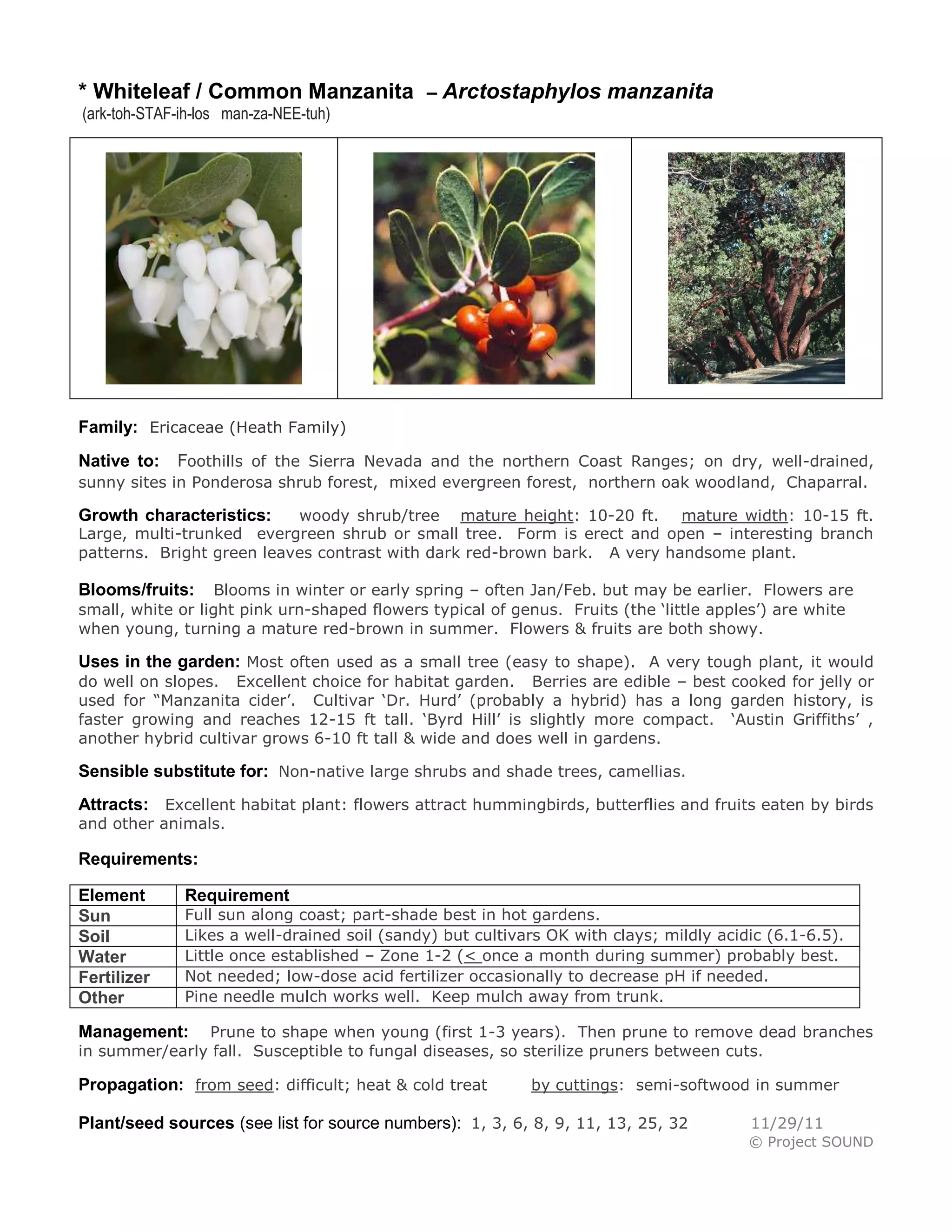
Large, multi-trunked evergreen shrub or small tree. Form is erect and open – interesting branch
patterns. Bright green leaves contrast with dark red-brown bark. A very handsome plant.

Growth characteristics:

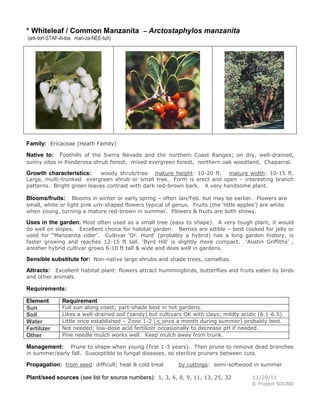
Blooms in winter or early spring – often Jan/Feb. but may be earlier. Flowers are
small, white or light pink urn-shaped flowers typical of genus. Fruits (the ‘little apples’) are white
when young, turning a mature red-brown in summer. Flowers & fruits are both showy.

Blooms/fruits:

Uses in the garden: Most often used as a small tree (easy to shape). A very tough plant, it would
do well on slopes. Excellent choice for habitat garden. Berries are edible – best cooked for jelly or
used for “Manzanita cider’. Cultivar ‘Dr. Hurd’ (probably a hybrid) has a long garden history, is
faster growing and reaches 12-15 ft tall. ‘Byrd Hill’ is slightly more compact. ‘Austin Griffiths’ ,
another hybrid cultivar grows 6-10 ft tall & wide and does well in gardens.

Sensible substitute for: Non-native large shrubs and shade trees, camellias.
Attracts: Excellent habitat plant: flowers attract hummingbirds, butterflies and fruits eaten by birds
and other animals.

Requirements:
Element
Sun
Soil
Water
Fertilizer
Other

Requirement

Full sun along coast; part-shade best in hot gardens.
Likes a well-drained soil (sandy) but cultivars OK with clays; mildly acidic (6.1-6.5).
Little once established – Zone 1-2 (< once a month during summer) probably best.
Not needed; low-dose acid fertilizer occasionally to decrease pH if needed.
Pine needle mulch works well. Keep mulch away from trunk.

Prune to shape when young (first 1-3 years). Then prune to remove dead branches
in summer/early fall. Susceptible to fungal diseases, so sterilize pruners between cuts.

Management:

Propagation: from seed: difficult; heat & cold treat

by cuttings: semi-softwood in summer

Plant/seed sources (see list for source numbers): 1, 3, 6, 8, 9, 11, 13, 25, 32

11/29/11
© Project SOUND

Arctostaphylos manzanita

  • 1.
    * Whiteleaf /Common Manzanita – Arctostaphylos manzanita (ark-toh-STAF-ih-los man-za-NEE-tuh) Family: Ericaceae (Heath Family) Native to: Foothills of the Sierra Nevada and the northern Coast Ranges; on dry, well-drained, sunny sites in Ponderosa shrub forest, mixed evergreen forest, northern oak woodland, Chaparral. woody shrub/tree mature height: 10-20 ft. mature width: 10-15 ft. Large, multi-trunked evergreen shrub or small tree. Form is erect and open – interesting branch patterns. Bright green leaves contrast with dark red-brown bark. A very handsome plant. Growth characteristics: Blooms in winter or early spring – often Jan/Feb. but may be earlier. Flowers are small, white or light pink urn-shaped flowers typical of genus. Fruits (the ‘little apples’) are white when young, turning a mature red-brown in summer. Flowers & fruits are both showy. Blooms/fruits: Uses in the garden: Most often used as a small tree (easy to shape). A very tough plant, it would do well on slopes. Excellent choice for habitat garden. Berries are edible – best cooked for jelly or used for “Manzanita cider’. Cultivar ‘Dr. Hurd’ (probably a hybrid) has a long garden history, is faster growing and reaches 12-15 ft tall. ‘Byrd Hill’ is slightly more compact. ‘Austin Griffiths’ , another hybrid cultivar grows 6-10 ft tall & wide and does well in gardens. Sensible substitute for: Non-native large shrubs and shade trees, camellias. Attracts: Excellent habitat plant: flowers attract hummingbirds, butterflies and fruits eaten by birds and other animals. Requirements: Element Sun Soil Water Fertilizer Other Requirement Full sun along coast; part-shade best in hot gardens. Likes a well-drained soil (sandy) but cultivars OK with clays; mildly acidic (6.1-6.5). Little once established – Zone 1-2 (< once a month during summer) probably best. Not needed; low-dose acid fertilizer occasionally to decrease pH if needed. Pine needle mulch works well. Keep mulch away from trunk. Prune to shape when young (first 1-3 years). Then prune to remove dead branches in summer/early fall. Susceptible to fungal diseases, so sterilize pruners between cuts. Management: Propagation: from seed: difficult; heat & cold treat by cuttings: semi-softwood in summer Plant/seed sources (see list for source numbers): 1, 3, 6, 8, 9, 11, 13, 25, 32 11/29/11 © Project SOUND