ARC PHENOMENON IN CIRCUIT BREAKERS
EEE 427 – Power System Protection
1
Susmita Debnath
ID: 183001028
Jannatul Ferdous
ID: 183001013
Ashikul Rahman Shipon
ID: 183001068
Mutasim Billah Tahsiin
ID: 183001053
Yamin
ID: 183001027
Badhon Kumar Biswas
ID: 183001005
Meet Our Team
2
CONTENT
 Circuit Breaker
 Circuit Breaker Operating Principle
 Arc Phenomenon
 Arcing Period
 The Arc Resistance
 Principles of Arc Extinction
 Methods of Arc Extinction
 Conclusion
3
Circuit Breaker
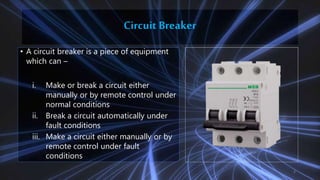
• A circuit breaker is a piece of equipment
which can –
i. Make or break a circuit either
manually or by remote control under
normal conditions
ii. Break a circuit automatically under
fault conditions
iii. Make a circuit either manually or by
remote control under fault
conditions
4
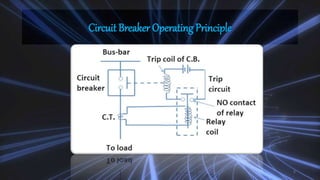
Circuit Breaker Operating Principle
5
Arc Phenomenon
6
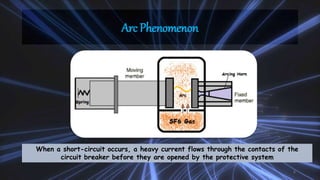
When a short-circuit occurs, a heavy current flows through the contacts of the
circuit breaker before they are opened by the protective system
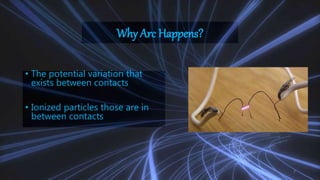
Why Arc Happens?
• The potential variation that
exists between contacts
• Ionized particles those are in
between contacts
7
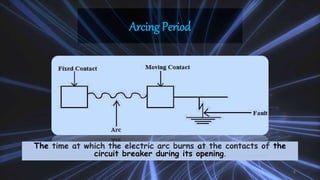
Arcing Period
The time at which the electric arc burns at the contacts of the
circuit breaker during its opening.
8
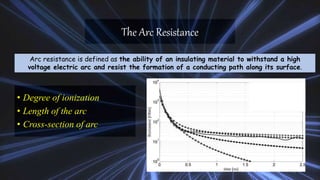
The Arc Resistance
• Degree of ionization
• Length of the arc
• Cross-section of arc
9
Arc resistance is defined as the ability of an insulating material to withstand a high
voltage electric arc and resist the formation of a conducting path along its surface.
Principles of Arc Extinction
i. Potential difference between the contacts
ii. Ionized particles between contacts
(i) When the contacts have a small separation, the potential difference.
between them is sufficient to maintain the arc. One way to extinguish the arc is to
separate the contacts to such a distance that p.m. becomes inadequate to maintain the
arc. However, this method is impracticable in high voltage system where a separation
of many meters may be required.
(ii) The ionized particles between the contacts tend to maintain the arc. If the
arc path is deionized, the arc extinction will be facilitated. This may be achieved by
cooling the arc or by bodily removing the ionized particles from the space between the
contacts.
10
11
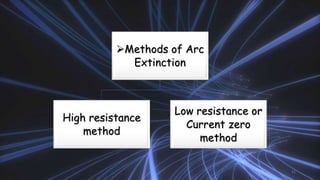
Methods of Arc
Extinction
High resistance
method
Low resistance or
Current zero
method
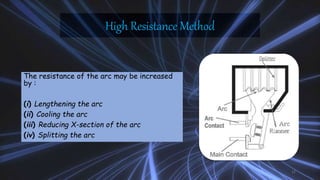
High Resistance Method
The resistance of the arc may be increased
by :
(i) Lengthening the arc
(ii) Cooling the arc
(iii) Reducing X-section of the arc
(iv) Splitting the arc
12
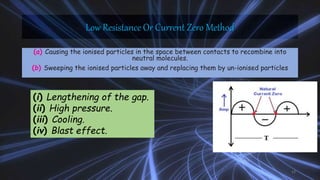
Low Resistance Or Current Zero Method
(a) Causing the ionised particles in the space between contacts to recombine into
neutral molecules.
(b) Sweeping the ionised particles away and replacing them by un-ionised particles
13
(i) Lengthening of the gap.
(ii) High pressure.
(iii) Cooling.
(iv) Blast effect.
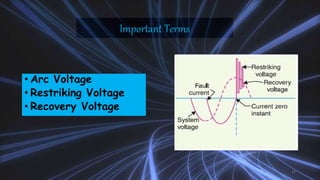
Important Terms
• Arc Voltage
• Restriking Voltage
• Recovery Voltage
14
15

ARC PHENOMENON (Power Protection System).pptx

  • 1.
    ARC PHENOMENON INCIRCUIT BREAKERS EEE 427 – Power System Protection 1
  • 2.
    Susmita Debnath ID: 183001028 JannatulFerdous ID: 183001013 Ashikul Rahman Shipon ID: 183001068 Mutasim Billah Tahsiin ID: 183001053 Yamin ID: 183001027 Badhon Kumar Biswas ID: 183001005 Meet Our Team 2
  • 3.
    CONTENT  Circuit Breaker Circuit Breaker Operating Principle  Arc Phenomenon  Arcing Period  The Arc Resistance  Principles of Arc Extinction  Methods of Arc Extinction  Conclusion 3
  • 4.
    Circuit Breaker • Acircuit breaker is a piece of equipment which can – i. Make or break a circuit either manually or by remote control under normal conditions ii. Break a circuit automatically under fault conditions iii. Make a circuit either manually or by remote control under fault conditions 4
  • 5.
  • 6.
    Arc Phenomenon 6 When ashort-circuit occurs, a heavy current flows through the contacts of the circuit breaker before they are opened by the protective system
  • 7.
    Why Arc Happens? •The potential variation that exists between contacts • Ionized particles those are in between contacts 7
  • 8.
    Arcing Period The timeat which the electric arc burns at the contacts of the circuit breaker during its opening. 8
  • 9.
    The Arc Resistance •Degree of ionization • Length of the arc • Cross-section of arc 9 Arc resistance is defined as the ability of an insulating material to withstand a high voltage electric arc and resist the formation of a conducting path along its surface.
  • 10.
    Principles of ArcExtinction i. Potential difference between the contacts ii. Ionized particles between contacts (i) When the contacts have a small separation, the potential difference. between them is sufficient to maintain the arc. One way to extinguish the arc is to separate the contacts to such a distance that p.m. becomes inadequate to maintain the arc. However, this method is impracticable in high voltage system where a separation of many meters may be required. (ii) The ionized particles between the contacts tend to maintain the arc. If the arc path is deionized, the arc extinction will be facilitated. This may be achieved by cooling the arc or by bodily removing the ionized particles from the space between the contacts. 10
  • 11.
    11 Methods of Arc Extinction Highresistance method Low resistance or Current zero method
  • 12.
    High Resistance Method Theresistance of the arc may be increased by : (i) Lengthening the arc (ii) Cooling the arc (iii) Reducing X-section of the arc (iv) Splitting the arc 12
  • 13.
    Low Resistance OrCurrent Zero Method (a) Causing the ionised particles in the space between contacts to recombine into neutral molecules. (b) Sweeping the ionised particles away and replacing them by un-ionised particles 13 (i) Lengthening of the gap. (ii) High pressure. (iii) Cooling. (iv) Blast effect.
  • 14.
    Important Terms • ArcVoltage • Restriking Voltage • Recovery Voltage 14
  • 15.