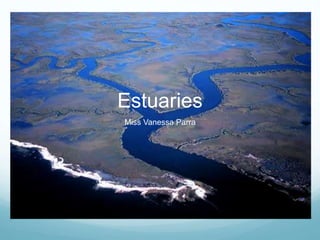
Estuaries 
Miss Vanessa Parra
What are estuaries? 
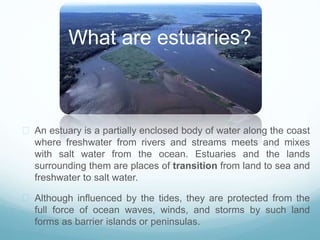
 An estuary is a partially enclosed body of water along the coast 
where freshwater from rivers and streams meets and mixes 
with salt water from the ocean. Estuaries and the lands 
surrounding them are places of transition from land to sea and 
freshwater to salt water. 
 Although influenced by the tides, they are protected from the 
full force of ocean waves, winds, and storms by such land 
forms as barrier islands or peninsulas.
Productivity 
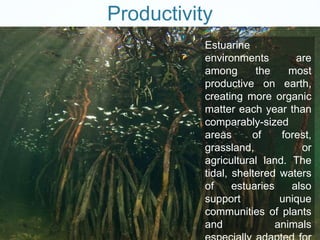
Estuarine 
environments are 
among the most 
productive on earth, 
creating more organic 
matter each year than 
comparably-sized 
areas of forest, 
grassland, or 
agricultural land. The 
tidal, sheltered waters 
of estuaries also 
support unique 
communities of plants 
and animals 
especially adapted for
What are they like? 
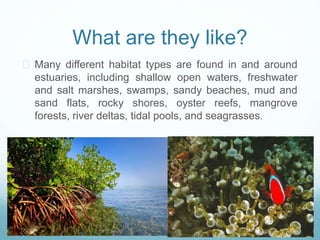
 Many different habitat types are found in and around 
estuaries, including shallow open waters, freshwater 
and salt marshes, swamps, sandy beaches, mud and 
sand flats, rocky shores, oyster reefs, mangrove 
forests, river deltas, tidal pools, and seagrasses.
Types 
 Estuaries are divided into four types, depending on 
how they are formed: 
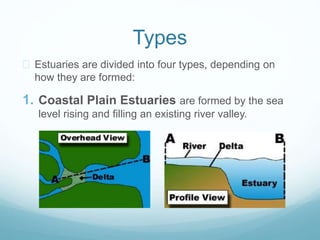
1. Coastal Plain Estuaries are formed by the sea 
level rising and filling an existing river valley.
Types 
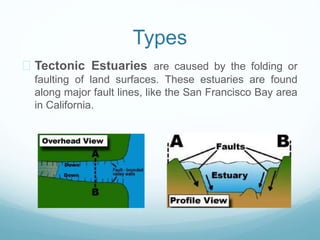
 Tectonic Estuaries are caused by the folding or 
faulting of land surfaces. These estuaries are found 
along major fault lines, like the San Francisco Bay area 
in California.
Types 
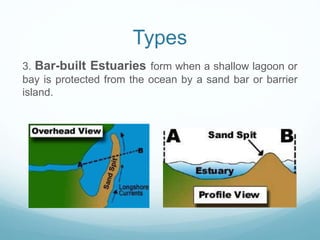
3. Bar-built Estuaries form when a shallow lagoon or 
bay is protected from the ocean by a sand bar or barrier 
island.
Types 
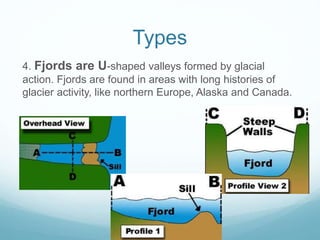
4. Fjords are U-shaped valleys formed by glacial 
action. Fjords are found in areas with long histories of 
glacier activity, like northern Europe, Alaska and Canada.
Biological importance 
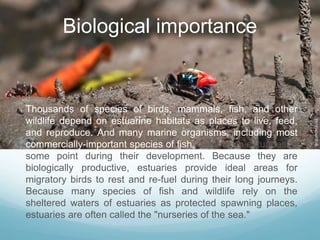
 Thousands of species of birds, mammals, fish, and other 
wildlife depend on estuarine habitats as places to live, feed, 
and reproduce. And many marine organisms, including most 
commercially-important species of fish, depend on estuaries at 
some point during their development. Because they are 
biologically productive, estuaries provide ideal areas for 
migratory birds to rest and re-fuel during their long journeys. 
Because many species of fish and wildlife rely on the 
sheltered waters of estuaries as protected spawning places, 
estuaries are often called the "nurseries of the sea."
Economical Importance 
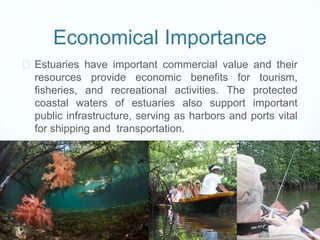
 Estuaries have important commercial value and their 
resources provide economic benefits for tourism, 
fisheries, and recreational activities. The protected 
coastal waters of estuaries also support important 
public infrastructure, serving as harbors and ports vital 
for shipping and transportation.
Other functions 
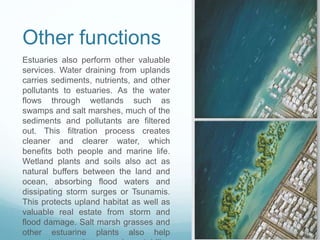
Estuaries also perform other valuable 
services. Water draining from uplands 
carries sediments, nutrients, and other 
pollutants to estuaries. As the water 
flows through wetlands such as 
swamps and salt marshes, much of the 
sediments and pollutants are filtered 
out. This filtration process creates 
cleaner and clearer water, which 
benefits both people and marine life. 
Wetland plants and soils also act as 
natural buffers between the land and 
ocean, absorbing flood waters and 
dissipating storm surges or Tsunamis. 
This protects upland habitat as well as 
valuable real estate from storm and 
flood damage. Salt marsh grasses and 
other estuarine plants also help 
prevent erosion and stabilize
Impacts 
 Coastal counties are growing three times faster than counties 
elsewhere in the nation. Unfortunately, this increasing 
concentration of people upsets the natural balance of estuarine 
ecosystems, threatens their integrity, and imposes increased 
pressures on vital natural resources like estuaries. What happens 
on the land affects the quality of the water and health of the 
organisms that live in an estuary. For example, if a river or stream 
flows through an agricultural area, it picks up fertilizer, manure, 
and pesticides from farming operations that run off the land after a 
rainstorm. As it passes urbanized and suburbanized areas, it 
gathers fertilizers or pet waste that wash off lawns, untreated 
sewage from failing septic tanks, wastewater discharges from 
industrial facilities, sediment from construction sites, and runoff 
from impervious surfaces like parking lots.
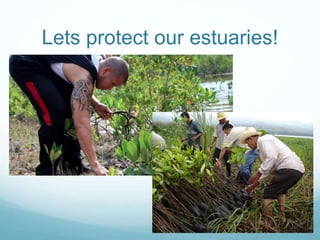
Lets protect our estuaries!
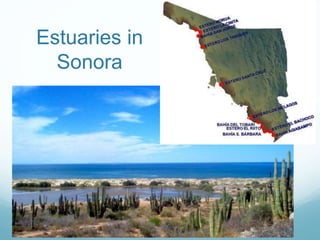
Estuaries in 
Sonora
References 
 Office of Naval Research, “ Habitats: Estuaries – 
Characteristics”. Taken 
from:http://www.onr.navy.mil/focus/ocean/habitats/estua 
ries1.htm 
 United States Environmental Protection Agency, “ 
Water: Estuaries and Costal Watersheds”. Taken 
from: http://water.epa.gov/type/oceb/nep/about.cfm

Estuaries

  • 1.
  • 2.
    What are estuaries?  An estuary is a partially enclosed body of water along the coast where freshwater from rivers and streams meets and mixes with salt water from the ocean. Estuaries and the lands surrounding them are places of transition from land to sea and freshwater to salt water.  Although influenced by the tides, they are protected from the full force of ocean waves, winds, and storms by such land forms as barrier islands or peninsulas.
  • 3.
    Productivity Estuarine environmentsare among the most productive on earth, creating more organic matter each year than comparably-sized areas of forest, grassland, or agricultural land. The tidal, sheltered waters of estuaries also support unique communities of plants and animals especially adapted for
  • 4.
    What are theylike?  Many different habitat types are found in and around estuaries, including shallow open waters, freshwater and salt marshes, swamps, sandy beaches, mud and sand flats, rocky shores, oyster reefs, mangrove forests, river deltas, tidal pools, and seagrasses.
  • 5.
    Types  Estuariesare divided into four types, depending on how they are formed: 1. Coastal Plain Estuaries are formed by the sea level rising and filling an existing river valley.
  • 6.
    Types  TectonicEstuaries are caused by the folding or faulting of land surfaces. These estuaries are found along major fault lines, like the San Francisco Bay area in California.
  • 7.
    Types 3. Bar-builtEstuaries form when a shallow lagoon or bay is protected from the ocean by a sand bar or barrier island.
  • 8.
    Types 4. Fjordsare U-shaped valleys formed by glacial action. Fjords are found in areas with long histories of glacier activity, like northern Europe, Alaska and Canada.
  • 9.
    Biological importance Thousands of species of birds, mammals, fish, and other wildlife depend on estuarine habitats as places to live, feed, and reproduce. And many marine organisms, including most commercially-important species of fish, depend on estuaries at some point during their development. Because they are biologically productive, estuaries provide ideal areas for migratory birds to rest and re-fuel during their long journeys. Because many species of fish and wildlife rely on the sheltered waters of estuaries as protected spawning places, estuaries are often called the "nurseries of the sea."
  • 10.
    Economical Importance Estuaries have important commercial value and their resources provide economic benefits for tourism, fisheries, and recreational activities. The protected coastal waters of estuaries also support important public infrastructure, serving as harbors and ports vital for shipping and transportation.
  • 11.
    Other functions Estuariesalso perform other valuable services. Water draining from uplands carries sediments, nutrients, and other pollutants to estuaries. As the water flows through wetlands such as swamps and salt marshes, much of the sediments and pollutants are filtered out. This filtration process creates cleaner and clearer water, which benefits both people and marine life. Wetland plants and soils also act as natural buffers between the land and ocean, absorbing flood waters and dissipating storm surges or Tsunamis. This protects upland habitat as well as valuable real estate from storm and flood damage. Salt marsh grasses and other estuarine plants also help prevent erosion and stabilize
  • 12.
    Impacts  Coastalcounties are growing three times faster than counties elsewhere in the nation. Unfortunately, this increasing concentration of people upsets the natural balance of estuarine ecosystems, threatens their integrity, and imposes increased pressures on vital natural resources like estuaries. What happens on the land affects the quality of the water and health of the organisms that live in an estuary. For example, if a river or stream flows through an agricultural area, it picks up fertilizer, manure, and pesticides from farming operations that run off the land after a rainstorm. As it passes urbanized and suburbanized areas, it gathers fertilizers or pet waste that wash off lawns, untreated sewage from failing septic tanks, wastewater discharges from industrial facilities, sediment from construction sites, and runoff from impervious surfaces like parking lots.
  • 13.
    Lets protect ourestuaries!
  • 16.
  • 17.
    References  Officeof Naval Research, “ Habitats: Estuaries – Characteristics”. Taken from:http://www.onr.navy.mil/focus/ocean/habitats/estua ries1.htm  United States Environmental Protection Agency, “ Water: Estuaries and Costal Watersheds”. Taken from: http://water.epa.gov/type/oceb/nep/about.cfm