Ashuganj Power Station
Company Ltd (APSCL).
 Romel Barua,
 Sujoy Dutta,
 Mir Md. Anisuzzaman,
 Asif Rahman Mithun,
 Jubaraj Baidya,
 Jungko Moni Chakma,
Department of Mechanical Engineering
Dhaka University of Engineering &Technology, Gazipur -1700
 Name of the Plant : Ashuganj Power Station
Company Ltd.
 Established : 1966
 Location : Ashuganj, B-Baria.
 Business : Power Generation.
 No. of Generating Units : 9
 5 Steam turbine
 2 Gas Turbine & 1 Steam turbine
 1 Gas Engine
 Manufacturer : Brown Brovary & GEC
England.
 Type of Fuel : Natural Gas
 Area of Plant : 263.55 acres
 Two Steam Units : 64 MW Each
 Three Steam Units : 150 MW Each
 Gas Turbine : 56 MW Each
 One Steam Turbine : 34 MW
 Gas Engine Power Plant : 50 MW
 Installed Capacity : 777 MW
 Present De-rated Capacity : 731 MW
 To know about APSCL
 To gather practical knowledge and experience.
 To know implementation of theoretical study in
real world.
 To know about various kinds of power
generation system
 To know about water treatment plant.
 Steam Turbine Power Plant
 Gas Turbine Power Plant
 Combined Cycle Power Plant
TURBINE
SECTION
WATER
TREATMENT
PLANT
BOILER
SECTION
GENERATOR
SECTION
Raw
water
pump
River
water
Sedimentation
Basin
70% Pure
water
Intermediate
Basin
Clear water
pump
Drinking
Water
Bleaching
Gravel
filter
Overhead
Tank
Filter
water
pump
Scavenger
Filter
Cat-ion
Exchanger
Anion
ExchangerMixed BedDemineralized
Water
Feed
Water
tank
Sludge
pump
River
Condenser
Demineralization Plant
 Sedimentation basin: This basin included aluminum
sulphate with polyelectrolyte which is used to remove
clay from water.
 Intermediate basin: store clear water
 Gravel filter: This filter included col, sand, and stone.
Which remove the insoluble particle.
 Cat-ion exchanger: Remove metallic substances.
 Overhead tank: It store filtered water.
 Scavenger filter: Remove the organic substance.
 Anion exchanger: Remove the non- metallic substances.
 Mixed bed: It helps to remove both metallic and non-
metallic substances if Cat-ion and Anion exchanger fail
to remove those.
 Demineralized water tank: Which help to storage the
demineralized water and then through the water into the
feed water tank or condenser.
 Safety Valve
 Water Level Indicator
 Fusible Plug
 Blow Down Valve
 Main Steam Stop Valve
 Feed Check Valve
 Pressure Gauge
 Safety Valve
It’s acting as a guard of boiler
resist high pressure of steam
inside the drum.
 Water Level Indicator
It indicate the water level
inside the boiler vessel.
It shows the level in the
boiler drum.
 Boiler fusible plug
It is used to protect the boiler
against damage due to
overheating caused by low
water level in the boiler.
 Blow Down Valve
To discharge the mud and
other sediments deposit
in the boiler.
 Steam Stop Valve
It regulate the flow of steam
from boiler to the steam pipe
or from one steam pipe to the
other.
 Feed Check Valve
It controls the supply of water
from the boiler when the feed
pump pressure is less than
boiler pressure or pump is
stopped.
 Pressure Gauge
It indicates the pressure
of steam in boiler.
 Feed Pump
 Economizer
 Air Preheater
 Super Heater
 Feed Pump
The feed pump is a pump
which is used to deliver feed
water to the boiler.
 Economizer
Economizer increases the temperature of feed water using
Waste of heat to flue gases leaving the boiler through
chimney.
 Super Heater
The function of super heater
is to increase the temperature
of the steam above its saturation
point.
 Air Preheater
It’s a general term to describe
any device designed to heat air
before another process with the
primary objective of increasing
the thermal efficiency of the
process.
 Steam turbine is a prime mover in which pressure
energy of steam is converted into mechanical energy &
further electrical energy.
 Classification of steam turbine
 Reaction turbine
 Impulse turbine
 Steam turbine operation is based on the Rankine cycle
with 4 key stages:
 1‐2: Pressurize
 2‐3: Heat
 3‐4: Expand
 4‐1: Condense
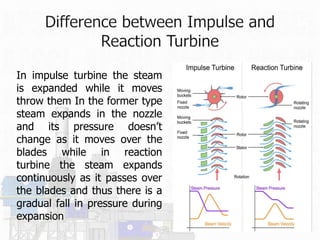
In impulse turbine the steam
is expanded while it moves
throw them In the former type
steam expands in the nozzle
and its pressure doesn’t
change as it moves over the
blades while in reaction
turbine the steam expands
continuously as it passes over
the blades and thus there is a
gradual fall in pressure during
expansion
 Steam enters the HP (high pressure) turbine through
nozzle. It consist of 21 stages.
 Re‐heated steam enters the IP (intermediate pressure)
turbine under the re‐heated conditions. It consist of 14
stages.
 Steam from the cross over pipe enters the center of the
LP. It consist of 6 stages.
The condenser rapidly cools
the steam leaving the LP turbine.
Condensed water is passed
through a series of pre‐heaters
on its way back to the main
boiler.
 A combined cycle system uses the same heat energy to
generate power from two different thermodynamic
cycles.
 It’s operated by
1. The Brayton cycle (Gas turbine)
2. The Rankine cycle (Steam turbine)
 Advantages:
 High power-to-weight ratio.
 It’s capital cost is lower than that of steam turbine
plant.
 Smaller, fewer moving parts and less vibration than a
reciprocating engine.
 Low toxic emissions, less pollution compared to
conventional steam or gas turbine power plants
 Runs on a wide variety of fuels, and high operating
speeds.
 Disadvantages:
 Higher operating cost.
 Higher maintenance cost because of the combination of
two systems.
 Longer start-up.
 Less responsive to power demands, and a shrill whining
noise.
 The capital cost is higher than that of gas turbine plant.
In a Brayton cycle
combustion
and exhaust take place
at a constant pressure.
The Rankine cycle is a model
that is used to predict the
performance of steam
turbine systems. The
Rankine cycle is an idealized
thermodynamic cycle of a
heat engine that converts
heat into mechanical work
 The HRSG uses waste
heat contained in the
exhaust of a gas turbine
to convert water to
steam. The steam is then
used to power a steam
turbine and supply
auxiliary plant processes
 Deaerator is used to remove the dissolve gases like
oxygen and carbon dioxide
A mechanical draft cooling tower with a fan at the discharge which pulls
air through tower. The fan induces hot moist air out the discharge.
APSCL is playing an important role in producing power for
the nation and thus contributing to the country’s economy.
We are glad that we got a chance to compete our
internship program in APSCL; which is the second largest
power company in Bangladesh. We believe that, the
practical experience that we gathered in APSCL will help
us in our professional life.
Thank You

power station in bangladesh

  • 1.
  • 2.
     Romel Barua, Sujoy Dutta,  Mir Md. Anisuzzaman,  Asif Rahman Mithun,  Jubaraj Baidya,  Jungko Moni Chakma, Department of Mechanical Engineering Dhaka University of Engineering &Technology, Gazipur -1700
  • 3.
     Name ofthe Plant : Ashuganj Power Station Company Ltd.  Established : 1966  Location : Ashuganj, B-Baria.  Business : Power Generation.  No. of Generating Units : 9  5 Steam turbine  2 Gas Turbine & 1 Steam turbine  1 Gas Engine  Manufacturer : Brown Brovary & GEC England.  Type of Fuel : Natural Gas  Area of Plant : 263.55 acres
  • 4.
     Two SteamUnits : 64 MW Each  Three Steam Units : 150 MW Each  Gas Turbine : 56 MW Each  One Steam Turbine : 34 MW  Gas Engine Power Plant : 50 MW  Installed Capacity : 777 MW  Present De-rated Capacity : 731 MW
  • 5.
     To knowabout APSCL  To gather practical knowledge and experience.  To know implementation of theoretical study in real world.  To know about various kinds of power generation system  To know about water treatment plant.
  • 6.
     Steam TurbinePower Plant  Gas Turbine Power Plant  Combined Cycle Power Plant
  • 7.
  • 8.
  • 9.
     Sedimentation basin:This basin included aluminum sulphate with polyelectrolyte which is used to remove clay from water.  Intermediate basin: store clear water  Gravel filter: This filter included col, sand, and stone. Which remove the insoluble particle.
  • 10.
     Cat-ion exchanger:Remove metallic substances.  Overhead tank: It store filtered water.  Scavenger filter: Remove the organic substance.  Anion exchanger: Remove the non- metallic substances.
  • 11.
     Mixed bed:It helps to remove both metallic and non- metallic substances if Cat-ion and Anion exchanger fail to remove those.  Demineralized water tank: Which help to storage the demineralized water and then through the water into the feed water tank or condenser.
  • 13.
     Safety Valve Water Level Indicator  Fusible Plug  Blow Down Valve  Main Steam Stop Valve  Feed Check Valve  Pressure Gauge
  • 14.
     Safety Valve It’sacting as a guard of boiler resist high pressure of steam inside the drum.
  • 15.
     Water LevelIndicator It indicate the water level inside the boiler vessel. It shows the level in the boiler drum.
  • 16.
     Boiler fusibleplug It is used to protect the boiler against damage due to overheating caused by low water level in the boiler.
  • 17.
     Blow DownValve To discharge the mud and other sediments deposit in the boiler.
  • 18.
     Steam StopValve It regulate the flow of steam from boiler to the steam pipe or from one steam pipe to the other.
  • 19.
     Feed CheckValve It controls the supply of water from the boiler when the feed pump pressure is less than boiler pressure or pump is stopped.
  • 20.
     Pressure Gauge Itindicates the pressure of steam in boiler.
  • 21.
     Feed Pump Economizer  Air Preheater  Super Heater
  • 22.
     Feed Pump Thefeed pump is a pump which is used to deliver feed water to the boiler.
  • 23.
     Economizer Economizer increasesthe temperature of feed water using Waste of heat to flue gases leaving the boiler through chimney.
  • 24.
     Super Heater Thefunction of super heater is to increase the temperature of the steam above its saturation point.
  • 25.
     Air Preheater It’sa general term to describe any device designed to heat air before another process with the primary objective of increasing the thermal efficiency of the process.
  • 26.
     Steam turbineis a prime mover in which pressure energy of steam is converted into mechanical energy & further electrical energy.  Classification of steam turbine  Reaction turbine  Impulse turbine
  • 27.
     Steam turbineoperation is based on the Rankine cycle with 4 key stages:  1‐2: Pressurize  2‐3: Heat  3‐4: Expand  4‐1: Condense
  • 28.
    In impulse turbinethe steam is expanded while it moves throw them In the former type steam expands in the nozzle and its pressure doesn’t change as it moves over the blades while in reaction turbine the steam expands continuously as it passes over the blades and thus there is a gradual fall in pressure during expansion
  • 30.
     Steam entersthe HP (high pressure) turbine through nozzle. It consist of 21 stages.  Re‐heated steam enters the IP (intermediate pressure) turbine under the re‐heated conditions. It consist of 14 stages.  Steam from the cross over pipe enters the center of the LP. It consist of 6 stages.
  • 31.
    The condenser rapidlycools the steam leaving the LP turbine. Condensed water is passed through a series of pre‐heaters on its way back to the main boiler.
  • 32.
     A combinedcycle system uses the same heat energy to generate power from two different thermodynamic cycles.  It’s operated by 1. The Brayton cycle (Gas turbine) 2. The Rankine cycle (Steam turbine)
  • 33.
     Advantages:  Highpower-to-weight ratio.  It’s capital cost is lower than that of steam turbine plant.  Smaller, fewer moving parts and less vibration than a reciprocating engine.  Low toxic emissions, less pollution compared to conventional steam or gas turbine power plants  Runs on a wide variety of fuels, and high operating speeds.
  • 34.
     Disadvantages:  Higheroperating cost.  Higher maintenance cost because of the combination of two systems.  Longer start-up.  Less responsive to power demands, and a shrill whining noise.  The capital cost is higher than that of gas turbine plant.
  • 35.
    In a Braytoncycle combustion and exhaust take place at a constant pressure.
  • 36.
    The Rankine cycleis a model that is used to predict the performance of steam turbine systems. The Rankine cycle is an idealized thermodynamic cycle of a heat engine that converts heat into mechanical work
  • 39.
     The HRSGuses waste heat contained in the exhaust of a gas turbine to convert water to steam. The steam is then used to power a steam turbine and supply auxiliary plant processes
  • 40.
     Deaerator isused to remove the dissolve gases like oxygen and carbon dioxide
  • 42.
    A mechanical draftcooling tower with a fan at the discharge which pulls air through tower. The fan induces hot moist air out the discharge.
  • 43.
    APSCL is playingan important role in producing power for the nation and thus contributing to the country’s economy. We are glad that we got a chance to compete our internship program in APSCL; which is the second largest power company in Bangladesh. We believe that, the practical experience that we gathered in APSCL will help us in our professional life.
  • 44.