Parental Substance Abuse
Andrea DeWitte
Description
• Substance abuse is a patterned use of a drug that is harmful to the user
causing physical, social, and psychological harm (WHO)
• Common substance abuse drugs include: alcohol, marijuana, cocaine,
heroin, meth, and opioids
• Substance abuse is a significant problem in today’s society,
unfortunately, millions of American children live in homes with parents
or caregivers who are regularly involved in alcohol or drug use
• A parent’s substance abuse may affect their ability to consistently
prioritize their children’s basic physical and emotional needs and provide
a safe, nurturing environment (Smith 2016)
Prevalence
• 9.5 million children are living with parents who are substance abusers
(Center for Behavioral Health Statistics and Quality 2015)
 7.3 million with a parent dependent or abusing alcohol
 2.2 million with a parent dependent or abusing illicit drugs
• 1:6 children in school today has a parent dependent on or addicted to
alcohol or other drugs (Davies, 2010)
• 70% of abused and neglected children have alcohol or drug abusing
parents (National Center on Addiction and Substance Abuse)
• Children whose parents abuse drugs/alcohol are 3x more likely to
experience physical, sexual, or emotional abuse and 4x more likely to
experience neglect compared to their peers (DrugRehab)
• Children who grow up in homes with a parent who abuses drugs or
alcohol are more likely to begin using drugs or alcohol
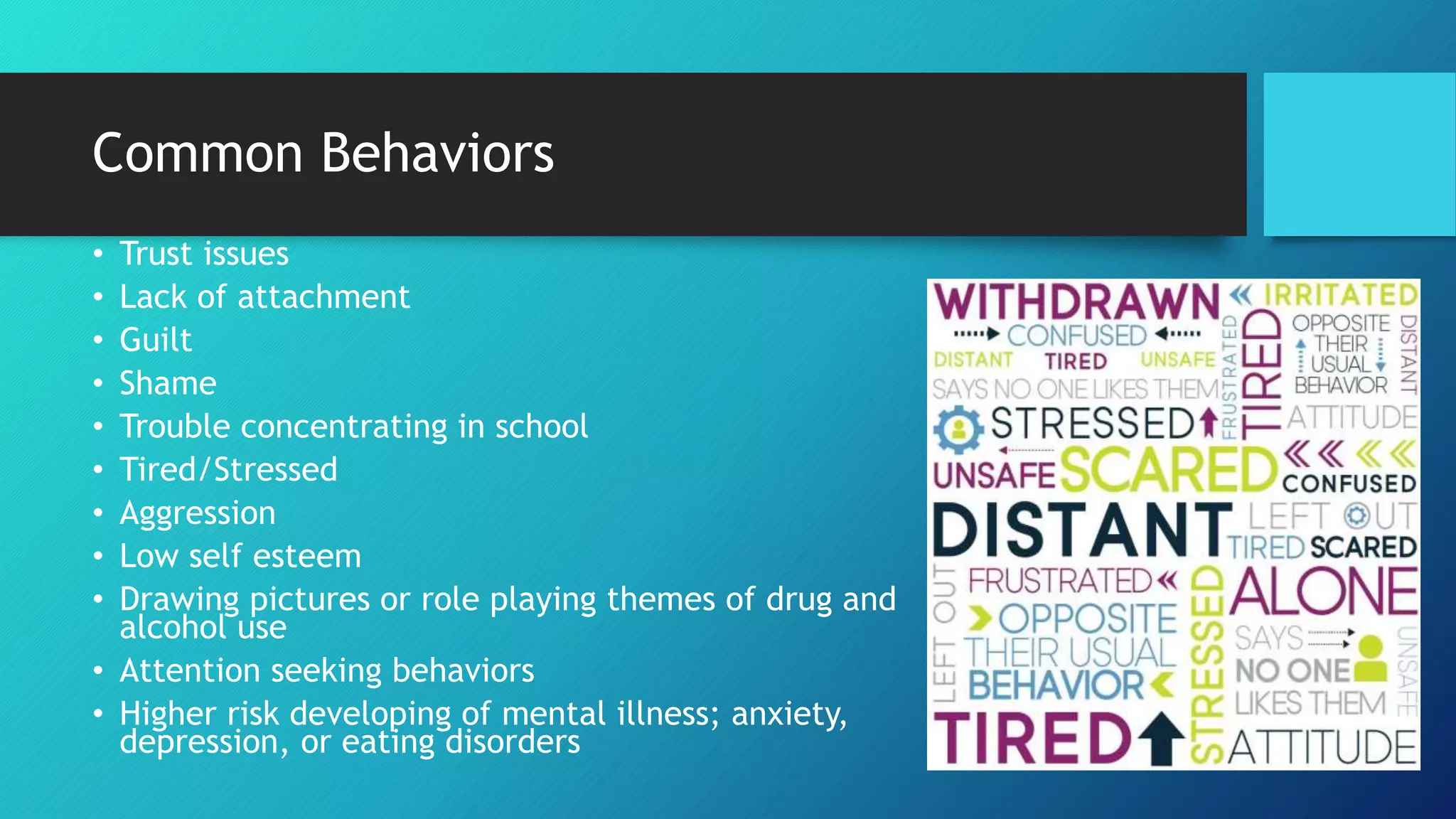
Common Behaviors
• Trust issues
• Lack of attachment
• Guilt
• Shame
• Trouble concentrating in school
• Tired/Stressed
• Aggression
• Low self esteem
• Drawing pictures or role playing themes of drug and
alcohol use
• Attention seeking behaviors
• Higher risk developing of mental illness; anxiety,
depression, or eating disorders
Resources
• Coulee Council on Addictions
http://www.couleecouncil.org/parentfamily-
resources.html
• National Association for Children of Alcoholics
http://nacoa.org/
• U.S. Department of Health and Human
Services, Children’s Bureau
http://www.acf.hhs.gov/cb/
• Therapy
• Counseling
Strategies for Paras
• Encourage the child and be a positive role model
• Reassure the child that it is not their fault
• Reassure the child that you care about them and are there for
them
• Keep the child’s home life confidential
• Observe behavioral indicators and report to a superior if needed
Video
• https://www.youtube.com/watch?v=8z1RkypLIUA
Living Situations
• Foster care- Child Protective Services
• Living with the parent with a substance abuse problem
• Living with another family member: grandparents, aunts/uncles,
other parent
Which child looks like
they have a parent
who abuses
drugs/alcohol?
Sources
• http://performancepyramid.miamioh.edu/node/1326
• https://www.psychologytoday.com/blog/the-athletes-way/201607/harvard-
study-pegs-how-parental-substance-abuse-impacts-kids
• http://digitalcommons.providence.edu/cgi/viewcontent.cgi?article=1013&cont
ext=socialwrk_students
• http://www.drugrehab.us/news/parental-drug-addiction-children/
• Substance abuse. (2016). World Health Organization. Retrieved 18 October
2016, from http://www.who.int/topics/substance_abuse/en/
• Center for Behavioral Health Statistics and Quality. (2015). Behavioral health
trends in the United States: Results from the 2014 National Survey on Drug Use
and Health (HHS Publication No. SMA 15-4927, NSDUH Series H-50). Retrieved
from http://www.samhsa.gov/ data/
• Davies, L (2010. An Educator’s Guide to Children Affected by Parental Drug
Abuse. Education Digest, 75(8) 62-64.

Parental Substance Abuse

  • 1.
  • 2.
    Description • Substance abuseis a patterned use of a drug that is harmful to the user causing physical, social, and psychological harm (WHO) • Common substance abuse drugs include: alcohol, marijuana, cocaine, heroin, meth, and opioids • Substance abuse is a significant problem in today’s society, unfortunately, millions of American children live in homes with parents or caregivers who are regularly involved in alcohol or drug use • A parent’s substance abuse may affect their ability to consistently prioritize their children’s basic physical and emotional needs and provide a safe, nurturing environment (Smith 2016)
  • 3.
    Prevalence • 9.5 millionchildren are living with parents who are substance abusers (Center for Behavioral Health Statistics and Quality 2015)  7.3 million with a parent dependent or abusing alcohol  2.2 million with a parent dependent or abusing illicit drugs • 1:6 children in school today has a parent dependent on or addicted to alcohol or other drugs (Davies, 2010) • 70% of abused and neglected children have alcohol or drug abusing parents (National Center on Addiction and Substance Abuse) • Children whose parents abuse drugs/alcohol are 3x more likely to experience physical, sexual, or emotional abuse and 4x more likely to experience neglect compared to their peers (DrugRehab) • Children who grow up in homes with a parent who abuses drugs or alcohol are more likely to begin using drugs or alcohol
  • 4.
    Common Behaviors • Trustissues • Lack of attachment • Guilt • Shame • Trouble concentrating in school • Tired/Stressed • Aggression • Low self esteem • Drawing pictures or role playing themes of drug and alcohol use • Attention seeking behaviors • Higher risk developing of mental illness; anxiety, depression, or eating disorders
  • 5.
    Resources • Coulee Councilon Addictions http://www.couleecouncil.org/parentfamily- resources.html • National Association for Children of Alcoholics http://nacoa.org/ • U.S. Department of Health and Human Services, Children’s Bureau http://www.acf.hhs.gov/cb/ • Therapy • Counseling
  • 6.
    Strategies for Paras •Encourage the child and be a positive role model • Reassure the child that it is not their fault • Reassure the child that you care about them and are there for them • Keep the child’s home life confidential • Observe behavioral indicators and report to a superior if needed
  • 7.
  • 8.
    Living Situations • Fostercare- Child Protective Services • Living with the parent with a substance abuse problem • Living with another family member: grandparents, aunts/uncles, other parent
  • 9.
    Which child lookslike they have a parent who abuses drugs/alcohol?
  • 10.
    Sources • http://performancepyramid.miamioh.edu/node/1326 • https://www.psychologytoday.com/blog/the-athletes-way/201607/harvard- study-pegs-how-parental-substance-abuse-impacts-kids •http://digitalcommons.providence.edu/cgi/viewcontent.cgi?article=1013&cont ext=socialwrk_students • http://www.drugrehab.us/news/parental-drug-addiction-children/ • Substance abuse. (2016). World Health Organization. Retrieved 18 October 2016, from http://www.who.int/topics/substance_abuse/en/ • Center for Behavioral Health Statistics and Quality. (2015). Behavioral health trends in the United States: Results from the 2014 National Survey on Drug Use and Health (HHS Publication No. SMA 15-4927, NSDUH Series H-50). Retrieved from http://www.samhsa.gov/ data/ • Davies, L (2010. An Educator’s Guide to Children Affected by Parental Drug Abuse. Education Digest, 75(8) 62-64.