APPROACH TO EDEMA
DR. HARISHMA RAMESH
1
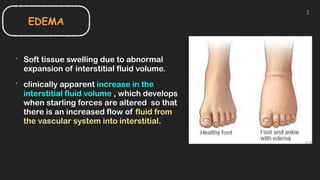
EDEMA
‣ Soft tissue swelling due to abnormal
expansion of interstitial fluid volume.


‣ clinically apparent increase in the
interstitial fluid volume , which develops
when starling forces are altered so that
there is an increased flow of fluid from
the vascular system into interstitial.
2
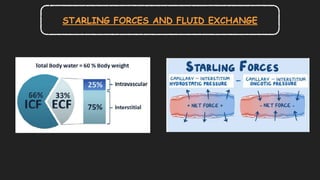
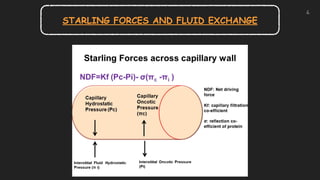
STARLING FORCES AND FLUID EXCHANGE
4
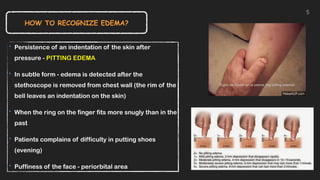
‣ Persistence of an indentation of the skin after
pressure - PITTING EDEMA


‣ In subtle form - edema is detected after the
stethoscope is removed from chest wall (the rim of the
bell leaves an indentation on the skin)


‣ When the ring on the finger fits more snugly than in the
past


‣ Patients complains of difficulty in putting shoes
(evening)


‣ Puffiness of the face - periorbital area
HOW TO RECOGNIZE EDEMA?
5
6
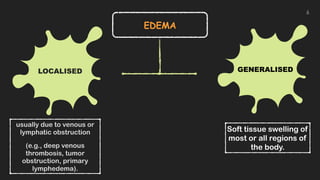
EDEMA
LOCALISED GENERALISED
usually due to venous or
lymphatic obstruction


(e.g., deep venous
thrombosis, tumor
obstruction, primary
lymphedema).
Soft tissue swelling of
most or all regions of
the body.
IF LOCALISED
DAMAGE TO
CAPILLARY
ENDOTHELIUM
Increase the permeability
Permits the transfer of proteins into
the interstitial compartment
Injury to the capillary wall can result
from:


Drugs


Viral or bacterial agents


Thermal or mechanical trauma
THE LOCAL PHENOMENON THAT MAY BE RESPONSIBLE SHOULD
BE CONSIDERED
7
IF LOCALISED
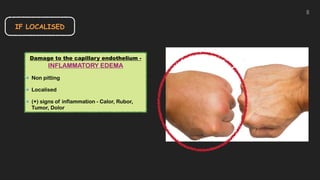
Damage to the capillary endothelium -
INFLAMMATORY EDEMA


Non pitting


Localised


(+) signs of inflammation - Calor, Rubor,
Tumor, Dolor
8
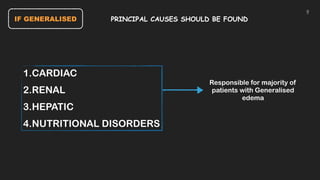
IF GENERALISED
1.CARDIAC


2.RENAL


3.HEPATIC


4.NUTRITIONAL DISORDERS
Responsible for majority of
patients with Generalised
edema
PRINCIPAL CAUSES SHOULD BE FOUND
9
10
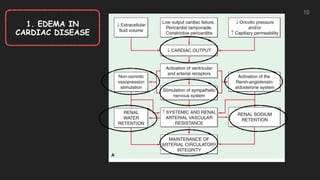
1. EDEMA IN
CARDIAC DISEASE
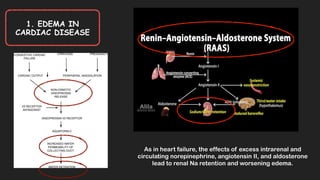
As in heart failure, the effects of excess intrarenal and
circulating norepinephrine, angiotensin II, and aldosterone
lead to renal Na retention and worsening edema.
1. EDEMA IN
CARDIAC DISEASE
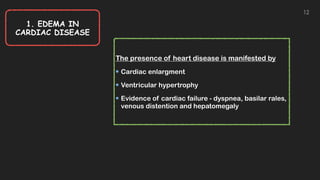
The presence of heart disease is manifested by


Cardiac enlargment


Ventricular hypertrophy


Evidence of cardiac failure - dyspnea, basilar rales,
venous distention and hepatomegaly


1. EDEMA IN
CARDIAC DISEASE
12
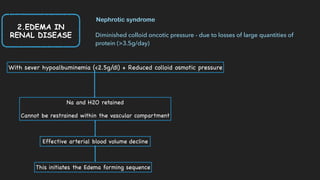
Nephrotic syndrome
Diminished colloid oncotic pressure - due to losses of large quantities of
protein (>3.5g/day)
With sever hypoalbuminemia (<2.5g/dl) + Reduced colloid osmotic pressure
Na and H2O retained

Cannot be restrained within the vascular compartment
Effective arterial blood volume decline
This initiates the Edema forming sequence
2.EDEMA IN
RENAL DISEASE
2. EDEMA IN
RENAL DISEASE
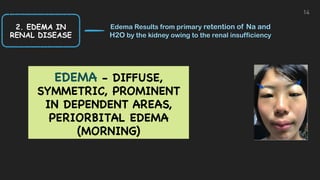
Edema Results from primary retention of Na and
H2O by the kidney owing to the renal insufficiency
14
EDEMA - DIFFUSE,
SYMMETRIC, PROMINENT
IN DEPENDENT AREAS,
PERIORBITAL EDEMA
(MORNING)
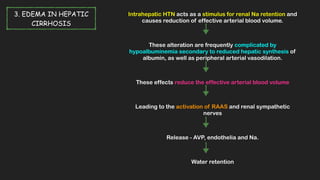
3. EDEMA IN HEPATIC
CIRRHOSIS
Intrahepatic HTN acts as a stimulus for renal Na retention and
causes reduction of effective arterial blood volume.


These alteration are frequently complicated by
hypoalbuminemia secondary to reduced hepatic synthesis of
albumin, as well as peripheral arterial vasodilation.


These effects reduce the effective arterial blood volume


Leading to the activation of RAAS and renal sympathetic
nerves


Release - AVP, endothelia and Na.


Water retention
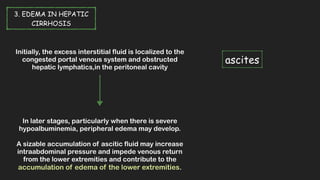
In later stages, particularly when there is severe
hypoalbuminemia, peripheral edema may develop.


A sizable accumulation of ascitic fluid may increase
intraabdominal pressure and impede venous return
from the lower extremities and contribute to the
accumulation of edema of the lower extremities.
Initially, the excess interstitial fluid is localized to the
congested portal venous system and obstructed
hepatic lymphatics,in the peritoneal cavity
ascites
3. EDEMA IN HEPATIC
CIRRHOSIS
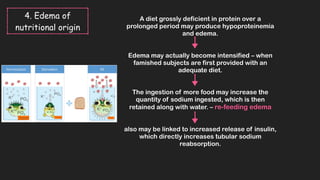
4. Edema of
nutritional origin
A diet grossly deficient in protein over a
prolonged period may produce hypoproteinemia
and edema.


Edema may actually become intensified – when
famished subjects are first provided with an
adequate diet.


The ingestion of more food may increase the
quantity of sodium ingested, which is then
retained along with water. – re-feeding edema


also may be linked to increased release of insulin,
which directly increases tubular sodium
reabsorption.
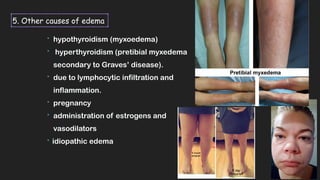
5. Other causes of edema
‣ hypothyroidism (myxoedema)


‣ hyperthyroidism (pretibial myxedema
secondary to Graves’ disease).


‣ due to lymphocytic infiltration and
inflammation.


‣ pregnancy


‣ administration of estrogens and
vasodilators


‣ idiopathic edema
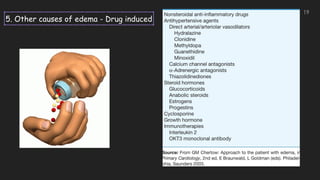
5. Other causes of edema - Drug induced
19
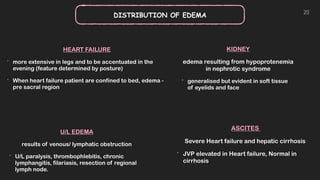
DISTRIBUTION OF EDEMA
U/L EDEMA


results of venous/ lymphatic obstruction


‣ U/L paralysis, thrombophlebitis, chronic
lymphangitis, filariasis, resection of regional
lymph node.
ASCITES


Severe Heart failure and hepatic cirrhosis


‣ JVP elevated in Heart failure, Normal in
cirrhosis
HEART FAILURE


‣ more extensive in legs and to be accentuated in the
evening (feature determined by posture)


‣ When heart failure patient are confined to bed, edema -
pre sacral region
KIDNEY


edema resulting from hypoprotenemia
in nephrotic syndrome


‣ generalised but evident in soft tissue
of eyelids and face
20
21
22
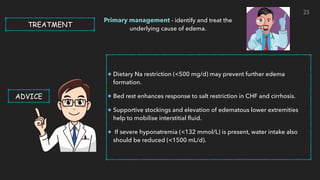
Dietary Na restriction (<500 mg/d) may prevent further edema
formation.


Bed rest enhances response to salt restriction in CHF and cirrhosis.


Supportive stockings and elevation of edematous lower extremities
help to mobilise interstitial
fl
uid.


If severe hyponatremia (<132 mmol/L) is present, water intake also
should be reduced (<1500 mL/d).


TREATMENT
Primary management - identify and treat the
underlying cause of edema.
ADVICE
23
REFERENCE: HARRISON’S PRINCIPLES OF INTERNAL
MEDICINE, 20TH EDITION


THANK YOU…

APPROACH TO EDEMA - Dr.Harishma

  • 1.
    APPROACH TO EDEMA DR.HARISHMA RAMESH 1
  • 2.
    EDEMA ‣ Soft tissueswelling due to abnormal expansion of interstitial fluid volume. ‣ clinically apparent increase in the interstitial fluid volume , which develops when starling forces are altered so that there is an increased flow of fluid from the vascular system into interstitial. 2
  • 3.
    STARLING FORCES ANDFLUID EXCHANGE
  • 4.
    STARLING FORCES ANDFLUID EXCHANGE 4
  • 5.
    ‣ Persistence ofan indentation of the skin after pressure - PITTING EDEMA ‣ In subtle form - edema is detected after the stethoscope is removed from chest wall (the rim of the bell leaves an indentation on the skin) ‣ When the ring on the finger fits more snugly than in the past ‣ Patients complains of difficulty in putting shoes (evening) ‣ Puffiness of the face - periorbital area HOW TO RECOGNIZE EDEMA? 5
  • 6.
    6 EDEMA LOCALISED GENERALISED usually dueto venous or lymphatic obstruction (e.g., deep venous thrombosis, tumor obstruction, primary lymphedema). Soft tissue swelling of most or all regions of the body.
  • 7.
    IF LOCALISED DAMAGE TO CAPILLARY ENDOTHELIUM Increasethe permeability Permits the transfer of proteins into the interstitial compartment Injury to the capillary wall can result from: Drugs Viral or bacterial agents Thermal or mechanical trauma THE LOCAL PHENOMENON THAT MAY BE RESPONSIBLE SHOULD BE CONSIDERED 7
  • 8.
    IF LOCALISED Damage tothe capillary endothelium - INFLAMMATORY EDEMA Non pitting Localised (+) signs of inflammation - Calor, Rubor, Tumor, Dolor 8
  • 9.
    IF GENERALISED 1.CARDIAC 2.RENAL 3.HEPATIC 4.NUTRITIONAL DISORDERS Responsiblefor majority of patients with Generalised edema PRINCIPAL CAUSES SHOULD BE FOUND 9
  • 10.
  • 11.
    As in heartfailure, the effects of excess intrarenal and circulating norepinephrine, angiotensin II, and aldosterone lead to renal Na retention and worsening edema. 1. EDEMA IN CARDIAC DISEASE
  • 12.
    The presence ofheart disease is manifested by Cardiac enlargment Ventricular hypertrophy Evidence of cardiac failure - dyspnea, basilar rales, venous distention and hepatomegaly 1. EDEMA IN CARDIAC DISEASE 12
  • 13.
    Nephrotic syndrome Diminished colloidoncotic pressure - due to losses of large quantities of protein (>3.5g/day) With sever hypoalbuminemia (<2.5g/dl) + Reduced colloid osmotic pressure Na and H2O retained Cannot be restrained within the vascular compartment Effective arterial blood volume decline This initiates the Edema forming sequence 2.EDEMA IN RENAL DISEASE
  • 14.
    2. EDEMA IN RENALDISEASE Edema Results from primary retention of Na and H2O by the kidney owing to the renal insufficiency 14 EDEMA - DIFFUSE, SYMMETRIC, PROMINENT IN DEPENDENT AREAS, PERIORBITAL EDEMA (MORNING)
  • 15.
    3. EDEMA INHEPATIC CIRRHOSIS Intrahepatic HTN acts as a stimulus for renal Na retention and causes reduction of effective arterial blood volume. These alteration are frequently complicated by hypoalbuminemia secondary to reduced hepatic synthesis of albumin, as well as peripheral arterial vasodilation. These effects reduce the effective arterial blood volume Leading to the activation of RAAS and renal sympathetic nerves Release - AVP, endothelia and Na. Water retention
  • 16.
    In later stages,particularly when there is severe hypoalbuminemia, peripheral edema may develop. A sizable accumulation of ascitic fluid may increase intraabdominal pressure and impede venous return from the lower extremities and contribute to the accumulation of edema of the lower extremities. Initially, the excess interstitial fluid is localized to the congested portal venous system and obstructed hepatic lymphatics,in the peritoneal cavity ascites 3. EDEMA IN HEPATIC CIRRHOSIS
  • 17.
    4. Edema of nutritionalorigin A diet grossly deficient in protein over a prolonged period may produce hypoproteinemia and edema. Edema may actually become intensified – when famished subjects are first provided with an adequate diet. The ingestion of more food may increase the quantity of sodium ingested, which is then retained along with water. – re-feeding edema also may be linked to increased release of insulin, which directly increases tubular sodium reabsorption.
  • 18.
    5. Other causesof edema ‣ hypothyroidism (myxoedema) ‣ hyperthyroidism (pretibial myxedema secondary to Graves’ disease). ‣ due to lymphocytic infiltration and inflammation. ‣ pregnancy ‣ administration of estrogens and vasodilators ‣ idiopathic edema
  • 19.
    5. Other causesof edema - Drug induced 19
  • 20.
    DISTRIBUTION OF EDEMA U/LEDEMA results of venous/ lymphatic obstruction ‣ U/L paralysis, thrombophlebitis, chronic lymphangitis, filariasis, resection of regional lymph node. ASCITES Severe Heart failure and hepatic cirrhosis ‣ JVP elevated in Heart failure, Normal in cirrhosis HEART FAILURE ‣ more extensive in legs and to be accentuated in the evening (feature determined by posture) ‣ When heart failure patient are confined to bed, edema - pre sacral region KIDNEY edema resulting from hypoprotenemia in nephrotic syndrome ‣ generalised but evident in soft tissue of eyelids and face 20
  • 21.
  • 22.
  • 23.
    Dietary Na restriction(<500 mg/d) may prevent further edema formation. Bed rest enhances response to salt restriction in CHF and cirrhosis. Supportive stockings and elevation of edematous lower extremities help to mobilise interstitial fl uid. If severe hyponatremia (<132 mmol/L) is present, water intake also should be reduced (<1500 mL/d). TREATMENT Primary management - identify and treat the underlying cause of edema. ADVICE 23
  • 24.
    REFERENCE: HARRISON’S PRINCIPLESOF INTERNAL MEDICINE, 20TH EDITION THANK YOU…