Applied English Phonetics
Intonation
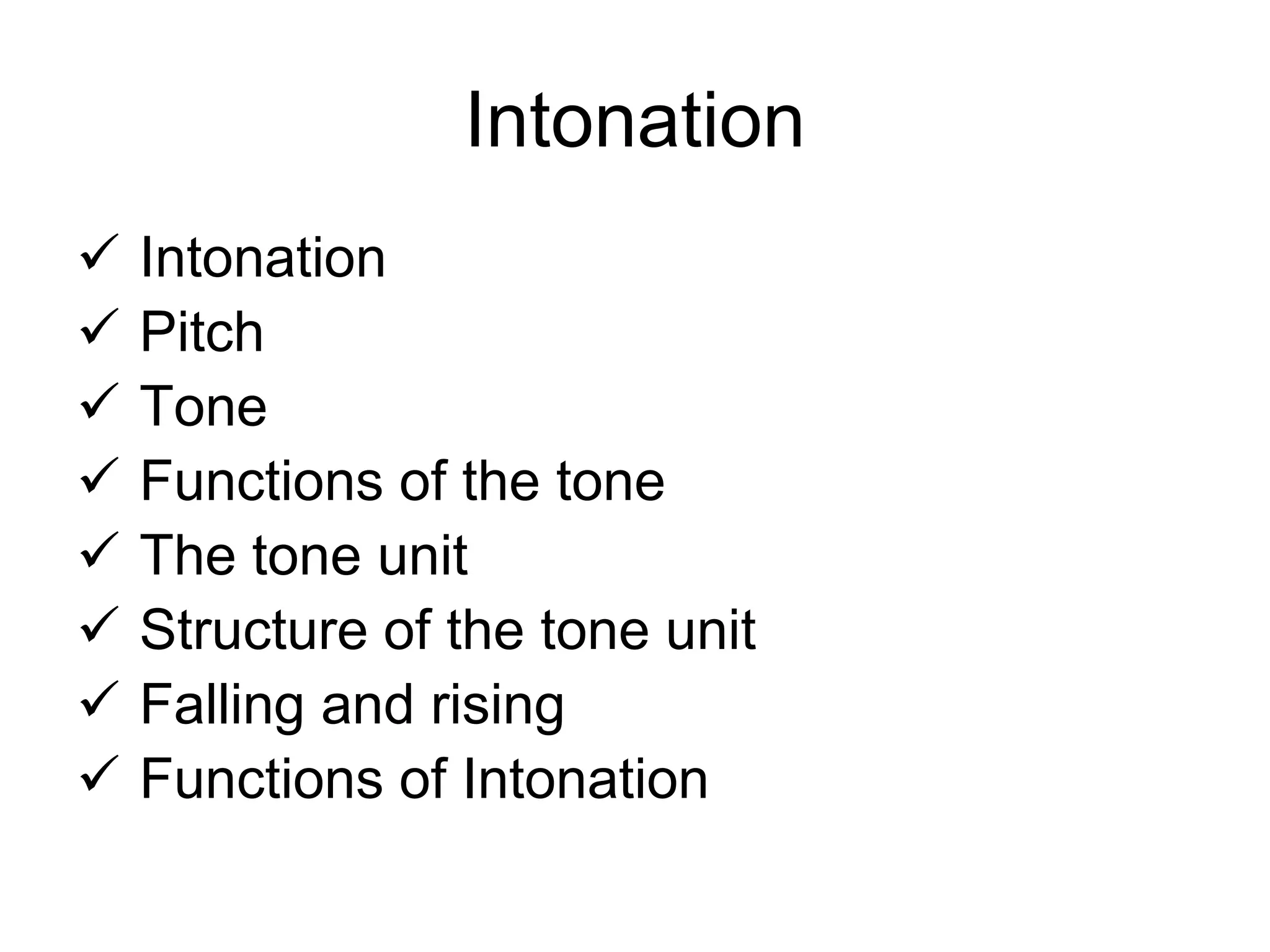
   Intonation
   Pitch
   Tone
   Functions of the tone
   The tone unit
   Structure of the tone unit
   Falling and rising
   Functions of Intonation
Intonation
 No language is spoken on a monotone
 Languages have variations of pitch
 English intonation: pitch patterns of spoken
  English; the speech tunes or melodies; the
  musical features of English
 Intonation is significant
 Intonation is systematic
 Intonation is characteristic
 Because word/sentence stress involves changes
  in voice pitch, speakers continually modify the
  fundamental frequency of their voice while
  speaking in order to stress particular words in an
  utterance.
 The modification of voice pitch is known
 as intonation
A speaker’s intonation pattern cues a
 listener as to the type of utterance being
 spoken, i.e., a statement of fact, a
 question, an exclamation, etc.
 Intonation is also responsible, in part, for
 indicating a speaker’s particular mood.
 Intonation is different from
 stress, however there are relations
 between them.
 Range of intonation varies.
Pitch
 Auditory sensation experienced by the
 hearer
 An individual speaker does have control
 over his/her pitch and may choose to
 speak with a higher pitch than normal
Pitch: High or Low
Tone
 Behaviour of the pitch
 One-syllable words can be said with level
 tone or moving tone, however, English
 speakers do not use level tones. It sounds
 unnatural.
 Tone Languages imply meaning:
 Mandarin Chinese, Thai, Vietnamese
 The tones are falling, rising, fall-rise,
  rise-fall
 Representation of tones.
Structure of the tone unit
   Nucleus (Tonic syllable)
   Tail
   Head
   Pre-head
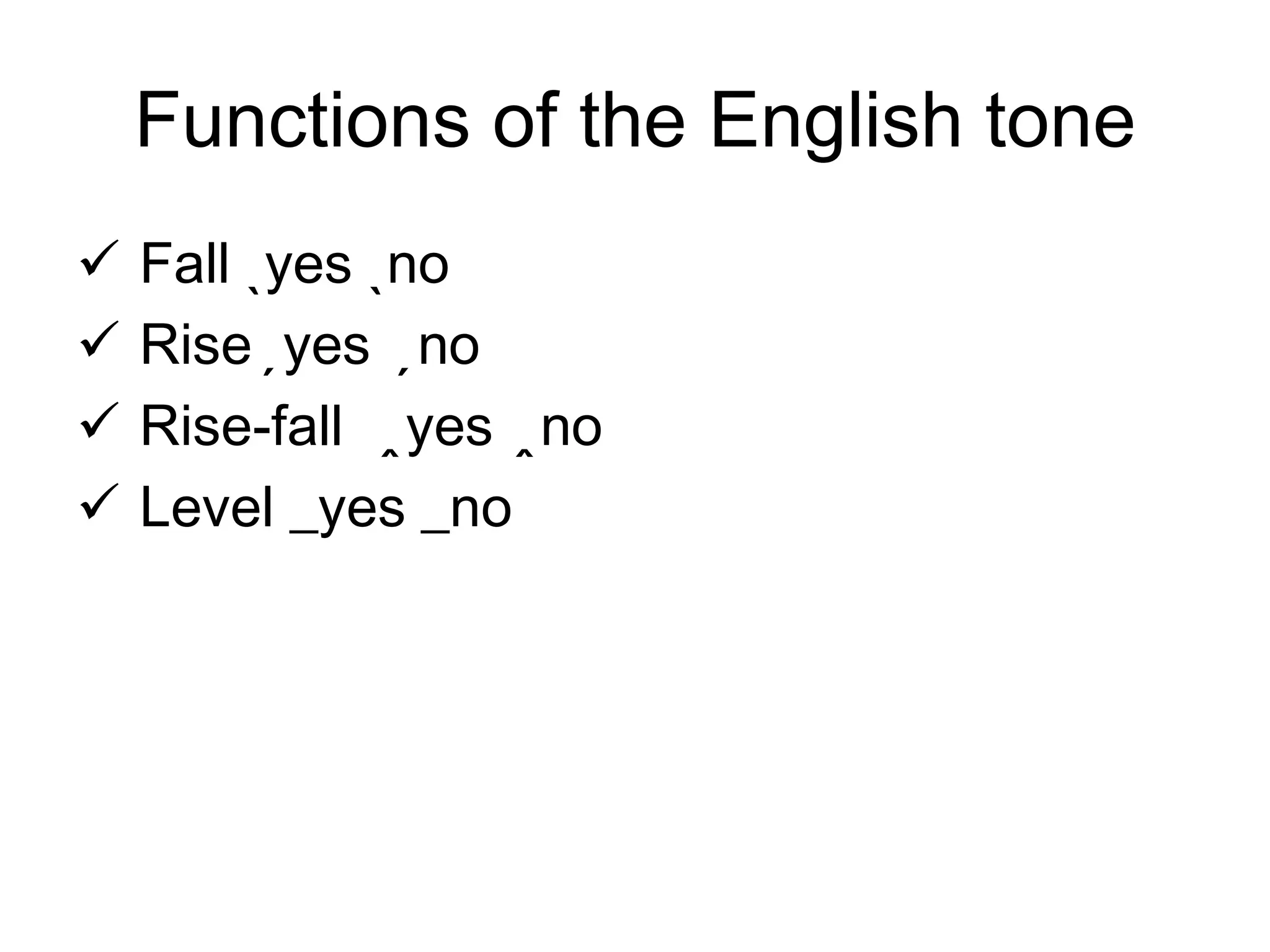
Functions of the English tone
   Fall ˎyes ˎno
   Rise ̗yes ̗no
   Rise-fall yes ̭no
                ̭
   Level _yes _no
Falling and Rising
          Falling intonation or tune
 Statements
 Questions containing a special
 interrogative word
 Commands
Rising Intonation
 Questions requiring the answer “yes” or
 “no”
 First part of sentences
 Statements with an implication
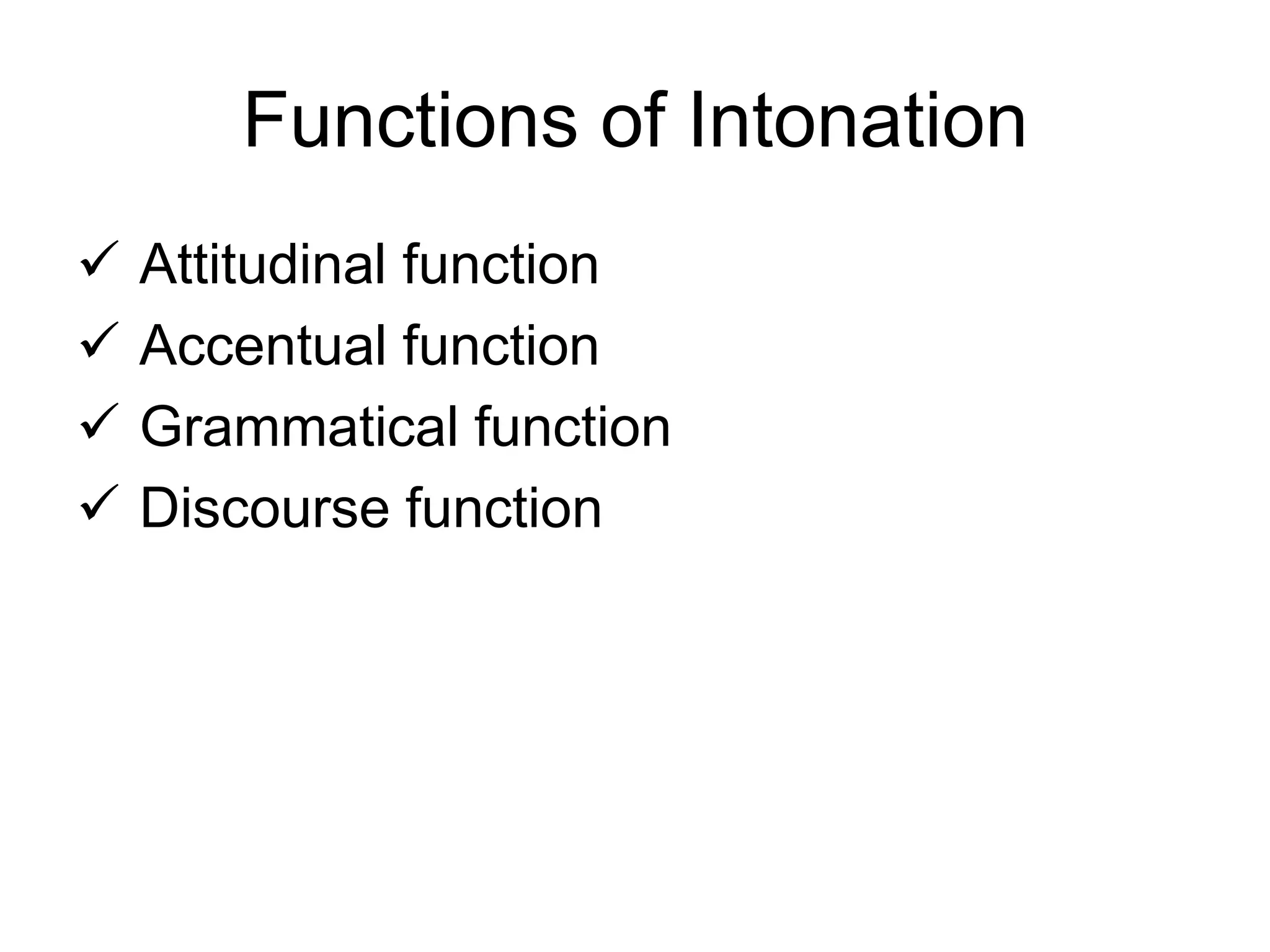
Functions of Intonation
   Attitudinal function
   Accentual function
   Grammatical function
   Discourse function
Bibliography

• Allen, W Stannard. Living English Speech, 1954
• Celce Murcia, et al. Teaching Pronunciation, 1996
• Finch and Ortiz. A course in English Phonetics for Spanish
  Speakers, 1982
• Jones, Daniel. An Outline of English Phonetics, 1967
• Roach, Peter. English Phonetics and Phonology, 2000
• Wells, J C. English Intonation. 2007

Applied english phonetics intonation

  • 1.
  • 2.
    Intonation  Intonation  Pitch  Tone  Functions of the tone  The tone unit  Structure of the tone unit  Falling and rising  Functions of Intonation
  • 3.
    Intonation  No languageis spoken on a monotone  Languages have variations of pitch  English intonation: pitch patterns of spoken English; the speech tunes or melodies; the musical features of English  Intonation is significant  Intonation is systematic  Intonation is characteristic  Because word/sentence stress involves changes in voice pitch, speakers continually modify the fundamental frequency of their voice while speaking in order to stress particular words in an utterance.
  • 4.
     The modificationof voice pitch is known as intonation A speaker’s intonation pattern cues a listener as to the type of utterance being spoken, i.e., a statement of fact, a question, an exclamation, etc.  Intonation is also responsible, in part, for indicating a speaker’s particular mood.  Intonation is different from stress, however there are relations between them.  Range of intonation varies.
  • 5.
    Pitch  Auditory sensationexperienced by the hearer  An individual speaker does have control over his/her pitch and may choose to speak with a higher pitch than normal Pitch: High or Low
  • 6.
    Tone  Behaviour ofthe pitch  One-syllable words can be said with level tone or moving tone, however, English speakers do not use level tones. It sounds unnatural.  Tone Languages imply meaning: Mandarin Chinese, Thai, Vietnamese  The tones are falling, rising, fall-rise, rise-fall  Representation of tones.
  • 7.
    Structure of thetone unit  Nucleus (Tonic syllable)  Tail  Head  Pre-head
  • 8.
    Functions of theEnglish tone  Fall ˎyes ˎno  Rise ̗yes ̗no  Rise-fall yes ̭no ̭  Level _yes _no
  • 9.
    Falling and Rising Falling intonation or tune  Statements  Questions containing a special interrogative word  Commands
  • 10.
    Rising Intonation  Questionsrequiring the answer “yes” or “no”  First part of sentences  Statements with an implication
  • 11.
    Functions of Intonation  Attitudinal function  Accentual function  Grammatical function  Discourse function
  • 12.
    Bibliography • Allen, WStannard. Living English Speech, 1954 • Celce Murcia, et al. Teaching Pronunciation, 1996 • Finch and Ortiz. A course in English Phonetics for Spanish Speakers, 1982 • Jones, Daniel. An Outline of English Phonetics, 1967 • Roach, Peter. English Phonetics and Phonology, 2000 • Wells, J C. English Intonation. 2007