Phonetics
and
Phonology
Contents
 Prosody.
 Intonation.
 Pitch .
 Tone.
 Stress.
 Rhythm.
 Speech Tempo.
Prosody
 It is the study of linguistic functions such
as intonation, pitch, tone, speech tempo
,stress, and rhythm.
 It may reflect various features of the
speaker or utterance.
Intonation
 Intonation is referred to as a prosodic
feature of English.
It is used to describe variations in pitch,
tone , stress , tempo,
and rhythm.
History
Early in the 20th century the dominant approach in
the description of English and French intonation
was based on a small number of basic "tunes"
associated with intonation units.in a typical
description, Tune 1 is falling,while Tune 2 has a final
rise.
This "Standard British" treatment of intonation in
its present-day form is explained in detail by
Wells and in a simplified version by Roach.
Form of english intonation
 The form of English intonation is
often said to be based on three aspects:
The division of speech into units
The highlighting of particular words and
syllables
The choice of pitch movement.
Pitch :
 The degree of highness and lowness of the
voice.
 The pitch of a word often used to express
differences of meaning.
e.g ; “ You are coming.”
“ You are coming?”
Stress :
 Stress functions as the means of making a
syllable prominent.
Speech tempo :
 The pace of speech is called tempo.
 Fast speech can convey urgency.
 Slow speech can be used for emphasis.
Tone
 The emotions or attitude express by the
words that is used by the speaker.(
varying between rise and fall of tone )
Rhythm
 The measured flow of words
determined by the relation of stressed or
unstressed syllables.
Significance of Intonation.
 Indicating the attitudes and emotions of the
speaker,
 Define the difference between statements ,
commands and questions,
 Focusing on important elements of the
spoken message.
Functions of Intonation
 Psychological function.
 Indexical function
 Grammatical function
Psychological function:
 To organise speech into units that are easier
to perceive and memorize.
Indexical function :
(associated an individual speaker)
 To serve as a social identity; Lawyers, Army
sergeants, preachers and sports commentators
are readily identified through their distinctive
prosody
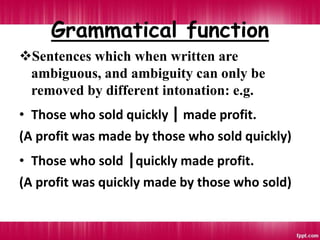
Grammatical function
Sentences which when written are
ambiguous, and ambiguity can only be
removed by different intonation: e.g.
• Those who sold quickly | made profit.
(A profit was made by those who sold quickly)
• Those who sold |quickly made profit.
(A profit was quickly made by those who sold)
Patterns of Intonation
 Rising intonation pattern.
 Falling intonation pattern.
Rising- falling intonation pattern.
Rising intonation pattern.
 Rising intonation describes how the voice
rises at the end of a sentence.
 It can express a various no. of emotions such
as ; ambiguity, surprise,politeness,interest,
lack of confidence etc.
e.g ; What a beautiful weather !
Falling intonation pattern.
 In this pattern at the end of sentence the
tone is falling.
 The most common type of intonation.
 Used for asking and giving information in
quiet and certain style e.g; Where do you
live ?
“We live in Pakistan.”
Rising- falling intonation
pattern.
 This Pattern shows limited agreement,
reservation, doubt or uncertainty.
e.g ; It’s possible.
You may be right.
If I am not mistaken.
Any Question ?

Intonation presentation

  • 2.
  • 3.
    Contents  Prosody.  Intonation. Pitch .  Tone.  Stress.  Rhythm.  Speech Tempo.
  • 4.
    Prosody  It isthe study of linguistic functions such as intonation, pitch, tone, speech tempo ,stress, and rhythm.  It may reflect various features of the speaker or utterance.
  • 5.
    Intonation  Intonation isreferred to as a prosodic feature of English. It is used to describe variations in pitch, tone , stress , tempo, and rhythm.
  • 6.
    History Early in the20th century the dominant approach in the description of English and French intonation was based on a small number of basic "tunes" associated with intonation units.in a typical description, Tune 1 is falling,while Tune 2 has a final rise. This "Standard British" treatment of intonation in its present-day form is explained in detail by Wells and in a simplified version by Roach.
  • 7.
    Form of englishintonation  The form of English intonation is often said to be based on three aspects: The division of speech into units The highlighting of particular words and syllables The choice of pitch movement.
  • 8.
    Pitch :  Thedegree of highness and lowness of the voice.  The pitch of a word often used to express differences of meaning. e.g ; “ You are coming.” “ You are coming?”
  • 9.
    Stress :  Stressfunctions as the means of making a syllable prominent. Speech tempo :  The pace of speech is called tempo.  Fast speech can convey urgency.  Slow speech can be used for emphasis.
  • 10.
    Tone  The emotionsor attitude express by the words that is used by the speaker.( varying between rise and fall of tone ) Rhythm  The measured flow of words determined by the relation of stressed or unstressed syllables.
  • 11.
    Significance of Intonation. Indicating the attitudes and emotions of the speaker,  Define the difference between statements , commands and questions,  Focusing on important elements of the spoken message.
  • 12.
    Functions of Intonation Psychological function.  Indexical function  Grammatical function
  • 13.
    Psychological function:  Toorganise speech into units that are easier to perceive and memorize. Indexical function : (associated an individual speaker)  To serve as a social identity; Lawyers, Army sergeants, preachers and sports commentators are readily identified through their distinctive prosody
  • 14.
    Grammatical function Sentences whichwhen written are ambiguous, and ambiguity can only be removed by different intonation: e.g. • Those who sold quickly | made profit. (A profit was made by those who sold quickly) • Those who sold |quickly made profit. (A profit was quickly made by those who sold)
  • 15.
    Patterns of Intonation Rising intonation pattern.  Falling intonation pattern. Rising- falling intonation pattern.
  • 16.
    Rising intonation pattern. Rising intonation describes how the voice rises at the end of a sentence.  It can express a various no. of emotions such as ; ambiguity, surprise,politeness,interest, lack of confidence etc. e.g ; What a beautiful weather !
  • 17.
    Falling intonation pattern. In this pattern at the end of sentence the tone is falling.  The most common type of intonation.  Used for asking and giving information in quiet and certain style e.g; Where do you live ? “We live in Pakistan.”
  • 18.
    Rising- falling intonation pattern. This Pattern shows limited agreement, reservation, doubt or uncertainty. e.g ; It’s possible. You may be right. If I am not mistaken.
  • 19.