Application of
genetic engineering
Submitted by: Ananya Naskar
SALS 5th Sem
Uttaranchal University
Submitted to: Farah Marfi
ma’am
Contents
• Genetic engineering
• Application in pharmaceutical sector
• Vaccines
• Gene therapy
• Application in agricultural sector
• Bacillus thuringinesis
• Agrobacterium tumeficiens
• Application in industrial sector
• Production of insulin artificially
What is Genetic engineering ?
• It is a process in which a piece of DNA is artificially copied from one
organism and ligated into DNA of another organism.
• It has application in various sectors-
• Pharmaceutical,
• Agriculture,
• Industrial
Application in pharmaceutical
sector
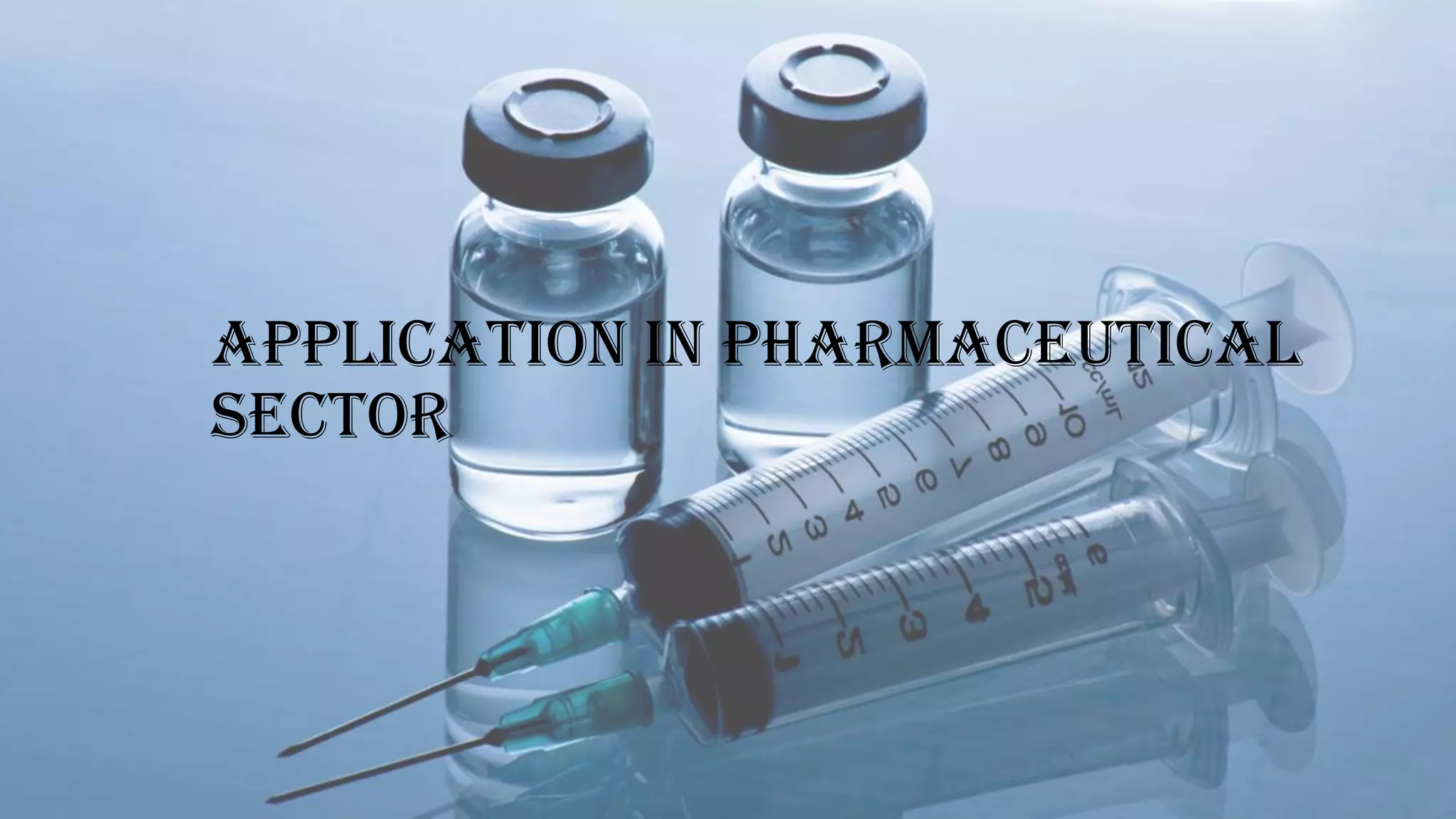
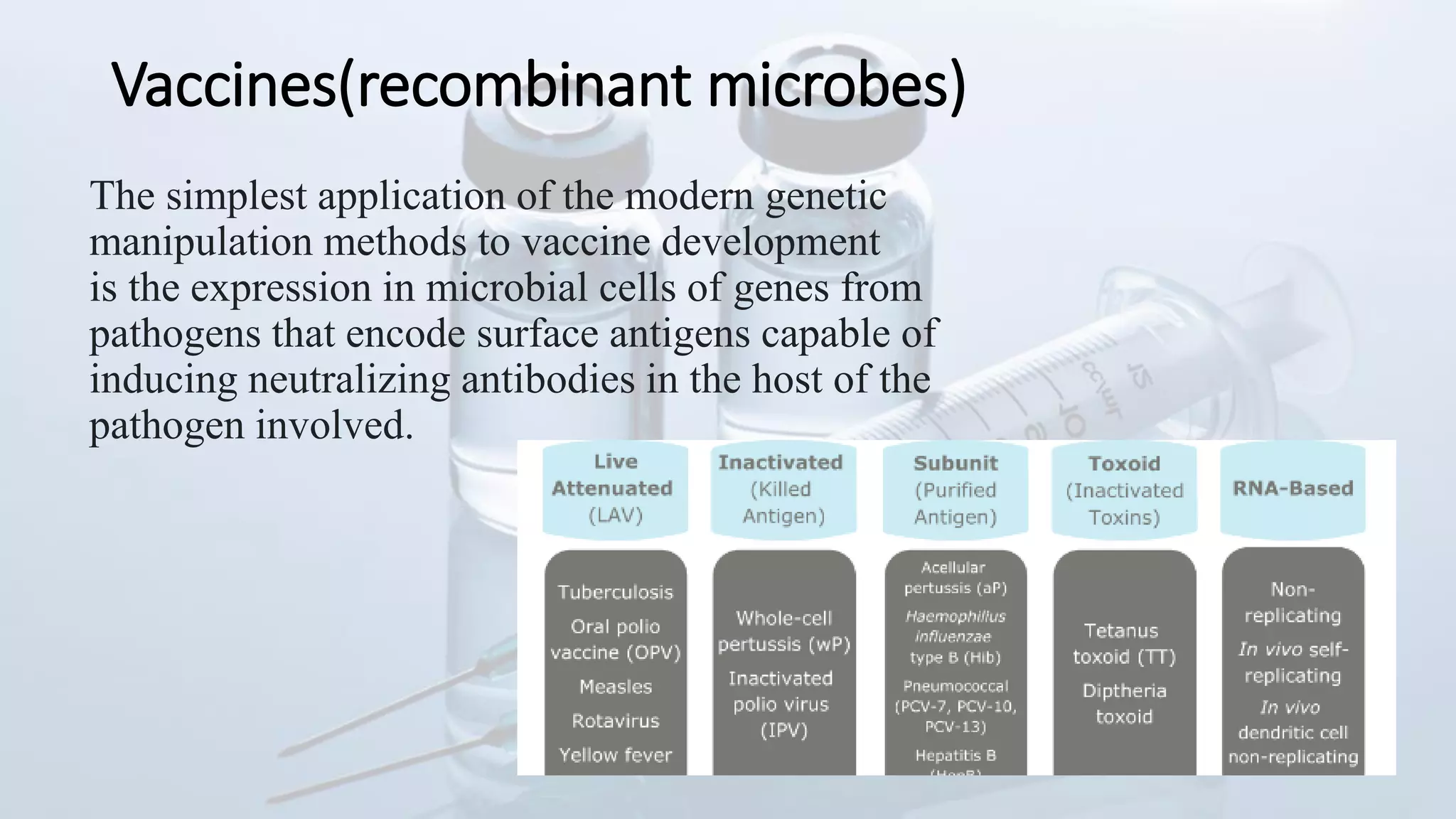
Vaccines(recombinant microbes)
The simplest application of the modern genetic
manipulation methods to vaccine development
is the expression in microbial cells of genes from
pathogens that encode surface antigens capable of
inducing neutralizing antibodies in the host of the
pathogen involved.
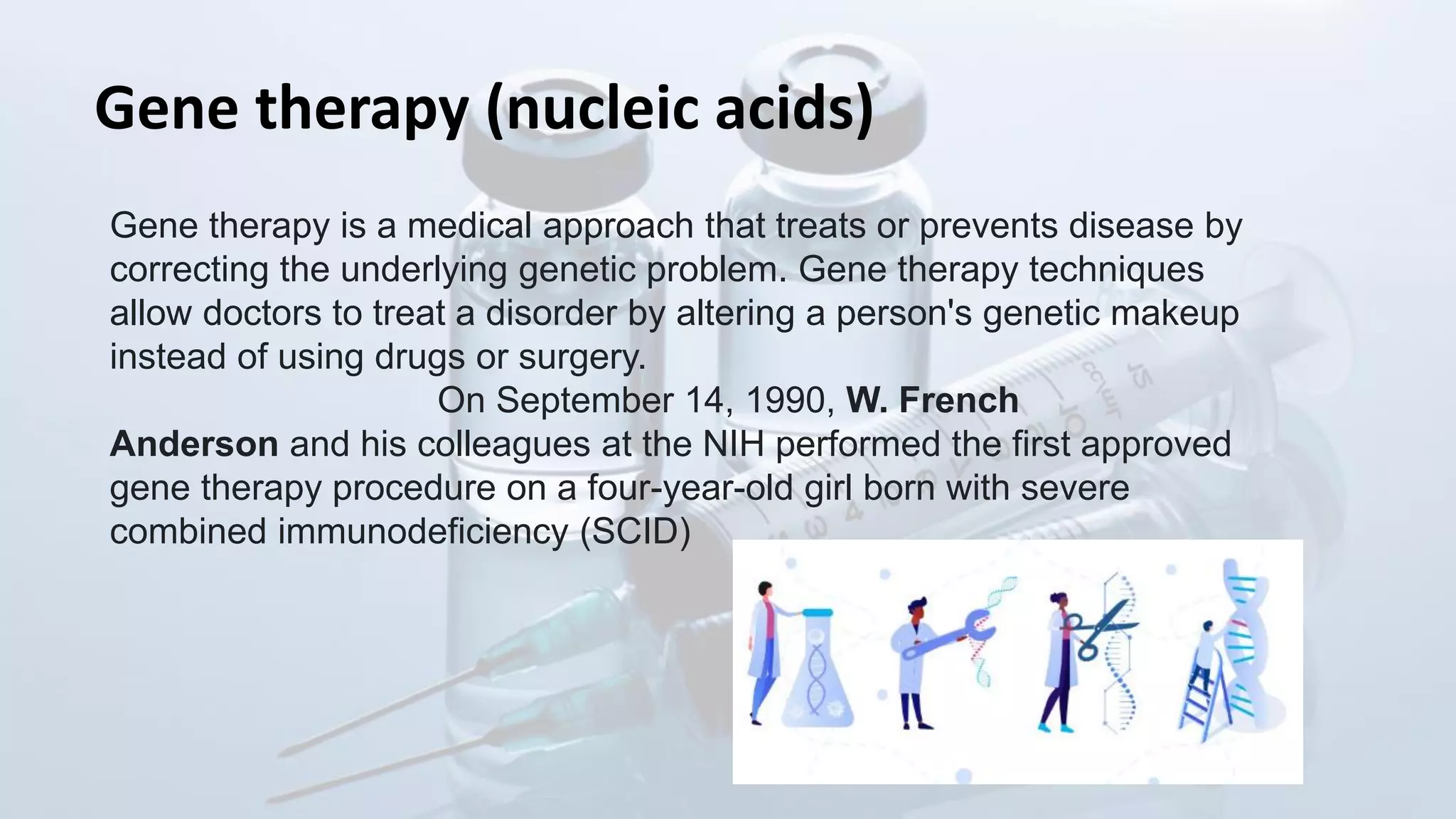
Gene therapy (nucleic acids)
Gene therapy is a medical approach that treats or prevents disease by
correcting the underlying genetic problem. Gene therapy techniques
allow doctors to treat a disorder by altering a person's genetic makeup
instead of using drugs or surgery.
On September 14, 1990, W. French
Anderson and his colleagues at the NIH performed the first approved
gene therapy procedure on a four-year-old girl born with severe
combined immunodeficiency (SCID)
Application in agriculture sector
Includes -
• Crop improvement
• Frost Resistance
• Delayed fruit ripening
• Insect resistance
• Herbicide resistance
• Genetically engineered food-
• Bt cotton
• Bt brinjal
Bt cotton
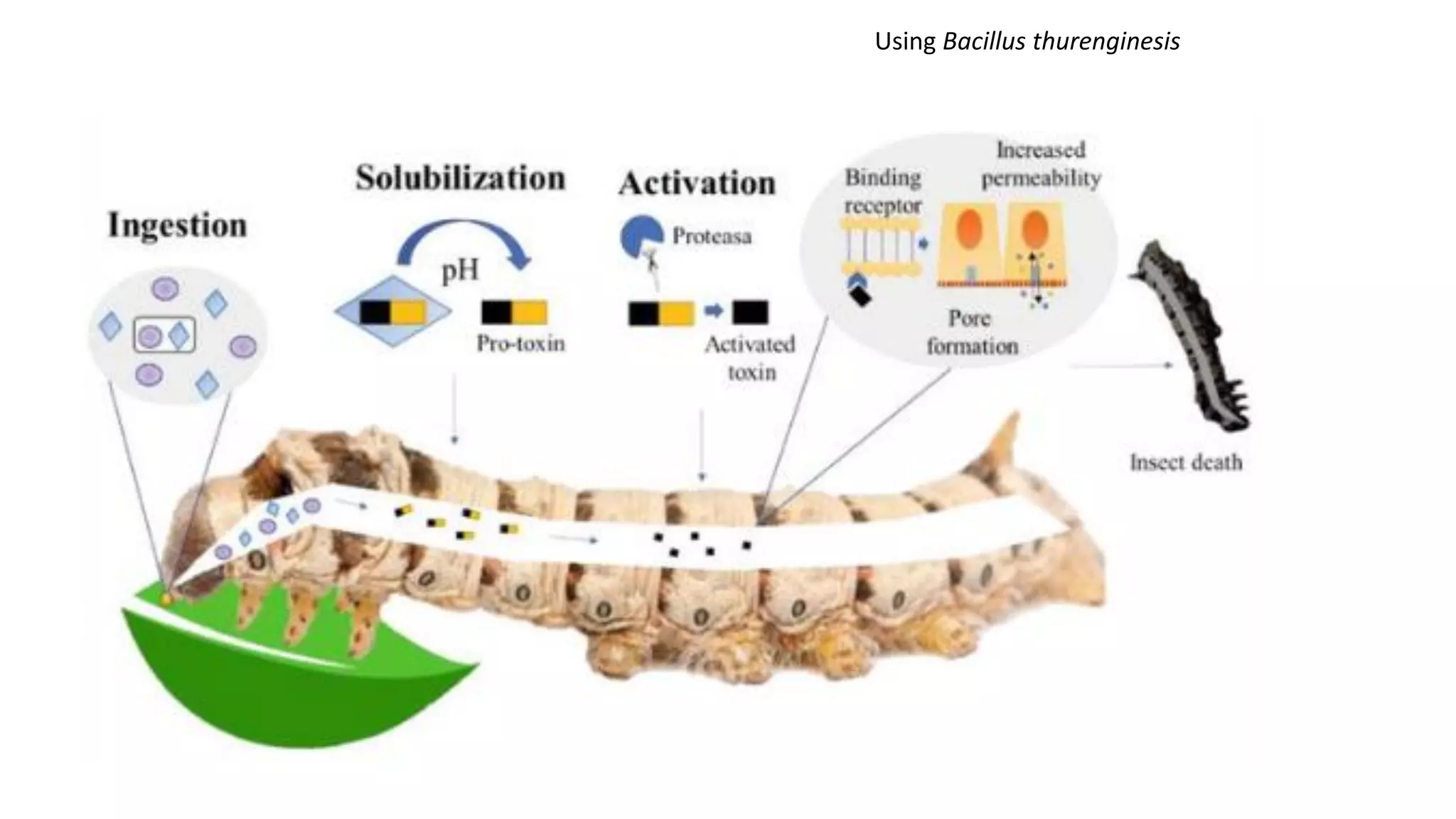
• Bt cotton has been genetically modified by the insertion of one or
more genes from a common soil bacterium, Bacillus thuringiensis.
These genes encode for the production of insecticidal proteins, and
thus, genetically transformed plants produce one or more toxins as
they grow. the insertion of the genes from B. thuringiensis causes
cotton plant cells to produce crystal insecticidal proteins, often
referred to as Cry- proteins. These perforate the cell membrane of in
alkaline environment causing cell lysis and finally death of the insect.
Using Bacillus thurenginesis
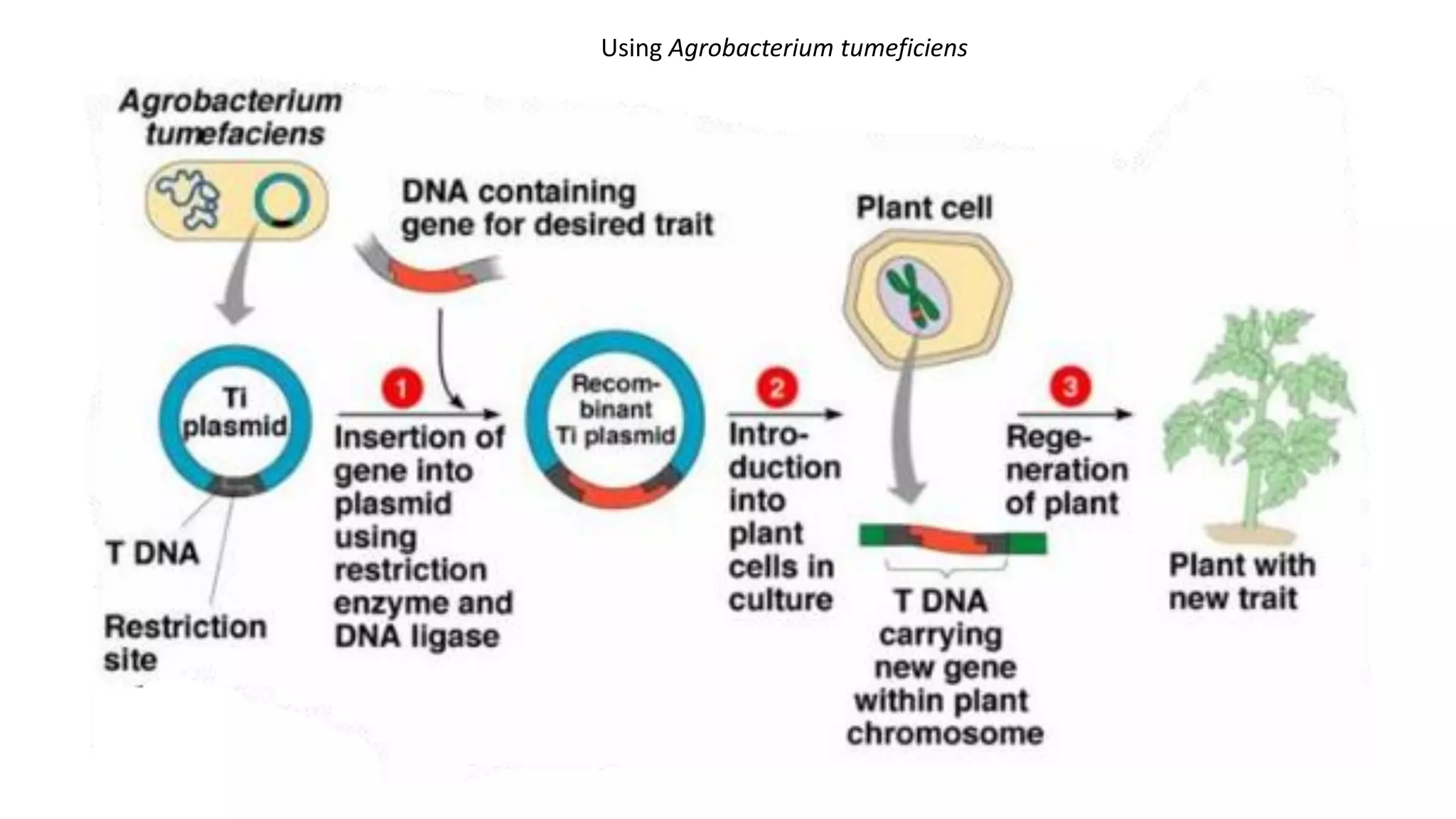
Using Agrobacterium tumeficiens
Application in industrial sector
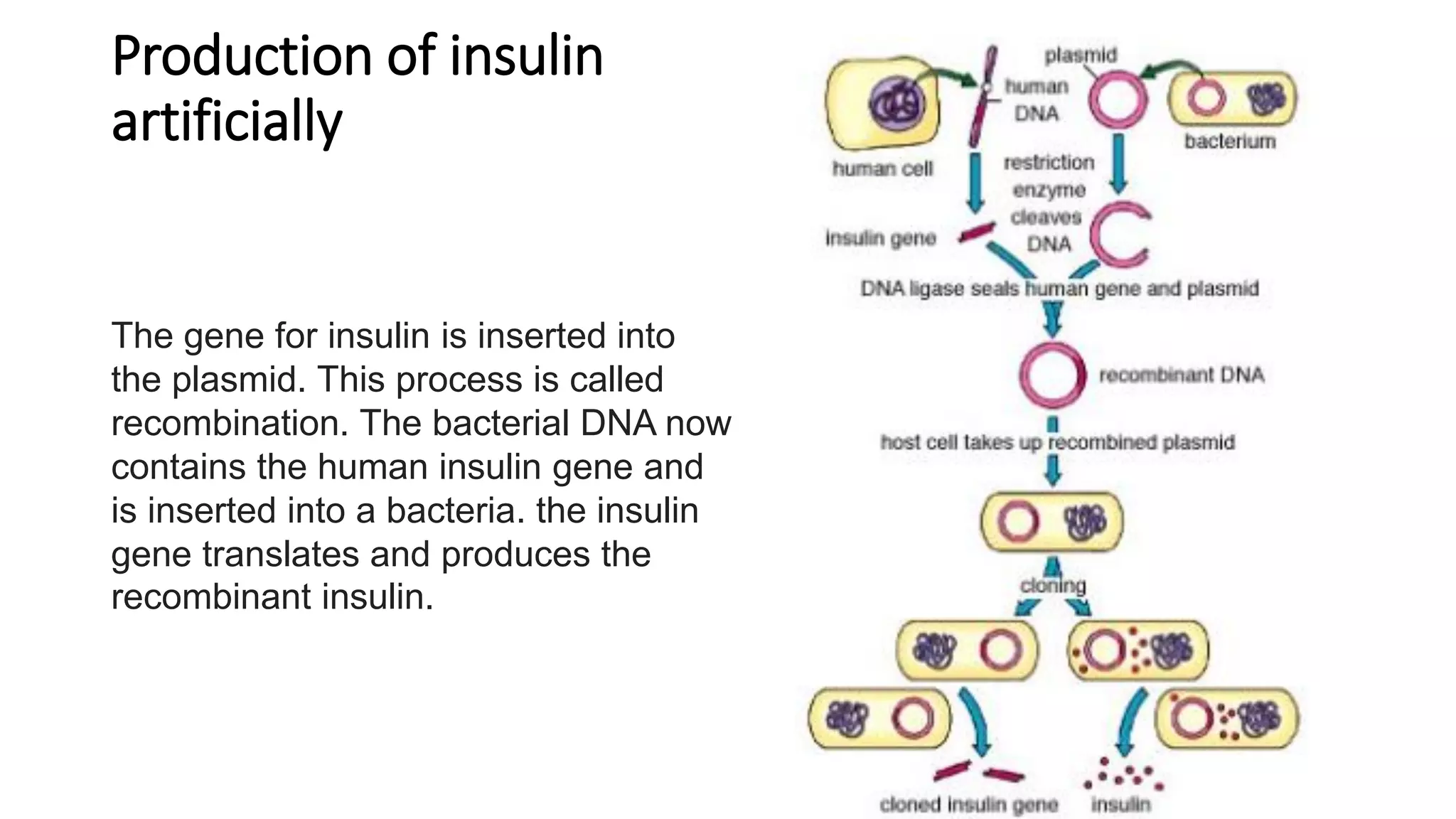
Production of insulin
artificially
The gene for insulin is inserted into
the plasmid. This process is called
recombination. The bacterial DNA now
contains the human insulin gene and
is inserted into a bacteria. the insulin
gene translates and produces the
recombinant insulin.
Application-of-genetic-engineering.pdf

Application-of-genetic-engineering.pdf

  • 1.
    Application of genetic engineering Submittedby: Ananya Naskar SALS 5th Sem Uttaranchal University Submitted to: Farah Marfi ma’am
  • 2.
    Contents • Genetic engineering •Application in pharmaceutical sector • Vaccines • Gene therapy • Application in agricultural sector • Bacillus thuringinesis • Agrobacterium tumeficiens • Application in industrial sector • Production of insulin artificially
  • 3.
    What is Geneticengineering ? • It is a process in which a piece of DNA is artificially copied from one organism and ligated into DNA of another organism. • It has application in various sectors- • Pharmaceutical, • Agriculture, • Industrial
  • 4.
  • 5.
    Vaccines(recombinant microbes) The simplestapplication of the modern genetic manipulation methods to vaccine development is the expression in microbial cells of genes from pathogens that encode surface antigens capable of inducing neutralizing antibodies in the host of the pathogen involved.
  • 6.
    Gene therapy (nucleicacids) Gene therapy is a medical approach that treats or prevents disease by correcting the underlying genetic problem. Gene therapy techniques allow doctors to treat a disorder by altering a person's genetic makeup instead of using drugs or surgery. On September 14, 1990, W. French Anderson and his colleagues at the NIH performed the first approved gene therapy procedure on a four-year-old girl born with severe combined immunodeficiency (SCID)
  • 7.
  • 8.
    Includes - • Cropimprovement • Frost Resistance • Delayed fruit ripening • Insect resistance • Herbicide resistance • Genetically engineered food- • Bt cotton • Bt brinjal
  • 9.
    Bt cotton • Btcotton has been genetically modified by the insertion of one or more genes from a common soil bacterium, Bacillus thuringiensis. These genes encode for the production of insecticidal proteins, and thus, genetically transformed plants produce one or more toxins as they grow. the insertion of the genes from B. thuringiensis causes cotton plant cells to produce crystal insecticidal proteins, often referred to as Cry- proteins. These perforate the cell membrane of in alkaline environment causing cell lysis and finally death of the insect.
  • 10.
  • 11.
  • 12.
  • 13.
    Production of insulin artificially Thegene for insulin is inserted into the plasmid. This process is called recombination. The bacterial DNA now contains the human insulin gene and is inserted into a bacteria. the insulin gene translates and produces the recombinant insulin.