22nd – October, 2017.
APPLICATION OF SECURITY TO COMPUTER
Outline
• Introduction
• Definition of Computer Security
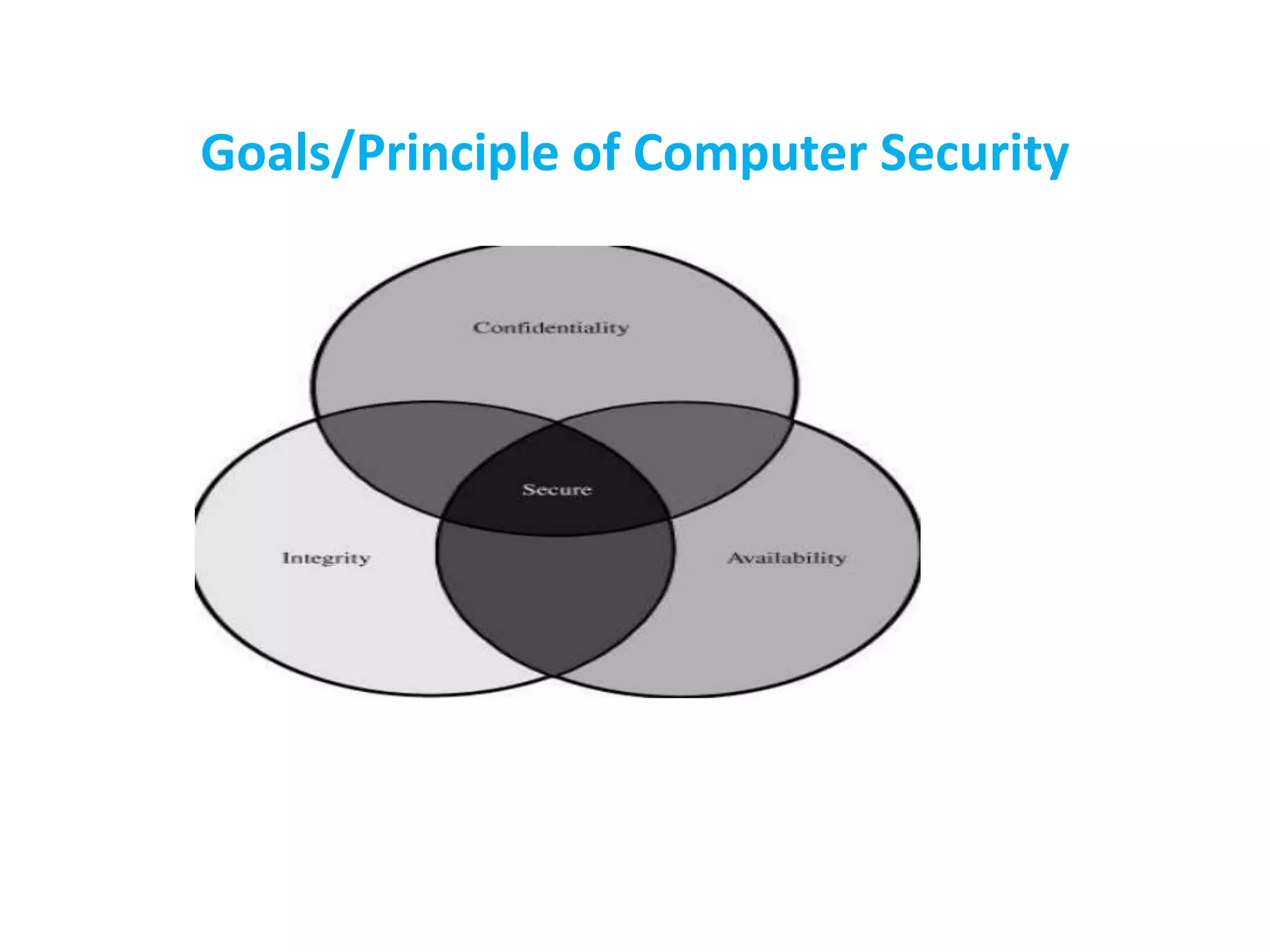
• Core Goal/Principle of Computer Security
• Vulnerability
• Threats
• Attacks
• Defenses
Introduction
• Many aspects of our lives rely on the
• Internet and computers,
 Communications include (email, cell phones, texting)
 Government licensing, tax records),
 Finance (bank accounts, loans, electronic paychecks),
 Medicine (equipment, medical records).
How much of personal information stored either on your own
computer or on someone else’s system.
• How is that data and the systems on which that data resides kept
secure?
• Thousands of infected web pages are being discovered every day.
Hundreds of millions of records have been involved in data breaches.
• New attack methods are launched continuously.
• Hackers have the ability to watch all your actions on the computer, or
cause damage to your computer by reformatting your hard drive or
changing your data.
CONT,
Computer security, also known as
-Cyber security
-IT security,
• Is the protection of computer systems from
-The theft
-Damage of either
-Hardware
-software
-Information,
-Disruption
-Misdirection of the services they provide.
CONT
Cyber security includes controlling physical
access to the hardware,
• Protecting against harm that may come via
network access, data and code injection.
• Most computer security measures involve
data;
• Encryption and Passwords.
Goals/Principle of Computer Security
CONT,
Confidentiality called Secrecy or Privacy:
ensures that computer-related assets are
accessed only by authorized parties.
• Integrity: it means that assets can be modified
only by authorized parties or only in authorized
ways.
•Availability: it means that assets are accessible
to authorized parties at appropriate times.
Vulnerability
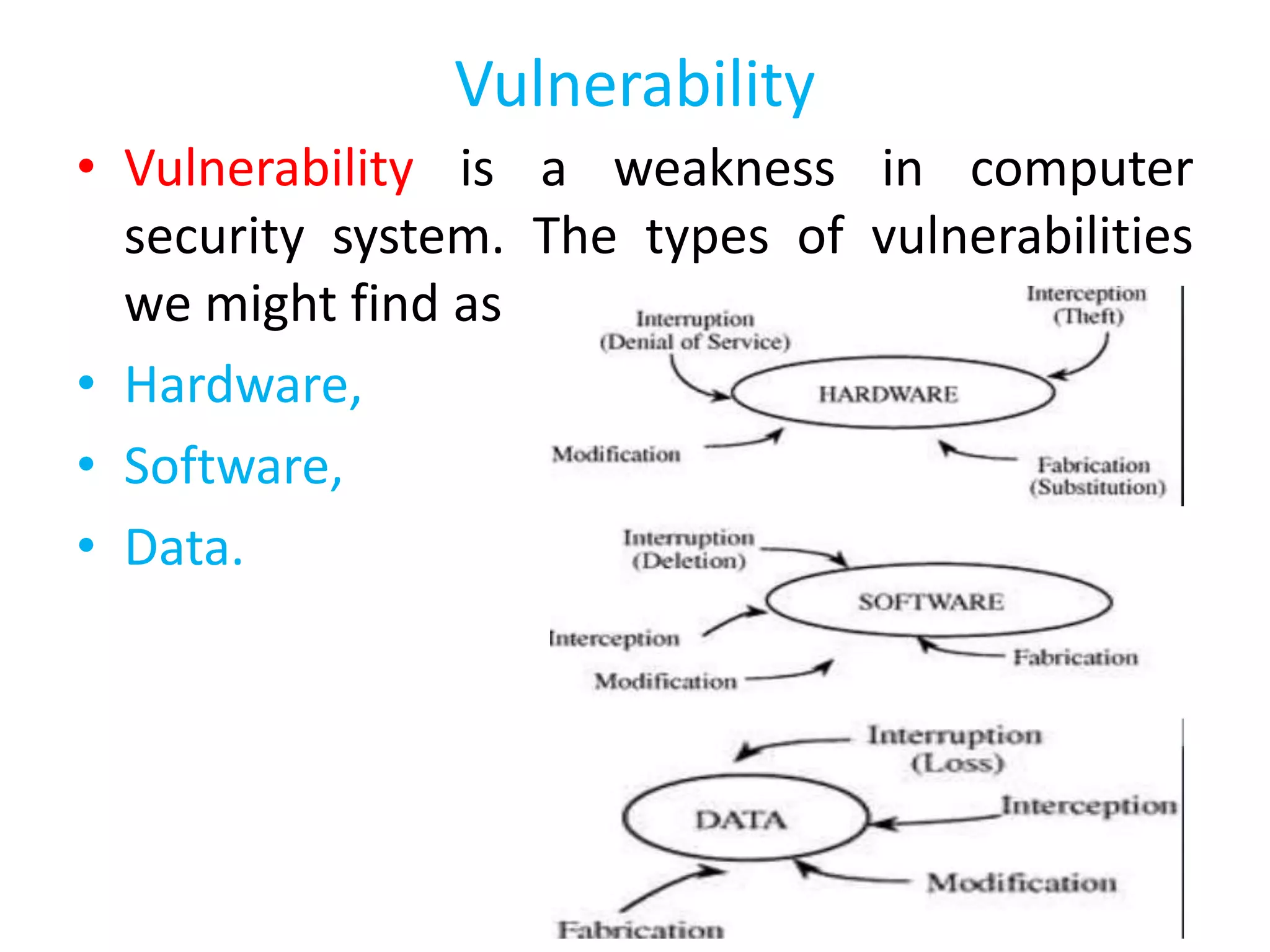
• Vulnerability is a weakness in computer
security system. The types of vulnerabilities
we might find as
• Hardware,
• Software,
• Data.
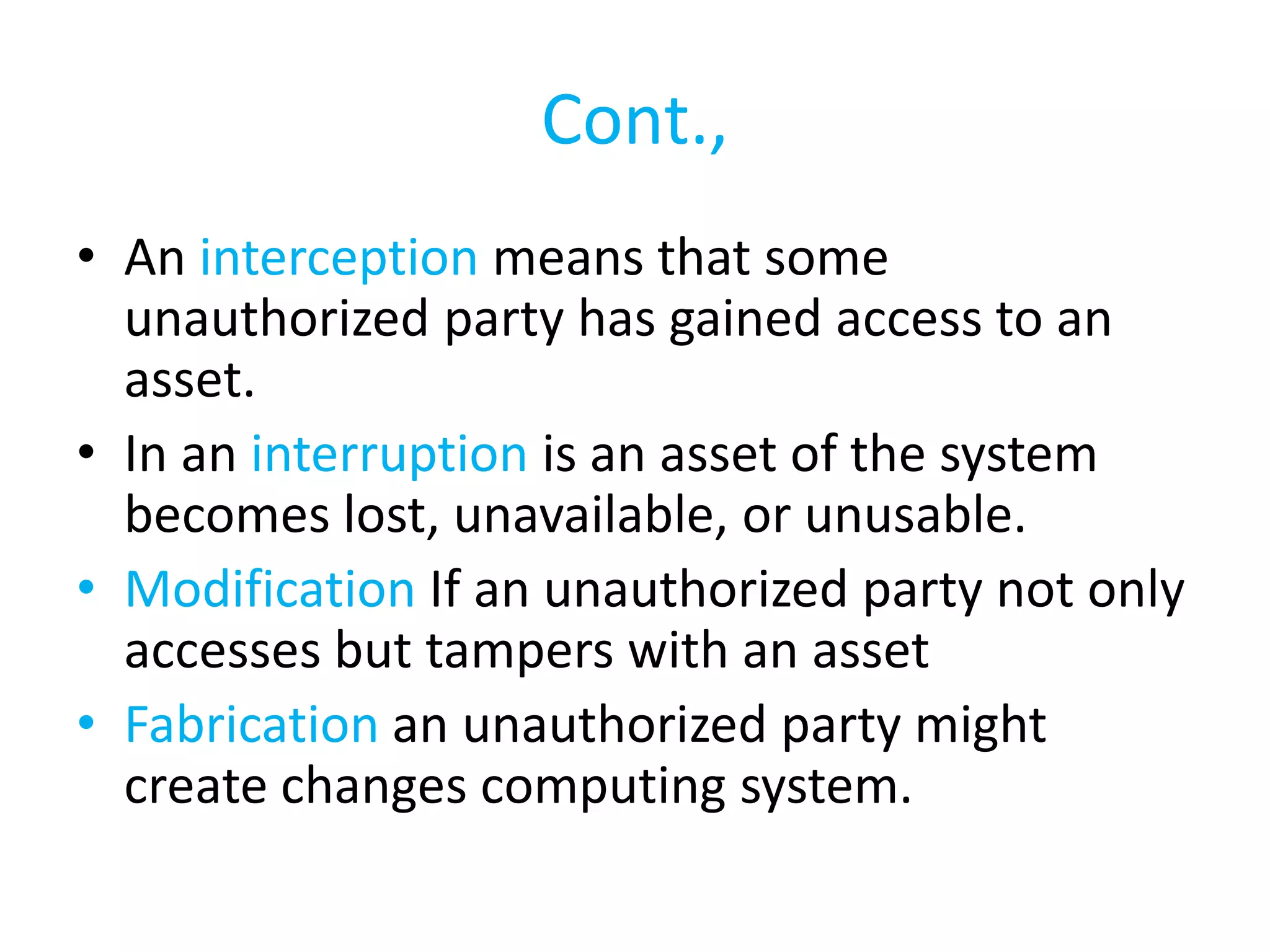
Cont.,
• An interception means that some
unauthorized party has gained access to an
asset.
• In an interruption is an asset of the system
becomes lost, unavailable, or unusable.
• Modification If an unauthorized party not only
accesses but tampers with an asset
• Fabrication an unauthorized party might
create changes computing system.
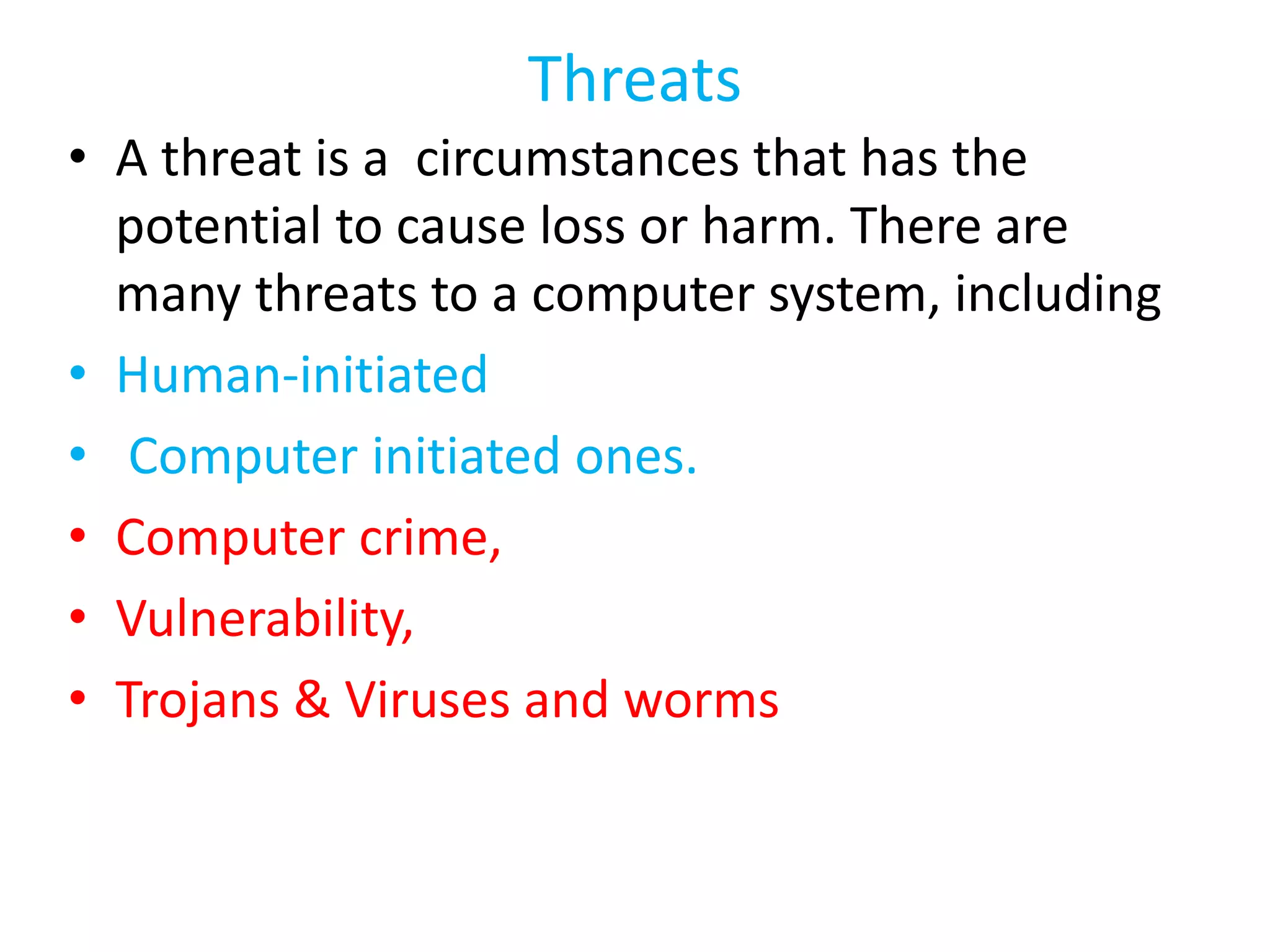
Threats
• A threat is a circumstances that has the
potential to cause loss or harm. There are
many threats to a computer system, including
• Human-initiated
• Computer initiated ones.
• Computer crime,
• Vulnerability,
• Trojans & Viruses and worms
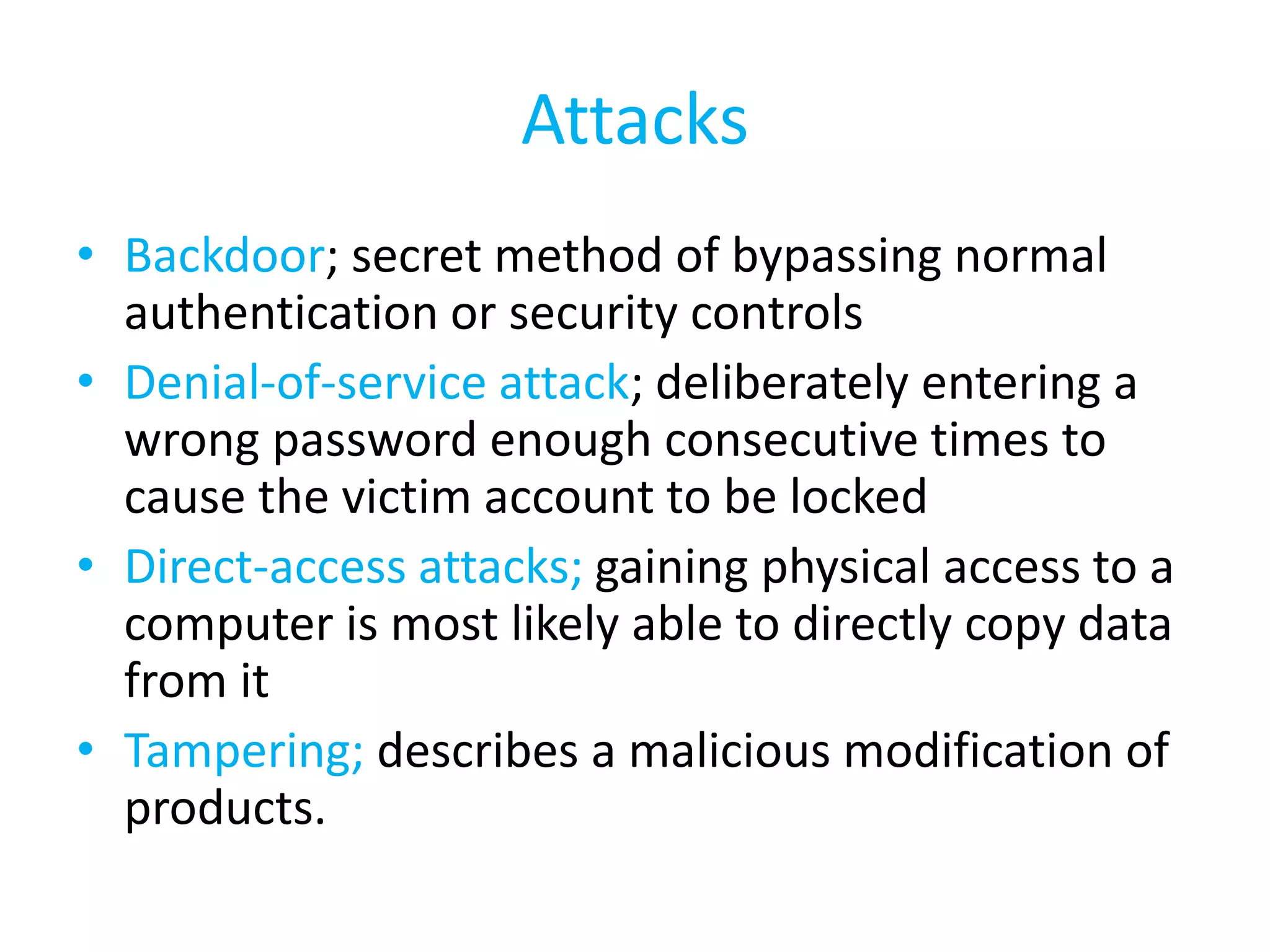
Attacks
• Backdoor; secret method of bypassing normal
authentication or security controls
• Denial-of-service attack; deliberately entering a
wrong password enough consecutive times to
cause the victim account to be locked
• Direct-access attacks; gaining physical access to a
computer is most likely able to directly copy data
from it
• Tampering; describes a malicious modification of
products.
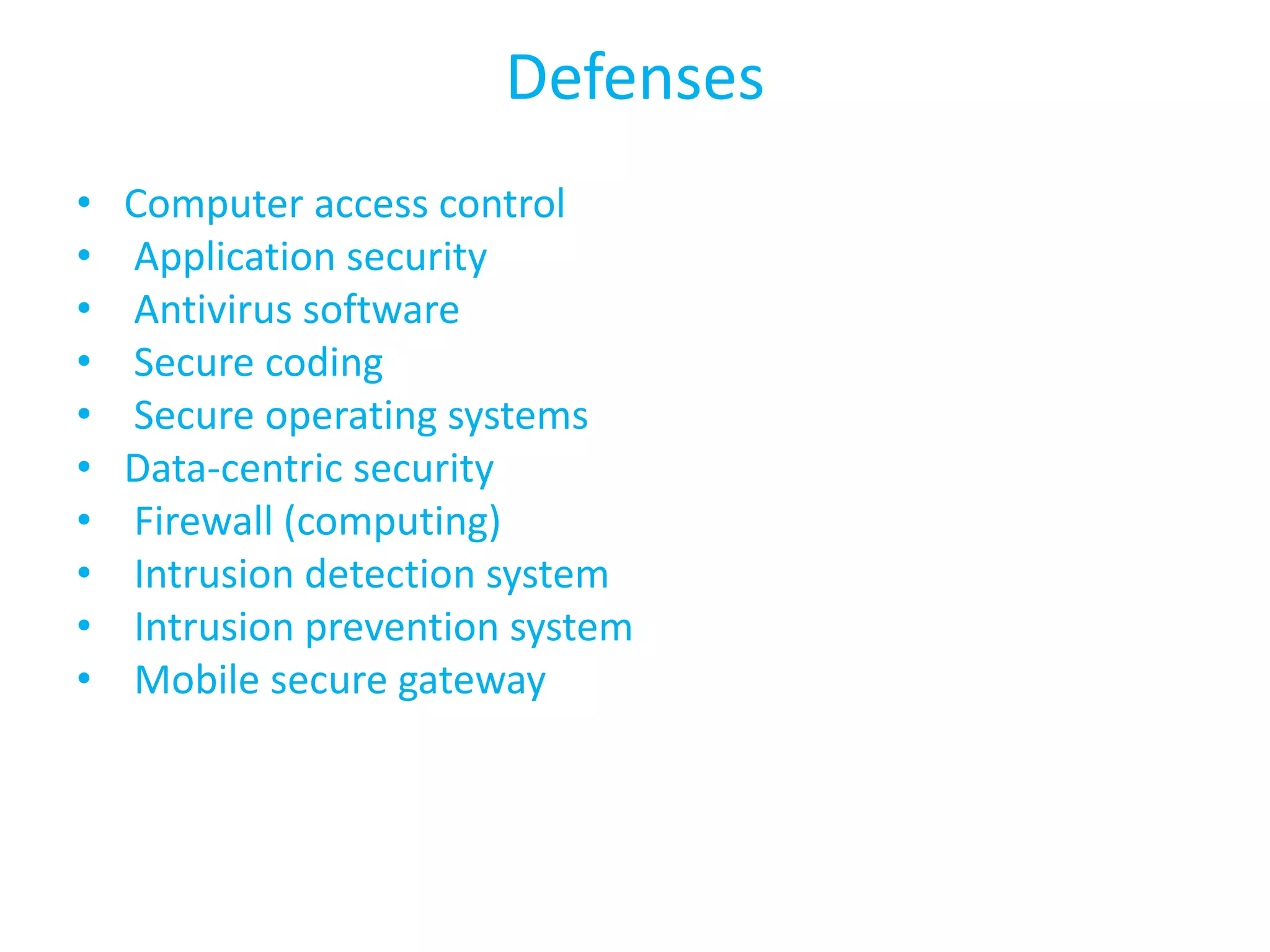
Defenses
• Computer access control
• Application security
• Antivirus software
• Secure coding
• Secure operating systems
• Data-centric security
• Firewall (computing)
• Intrusion detection system
• Intrusion prevention system
• Mobile secure gateway
THANK YOU

Application of security computer

  • 1.
    22nd – October,2017. APPLICATION OF SECURITY TO COMPUTER
  • 2.
    Outline • Introduction • Definitionof Computer Security • Core Goal/Principle of Computer Security • Vulnerability • Threats • Attacks • Defenses
  • 3.
    Introduction • Many aspectsof our lives rely on the • Internet and computers,  Communications include (email, cell phones, texting)  Government licensing, tax records),  Finance (bank accounts, loans, electronic paychecks),  Medicine (equipment, medical records). How much of personal information stored either on your own computer or on someone else’s system. • How is that data and the systems on which that data resides kept secure? • Thousands of infected web pages are being discovered every day. Hundreds of millions of records have been involved in data breaches. • New attack methods are launched continuously. • Hackers have the ability to watch all your actions on the computer, or cause damage to your computer by reformatting your hard drive or changing your data.
  • 4.
    CONT, Computer security, alsoknown as -Cyber security -IT security, • Is the protection of computer systems from -The theft -Damage of either -Hardware -software -Information, -Disruption -Misdirection of the services they provide.
  • 5.
    CONT Cyber security includescontrolling physical access to the hardware, • Protecting against harm that may come via network access, data and code injection. • Most computer security measures involve data; • Encryption and Passwords.
  • 6.
  • 7.
    CONT, Confidentiality called Secrecyor Privacy: ensures that computer-related assets are accessed only by authorized parties. • Integrity: it means that assets can be modified only by authorized parties or only in authorized ways. •Availability: it means that assets are accessible to authorized parties at appropriate times.
  • 8.
    Vulnerability • Vulnerability isa weakness in computer security system. The types of vulnerabilities we might find as • Hardware, • Software, • Data.
  • 9.
    Cont., • An interceptionmeans that some unauthorized party has gained access to an asset. • In an interruption is an asset of the system becomes lost, unavailable, or unusable. • Modification If an unauthorized party not only accesses but tampers with an asset • Fabrication an unauthorized party might create changes computing system.
  • 10.
    Threats • A threatis a circumstances that has the potential to cause loss or harm. There are many threats to a computer system, including • Human-initiated • Computer initiated ones. • Computer crime, • Vulnerability, • Trojans & Viruses and worms
  • 11.
    Attacks • Backdoor; secretmethod of bypassing normal authentication or security controls • Denial-of-service attack; deliberately entering a wrong password enough consecutive times to cause the victim account to be locked • Direct-access attacks; gaining physical access to a computer is most likely able to directly copy data from it • Tampering; describes a malicious modification of products.
  • 12.
    Defenses • Computer accesscontrol • Application security • Antivirus software • Secure coding • Secure operating systems • Data-centric security • Firewall (computing) • Intrusion detection system • Intrusion prevention system • Mobile secure gateway
  • 13.