

AP WORLD HISTORY – 
STRAYER UNIT 1 
OVERVIEW 
THE BIG PICTURE: TURNING POINTS IN EARLY WORLD 
HISTORY
THE EMERGENCE OF HUMANKIND 
• Most scholars in the post-Darwinian world regard human 
beginnings in the context of biological change. 
• archeologists and anthropologists believe that the lines of descent 
leading to Homo sapiens (modern man) and chimpanzees diverged 
around 5 million–6 million years ago 
• hominid family emerged in eastern and southern Africa, with 
20–30 different related species 
• they were bipedal (walked on two legs)
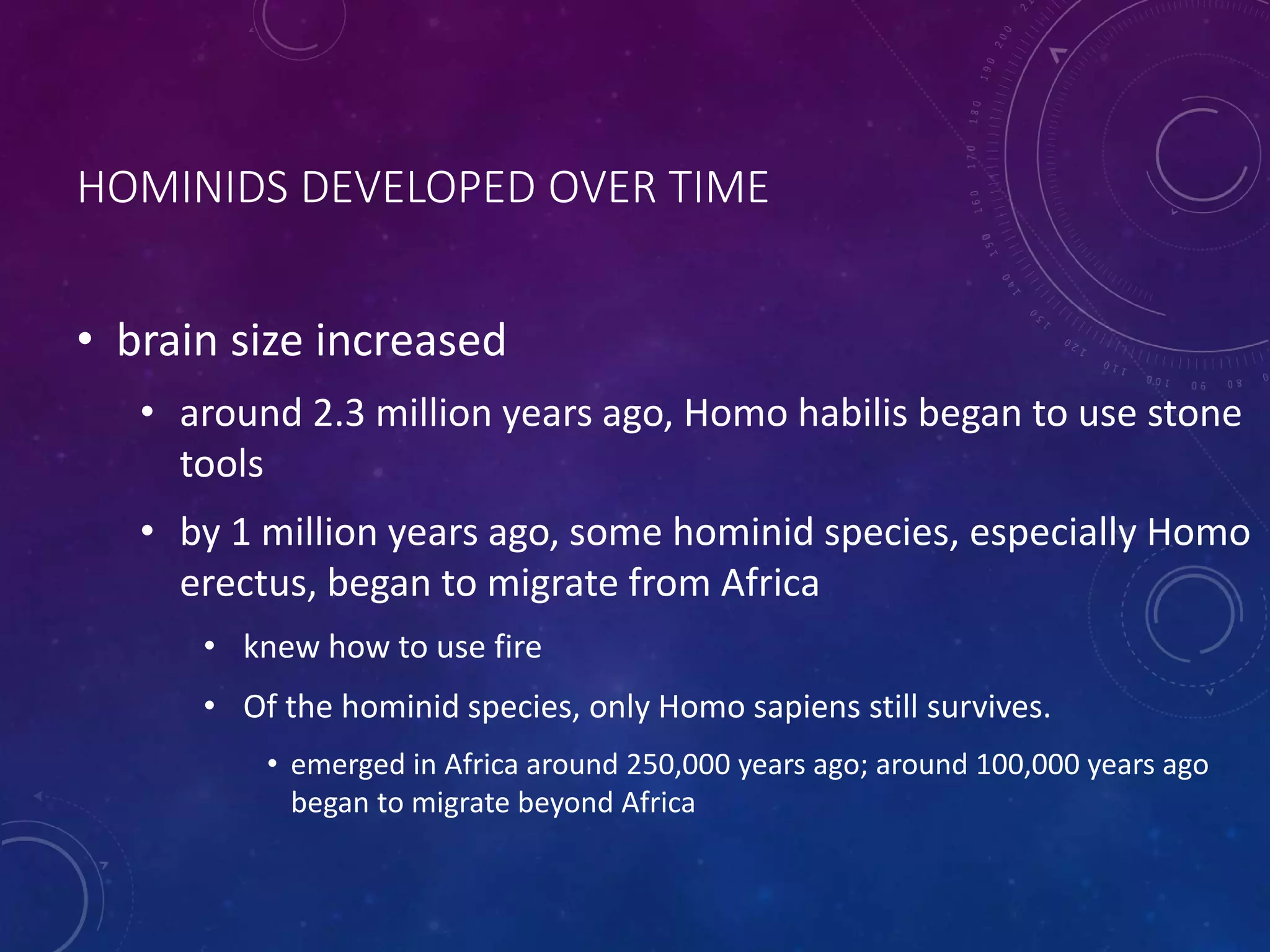
HOMINIDS DEVELOPED OVER TIME 
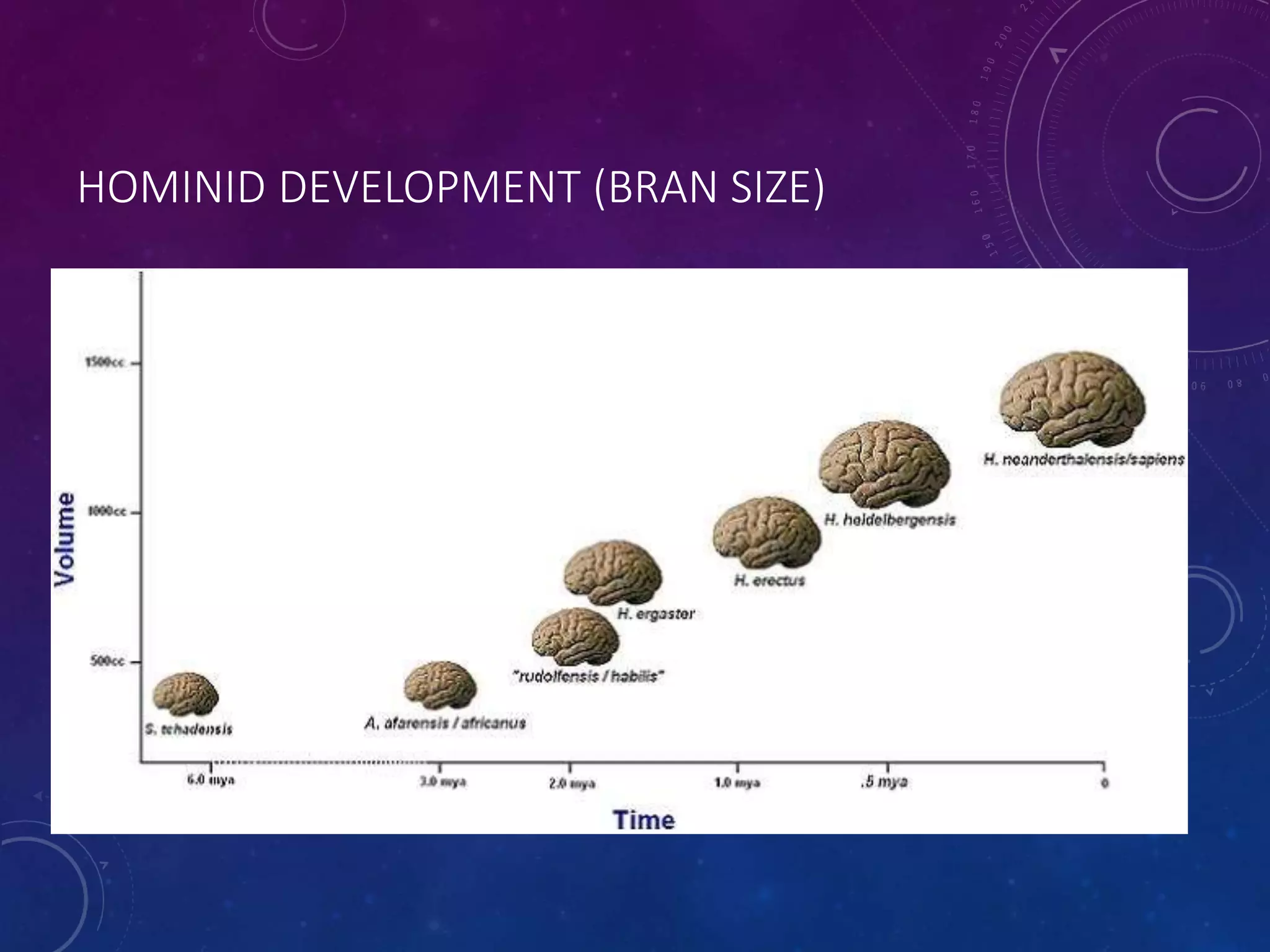
• brain size increased 
• around 2.3 million years ago, Homo habilis began to use stone 
tools 
• by 1 million years ago, some hominid species, especially Homo 
erectus, began to migrate from Africa 
• knew how to use fire 
• Of the hominid species, only Homo sapiens still survives. 
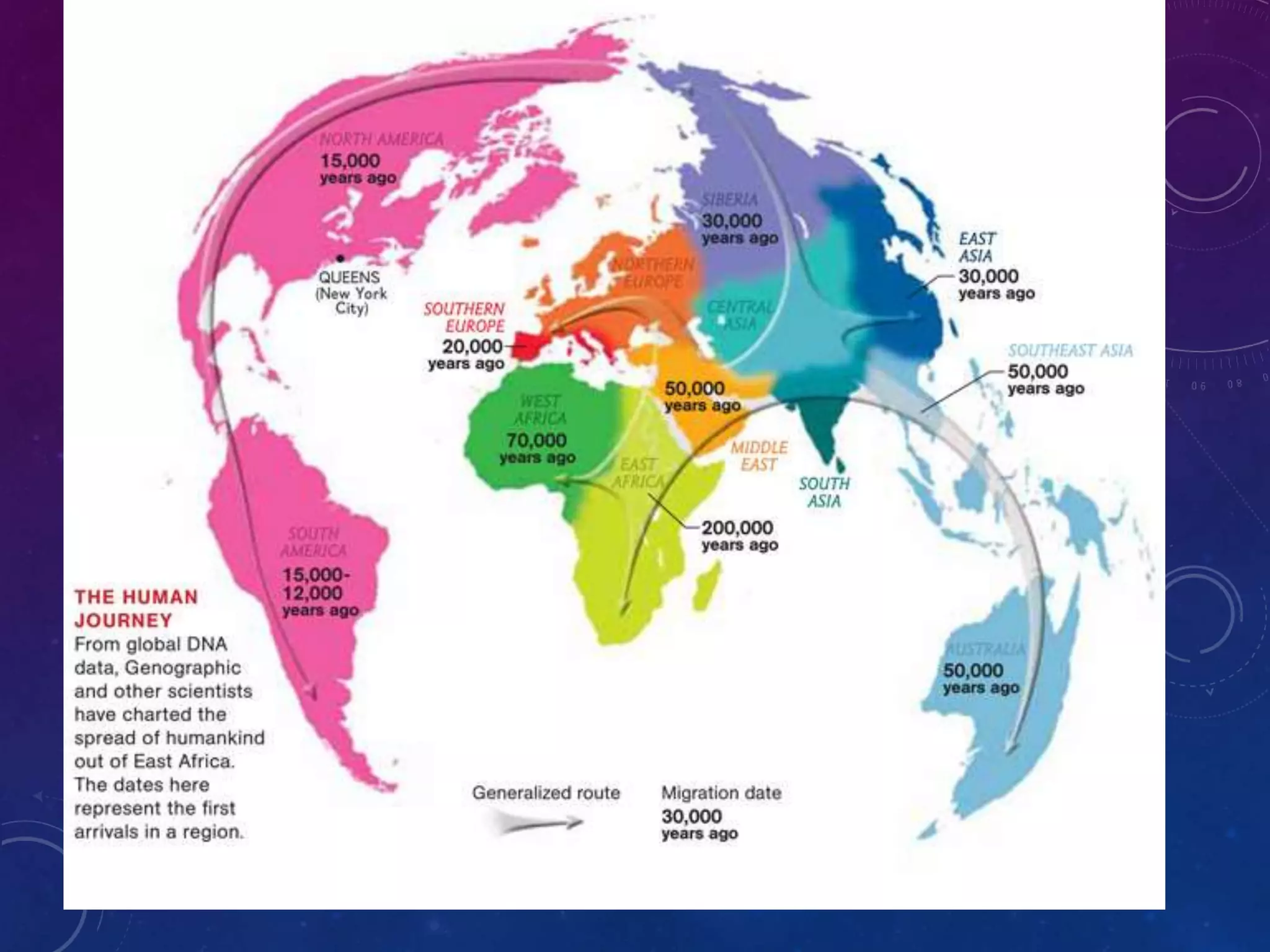
• emerged in Africa around 250,000 years ago; around 100,000 years ago 
began to migrate beyond Africa
HOMINID DEVELOPMENT (BRAN SIZE)
THE GLOBALIZATION OF HUMANKIND 
• Today humans occupy every significant landmass 
• 500,000 years ago didn’t exist 
• 100,000 years ago fewer than 10,000 individuals 
• Remarkably become a worldwide and increasingly 
dominant presence
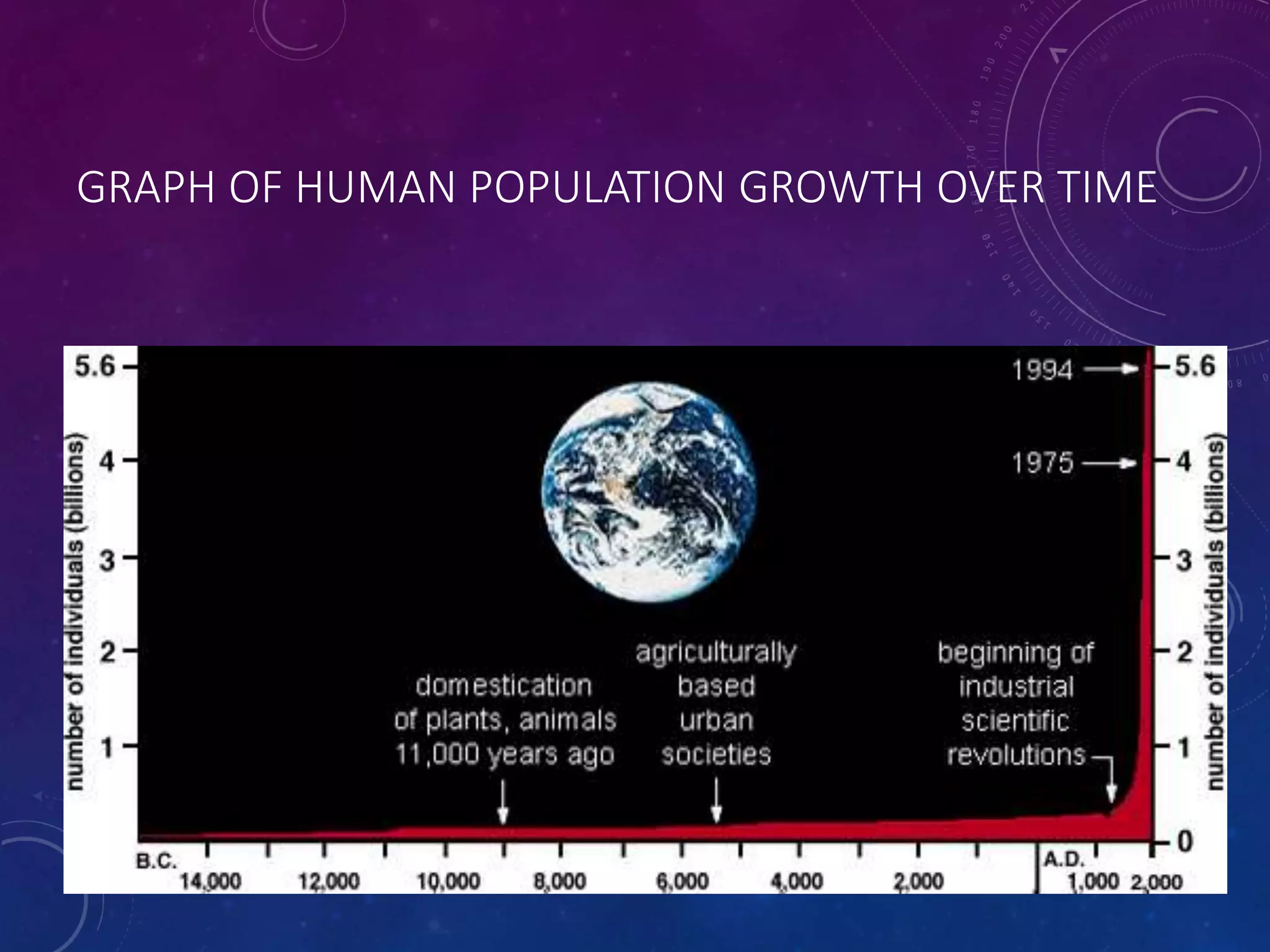
GRAPH OF HUMAN POPULATION GROWTH OVER TIME
THE PALEOLITHIC ERA (“OLD STONE AGE”) 
• Initial migrations from Africa took place in the 
Paleolithic Era. 
• gatherers and hunters 
• Paleolithic era continued until around 11,000 years ago 
• The Paleolithic era accounts for over 95 percent of 
human time on earth 
• accounts for about 12 percent of the total number of 
people who have lived
RELEVANCE OF EARLY HUMAN HISTORY 
• No other large species created homes in every 
environmental niche as Homo sapiens did. 
• slowly developed technology 
• slowly imposed meaning through 
• art, 
• ritual, and 
• religion
THE “REVOLUTION” OF FARMING AND HERDING 
• There are around 7 billion people in the world today; almost all live 
from domesticated plants and animals. 
• Domestication first occurred in several regions about 11,000 years ago. 
• it was the most significant and enduring transformation of 
humankind 
• provided the foundation for almost all subsequent change 
• the period from 11,000 years ago to around 1750 C.E. can be 
regarded as a single age— 
• the age of agriculture 
• allowed for a large increase in the human population
IMPORTANCE OF FOOD PRODUCTION 
• Food production laid the foundation for enduring divisions within 
human communities. 
• some regions were luckier in terms of climate and plants/animals 
available for domestication 
• the Americas were disadvantaged by the lack of large animals to be 
domesticated 
• in the Afro-Eurasian world, conflicts between agriculturalists and 
pastoralists became an enduring pattern
THE TURNING POINT OF CIVILIZATION 
• The most prominent human communities that emerged were 
“civilizations”: societies based in cities and governed by powerful 
states. 
• Almost everyone in the world now lives in a state with a formal 
political authority. 
• The first cities and states emerged around 3500 B.C.E. 
• well after 1000 C.E. substantial numbers still lived in communities 
without any state or urban structures
RELEVANCE OF STATE CITY-BASED SOCIETIES 
• state- and city-based societies have been the most 
powerful and innovative human communities 
• a. they have given rise to empires 
• b. they have created enduring cultural and religious 
traditions 
• c. they have created new technologies 
• d. they have bred sharp class inequalities, patriarchy, 
and large-scale warfare
A NOTE ON DATES 
• A recent convention encourages dating by 
B.C.E. and C.E., not B.C. and A.D. 
• B.C.E. = before the Common Era = B.C. (before Christ) 
• C.E. = the Common Era = A.D. (Anno Domini, Latin for 
“year of the Lord”) 
• B.C.E./C.E. dating is an effort to get away from 
Christian-centered and Eurocentric thinking. 
• Societies have reckoned time in many different 
ways. 
• 1. China: dated by the reign of particular emperors 
• 2. Muslim calendar: Year 1 marks Muhammad’s 
emigration to Medina in 622 C.E.

Ap world history – strayer unit 1 overview

  • 1.
    AP WORLD HISTORY– STRAYER UNIT 1 OVERVIEW THE BIG PICTURE: TURNING POINTS IN EARLY WORLD HISTORY
  • 2.
    THE EMERGENCE OFHUMANKIND • Most scholars in the post-Darwinian world regard human beginnings in the context of biological change. • archeologists and anthropologists believe that the lines of descent leading to Homo sapiens (modern man) and chimpanzees diverged around 5 million–6 million years ago • hominid family emerged in eastern and southern Africa, with 20–30 different related species • they were bipedal (walked on two legs)
  • 3.
    HOMINIDS DEVELOPED OVERTIME • brain size increased • around 2.3 million years ago, Homo habilis began to use stone tools • by 1 million years ago, some hominid species, especially Homo erectus, began to migrate from Africa • knew how to use fire • Of the hominid species, only Homo sapiens still survives. • emerged in Africa around 250,000 years ago; around 100,000 years ago began to migrate beyond Africa
  • 4.
  • 6.
    THE GLOBALIZATION OFHUMANKIND • Today humans occupy every significant landmass • 500,000 years ago didn’t exist • 100,000 years ago fewer than 10,000 individuals • Remarkably become a worldwide and increasingly dominant presence
  • 7.
    GRAPH OF HUMANPOPULATION GROWTH OVER TIME
  • 8.
    THE PALEOLITHIC ERA(“OLD STONE AGE”) • Initial migrations from Africa took place in the Paleolithic Era. • gatherers and hunters • Paleolithic era continued until around 11,000 years ago • The Paleolithic era accounts for over 95 percent of human time on earth • accounts for about 12 percent of the total number of people who have lived
  • 9.
    RELEVANCE OF EARLYHUMAN HISTORY • No other large species created homes in every environmental niche as Homo sapiens did. • slowly developed technology • slowly imposed meaning through • art, • ritual, and • religion
  • 10.
    THE “REVOLUTION” OFFARMING AND HERDING • There are around 7 billion people in the world today; almost all live from domesticated plants and animals. • Domestication first occurred in several regions about 11,000 years ago. • it was the most significant and enduring transformation of humankind • provided the foundation for almost all subsequent change • the period from 11,000 years ago to around 1750 C.E. can be regarded as a single age— • the age of agriculture • allowed for a large increase in the human population
  • 11.
    IMPORTANCE OF FOODPRODUCTION • Food production laid the foundation for enduring divisions within human communities. • some regions were luckier in terms of climate and plants/animals available for domestication • the Americas were disadvantaged by the lack of large animals to be domesticated • in the Afro-Eurasian world, conflicts between agriculturalists and pastoralists became an enduring pattern
  • 12.
    THE TURNING POINTOF CIVILIZATION • The most prominent human communities that emerged were “civilizations”: societies based in cities and governed by powerful states. • Almost everyone in the world now lives in a state with a formal political authority. • The first cities and states emerged around 3500 B.C.E. • well after 1000 C.E. substantial numbers still lived in communities without any state or urban structures
  • 13.
    RELEVANCE OF STATECITY-BASED SOCIETIES • state- and city-based societies have been the most powerful and innovative human communities • a. they have given rise to empires • b. they have created enduring cultural and religious traditions • c. they have created new technologies • d. they have bred sharp class inequalities, patriarchy, and large-scale warfare
  • 14.
    A NOTE ONDATES • A recent convention encourages dating by B.C.E. and C.E., not B.C. and A.D. • B.C.E. = before the Common Era = B.C. (before Christ) • C.E. = the Common Era = A.D. (Anno Domini, Latin for “year of the Lord”) • B.C.E./C.E. dating is an effort to get away from Christian-centered and Eurocentric thinking. • Societies have reckoned time in many different ways. • 1. China: dated by the reign of particular emperors • 2. Muslim calendar: Year 1 marks Muhammad’s emigration to Medina in 622 C.E.