ANU Library: responding to new needs
Roxanne Missingham, University Librarian, ANU
• MOOCS – reaching out
• Search and finding
• Cognition and literacy
• Open access – resources at your
fingertips (or almost)
2
3
MOOCs
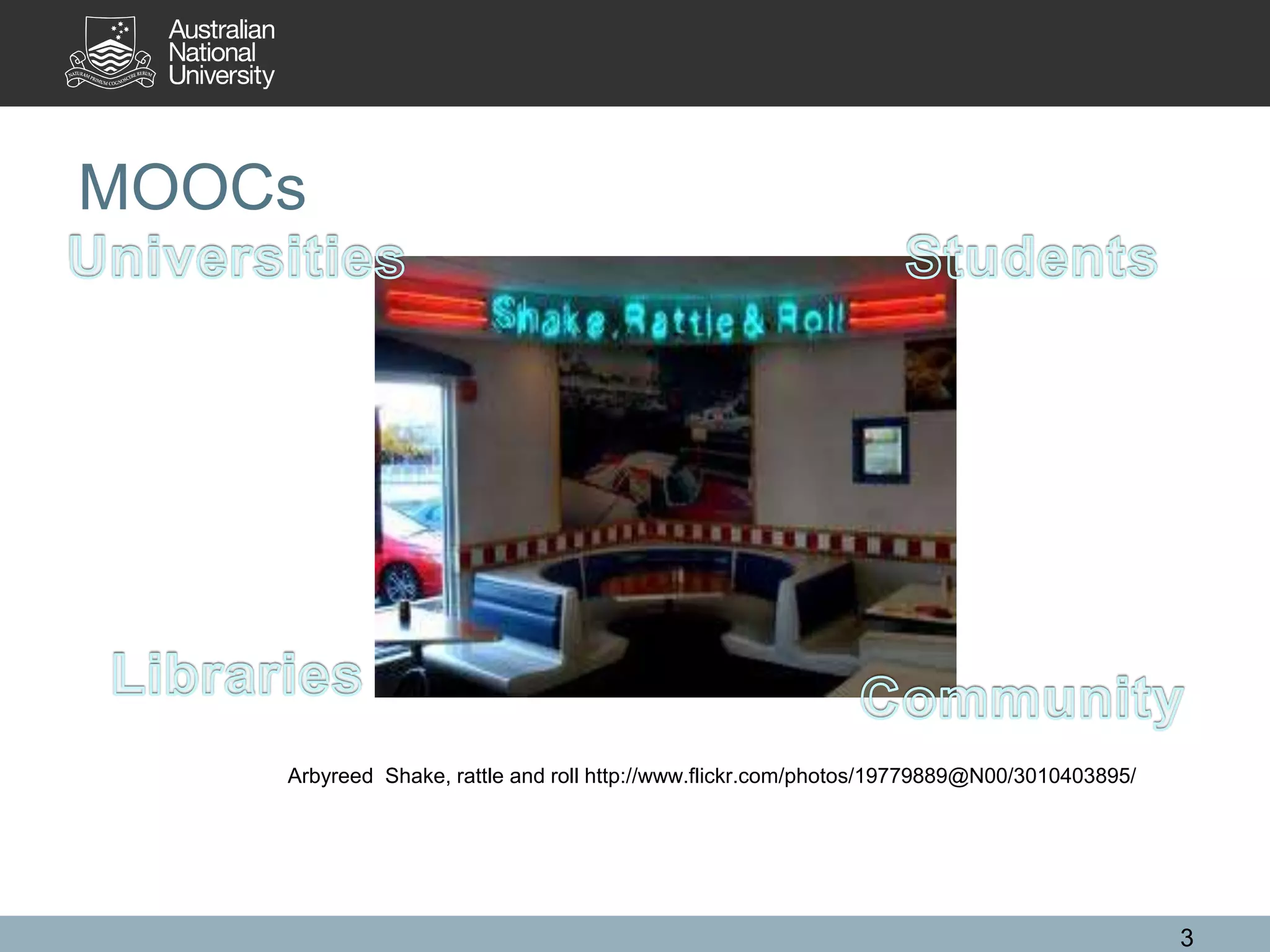
Arbyreed Shake, rattle and roll http://www.flickr.com/photos/19779889@N00/3010403895/
“That's what education should be," I said,
"the art of orientation. Educators should
devise the simplest and most effective
methods of turning minds around. It
shouldn't be the art of implanting sight in the
organ, but should proceed on the
understanding that the organ already has
the capacity, but is improperly aligned and
isn't facing the right way.”
― Plato, The Republic 4
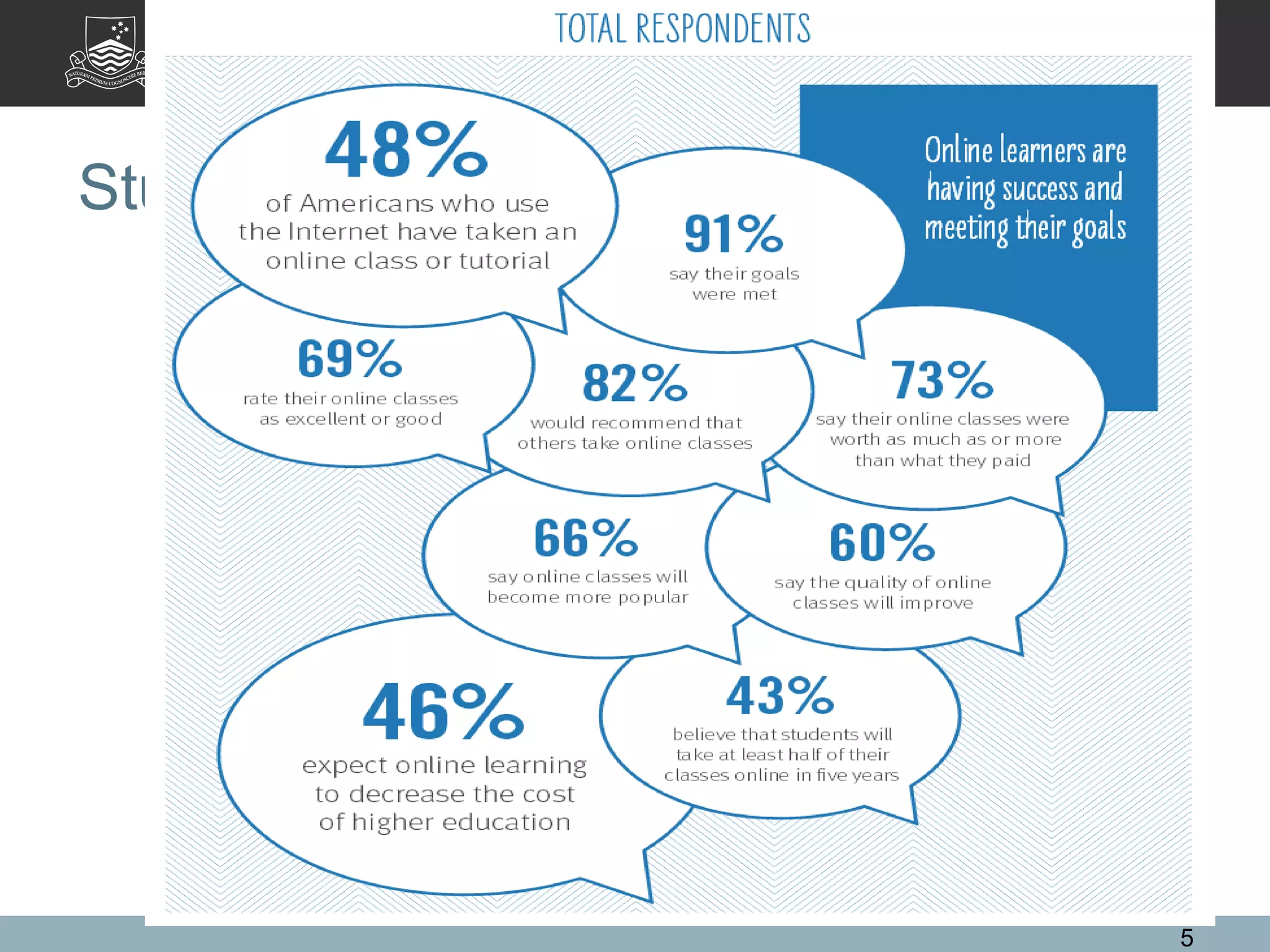
Student expectations
5
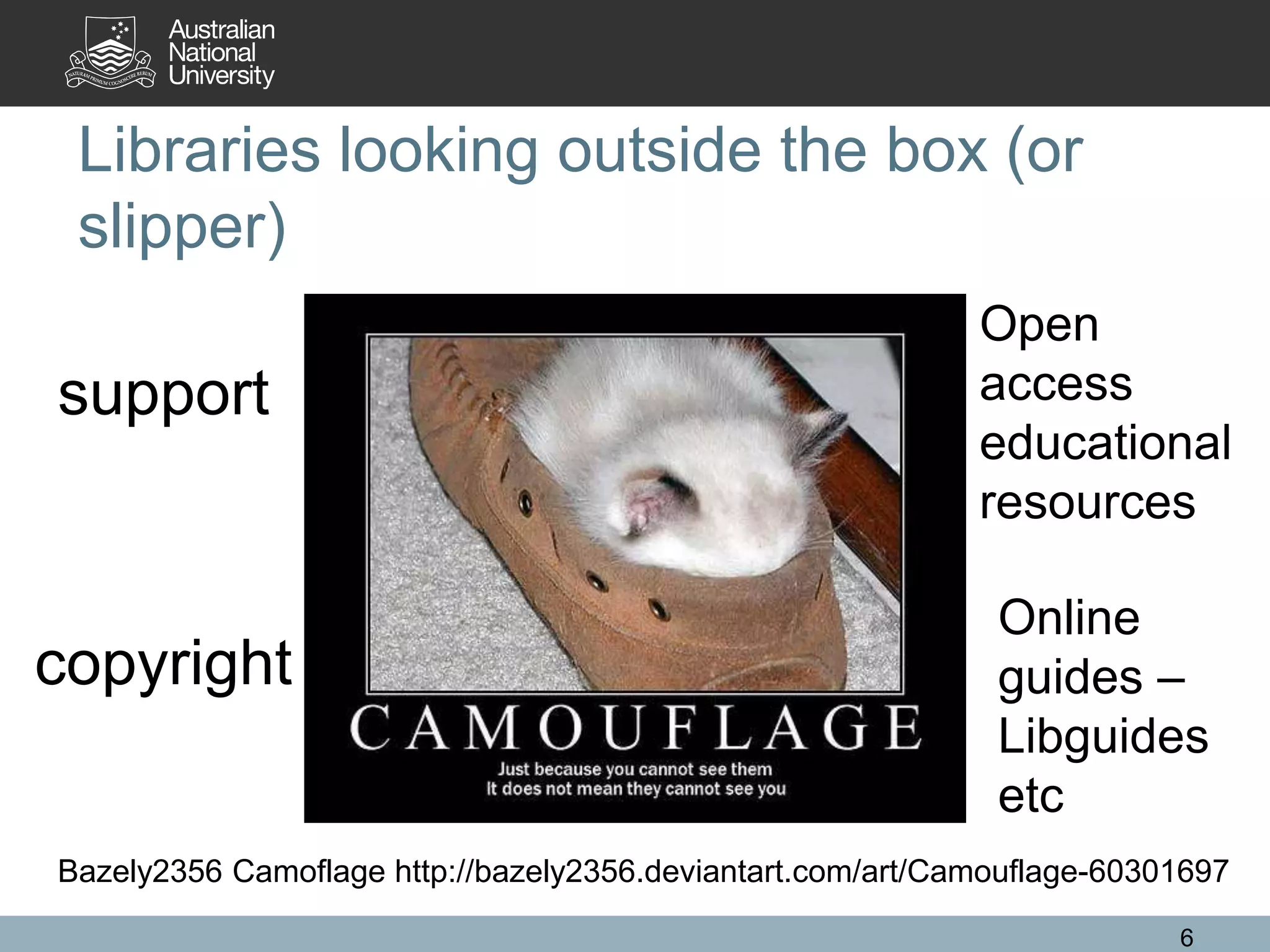
Libraries looking outside the box (or
slipper)
6
Bazely2356 Camoflage http://bazely2356.deviantart.com/art/Camouflage-60301697
support
copyright
Open
access
educational
resources
Online
guides –
Libguides
etc
7
Collections and
searching
8
Café press Neil Gaiman quote
http://www.cafepress.com.au/mf/68
351917/libraryfrontwhite_tshirt?pro
ductId=651339039
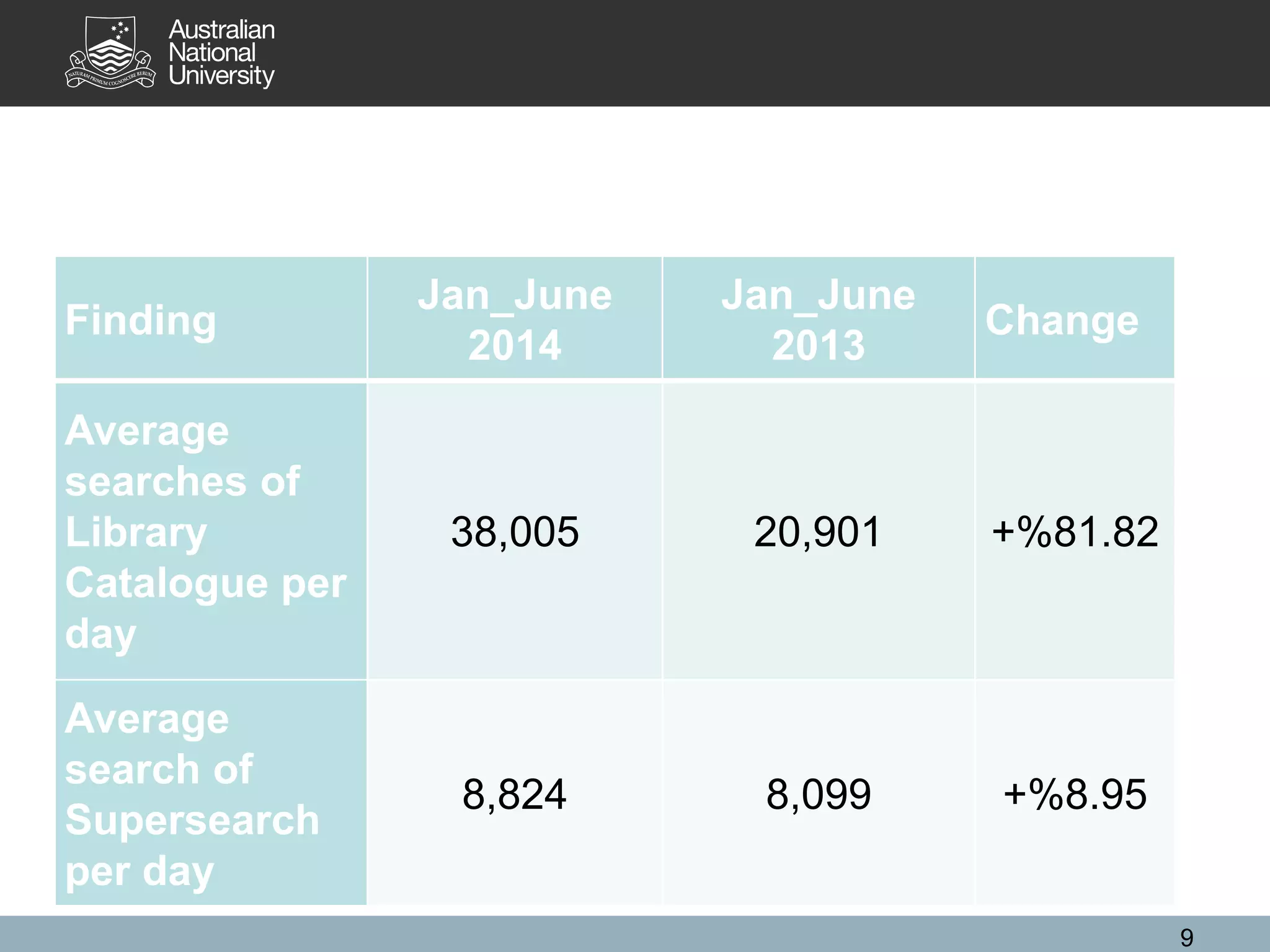
Finding
Jan_June
2014
Jan_June
2013
Change
Average
searches of
Library
Catalogue per
day
38,005 20,901 +%81.82
Average
search of
Supersearch
per day
8,824 8,099 +%8.95
9
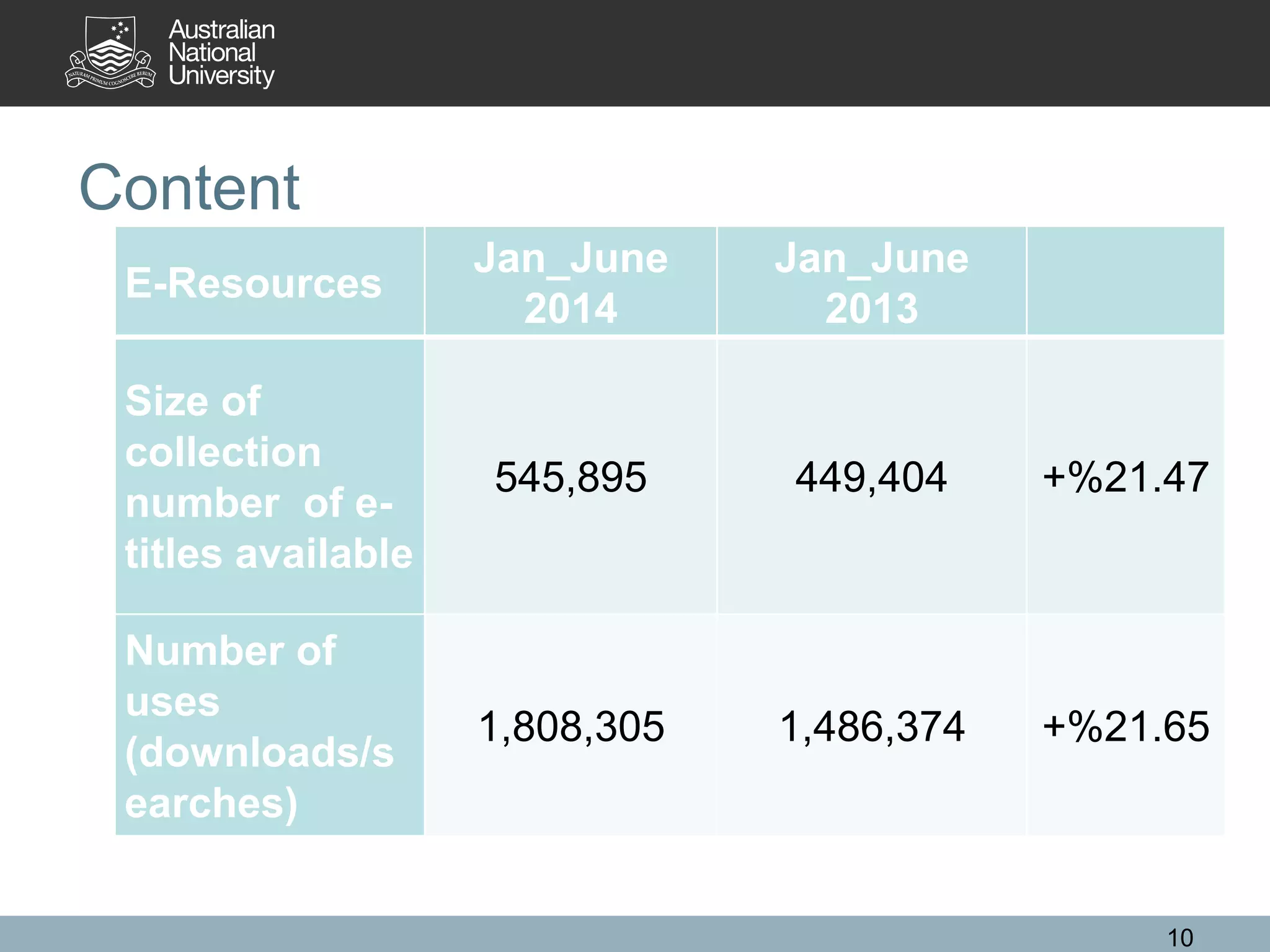
Content
10
E-Resources
Jan_June
2014
Jan_June
2013
Size of
collection
number of e-
titles available
545,895 449,404 +%21.47
Number of
uses
(downloads/s
earches)
1,808,305 1,486,374 +%21.65
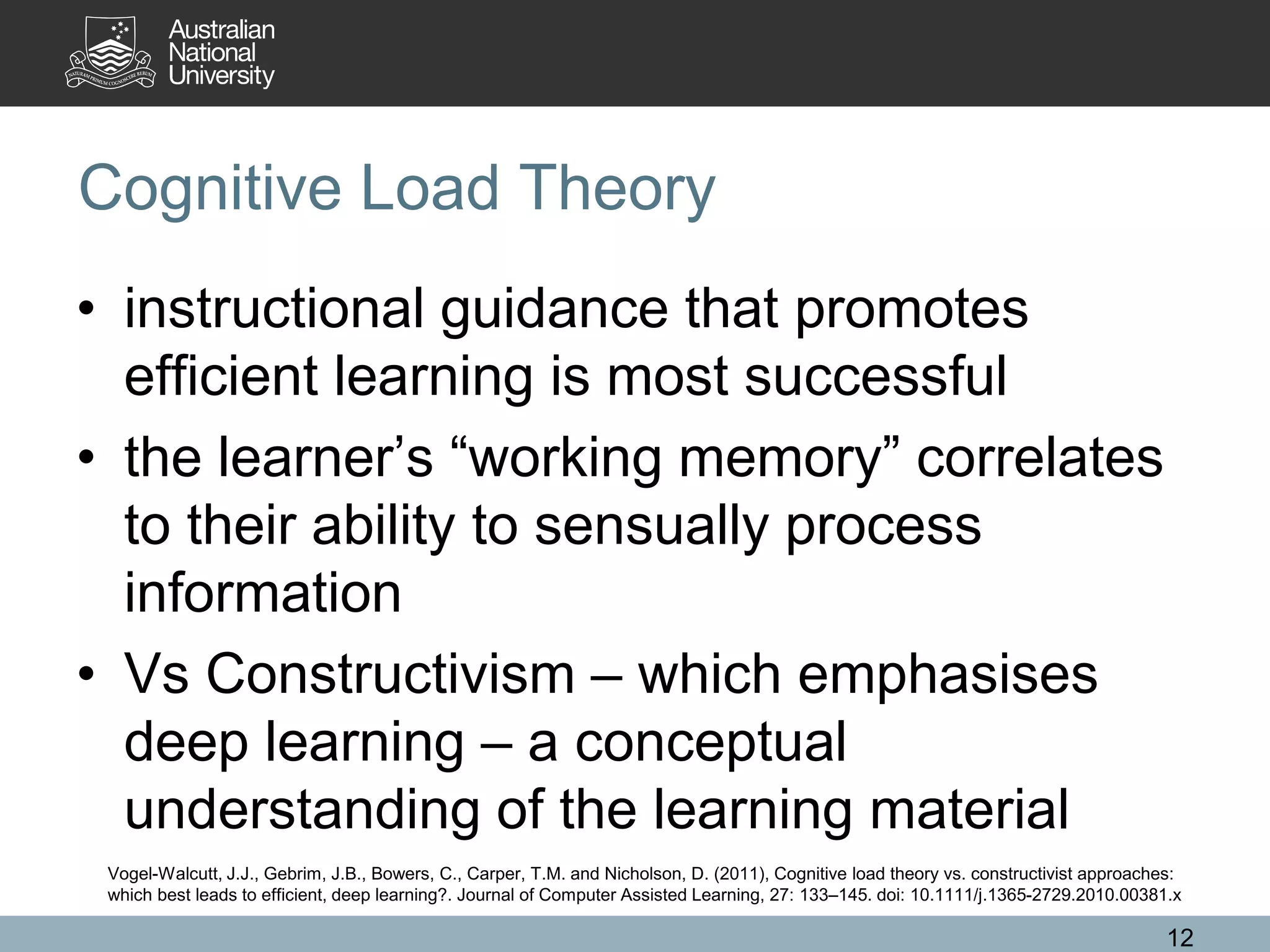
Information literacy: Cognition and
learning
• Mayer’s theory of multimedia learning
• Anderson’s theory of ACT-R cognitive
architecture
• Cognitive load
11
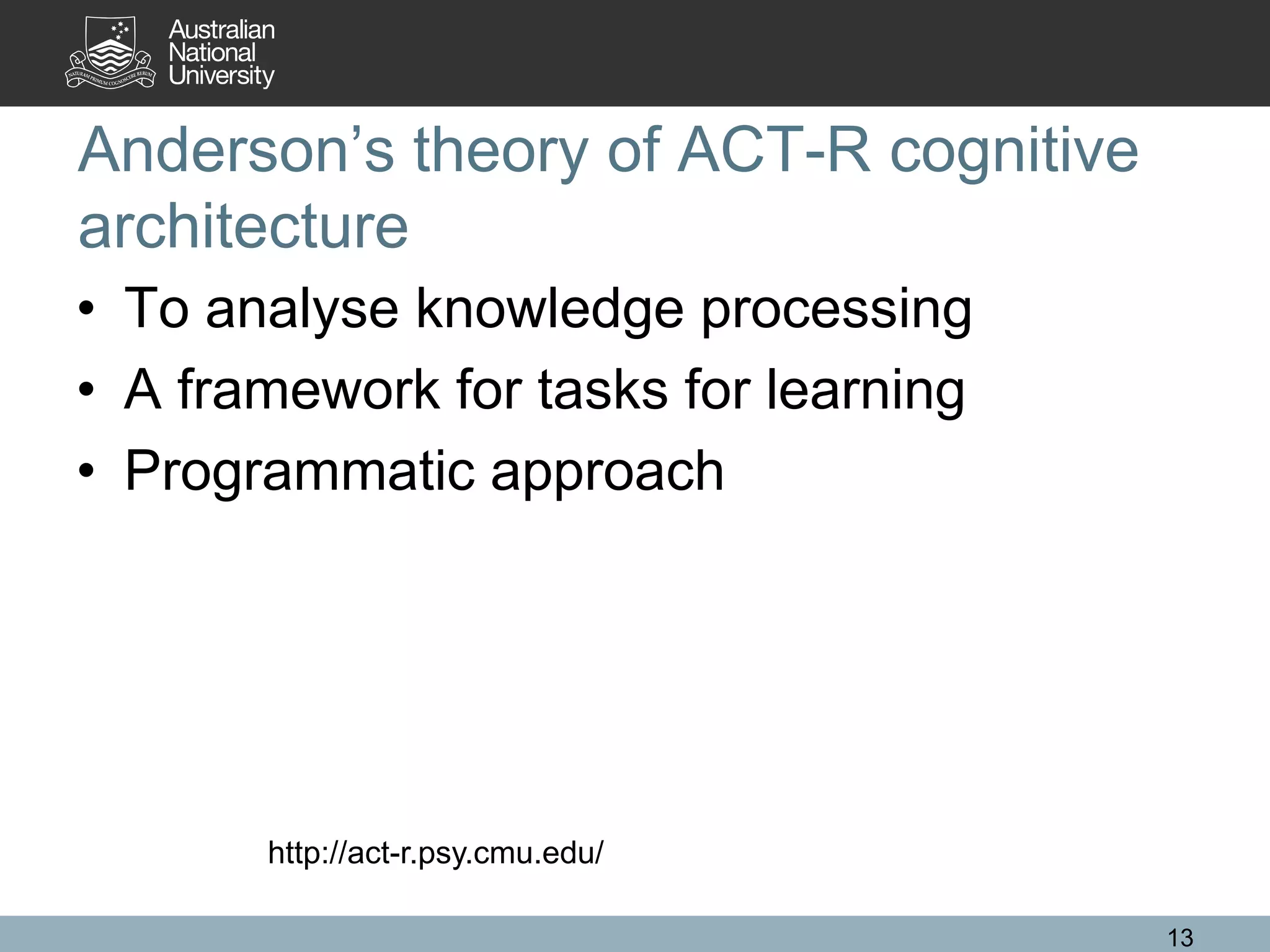
Cognitive Load Theory
• instructional guidance that promotes
efficient learning is most successful
• the learner’s “working memory” correlates
to their ability to sensually process
information
• Vs Constructivism – which emphasises
deep learning – a conceptual
understanding of the learning material
12
Vogel-Walcutt, J.J., Gebrim, J.B., Bowers, C., Carper, T.M. and Nicholson, D. (2011), Cognitive load theory vs. constructivist approaches:
which best leads to efficient, deep learning?. Journal of Computer Assisted Learning, 27: 133–145. doi: 10.1111/j.1365-2729.2010.00381.x
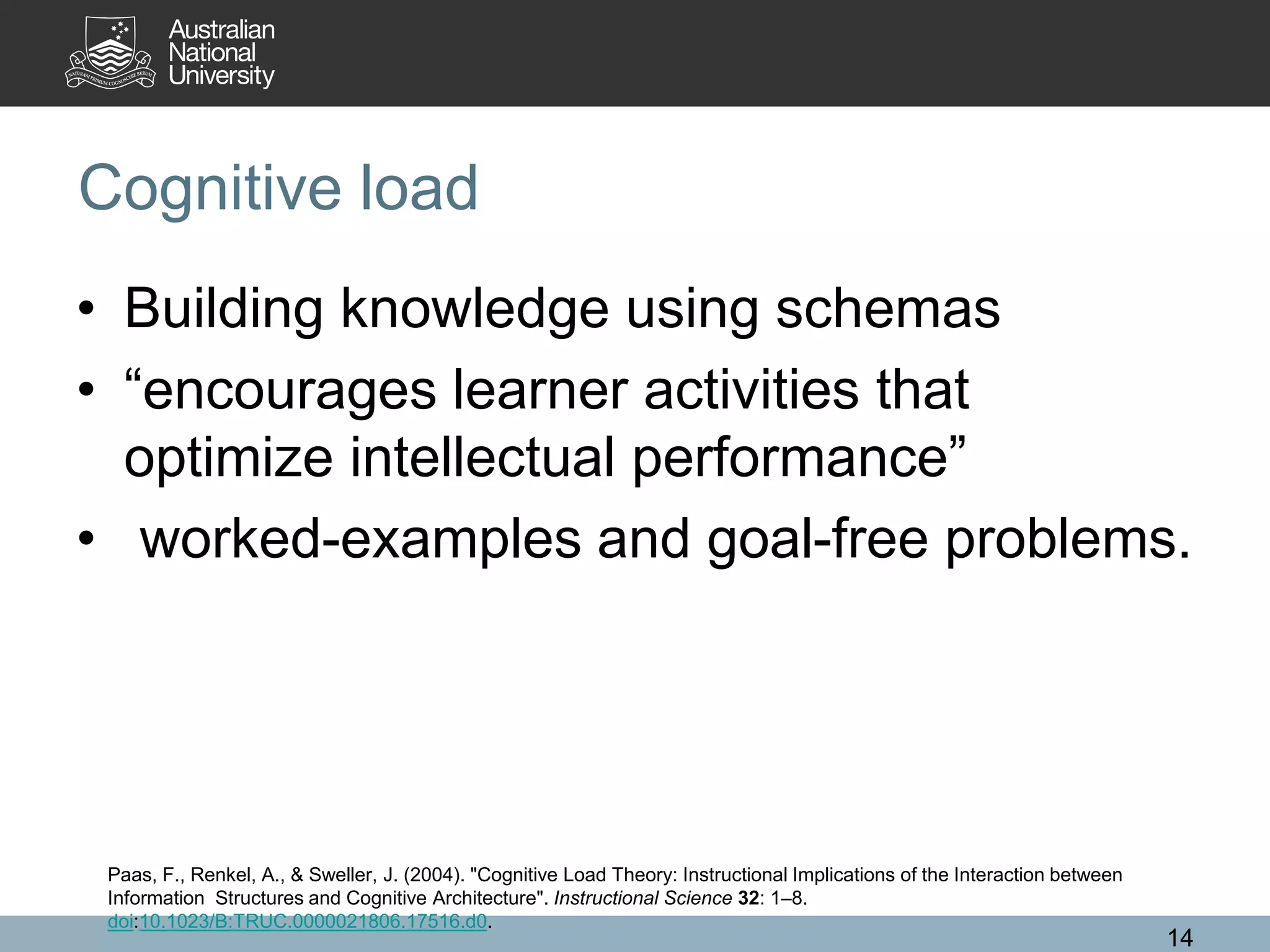
Anderson’s theory of ACT-R cognitive
architecture
• To analyse knowledge processing
• A framework for tasks for learning
• Programmatic approach
13
http://act-r.psy.cmu.edu/
Cognitive load
• Building knowledge using schemas
• “encourages learner activities that
optimize intellectual performance”
• worked-examples and goal-free problems.
14
Paas, F., Renkel, A., & Sweller, J. (2004). "Cognitive Load Theory: Instructional Implications of the Interaction between
Information Structures and Cognitive Architecture". Instructional Science 32: 1–8.
doi:10.1023/B:TRUC.0000021806.17516.d0.
Redesigning
• Beyond the eye tracking test
• Incorporating narrative
• Taking account of research that supports
MOOC developments
15
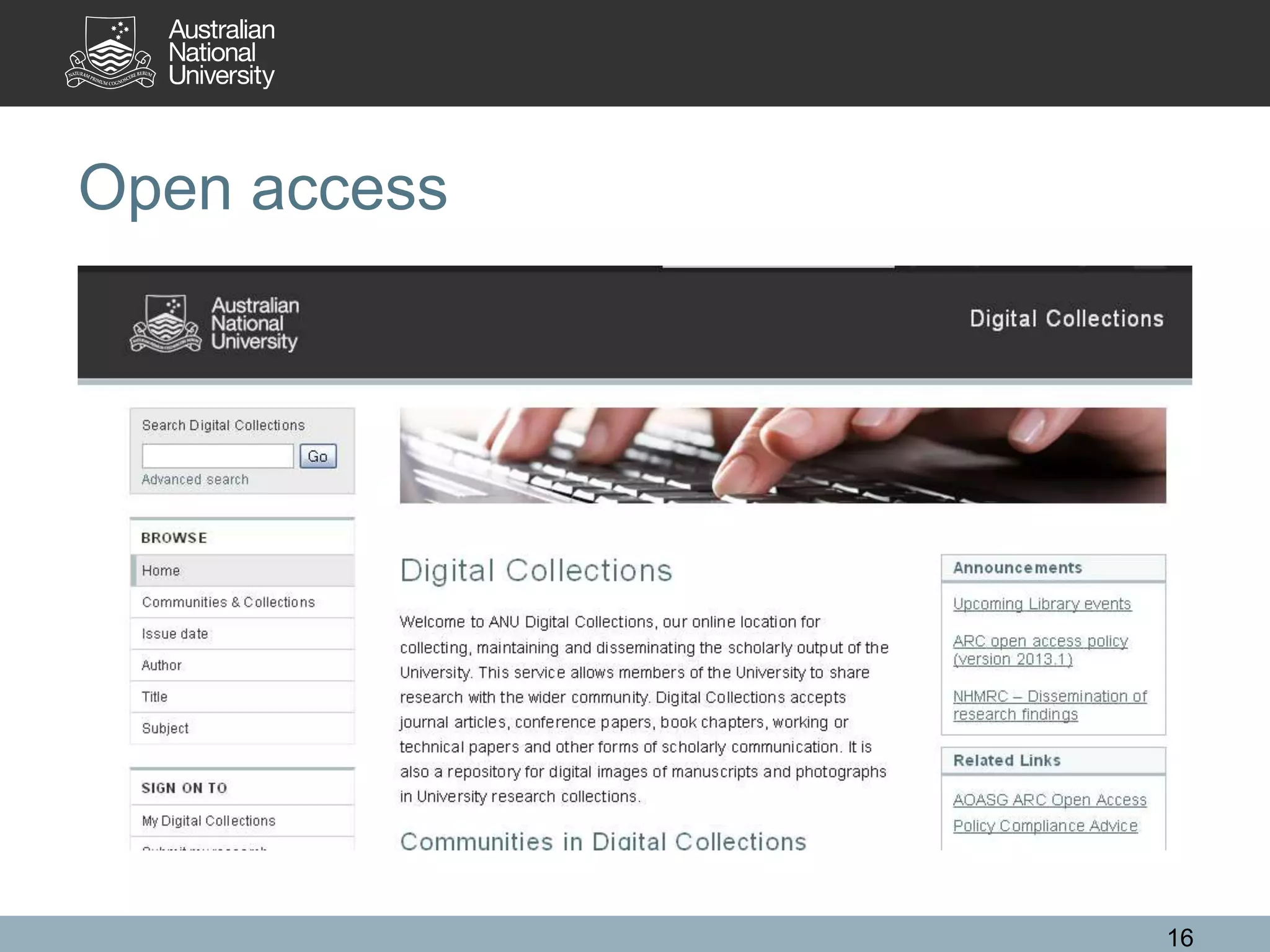
Open access
16
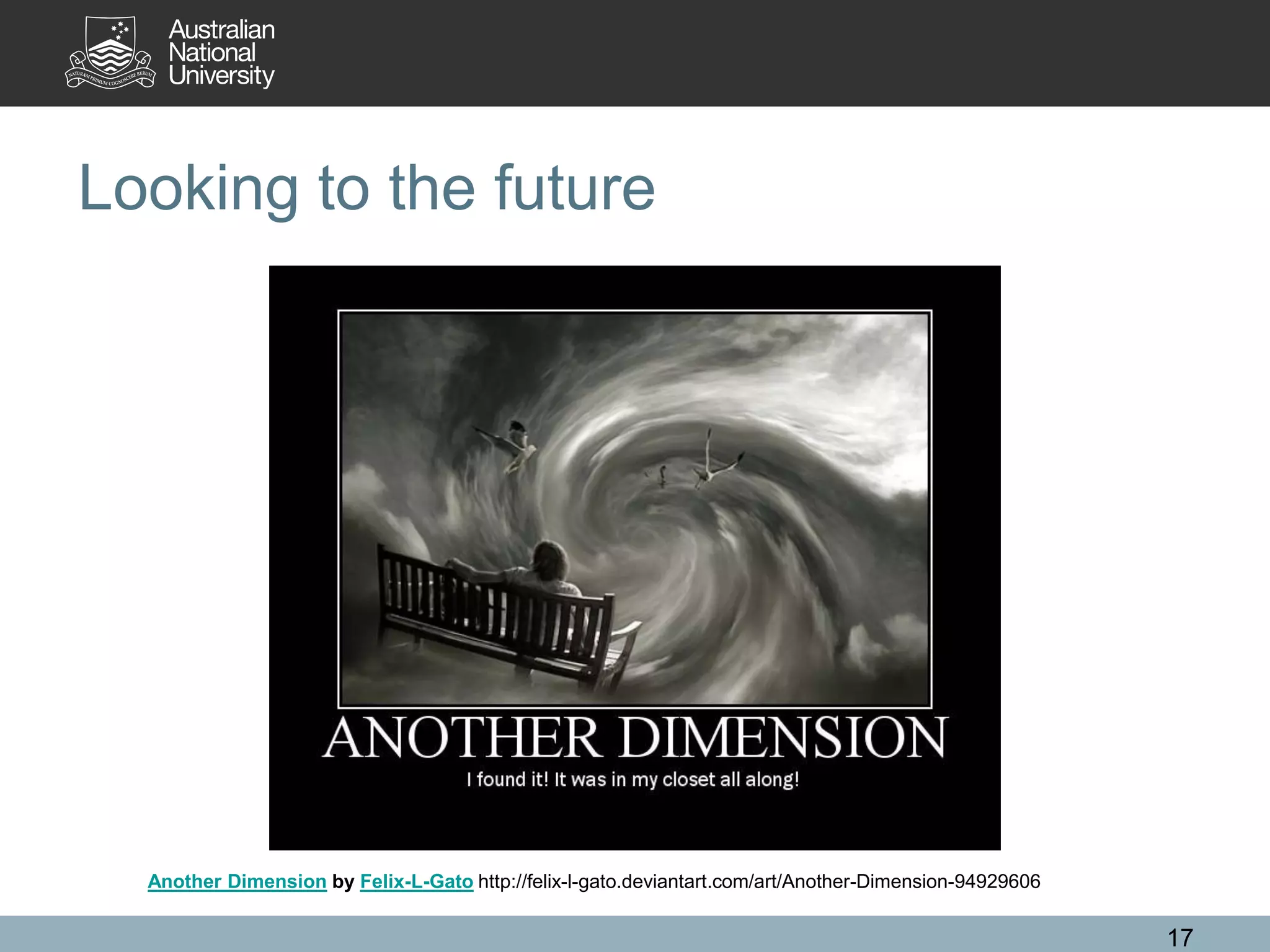
Looking to the future
17
Another Dimension by Felix-L-Gato http://felix-l-gato.deviantart.com/art/Another-Dimension-94929606
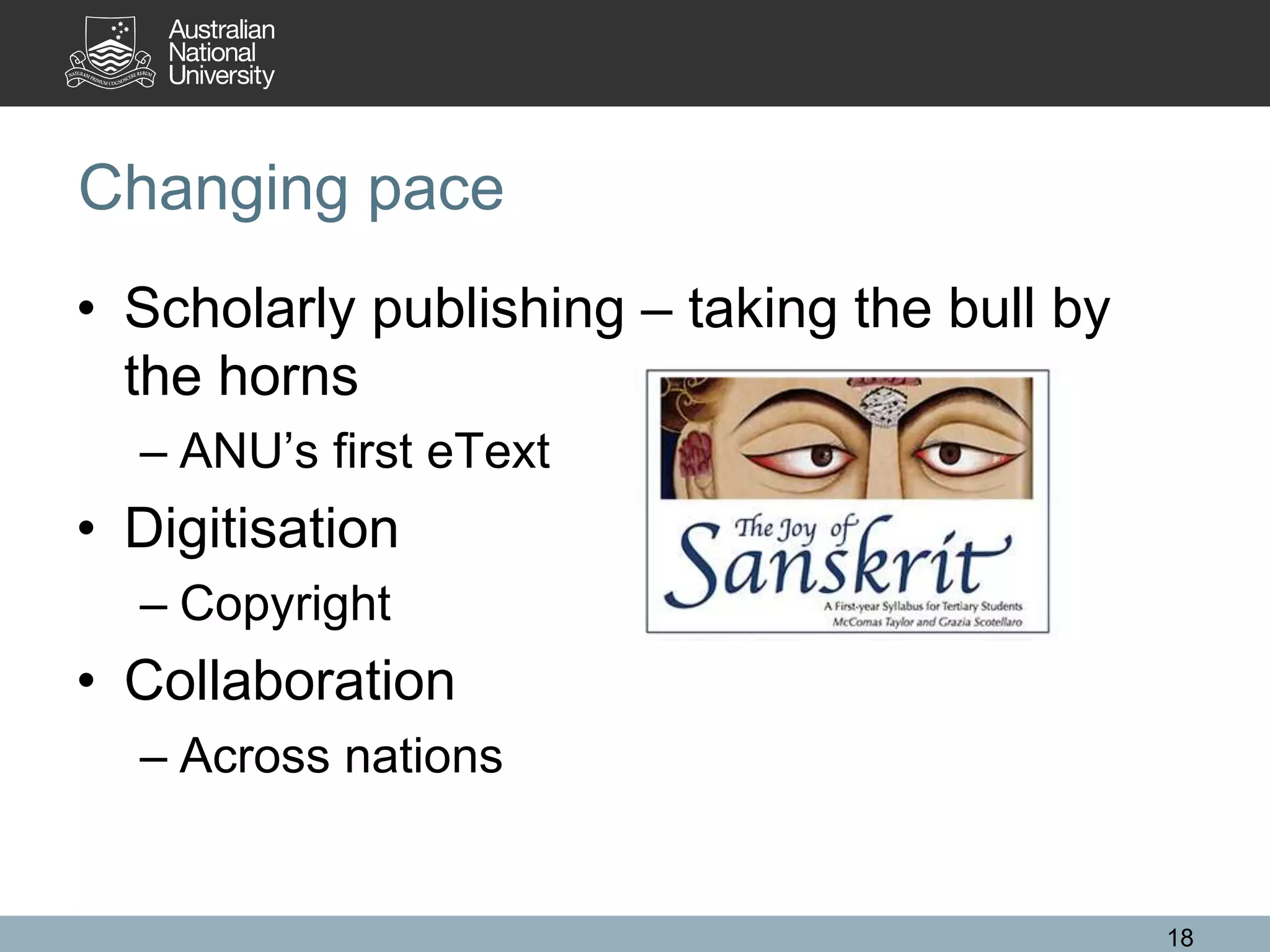
Changing pace
• Scholarly publishing – taking the bull by
the horns
– ANU’s first eText
• Digitisation
– Copyright
• Collaboration
– Across nations
18
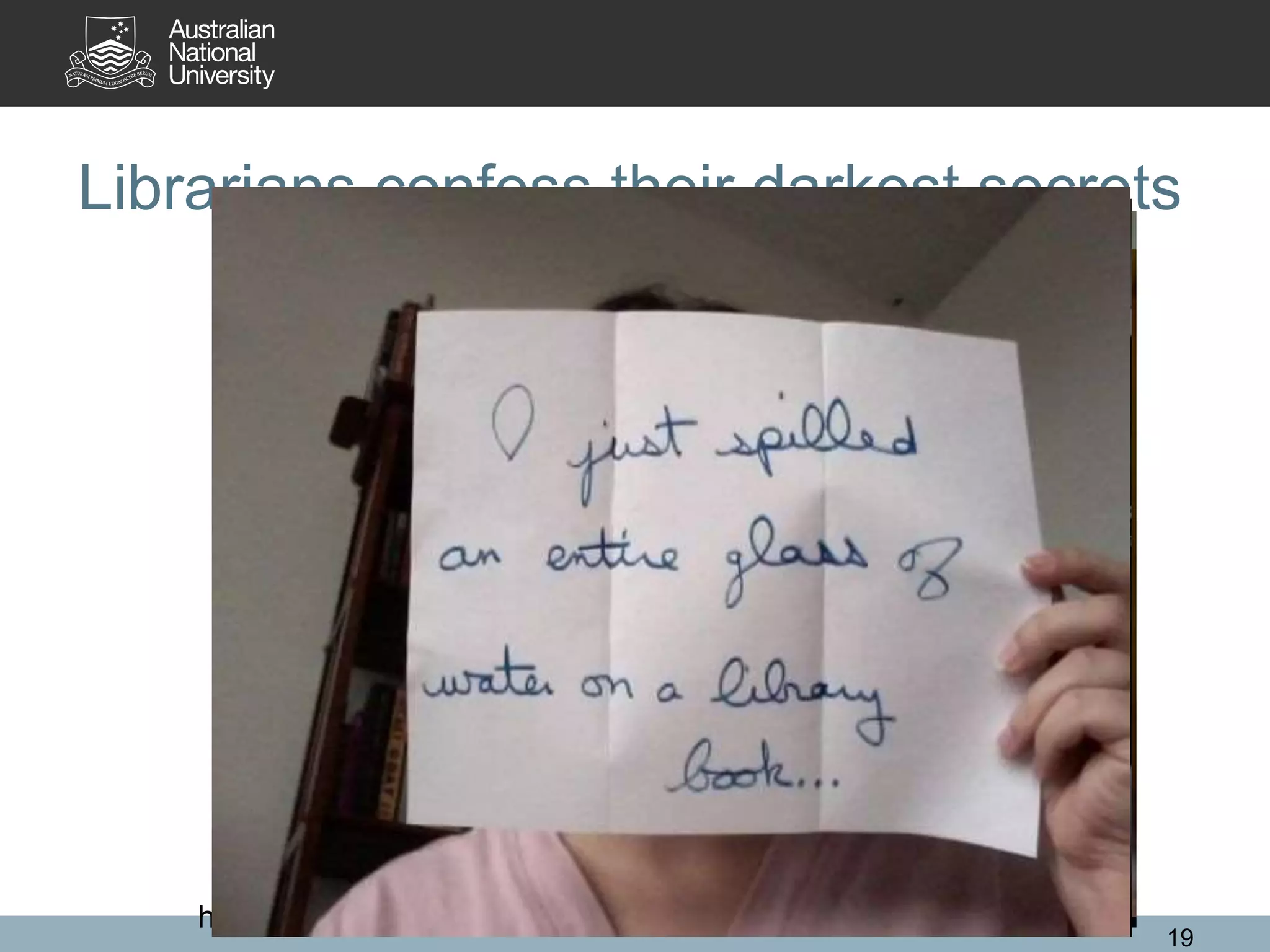
Librarians confess their darkest secrets
19
http://www.boredpanda.org/librarian-shaming-confessions/

ANU Library: responding to new needs

  • 1.
    ANU Library: respondingto new needs Roxanne Missingham, University Librarian, ANU
  • 2.
    • MOOCS –reaching out • Search and finding • Cognition and literacy • Open access – resources at your fingertips (or almost) 2
  • 3.
    3 MOOCs Arbyreed Shake, rattleand roll http://www.flickr.com/photos/19779889@N00/3010403895/
  • 4.
    “That's what educationshould be," I said, "the art of orientation. Educators should devise the simplest and most effective methods of turning minds around. It shouldn't be the art of implanting sight in the organ, but should proceed on the understanding that the organ already has the capacity, but is improperly aligned and isn't facing the right way.” ― Plato, The Republic 4
  • 5.
  • 6.
    Libraries looking outsidethe box (or slipper) 6 Bazely2356 Camoflage http://bazely2356.deviantart.com/art/Camouflage-60301697 support copyright Open access educational resources Online guides – Libguides etc
  • 7.
  • 8.
    Collections and searching 8 Café pressNeil Gaiman quote http://www.cafepress.com.au/mf/68 351917/libraryfrontwhite_tshirt?pro ductId=651339039
  • 9.
    Finding Jan_June 2014 Jan_June 2013 Change Average searches of Library Catalogue per day 38,00520,901 +%81.82 Average search of Supersearch per day 8,824 8,099 +%8.95 9
  • 10.
    Content 10 E-Resources Jan_June 2014 Jan_June 2013 Size of collection number ofe- titles available 545,895 449,404 +%21.47 Number of uses (downloads/s earches) 1,808,305 1,486,374 +%21.65
  • 11.
    Information literacy: Cognitionand learning • Mayer’s theory of multimedia learning • Anderson’s theory of ACT-R cognitive architecture • Cognitive load 11
  • 12.
    Cognitive Load Theory •instructional guidance that promotes efficient learning is most successful • the learner’s “working memory” correlates to their ability to sensually process information • Vs Constructivism – which emphasises deep learning – a conceptual understanding of the learning material 12 Vogel-Walcutt, J.J., Gebrim, J.B., Bowers, C., Carper, T.M. and Nicholson, D. (2011), Cognitive load theory vs. constructivist approaches: which best leads to efficient, deep learning?. Journal of Computer Assisted Learning, 27: 133–145. doi: 10.1111/j.1365-2729.2010.00381.x
  • 13.
    Anderson’s theory ofACT-R cognitive architecture • To analyse knowledge processing • A framework for tasks for learning • Programmatic approach 13 http://act-r.psy.cmu.edu/
  • 14.
    Cognitive load • Buildingknowledge using schemas • “encourages learner activities that optimize intellectual performance” • worked-examples and goal-free problems. 14 Paas, F., Renkel, A., & Sweller, J. (2004). "Cognitive Load Theory: Instructional Implications of the Interaction between Information Structures and Cognitive Architecture". Instructional Science 32: 1–8. doi:10.1023/B:TRUC.0000021806.17516.d0.
  • 15.
    Redesigning • Beyond theeye tracking test • Incorporating narrative • Taking account of research that supports MOOC developments 15
  • 16.
  • 17.
    Looking to thefuture 17 Another Dimension by Felix-L-Gato http://felix-l-gato.deviantart.com/art/Another-Dimension-94929606
  • 18.
    Changing pace • Scholarlypublishing – taking the bull by the horns – ANU’s first eText • Digitisation – Copyright • Collaboration – Across nations 18
  • 19.
    Librarians confess theirdarkest secrets 19 http://www.boredpanda.org/librarian-shaming-confessions/