Download to read offline
![“The nineteenth century found its essential mythological
resources [anchored in time and principles of temporality].
The present epoch will perhaps be above all the epoch of
space” – Michael Foucault, Spring 1986
“Nothing disappears completely ... In space,
what came earlier continues to underpin what
follows ... Pre-existing space underpins not
only durable spatial arrangements, but also
representational spaces and their attendant
imagery and mythic narratives.”
― Henri Lefebvre, The Production of Space](https://image.slidesharecdn.com/pechakuchaedlt610-161026044403/85/Place-Based-Learning-Supported-by-Technology-5-320.jpg)
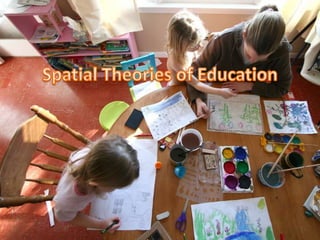
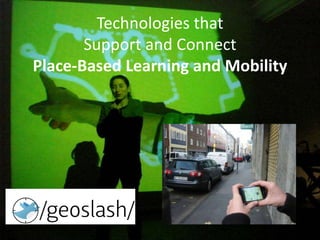

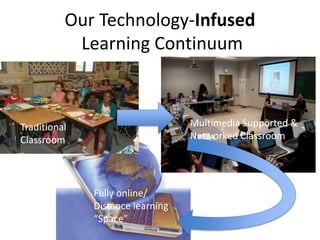
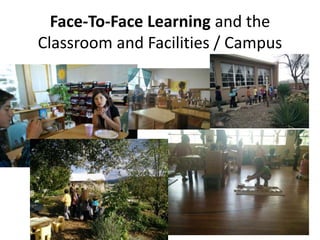

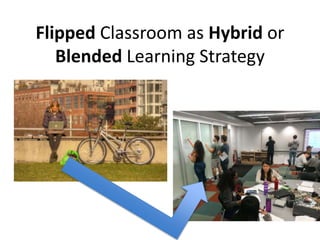

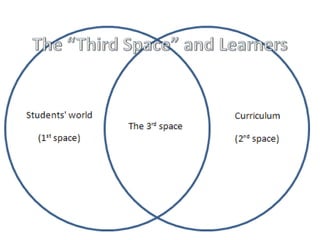
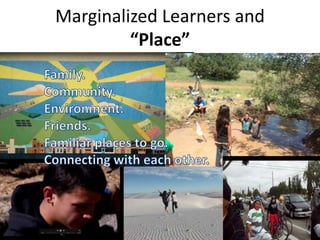


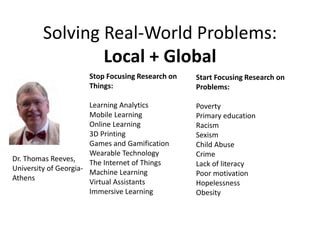
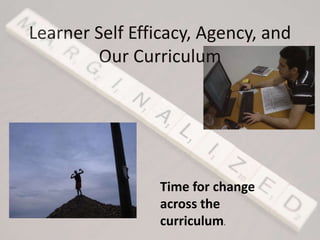
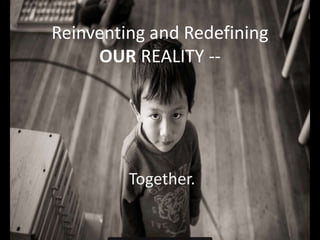

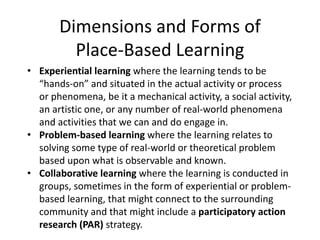
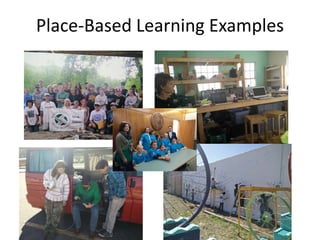
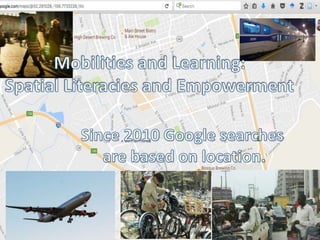
The document discusses opportunities to restructure educational curricula for marginalized learners through place-based and technology-supported learning. It emphasizes experiential, problem-based, and collaborative learning methods that connect to local communities and address real-world issues. The authors advocate for a shift in research focus from specific technologies to pressing social problems such as poverty and racism, urging a collaborative reinvention of curricula to support learners effectively.


