SAnti
Perso
        ocial
     nality
              Disord
                    er
Personality
    Disorder
  A persistent pattern of

feelings
thoughts
behaviors

   that is significantly
  different from what is
  considered normal in
Antisocial Personality Disorder
          A pervasive pattern of

                disregard
                violation

           of the rights of others.
        It begins in childhood and
           continues throughout
                 adulthood.
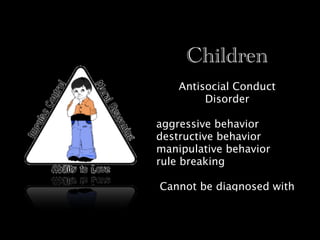
Children
    Antisocial Conduct
         Disorder

aggressive behavior
destructive behavior
manipulative behavior
rule breaking

Cannot be diagnosed with
Symptoms
Anti social and impulsive behavior

       Disregard for societal standards

              No indication of fear or
              guilt
Controversy

 Different          Anti-social personality   Same thing?
extremes?


             Sociopathy            Psychopathy


               Common ground?
Causes Theories.
Abnormal brain function and serotonin have
been linked with impulsive behavior. Because
both the temporal lobes and prefrontal cortex
help regulate mood and behavior, it is possible
  that ASP behavior stems from a functional
  abnormality in the serotonin levels in said
                   regions.
An unstable or
abusive environment
during childhood
may contribute to
ASP. The lack of
emotional bonding at
a young age can
damage a persons
ability to form
intimate and trusting
relationships in the
future, causing them
to view others solely
as objects or victims.
Smoking during pregnancy could cause lower
oxygen levels for the fetus. This then results in
fetal brain injury, primarily in the temporal lobe,
  which may later lead to the offspring being at
         risk of the development of ASP.
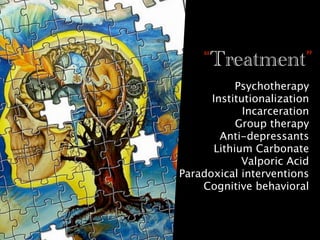
“Treatment”
            Psychotherapy
      Institutionalization
             Incarceration
            Group therapy
        Anti-depressants
       Lithium Carbonate
             Valporic Acid
Paradoxical interventions
    Cognitive behavioral
“If they exhibit emotion, it’s in an effort to create
                  an impression.”
                                        - J.B. Helfgott
Famous Psychopaths
Famous Psychopaths
Famous Psychopaths
Famous Psychopaths
Famous Psychopaths
Famous Psychopaths
Famous Psychopaths
Famous Psychopaths
References
•   http://www.medicinenet.com/antisocial_personality_disorder/page3.htm

•   http://psychcentral.com/disorders/sx7t.htm

•   http://psychcentral.com/disorders/sx7t.htm

•   http://allpsych.com/disorders/personality/antisocial.html

•   http://www.suite101.com/content/manipulative-behaviors-of-kids-with-antisocial-conduct-
    disorder-a294479

•   http://beautyineverything.com/2282360004

•   http://www.suite101.com/content/manipulative-behaviors-of-kids-with-antisocial-conduct-
    disorder-a294479

•   http://www.webmd.com/mental-health/features/portrait-of-psychopath?page=2

•   http://allpsych.com/disorders/personality/antisocial.html

•   http://www.ptypes.com/antisocialpd.html

•

Antisocial personality disorders

  • 1.
    SAnti Perso ocial nality Disord er
  • 2.
    Personality Disorder A persistent pattern of feelings thoughts behaviors that is significantly different from what is considered normal in
  • 3.
    Antisocial Personality Disorder A pervasive pattern of disregard violation of the rights of others. It begins in childhood and continues throughout adulthood.
  • 4.
    Children Antisocial Conduct Disorder aggressive behavior destructive behavior manipulative behavior rule breaking Cannot be diagnosed with
  • 5.
    Symptoms Anti social andimpulsive behavior Disregard for societal standards No indication of fear or guilt
  • 6.
    Controversy Different Anti-social personality Same thing? extremes? Sociopathy Psychopathy Common ground?
  • 7.
  • 8.
    Abnormal brain functionand serotonin have been linked with impulsive behavior. Because both the temporal lobes and prefrontal cortex help regulate mood and behavior, it is possible that ASP behavior stems from a functional abnormality in the serotonin levels in said regions.
  • 9.
    An unstable or abusiveenvironment during childhood may contribute to ASP. The lack of emotional bonding at a young age can damage a persons ability to form intimate and trusting relationships in the future, causing them to view others solely as objects or victims.
  • 10.
    Smoking during pregnancycould cause lower oxygen levels for the fetus. This then results in fetal brain injury, primarily in the temporal lobe, which may later lead to the offspring being at risk of the development of ASP.
  • 11.
    “Treatment” Psychotherapy Institutionalization Incarceration Group therapy Anti-depressants Lithium Carbonate Valporic Acid Paradoxical interventions Cognitive behavioral
  • 12.
    “If they exhibitemotion, it’s in an effort to create an impression.” - J.B. Helfgott
  • 13.
  • 14.
  • 15.
  • 16.
  • 17.
  • 18.
  • 19.
  • 20.
  • 22.
    References • http://www.medicinenet.com/antisocial_personality_disorder/page3.htm • http://psychcentral.com/disorders/sx7t.htm • http://psychcentral.com/disorders/sx7t.htm • http://allpsych.com/disorders/personality/antisocial.html • http://www.suite101.com/content/manipulative-behaviors-of-kids-with-antisocial-conduct- disorder-a294479 • http://beautyineverything.com/2282360004 • http://www.suite101.com/content/manipulative-behaviors-of-kids-with-antisocial-conduct- disorder-a294479 • http://www.webmd.com/mental-health/features/portrait-of-psychopath?page=2 • http://allpsych.com/disorders/personality/antisocial.html • http://www.ptypes.com/antisocialpd.html •