Borderline Personality
   Disorder (BPD)
      HEIDI CHODOROWICZ
            HLTH 473
        MARCH 26, 2013
Outline
•   Introduction
•   Case Study
•   Diagnoses
•   Treatment
•   Causality
•   Comorbidities
•   Trends
•   Controversial issues
•   Summary
Introduction
•   “Borderline” somewhere between a psychotic and neurotic mental disorder:
•   BPD typically manifests between 14 – 24
•   Complex disorder:
    •    Multiple symptoms and maladaptive behaviour

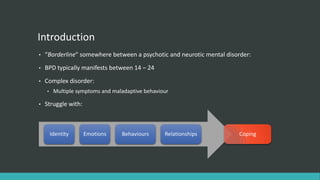
•   Struggle with:


        Identity     Emotions     Behaviours      Relationships        Coping
Case Study:
Rachel Jones
Rachel’s Story
•   Childhood-Symptom free:
    •   Turbulent family dynamics

•   High school-overt symptoms:
    •   Cutting, repeated thoughts of suicide
    •   Eating Disorders
    •   Substance misuse:
        •   Alcohol, THC, MDMA/Ecstasy, Shrooms
    •   Temporary period of paranoia:
        •   14 day Hospitalization- “Drug-Induced Temporary Psychosis”
Rachel’s Story
•   Appears functional:
    •   Social, Good academic achievement

•   Impulsivity/Emotional instability:
    •   Crying at inappropriate times
    •   Extremely low self image hyper emotional sensitivity

•   Relationship behaviour:
    •   Frantic efforts to avoid abandonment  neediness; stormy, intense relationships
Diagnosis of BPD
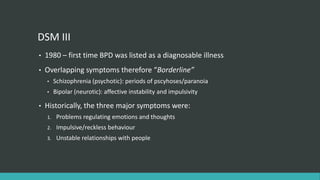
DSM III
•   1980 – first time BPD was listed as a diagnosable illness
•   Overlapping symptoms therefore “Borderline”
    •    Schizophrenia (psychotic): periods of pscyhoses/paranoia
    •    Bipolar (neurotic): affective instability and impulsivity

•   Historically, the three major symptoms were:
    1.    Problems regulating emotions and thoughts
    2.    Impulsive/reckless behaviour
    3.    Unstable relationships with people
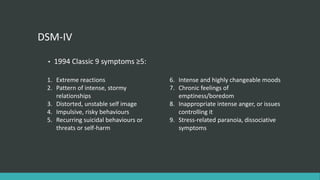
DSM-IV

 •   1994 Classic 9 symptoms ≥5:

 1. Extreme reactions                  6. Intense and highly changeable moods
 2. Pattern of intense, stormy         7. Chronic feelings of
    relationships                         emptiness/boredom
 3. Distorted, unstable self image     8. Inappropriate intense anger, or issues
 4. Impulsive, risky behaviours           controlling it
 5. Recurring suicidal behaviours or   9. Stress-related paranoia, dissociative
    threats or self-harm                  symptoms
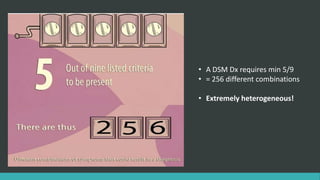
• A DSM Dx requires min 5/9
• = 256 different combinations

• Extremely heterogeneous!
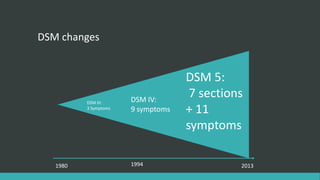
DSM changes


                                    DSM 5:
                       DSM IV:
                                     7 sections
          DSM III:
          3 Symptoms   9 symptoms   + 11
                                    symptoms

   1980                1994                   2013
Treatment of BPD
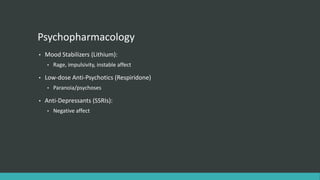
Psychopharmacology
•   Mood Stabilizers (Lithium):
    •   Rage, impulsivity, instable affect

•   Low-dose Anti-Psychotics (Respiridone)
    •   Paranoia/psychoses

•   Anti-Depressants (SSRIs):
    •   Negative affect
Psychotherapy
•   Cognitive Behaviour Therapy (CBT)
    •   Identify behaviours/beliefs underlying negative self image:
         •   Minimize suicidal/ self-harming behaviours

•   Schema-focused Therapy
    •   Reframing schemas/views of self

•   Dialectal Behaviour Therapy (DBT)
    •   Mindfulness> Irrational reactivity:
         •   Control intense emotions,
         •   Reduce self-destructive behaviour, and
         •   Improve relationships
Causality theories of BPD
Genetic Susceptibility
•   Strong genetic component:
    •   1st degree relatives = 10x risk of BPD
    •   Twin studies; 35% monozygotic, 7% dizygotic
        •   heritability score= 0.65-0.76

•   Haplotypes for:
    •   Abnormal 5-HTTLPR Serotonin transporter
        •   Emotional reactivity, depression, anxiety, obsessive-compulsive behaviours
    •   Abnormal adrenergic and noradrenergic receptors
        •   Anxiety, Panic attacks
Developmental theories
•   Traumatic childhood events:
    •   Sexual, physical, psychological abuse/neglect

•   Styles of communication/treatments:
    •   Failure to acknowledge significance of emotions, thoughts, ideas
    •   Not conducive to development of healthy identity


•   No causality has officially been determined
Comorbidities with BPD
Co-occurrance with other illnesses
•   Women more likely to co-occur with:
    •   Major depression
    •   Anxiety disorders
    •   Eating disorders
•   Men more likely to co-occur with:
    •   Substance abuse
    •   Antisocial Personality Disorder (ASPD)
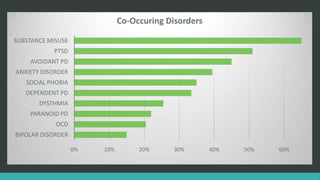
Co-Occuring Disorders

SUBSTANCE MISUSE
           PTSD
    AVOIDANT PD
ANXIETY DISORDER
   SOCIAL PHOBIA
   DEPENDENT PD
       DYSTHMIA
    PARANOID PD
            OCD
BIPOLAR DISORDER

                   0%   10%        20%      30%       40%   50%   60%
Trends of BPD
Prevalence
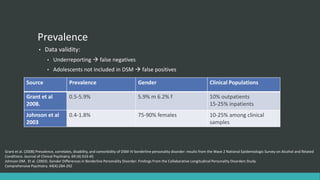
                    •   Data validity:
                          •   Underreporting  false negatives
                          •   Adolescents not included in DSM  false positives

             Source                    Prevalence                                 Gender                                      Clinical Populations

             Grant et al               0.5-5.9%                                   5.9% m 6.2% f                               10% outpatients
             2008.                                                                                                            15-25% inpatients
             Johnson et al             0.4-1.8%                                   75-90% females                              10-25% among clinical
             2003                                                                                                             samples


Grant et al. (2008) Prevalence, correlates, disability, and comorbidity of DSM-IV borderline personality disorder: results from the Wave 2 National Epidemiologic Survey on Alcohol and Related
Conditions. Journal of Clinical Psychiatry. 69 (4):533-45
Johnson DM. Et al. (2003). Gender Differences in Borderline Personality Disorder: Findings From the Collaborative Longitudinal Personality Disorders Study
Comprehensive Psychiatry. 44(4):284-292
Suicidality
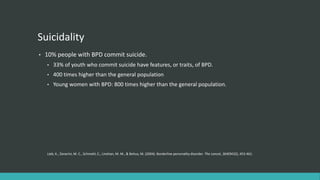
•   10% people with BPD commit suicide.
    •   33% of youth who commit suicide have features, or traits, of BPD.
    •   400 times higher than the general population
    •   Young women with BPD: 800 times higher than the general population.


    Lieb, K., Zanarini, M. C., Schmahl, C., Linehan, M. M., & Bohus, M. (2004). Borderline personality disorder. The Lancet, 364(9432), 453-461.
Controversial Issues
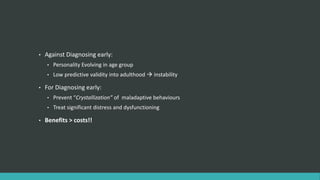
•   Against Diagnosing early:
    •   Personality Evolving in age group
    •   Low predictive validity into adulthood  instability

•   For Diagnosing early:
    •   Prevent “Crystallization” of maladaptive behaviours
    •   Treat significant distress and dysfunctioning

•   Benefits > costs!!
Shift to Axis I?
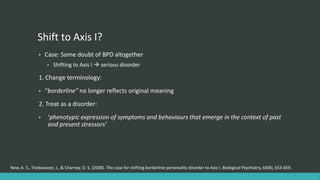
               •   Case: Some doubt of BPD altogether
                    •   Shifting to Axis I  serious disorder

               1. Change terminology:
               •   “borderline” no longer reflects original meaning
               2. Treat as a disorder:
               •    ‘phenotypic expression of symptoms and behaviours that emerge in the context of past
                    and present stressors’


New, A. S., Triebwasser, J., & Charney, D. S. (2008). The case for shifting borderline personality disorder to Axis I. Biological Psychiatry, 64(8), 653-659.
Summary
•   BPD is common and extremely complex
•   Debilitating to patients, family/partners, and mental health system
    •   10-25% clinical pop

•   Successful Prevention and treatment available
•   Greater awareness
•   De-stigmatize!
Discussion
References
•   New, A. S., Triebwasser, J., & Charney, D. S. (2008). The case for shifting borderline
    personality disorder to Axis I. Biological Psychiatry, 64(8), 653-659.
•   Grant et al. (2008) Prevalence, correlates, disability, and comorbidity of DSM-IV
    borderline personality disorder: results from the Wave 2 National Epidemiologic Survey
    on Alcohol and Related Conditions. Journal of Clinical Psychiatry. 69 (4):533-45
•   Johnson DM. Et al. (2003). Gender Differences in Borderline Personality Disorder:
    Findings From the Collaborative Longitudinal Personality Disorders Study
    Comprehensive Psychiatry. 44(4):284-292

Borderline personality disorder (bpd)

  • 1.
    Borderline Personality Disorder (BPD) HEIDI CHODOROWICZ HLTH 473 MARCH 26, 2013
  • 2.
    Outline • Introduction • Case Study • Diagnoses • Treatment • Causality • Comorbidities • Trends • Controversial issues • Summary
  • 3.
    Introduction • “Borderline” somewhere between a psychotic and neurotic mental disorder: • BPD typically manifests between 14 – 24 • Complex disorder: • Multiple symptoms and maladaptive behaviour • Struggle with: Identity Emotions Behaviours Relationships Coping
  • 4.
  • 5.
    Rachel’s Story • Childhood-Symptom free: • Turbulent family dynamics • High school-overt symptoms: • Cutting, repeated thoughts of suicide • Eating Disorders • Substance misuse: • Alcohol, THC, MDMA/Ecstasy, Shrooms • Temporary period of paranoia: • 14 day Hospitalization- “Drug-Induced Temporary Psychosis”
  • 6.
    Rachel’s Story • Appears functional: • Social, Good academic achievement • Impulsivity/Emotional instability: • Crying at inappropriate times • Extremely low self image hyper emotional sensitivity • Relationship behaviour: • Frantic efforts to avoid abandonment  neediness; stormy, intense relationships
  • 7.
  • 8.
    DSM III • 1980 – first time BPD was listed as a diagnosable illness • Overlapping symptoms therefore “Borderline” • Schizophrenia (psychotic): periods of pscyhoses/paranoia • Bipolar (neurotic): affective instability and impulsivity • Historically, the three major symptoms were: 1. Problems regulating emotions and thoughts 2. Impulsive/reckless behaviour 3. Unstable relationships with people
  • 9.
    DSM-IV • 1994 Classic 9 symptoms ≥5: 1. Extreme reactions 6. Intense and highly changeable moods 2. Pattern of intense, stormy 7. Chronic feelings of relationships emptiness/boredom 3. Distorted, unstable self image 8. Inappropriate intense anger, or issues 4. Impulsive, risky behaviours controlling it 5. Recurring suicidal behaviours or 9. Stress-related paranoia, dissociative threats or self-harm symptoms
  • 10.
    • A DSMDx requires min 5/9 • = 256 different combinations • Extremely heterogeneous!
  • 11.
    DSM changes DSM 5: DSM IV: 7 sections DSM III: 3 Symptoms 9 symptoms + 11 symptoms 1980 1994 2013
  • 12.
  • 13.
    Psychopharmacology • Mood Stabilizers (Lithium): • Rage, impulsivity, instable affect • Low-dose Anti-Psychotics (Respiridone) • Paranoia/psychoses • Anti-Depressants (SSRIs): • Negative affect
  • 14.
    Psychotherapy • Cognitive Behaviour Therapy (CBT) • Identify behaviours/beliefs underlying negative self image: • Minimize suicidal/ self-harming behaviours • Schema-focused Therapy • Reframing schemas/views of self • Dialectal Behaviour Therapy (DBT) • Mindfulness> Irrational reactivity: • Control intense emotions, • Reduce self-destructive behaviour, and • Improve relationships
  • 15.
  • 16.
    Genetic Susceptibility • Strong genetic component: • 1st degree relatives = 10x risk of BPD • Twin studies; 35% monozygotic, 7% dizygotic • heritability score= 0.65-0.76 • Haplotypes for: • Abnormal 5-HTTLPR Serotonin transporter • Emotional reactivity, depression, anxiety, obsessive-compulsive behaviours • Abnormal adrenergic and noradrenergic receptors • Anxiety, Panic attacks
  • 17.
    Developmental theories • Traumatic childhood events: • Sexual, physical, psychological abuse/neglect • Styles of communication/treatments: • Failure to acknowledge significance of emotions, thoughts, ideas • Not conducive to development of healthy identity • No causality has officially been determined
  • 18.
  • 19.
    Co-occurrance with otherillnesses • Women more likely to co-occur with: • Major depression • Anxiety disorders • Eating disorders • Men more likely to co-occur with: • Substance abuse • Antisocial Personality Disorder (ASPD)
  • 20.
    Co-Occuring Disorders SUBSTANCE MISUSE PTSD AVOIDANT PD ANXIETY DISORDER SOCIAL PHOBIA DEPENDENT PD DYSTHMIA PARANOID PD OCD BIPOLAR DISORDER 0% 10% 20% 30% 40% 50% 60%
  • 21.
  • 22.
    Prevalence • Data validity: • Underreporting  false negatives • Adolescents not included in DSM  false positives Source Prevalence Gender Clinical Populations Grant et al 0.5-5.9% 5.9% m 6.2% f 10% outpatients 2008. 15-25% inpatients Johnson et al 0.4-1.8% 75-90% females 10-25% among clinical 2003 samples Grant et al. (2008) Prevalence, correlates, disability, and comorbidity of DSM-IV borderline personality disorder: results from the Wave 2 National Epidemiologic Survey on Alcohol and Related Conditions. Journal of Clinical Psychiatry. 69 (4):533-45 Johnson DM. Et al. (2003). Gender Differences in Borderline Personality Disorder: Findings From the Collaborative Longitudinal Personality Disorders Study Comprehensive Psychiatry. 44(4):284-292
  • 23.
    Suicidality • 10% people with BPD commit suicide. • 33% of youth who commit suicide have features, or traits, of BPD. • 400 times higher than the general population • Young women with BPD: 800 times higher than the general population. Lieb, K., Zanarini, M. C., Schmahl, C., Linehan, M. M., & Bohus, M. (2004). Borderline personality disorder. The Lancet, 364(9432), 453-461.
  • 24.
  • 25.
    Against Diagnosing early: • Personality Evolving in age group • Low predictive validity into adulthood  instability • For Diagnosing early: • Prevent “Crystallization” of maladaptive behaviours • Treat significant distress and dysfunctioning • Benefits > costs!!
  • 26.
    Shift to AxisI? • Case: Some doubt of BPD altogether • Shifting to Axis I  serious disorder 1. Change terminology: • “borderline” no longer reflects original meaning 2. Treat as a disorder: • ‘phenotypic expression of symptoms and behaviours that emerge in the context of past and present stressors’ New, A. S., Triebwasser, J., & Charney, D. S. (2008). The case for shifting borderline personality disorder to Axis I. Biological Psychiatry, 64(8), 653-659.
  • 27.
  • 28.
    BPD is common and extremely complex • Debilitating to patients, family/partners, and mental health system • 10-25% clinical pop • Successful Prevention and treatment available • Greater awareness • De-stigmatize!
  • 29.
  • 30.
    References • New, A. S., Triebwasser, J., & Charney, D. S. (2008). The case for shifting borderline personality disorder to Axis I. Biological Psychiatry, 64(8), 653-659. • Grant et al. (2008) Prevalence, correlates, disability, and comorbidity of DSM-IV borderline personality disorder: results from the Wave 2 National Epidemiologic Survey on Alcohol and Related Conditions. Journal of Clinical Psychiatry. 69 (4):533-45 • Johnson DM. Et al. (2003). Gender Differences in Borderline Personality Disorder: Findings From the Collaborative Longitudinal Personality Disorders Study Comprehensive Psychiatry. 44(4):284-292

Editor's Notes

  • #4 BPD is characterised by frantic efforts to avoid perceived abandonment, long standing problems with relationships, identity of sense of self, the control of emotions and behaviour and a mortality rate by suicide of almost 10%. People with BPD often have other personality disorders and mental illnesses as well as related alcohol and drug misuse
  • #9 Often presents with brief psychotic episodes; originally considered a borderline version of other mental disorders, such as bipolar or schizophrenia
  • #10 Classic 9 symptoms, require minimum combination of 5, over a significant period of time:Extreme reactions – panic, depressions, rage, frantic actionsPattern of intense, stormy relationships; veering from extreme idealization to devaluationDistorted, unstable (negative) self imageImpulsive, risky behaviours: unsafe sex, substance abuse, binge eatingRecurring suicidal behaviours or threats or self-harm; cuttingIntense and highly changeable moods; each episode few hours-few daysChronic feelings of emptiness/boredomInappropriate intense anger, or issues controlling angerStress-related paranoia, severe dissociative symptoms (lose touch with self/reality)NEGATIVE AFFECTIVITY: Frequent and intense experiences of high levels of a wide range of negative emotions (e.g., anxiety, depression, guilt/shame, worry, anger, etc.), and their behavioral (e.g., self-harm) and interpersonal (e.g., dependency) manifestations.1. Emotional lability2. Anxiousness3. Separation insecurity4. Submissiveness 5. Hostility6. Perseveration7. Depressivity8. Suspiciousness9. Restricted affectivityDISINHIBITIONDisinhibition (vs. conscientiousness)Orientation towards immediate gratification, leading to impulsive behavior driven by current thoughts, feelings, and external stimuli, without regard for past learning or consideration of future consequences; the opposite pole of this domain reflects excessive constraint of impulses, risk avoidance, hyperresponsibility, hyperperfectionism, and rigid, rule governed behavior.1. Irresponsibility2. Impulsivity3. Distractibility4. Risk taking5. (lack of) Rigid perfectionism
  • #15 SFT: CBT + Psychotherapy: Based on theory of BPD in which dysfunctions originate from negative self image brought on by childhood experiencesFocus on the mindfulness of situations in which they would normally react irrationally. Balance between acceptance of behaviours and changing them
  • #17  increased risk for MDD, affective instability & impulsivity, and more common than Axis IIsuggesting a strong genetic effect in the development of the disorder
  • #21 Upper and lower percentilesSubstance misuse, PTSD, panic disorder, dependant and avoidant personality disorder
  • #23 Higher than 1% schiz/bipolar
  • #24 Lieb, K., Zanarini, M. C., Schmahl, C., Linehan, M. M., & Bohus, M. (2004). Borderline personality disorder. The Lancet, 364(9432), 453-461.
  • #26 Suicidality, Self-cutting, Identity disturbance, academic failure, social dysfunction, and substance abusethe adolescent BPD criteria manifest less construct validity than the adult diagnosis in that its criteria did not uniformly predict the overall diagnosis, and showed more criterion overlap with other personality disorders and a broader pattern of axis II comorbidity. Further diminishing its construct validity, factor analysis suggested that adolescent BPD was not a single entity, and its low predictive validity was demonstrated by little diagnostic stability through adolescence into adulthood.
  • #27 Some doubt regarding the validity of BPD and existence altogether still exist; shifting the classification of the disease to Axis I for clinicians and researchers to take more seriouslyMajor misconceptions:“Borderline”: between two states (neurotic vs psychotic) – a view no longer acceptedBPD a direct consequence of childhood, rather than phenotypic expression of symptoms and behaviours that emerge in the context of past and present stressors
  • #29 the adolescent BPD criteria manifest less construct validity than the adult diagnosis in that its criteria did not uniformly predict the overall diagnosis, and showed more criterion overlap with other personality disorders and a broader pattern of axis II comorbidity. Further diminishing its construct validity, factor analysis suggested that adolescent BPD was not a single entity, and its low predictive validity was demonstrated by little diagnostic stability through adolescence into adulthood.
  • #32 Dr Hahn – expert on bpd