ANTISOCIAL 
PERSONALITY 
DISORDER 
Hope, Liudmyla, Rebeka, Jason, Yamuna
What is it? 
•A personality disorder that often has similar 
symptoms to being a social path or/and a 
psychopath. 
•Many people affected by this disorder are able 
to maintain and have descent and acceptable 
relationships with others. 
•Though some can be personable many are very 
manipulative and into self gain. 
•Cannot keep and job and act very impulsively.
• https://www.youtube.com/watch?v=WTjProbN1_I 
Antisocial Personality Disorder | 
Human Behavior - YouTube
Quick Fact: 
•This disorder is more commonly 
diagnosed in men then women
Symptoms 
•Failure to conform with social norms: 
with respect to lawful behaviors as 
indicated by repeatedly preforming 
unlawful acts. 
•Deceitfulness: Repeated lying, use of 
aliases, or conning other for personal 
pleasure.
•Impulsivity: Of failure to plan ahead. 
•Irritability and aggressiveness: as 
indicated by repeated physical fights 
or assaults. 
•Reckless or disregard: for safety of self 
or others.
•Consistent irresponsibility: as 
indicated by repeated failure to 
sustain consistent work behavior or 
honor financial obligations. 
•Lack of remorse.
Statistics 
•American studies show that 4.5% of 
men and 0.8% of women are sufferers. 
•Which means roughly 2.65 of 
Americans are living with antisocial 
disorder. 
•European studies found that 1.3 of 
men and 0% of women are suffers.
•Which means 0.65 of Europeans are 
sufferers. 
•Surveys of prisons nationwide show 
that 47% of men and 21% of women in 
prison are living with ASPD. 
•Which means 34% of prisoners have 
ASPD.
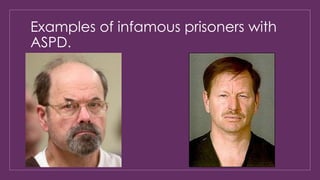
Examples of infamous prisoners with 
ASPD.
Age Range 
•Adults suffering usually show signs of this 
disorder before the age of 15. 
•Sometimes as young as seven years old. 
•Onset happens in middle childhood to middle 
adolescence; onset after age 16 is rare( Conduct 
Disorder).
•The age someone can be officially 
diagnosed with this disorder is 18. 
•And must show symptoms around the 
age 15. 
•A person in their 20’s will have strong 
symptoms if diagnosed.
•The symptoms will later decrease 
and become less aggressive once 
the patient reaches their 40’s, 50’s 
and so on.
Heritability of ASPD 
• Not much known for sure. 
• Studies have been done. 
• Factors can vary. 
• Can be misdiagnosed. 
• Environment may be more important. 
• Twins may have more susceptibility.
Treatments 
•There is little research done to find 
treatments for people with ASPD. 
•Enhanced thinking skills (ETS) is the most 
promising form of treatment right now for 
ASPD.
References

Antisocial personality disorder

  • 1.
    ANTISOCIAL PERSONALITY DISORDER Hope, Liudmyla, Rebeka, Jason, Yamuna
  • 2.
    What is it? •A personality disorder that often has similar symptoms to being a social path or/and a psychopath. •Many people affected by this disorder are able to maintain and have descent and acceptable relationships with others. •Though some can be personable many are very manipulative and into self gain. •Cannot keep and job and act very impulsively.
  • 3.
    • https://www.youtube.com/watch?v=WTjProbN1_I AntisocialPersonality Disorder | Human Behavior - YouTube
  • 4.
    Quick Fact: •Thisdisorder is more commonly diagnosed in men then women
  • 5.
    Symptoms •Failure toconform with social norms: with respect to lawful behaviors as indicated by repeatedly preforming unlawful acts. •Deceitfulness: Repeated lying, use of aliases, or conning other for personal pleasure.
  • 6.
    •Impulsivity: Of failureto plan ahead. •Irritability and aggressiveness: as indicated by repeated physical fights or assaults. •Reckless or disregard: for safety of self or others.
  • 7.
    •Consistent irresponsibility: as indicated by repeated failure to sustain consistent work behavior or honor financial obligations. •Lack of remorse.
  • 8.
    Statistics •American studiesshow that 4.5% of men and 0.8% of women are sufferers. •Which means roughly 2.65 of Americans are living with antisocial disorder. •European studies found that 1.3 of men and 0% of women are suffers.
  • 9.
    •Which means 0.65of Europeans are sufferers. •Surveys of prisons nationwide show that 47% of men and 21% of women in prison are living with ASPD. •Which means 34% of prisoners have ASPD.
  • 10.
    Examples of infamousprisoners with ASPD.
  • 11.
    Age Range •Adultssuffering usually show signs of this disorder before the age of 15. •Sometimes as young as seven years old. •Onset happens in middle childhood to middle adolescence; onset after age 16 is rare( Conduct Disorder).
  • 12.
    •The age someonecan be officially diagnosed with this disorder is 18. •And must show symptoms around the age 15. •A person in their 20’s will have strong symptoms if diagnosed.
  • 13.
    •The symptoms willlater decrease and become less aggressive once the patient reaches their 40’s, 50’s and so on.
  • 14.
    Heritability of ASPD • Not much known for sure. • Studies have been done. • Factors can vary. • Can be misdiagnosed. • Environment may be more important. • Twins may have more susceptibility.
  • 15.
    Treatments •There islittle research done to find treatments for people with ASPD. •Enhanced thinking skills (ETS) is the most promising form of treatment right now for ASPD.
  • 16.