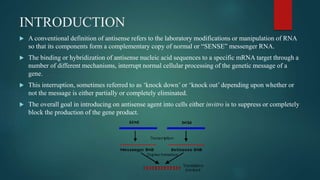
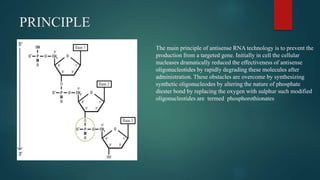
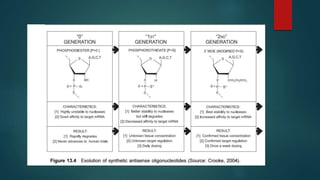
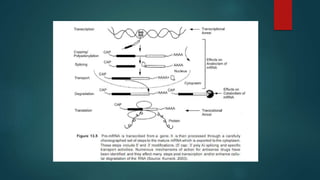
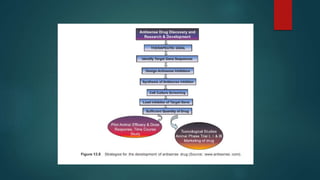
Antisense RNA technology involves introducing short oligonucleotides that are complementary to a target gene's mRNA, interrupting normal gene expression. This can partially or fully suppress protein production from the gene. Antisense RNA works by binding to the target mRNA, preventing translation into protein via mechanisms like RNaseH degradation. It has applications in cancer treatment, fruit ripening control in agriculture, and drug development by the pharmaceutical industry. Challenges include rapid degradation of antisense oligonucleotides inside cells, but chemical modifications now help overcome this. Antisense therapy is emerging as a potential tool for gene therapy and treatment of various diseases.







![谷歌留痕技术 [ 𝙩𝙤𝙥 𝟮𝟯𝟯. 𝙘 𝙤𝙢 ]](https://cdn.slidesharecdn.com/ss_thumbnails/top233-260130174328-3833018c-thumbnail.jpg?width=640&height=640&fit=bounds)


