1
By: Ahmed Sameh
Antibiotics
2
2
Outlines
Antibiotics: definition
Antibiotics: history and evolution
Antibiotics: use
Antibiotics: misuse
Antimicrobial resistance: definition and causes
Precautions: avoiding potential infections
Recent researches: fighting antimicrobial resistance
3
• Antibiotics, also known as antibacterials, are
medications that destroy or slow down the growth of
bacteria, if used properly.
• They include a range of powerful drugs and are used
to treat diseases caused by bacteria.
I. Antibiotics Definition
3
4
4
II. Antibiotics history and evolution
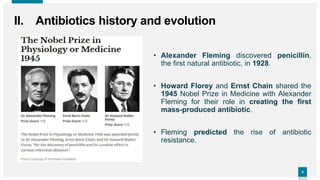
• Alexander Fleming discovered penicillin,
the first natural antibiotic, in 1928.
• Howard Florey and Ernst Chain shared the
1945 Nobel Prize in Medicine with Alexander
Fleming for their role in creating the first
mass-produced antibiotic.
• Fleming predicted the rise of antibiotic
resistance.
5
5
III. Antibiotics use
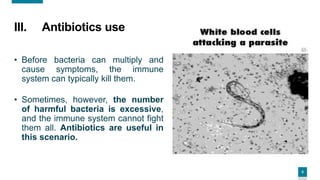
• Before bacteria can multiply and
cause symptoms, the immune
system can typically kill them.
• Sometimes, however, the number
of harmful bacteria is excessive,
and the immune system cannot fight
them all. Antibiotics are useful in
this scenario.
6
6
Antibiotics fight bacteria in a variety of ways :
In general, Antibiotics work by disrupting something bacterial cells
need but human cells don’t.
• Like many other antibiotics, Penicillin prevents bacteria
from synthesizing peptidoglycan which is a molecule in
the bacterial cell wall that provides the wall with the
strength it needs to survive in the human body.
• Other antibiotics prevent successful DNA replication or
repair in bacteria.
• Some antibiotics including Tetracycline inhibit bacteria
from building proteins they need to survive.
Without penicillin
With penicillin
7
7
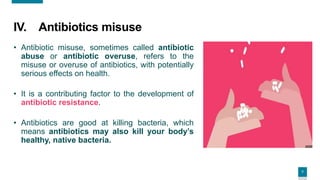
IV. Antibiotics misuse
• Antibiotic misuse, sometimes called antibiotic
abuse or antibiotic overuse, refers to the
misuse or overuse of antibiotics, with potentially
serious effects on health.
• It is a contributing factor to the development of
antibiotic resistance.
• Antibiotics are good at killing bacteria, which
means antibiotics may also kill your body’s
healthy, native bacteria.
8
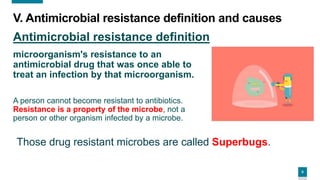
V. Antimicrobial resistance definition and causes
Antimicrobial resistance definition
microorganism's resistance to an
antimicrobial drug that was once able to
treat an infection by that microorganism.
A person cannot become resistant to antibiotics.
Resistance is a property of the microbe, not a
person or other organism infected by a microbe.
Those drug resistant microbes are called Superbugs.
9
Fleming predicted the rise of antibiotic resistance.
‘‘ Alexander Fleming, speaking in his Nobel
Prize acceptance speech in 1945.
10
Antimicrobial resistance causes
1. Poor hygiene and poor infection prevention and control.
 provide more opportunity for resistant
bacteria and other germs to spread.
 make more people sick and increase the
need for antibiotics.
11
2. Antibiotics overuse
The main cause of antibiotic resistance is antibiotic
use. When we use antibiotics, some bacteria die
but resistant bacteria can survive and even
multiply. The overuse of antibiotics makes resistant
bacteria more common.
The more we use antibiotics, the more chances
bacteria have to become resistant to them. This
means that antibiotics won’t work when we need
them in the future.
12
12
3. Bacterial DNA mutations
• Bacteria reproduce spontaneously by
binary fission rapidly where mutations
can arise easily.
• By using antibiotics we kill the weakest
bacteria leaving the strongest ones
and mutations can arise easily
producing generations of strong
superbugs as MRSA.
13
13
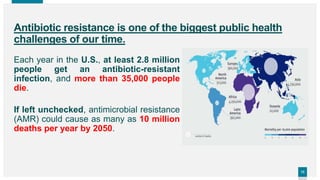
Antibiotic resistance is one of the biggest public health
challenges of our time.
Each year in the U.S., at least 2.8 million
people get an antibiotic-resistant
infection, and more than 35,000 people
die.
If left unchecked, antimicrobial resistance
(AMR) could cause as many as 10 million
deaths per year by 2050.
14
VI. Precautions: preventing bacterial infections
There are many steps you can take to help prevent infection from bacteria:
• Practice good hygiene, such as frequent hand
washing.
• Fortify your immune system with healthy foods
such as fruits and vegetables.
• Avoid close contact with people who are sick with
a contagious infection from bacteria.
• only take antibiotics when needed to avoid
developing resistance to antibiotics in the future.
15
15
VII. Recent researches: fighting antimicrobial resistance
AMR is life-threatening and some superbugs cause incurable diseases
but science always provides lots of potential solutions.
• Immunotherapy for deadly bacteria shows early promise.
• Combination antibiotic therapy against Multi Drug Resistant bacterial
pathogens (MRA).
• Teixobactin which is a new antibiotic, killing "without detectable
resistance“, It inhibits cell wall synthesis by inhibiting the production of
the peptidoglycan layer “as mentioned before” , leading to lysis of
vulnerable bacteria.
16
Thank You

Antibiotics

  • 1.
  • 2.
    2 2 Outlines Antibiotics: definition Antibiotics: historyand evolution Antibiotics: use Antibiotics: misuse Antimicrobial resistance: definition and causes Precautions: avoiding potential infections Recent researches: fighting antimicrobial resistance
  • 3.
    3 • Antibiotics, alsoknown as antibacterials, are medications that destroy or slow down the growth of bacteria, if used properly. • They include a range of powerful drugs and are used to treat diseases caused by bacteria. I. Antibiotics Definition 3
  • 4.
    4 4 II. Antibiotics historyand evolution • Alexander Fleming discovered penicillin, the first natural antibiotic, in 1928. • Howard Florey and Ernst Chain shared the 1945 Nobel Prize in Medicine with Alexander Fleming for their role in creating the first mass-produced antibiotic. • Fleming predicted the rise of antibiotic resistance.
  • 5.
    5 5 III. Antibiotics use •Before bacteria can multiply and cause symptoms, the immune system can typically kill them. • Sometimes, however, the number of harmful bacteria is excessive, and the immune system cannot fight them all. Antibiotics are useful in this scenario.
  • 6.
    6 6 Antibiotics fight bacteriain a variety of ways : In general, Antibiotics work by disrupting something bacterial cells need but human cells don’t. • Like many other antibiotics, Penicillin prevents bacteria from synthesizing peptidoglycan which is a molecule in the bacterial cell wall that provides the wall with the strength it needs to survive in the human body. • Other antibiotics prevent successful DNA replication or repair in bacteria. • Some antibiotics including Tetracycline inhibit bacteria from building proteins they need to survive. Without penicillin With penicillin
  • 7.
    7 7 IV. Antibiotics misuse •Antibiotic misuse, sometimes called antibiotic abuse or antibiotic overuse, refers to the misuse or overuse of antibiotics, with potentially serious effects on health. • It is a contributing factor to the development of antibiotic resistance. • Antibiotics are good at killing bacteria, which means antibiotics may also kill your body’s healthy, native bacteria.
  • 8.
    8 V. Antimicrobial resistancedefinition and causes Antimicrobial resistance definition microorganism's resistance to an antimicrobial drug that was once able to treat an infection by that microorganism. A person cannot become resistant to antibiotics. Resistance is a property of the microbe, not a person or other organism infected by a microbe. Those drug resistant microbes are called Superbugs.
  • 9.
    9 Fleming predicted therise of antibiotic resistance. ‘‘ Alexander Fleming, speaking in his Nobel Prize acceptance speech in 1945.
  • 10.
    10 Antimicrobial resistance causes 1.Poor hygiene and poor infection prevention and control.  provide more opportunity for resistant bacteria and other germs to spread.  make more people sick and increase the need for antibiotics.
  • 11.
    11 2. Antibiotics overuse Themain cause of antibiotic resistance is antibiotic use. When we use antibiotics, some bacteria die but resistant bacteria can survive and even multiply. The overuse of antibiotics makes resistant bacteria more common. The more we use antibiotics, the more chances bacteria have to become resistant to them. This means that antibiotics won’t work when we need them in the future.
  • 12.
    12 12 3. Bacterial DNAmutations • Bacteria reproduce spontaneously by binary fission rapidly where mutations can arise easily. • By using antibiotics we kill the weakest bacteria leaving the strongest ones and mutations can arise easily producing generations of strong superbugs as MRSA.
  • 13.
    13 13 Antibiotic resistance isone of the biggest public health challenges of our time. Each year in the U.S., at least 2.8 million people get an antibiotic-resistant infection, and more than 35,000 people die. If left unchecked, antimicrobial resistance (AMR) could cause as many as 10 million deaths per year by 2050.
  • 14.
    14 VI. Precautions: preventingbacterial infections There are many steps you can take to help prevent infection from bacteria: • Practice good hygiene, such as frequent hand washing. • Fortify your immune system with healthy foods such as fruits and vegetables. • Avoid close contact with people who are sick with a contagious infection from bacteria. • only take antibiotics when needed to avoid developing resistance to antibiotics in the future.
  • 15.
    15 15 VII. Recent researches:fighting antimicrobial resistance AMR is life-threatening and some superbugs cause incurable diseases but science always provides lots of potential solutions. • Immunotherapy for deadly bacteria shows early promise. • Combination antibiotic therapy against Multi Drug Resistant bacterial pathogens (MRA). • Teixobactin which is a new antibiotic, killing "without detectable resistance“, It inhibits cell wall synthesis by inhibiting the production of the peptidoglycan layer “as mentioned before” , leading to lysis of vulnerable bacteria.
  • 16.