ANTIMICROBIALS
MECHANISM OF ACTION
Dr.Elza Joy Munjely
JR-I
Depmt. Of Pharmacology
Govt. Medical College,Kottayam.
 CHEMOTHERAPY – treatment of
systemic or topical infection with
drugs that have selective toxicity
for an invading pathogen without
harming the host cells.
 Takes advantage of the
biochemical & physiological
differences that exist between
microorganism & human beings.
Antimicrobials
 Drugs that inhibit microbial growth &
multiplication
 Antibacterial
 Antiviral
 Antifungal
 Antiprotozoal
 Antihelminthics
 Cidal/static
 Narrow/Extended/Broad spectrum
 BACTERIOSTATICArrest the growth &
replication & limit the spread of infection.
 Macrolides -Oxazolidones
 Chloramphinicol -Tetracyclines
 Sulphonamides -Trimethoprim
 Clindamycin -Nitrofurantoin
 Ethambutol -Linezolid
 Erythromycin

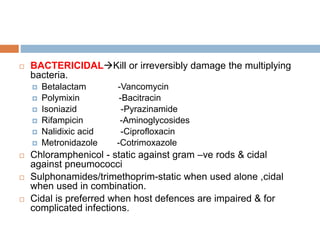
 BACTERICIDALKill or irreversibly damage the multiplying
bacteria.
 Betalactam -Vancomycin
 Polymixin -Bacitracin
 Isoniazid -Pyrazinamide
 Rifampicin -Aminoglycosides
 Nalidixic acid -Ciprofloxacin
 Metronidazole -Cotrimoxazole
 Chloramphenicol - static against gram –ve rods & cidal
against pneumococci
 Sulphonamides/trimethoprim-static when used alone ,cidal
when used in combination.
 Cidal is preferred when host defences are impaired & for
complicated infections.
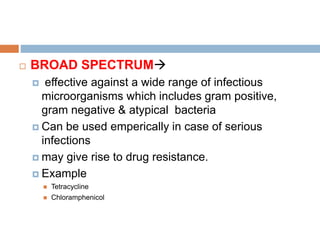
 BROAD SPECTRUM
 effective against a wide range of infectious
microorganisms which includes gram positive,
gram negative & atypical bacteria
 Can be used emperically in case of serious
infections
 may give rise to drug resistance.
 Example
 Tetracycline
 Chloramphenicol
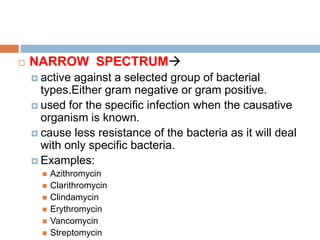
 NARROW SPECTRUM
 active against a selected group of bacterial
types.Either gram negative or gram positive.
 used for the specific infection when the causative
organism is known.
 cause less resistance of the bacteria as it will deal
with only specific bacteria.
 Examples:
 Azithromycin
 Clarithromycin
 Clindamycin
 Erythromycin
 Vancomycin
 Streptomycin
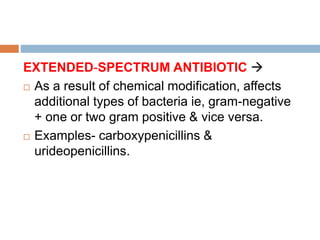
EXTENDED-SPECTRUM ANTIBIOTIC 
 As a result of chemical modification, affects
additional types of bacteria ie, gram-negative
+ one or two gram positive & vice versa.
 Examples- carboxypenicillins &
urideopenicillins.
Targets of antimicrobials
 Cell wall
 Cell membrane
 Protein synthesis
 Intermediary metabolism
 Intracellular organelles
 Nucleic acid metabolism
 Muscle fibres
Cell wall synthesis inhibitors
 Bacteria – peptidoglycan
 Inhibitors of peptidoglycan
synthesisBetalactam,Vancomycin,Bacitracin,Cy
closerin & Phosphomycin.
 Mycobacteria – mycolic acid &
arabinoglycans
 INH, Ethambutol, Pyrazinamide
 Fungi – chitin
 Echinocandins
Cell membrane
 Cell membrane disrupting drugs
 Anti-bacterial - polymixins
 Antifungal – polyene antibiotics
 Inhibitors of cell membrane synthesis
 Azoles
 Terbinafine
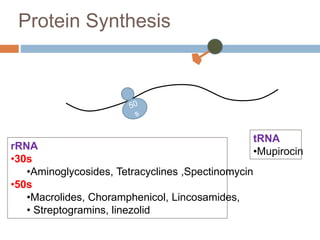
Protein Synthesis
rRNA
•30s
•Aminoglycosides, Tetracyclines ,Spectinomycin
•50s
•Macrolides, Choramphenicol, Lincosamides,
• Streptogramins, linezolid
tRNA
•Mupirocin
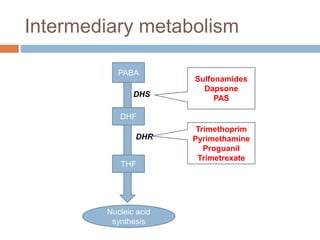
Intermediary metabolism
DHF
THF
Nucleic acid
synthesis
PABA
DHS
DHR
Sulfonamides
Dapsone
PAS
Trimethoprim
Pyrimethamine
Proguanil
Trimetrexate
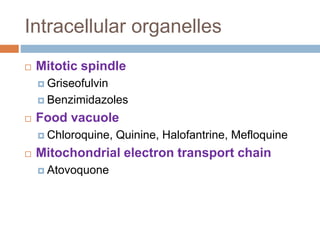
Intracellular organelles
 Mitotic spindle
 Griseofulvin
 Benzimidazoles
 Food vacuole
 Chloroquine, Quinine, Halofantrine, Mefloquine
 Mitochondrial electron transport chain
 Atovoquone
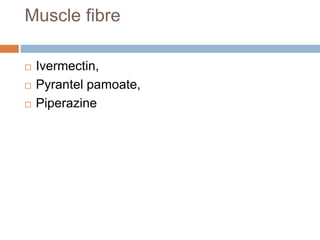
Muscle fibre
 Ivermectin,
 Pyrantel pamoate,
 Piperazine
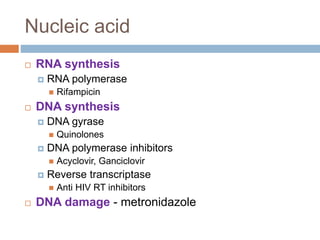
Nucleic acid
 RNA synthesis
 RNA polymerase
 Rifampicin
 DNA synthesis
 DNA gyrase
 Quinolones
 DNA polymerase inhibitors
 Acyclovir, Ganciclovir
 Reverse transcriptase
 Anti HIV RT inhibitors
 DNA damage - metronidazole
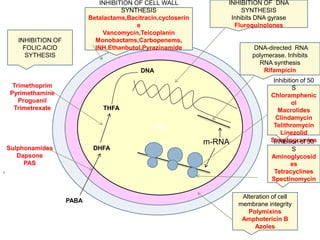
PP
DHFA
PABA
THFA
DNA
m-RNA
INHIBITION OF DNA
SYNTHESIS
Inhibits DNA gyrase
Fluroquinolones
DNA-directed RNA
polymerase. Inhibits
RNA synthesis
Rifampicin
INHIBITION OF
FOLIC ACID
SYTHESIS
Trimethoprim
Pyrimethamine
Proguanil
Trimetrexate
Sulphonamides
Dapsone
PAS
,
Inhibition of 50
S
Chloramphenic
ol
Macrolides
Clindamycin
Telithromycin
Linezolid
StreptograminsInhibition of 30
S
Aminoglycosid
es
Tetracyclines
Spectinomycin
INHIBITION OF CELL WALL
SYNTHESIS
Betalactams,Bacitracin,cycloserin
e
Vancomycin,Teicoplanin
Monobactams,Carbopenems,
INH,Ethanbutol,Pyrazinamide
Alteration of cell
membrane integrity
Polymixins
Amphotericin B
Azoles
THANK YOU

Antimicrobials

  • 1.
    ANTIMICROBIALS MECHANISM OF ACTION Dr.ElzaJoy Munjely JR-I Depmt. Of Pharmacology Govt. Medical College,Kottayam.
  • 2.
     CHEMOTHERAPY –treatment of systemic or topical infection with drugs that have selective toxicity for an invading pathogen without harming the host cells.  Takes advantage of the biochemical & physiological differences that exist between microorganism & human beings.
  • 3.
    Antimicrobials  Drugs thatinhibit microbial growth & multiplication  Antibacterial  Antiviral  Antifungal  Antiprotozoal  Antihelminthics  Cidal/static  Narrow/Extended/Broad spectrum
  • 4.
     BACTERIOSTATICArrest thegrowth & replication & limit the spread of infection.  Macrolides -Oxazolidones  Chloramphinicol -Tetracyclines  Sulphonamides -Trimethoprim  Clindamycin -Nitrofurantoin  Ethambutol -Linezolid  Erythromycin 
  • 5.
     BACTERICIDALKill orirreversibly damage the multiplying bacteria.  Betalactam -Vancomycin  Polymixin -Bacitracin  Isoniazid -Pyrazinamide  Rifampicin -Aminoglycosides  Nalidixic acid -Ciprofloxacin  Metronidazole -Cotrimoxazole  Chloramphenicol - static against gram –ve rods & cidal against pneumococci  Sulphonamides/trimethoprim-static when used alone ,cidal when used in combination.  Cidal is preferred when host defences are impaired & for complicated infections.
  • 6.
     BROAD SPECTRUM effective against a wide range of infectious microorganisms which includes gram positive, gram negative & atypical bacteria  Can be used emperically in case of serious infections  may give rise to drug resistance.  Example  Tetracycline  Chloramphenicol
  • 7.
     NARROW SPECTRUM active against a selected group of bacterial types.Either gram negative or gram positive.  used for the specific infection when the causative organism is known.  cause less resistance of the bacteria as it will deal with only specific bacteria.  Examples:  Azithromycin  Clarithromycin  Clindamycin  Erythromycin  Vancomycin  Streptomycin
  • 8.
    EXTENDED-SPECTRUM ANTIBIOTIC  As a result of chemical modification, affects additional types of bacteria ie, gram-negative + one or two gram positive & vice versa.  Examples- carboxypenicillins & urideopenicillins.
  • 9.
    Targets of antimicrobials Cell wall  Cell membrane  Protein synthesis  Intermediary metabolism  Intracellular organelles  Nucleic acid metabolism  Muscle fibres
  • 10.
    Cell wall synthesisinhibitors  Bacteria – peptidoglycan  Inhibitors of peptidoglycan synthesisBetalactam,Vancomycin,Bacitracin,Cy closerin & Phosphomycin.  Mycobacteria – mycolic acid & arabinoglycans  INH, Ethambutol, Pyrazinamide  Fungi – chitin  Echinocandins
  • 11.
    Cell membrane  Cellmembrane disrupting drugs  Anti-bacterial - polymixins  Antifungal – polyene antibiotics  Inhibitors of cell membrane synthesis  Azoles  Terbinafine
  • 12.
    Protein Synthesis rRNA •30s •Aminoglycosides, Tetracyclines,Spectinomycin •50s •Macrolides, Choramphenicol, Lincosamides, • Streptogramins, linezolid tRNA •Mupirocin
  • 13.
  • 14.
    Intracellular organelles  Mitoticspindle  Griseofulvin  Benzimidazoles  Food vacuole  Chloroquine, Quinine, Halofantrine, Mefloquine  Mitochondrial electron transport chain  Atovoquone
  • 15.
    Muscle fibre  Ivermectin, Pyrantel pamoate,  Piperazine
  • 16.
    Nucleic acid  RNAsynthesis  RNA polymerase  Rifampicin  DNA synthesis  DNA gyrase  Quinolones  DNA polymerase inhibitors  Acyclovir, Ganciclovir  Reverse transcriptase  Anti HIV RT inhibitors  DNA damage - metronidazole
  • 17.
    PP DHFA PABA THFA DNA m-RNA INHIBITION OF DNA SYNTHESIS InhibitsDNA gyrase Fluroquinolones DNA-directed RNA polymerase. Inhibits RNA synthesis Rifampicin INHIBITION OF FOLIC ACID SYTHESIS Trimethoprim Pyrimethamine Proguanil Trimetrexate Sulphonamides Dapsone PAS , Inhibition of 50 S Chloramphenic ol Macrolides Clindamycin Telithromycin Linezolid StreptograminsInhibition of 30 S Aminoglycosid es Tetracyclines Spectinomycin INHIBITION OF CELL WALL SYNTHESIS Betalactams,Bacitracin,cycloserin e Vancomycin,Teicoplanin Monobactams,Carbopenems, INH,Ethanbutol,Pyrazinamide Alteration of cell membrane integrity Polymixins Amphotericin B Azoles
  • 18.