10 STRATEGIES TO TACKLE ANTI
MICROBIAL RESISTANCE
MATHEW VARGHESE V
MSN(RAK),FHNP (CMC Vellore),CPEPC
Nursing officer
AIIMS Delhi
MAGNITUDE OF THE ISSUE
 Antibiotic resistance is one of the biggest public health
challenges of our time.
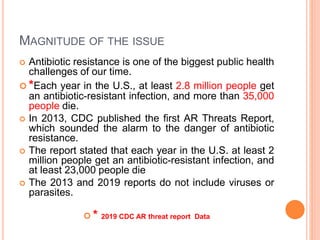
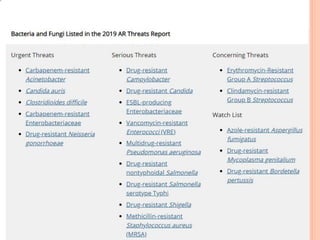
 *Each year in the U.S., at least 2.8 million people get
an antibiotic-resistant infection, and more than 35,000
people die.
 In 2013, CDC published the first AR Threats Report,
which sounded the alarm to the danger of antibiotic
resistance.
 The report stated that each year in the U.S. at least 2
million people get an antibiotic-resistant infection, and
at least 23,000 people die
 The 2013 and 2019 reports do not include viruses or
parasites.
 * 2019 CDC AR threat report Data
INDIAN SCENARIO#
 Antimicrobial resistance (AMR) continues to pose a
significant public health problem in terms of mortality
and economic loss in India
 India has one of the highest rates of resistance to
antimicrobial agents used both in humans and food
animals.
 Specific socio-economic and cultural factors prevalent in
India make the containment of resistance more
challenging.
 Injudicious use of antimicrobials and inadequate
treatment of waste waters are important drivers of AMR
in India.
# Taneja N, Sharma M. Antimicrobial resistance in the environment: The
Indian scenario. Indian J Med Res 2019;149:119-28
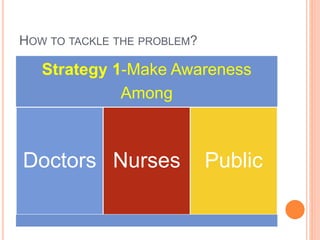
HOW TO TACKLE THE PROBLEM?
Strategy 1-Make Awareness
Among
Doctors Nurses Public
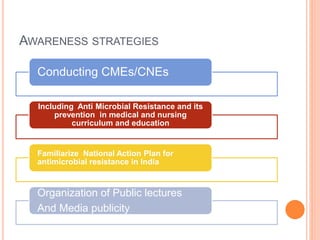
AWARENESS STRATEGIES
Conducting CMEs/CNEs
Including Anti Microbial Resistance and its
prevention in medical and nursing
curriculum and education
Familiarize National Action Plan for
antimicrobial resistance in India
Organization of Public lectures
And Media publicity
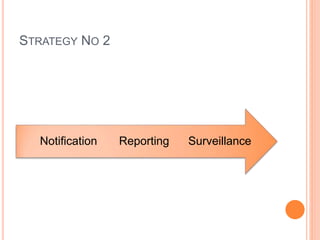
STRATEGY NO 2
SurveillanceReportingNotification
STRATEGY 3
No antibiotic policy
for non bacterial
infection
STRATEGY 4
Formulation of
Hospital
Antibiotic policy
STRATEGY 5
SOP
on Antibiotic
Preparation and
Administration for
nursing personnel
STRATEGY 6
Customize antibiotic
dose based on
patients condition
STRATEGY 7
Wait & watch strategy
Start antibiotic after C/S
report in non urgent patients
STRATEGY 8
Emphasize on full
course antibiotic
therapy & Discourage
abrupt stoppage
STRATEGY 9
Promote
Evidence based
practices
STRATEGY 10
Follow 10 Rights of
Medicine
Administration
Anti microbial resistance

Anti microbial resistance

  • 1.
    10 STRATEGIES TOTACKLE ANTI MICROBIAL RESISTANCE MATHEW VARGHESE V MSN(RAK),FHNP (CMC Vellore),CPEPC Nursing officer AIIMS Delhi
  • 2.
    MAGNITUDE OF THEISSUE  Antibiotic resistance is one of the biggest public health challenges of our time.  *Each year in the U.S., at least 2.8 million people get an antibiotic-resistant infection, and more than 35,000 people die.  In 2013, CDC published the first AR Threats Report, which sounded the alarm to the danger of antibiotic resistance.  The report stated that each year in the U.S. at least 2 million people get an antibiotic-resistant infection, and at least 23,000 people die  The 2013 and 2019 reports do not include viruses or parasites.  * 2019 CDC AR threat report Data
  • 4.
    INDIAN SCENARIO#  Antimicrobialresistance (AMR) continues to pose a significant public health problem in terms of mortality and economic loss in India  India has one of the highest rates of resistance to antimicrobial agents used both in humans and food animals.  Specific socio-economic and cultural factors prevalent in India make the containment of resistance more challenging.  Injudicious use of antimicrobials and inadequate treatment of waste waters are important drivers of AMR in India. # Taneja N, Sharma M. Antimicrobial resistance in the environment: The Indian scenario. Indian J Med Res 2019;149:119-28
  • 5.
    HOW TO TACKLETHE PROBLEM? Strategy 1-Make Awareness Among Doctors Nurses Public
  • 6.
    AWARENESS STRATEGIES Conducting CMEs/CNEs IncludingAnti Microbial Resistance and its prevention in medical and nursing curriculum and education Familiarize National Action Plan for antimicrobial resistance in India Organization of Public lectures And Media publicity
  • 7.
  • 8.
    STRATEGY 3 No antibioticpolicy for non bacterial infection
  • 9.
  • 10.
    STRATEGY 5 SOP on Antibiotic Preparationand Administration for nursing personnel
  • 11.
    STRATEGY 6 Customize antibiotic dosebased on patients condition
  • 12.
    STRATEGY 7 Wait &watch strategy Start antibiotic after C/S report in non urgent patients
  • 13.
    STRATEGY 8 Emphasize onfull course antibiotic therapy & Discourage abrupt stoppage
  • 14.
  • 15.
    STRATEGY 10 Follow 10Rights of Medicine Administration