Journal Club Presentation
Presented By:
Name: Sundar Lamichhane
Roll No: 31
BPH, VIII Semester, SHAS, PU.
12/10/2020 Sundar Lamichhane 1
Presented for the partial fulfillment of requirement
of
PHA 451 Journal Club/Health Seminar
of
Bachelor of Public Health, VIII Semester,
School of Health and Allied Sciences, Pokhara University
under the cardinal supervision of
Assistant Professor Dr. Hari Prasad Kaphle
By
Sundar Lamichhane,
Symbol no: 17370208
Regd No: 2016-1-37-032
12/10/2020 Sundar Lamichhane 2
Selected Article for Presentation
• Authors: Yonas Akalu, Birhanu Ayelign, Meseret Derbew Molla.
• Tittle of article Journal: Knowledge, Attitude and Practice Towards
COVID-19 Among Chronic Disease Patients at Addis Zemen Hospital,
Northwest Ethiopia
• Journal name: Infection and drug Resistance
• Year: 2020
• Volume:13
• Page number:1949-1960
• Received: 22 April 2020
• Accepted for Publication: 11 June 2020
• Published: 24 June 2020
12/10/2020 3Sundar Lamichhane
Journal Information
• An international, peer-reviewed, Open Access journal that focuses on the optimal
treatment of infection (bacterial, fungal and viral) and the development and
institution of preventative strategies to minimize the development and spread of
resistance.
• DOI: https://doi.org/10.2147/IDR.S258736
• ISSN: 1178-6973
• Dove Medical press is a publisher of this journal. Its publishing house is located
in New Zealand
• Coverage history of journal: 2009-ongoing
12/10/2020 Sundar Lamichhane 4
Indexed online:
• PubMed and PubMed Central
• Science Citation Index Expanded(also known as SciSearch)
• Journal Citation Report/Science Edition
• Embase, from 2009
• Scopus, from 2009
• Directory of Open Access Journal(DOAJ)
• OAIster: The open acess initiative
12/10/2020 Sundar Lamichhane 5
• Editor-in-Chief: Professor Suresh Antony (Department of Internal
Medicine, Texas Tech University School of Medicine, United States)
• Associate editor in chief: Dr Sahil Khanna (Division of
Gastroenterology and Hepatology, Mayo Clinic, United States)
• Editorial board has altogether 12 members.
• Peer review process: Single-anonymous (previously referred to as
single-blind): authors’ identities are known to reviewers, but reviewers
are anonymous
http://dovepress.com/getfile.php?fileID=22979
12/10/2020 Sundar Lamichhane 6
Profile of editor-in-chief (Suresh Antony)
• Current Institution: Texas Tech University Health Sciences Center
Department of Medicine
• Current Position: Clinical Professor of medicine
127 research items
9435 reads
1157 citations
https://www.researchgate.net/profile/Suresh_Antony2
12/10/2020 Sundar Lamichhane 7
Article Publishing Charge
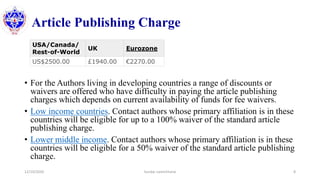
• For the Authors living in developing countries a range of discounts or
waivers are offered who have difficulty in paying the article publishing
charges which depends on current availability of funds for fee waivers.
• Low income countries. Contact authors whose primary affiliation is in these
countries will be eligible for up to a 100% waiver of the standard article
publishing charge.
• Lower middle income. Contact authors whose primary affiliation is in these
countries will be eligible for a 50% waiver of the standard article publishing
charge.
12/10/2020 Sundar Lamichhane 8
USA/Canada/
Rest-of-World
UK Eurozone
US$2500.00 £1940.00 €2270.00
Journal Metrics
According to SJR (SCImago Journal Rank):
• 2-year impact factor in 2019: 3.206
• h-index: 32
SCImago Journal Rank (SJR) 2018: 1.354
12/10/2020 Sundar Lamichhane 9
Critical Appraisal of Journal
• It is Peer-reviewed scientific journal.
• It is a paid journal and has open access.
• High visibility as it is indexed online by well known databases like
PubMed, PubMed central, Embase, Scopus and others.
• Manuscript submission is done online.
• Rejection rate: 61% (this percentage of manuscripts have been
rejected in the last 12 months.)
12/10/2020 Sundar Lamichhane 10
Tittle of Article
12/10/2020 Sundar Lamichhane 11
Tittle of Article
Tittle: Knowledge, Attitude and Practice Towards COVID-19 Among
Chronic Disease Patients at Addis Zemen Hospital, Northwest Ethiopia
Objective: To assess knowledge, attitude, and practice towards COVID-
19 among patients with chronic disease.
12/10/2020 Sundar Lamichhane 12
Critical Appraisal of Tittle
• The tittle of article is simple and specific.
• Tittle reflects the aim and objectives of the study.
• It clearly defines the study population and study area i.e. The Chronic
disease patients at Addis Zemen Hospital, Northwest Ethiopia
• Study design is not mentioned in the article.
12/10/2020 Sundar Lamichhane 13
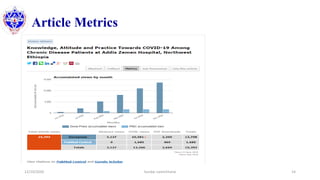
Article Metrics
12/10/2020 Sundar Lamichhane 14
Authors
• Yonas Akalu (Department of Physiology, School of Medicine,
College of Medicine and Health Sciences, University of Gondar,
Gondar, Ethiopia)
• Birhanu Ayelign (Department of Immunology and Molecular
Biology, School of Biomedical and Laboratory Sciences, College of
Medicine and Health Sciences, University of Gondar, Gondar,
Ethiopia)
• Meseret Derbew Molla (Department of Biochemistry, School of
Medicine, College of Medicine and Health Sciences, University of
Gondar, Gondar, Ethiopia)
12/10/2020 Sundar Lamichhane 15
Authors Profile
• Yonas Akalu
13 publications,1066 reads, 17 citations
https://www.researchgate.net/profile/Yonas_Akalu
• Birhanu Ayelign
23 Publications, 3929 reads, 97 citations
https://www.researchgate.net/profile/Birhanu_Ayelign
• Meseret Derbew Molla
21 publications, 1465 reads, 36 citations
https://www.researchgate.net/profile/Meseret_Derbew_Moll
12/10/2020 Sundar Lamichhane 16
Critical Appraisal of Authors
• Authors names, correspondence author along with their academic
background is mentioned.
• To clear any doubts and to know more about the article every detail
information of correspondence author is mentioned (address, contact
number, e-mail)
• Detail author credentials is not mentioned.
12/10/2020 Sundar Lamichhane 17
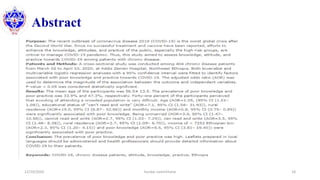
Abstract
12/10/2020 Sundar Lamichhane 18
Critical Appraisal of Abstract
• The abstract provides concise summary of the entire contents of
article.
• Abstract is short and informative
• Article is well structured as per Journal guidelines.
• Use of applicable keywords(6 keywords are mentioned as per journal
guidelines i.e. 4-6 keywords can be used)
12/10/2020 Sundar Lamichhane 19
Introduction
12/10/2020 Sundar Lamichhane 20
• Coronavirus disease 2019 (COVID -19) is a global public health threat
and has evolved to become a pandemic crisis around the world, which
is caused by the severe acute respiratory syndrome, coronavirus 2
(SARS-CoV-2
• A systematic review on COVID-19 patients showed that individuals
with hypertension, diabetes, cardiovascular and respiratory system
diseases were the most vulnerable groups.
• So far, no successful anti-viral treatment or vaccine has been reported.
Therefore, applying the preventive measure to control COVID-19
infection is the utmost critical intervention
• Successfully controlling and minimizing of morbidity and mortality
due to COVID-19 require changing the behaviour, which is influenced
by people’s knowledge and perceptions, especially the high-risk
groups i.e. chronic disease patients
• This study aimed to determine the KAP towards COVID-19 and
associated factors of poor knowledge and practice among chronic
disease patients at Addis Zemen district hospital
12/10/2020 Sundar Lamichhane 21
Critical Appraisal of Introduction
• There is proper development of the background of the study clearly
stating the purpose and rational of research.
• The background of the study is logically presented which is
meaningful and easy to understand.
• It presents the rational of the study and clearly state the objectives of
study.
• The citations are followed with correct references in the list of
references.
12/10/2020 Sundar Lamichhane 22
Materials and methods
• Study design: Cross sectional study(Institution based)
• Study area: Addis Zemen District Hospital in Addis Zemen town,
Northwest Ethiopia
• Study population: All patients with chronic diseases who attended the
chronic disease follow-up clinics at Addis Zemen District Hospital
• Exclusion criteria: chronic disease patients who were severely ill,
less than 18 years, and health professionals
• Sample size: 404 (single population formula is used)
• Sampling Technique: Consecutive sampling method
12/10/2020 Sundar Lamichhane 23
Materials and methods contd..
• Data collection procedure: The data were collected using a pre-tested,
structured interviewer-administered questionnaire. The questionnaire
includes sociodemographic characteristics, awareness, and KAP towards
COVID-19.
• Participants overall knowledge and practice was categorized using
modified Bloom's cut-off point.
• 5-point Likert scale ranging from strongly agree to strongly disagree for
assessing attitude and perceptions.
• Data Processing and Analysis
Software used: Epi Data-V.4.6 and STATA version 14
Data were analysed using appropriate descriptive statistics, and
summarized by frequency, percentage, and mean. Both binary and
multivariable logistic regression analyses were performed to identify
associated factors of poor knowledge and poor practice.
12/10/2020 Sundar Lamichhane 24
Critical Appraisal of Materials and Methods
• The methods and materials used in the research process were useful to
answer the research problem.
• The participants for the study were selected properly using appropriate
sampling method.
• The Ethical approval for the study obtained from the Ethical
committee of the school of Medicine, college of medicine and health
sciences, university of Gondar is only mentioned in the article.
• 50% of prevalence was used to get the maximum sample size as there
were no previous studies related to COVID-19 pandemic.
• Inclusion and exclusion criteria is properly mentioned.
12/10/2020 Sundar Lamichhane 25
Results
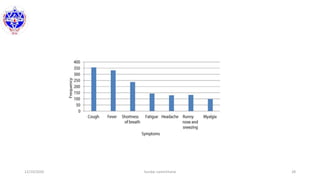
• Almost all patients (99.2%) heard about the pandemic COVID-19.
Only 151 (37.4%) study participants had good knowledge while the
remaining 116 (28.7%) had poor knowledge.
• 146 (36.1%) of the participants perceived that they have a moderate
risk of infection with COVID-19.
• The prevalence of poor practice among chronic disease patients was
47.3% and only 105 (25.9%) of study participants had a good practice
• Practicing physical distancing was the least 121 (29.9%) practiced
preventive measure.
12/10/2020 Sundar Lamichhane 26
Critical Appraisal of Results
• The results are clearly interpreted and later discussed on.
• The results are based on aim and objective of the study presented in a
logical manner.
• Detailed information is not added to some of the findings presented in
graph.(figure in next slide)
12/10/2020 Sundar Lamichhane 27
12/10/2020 Sundar Lamichhane 28
Discussion
12/10/2020 Sundar Lamichhane 29
Critical Appraisal of Discussion
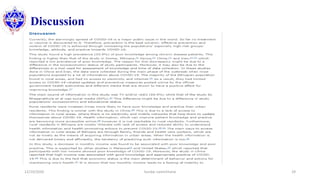
• It lightens the major findings of the study in a meaningful way.
• The findings of the study are compared to various studies that are
conducted on similar topic of COVID-19 in a logical and reasoned way
• Authors have acknowledged their limitations and presented their
reliability and validity measures.
12/10/2020 Sundar Lamichhane 30
Conclusion and Recommendations
• The study revealed that nearly half of the chronic disease patients in
Addis Zemen Hospital, Northwest Ethiopia had poor knowledge about
COVID-19.
• In addition, the study also delineate about the poor practices of chronic
disease patients.
• Low educational status, rural residence, and low monthly income were
significantly associated with poor knowledge and poor practice.
• Health education programs aimed at mobilizing and improving
COVID-19-related knowledge, attitude and practice are urgently
needed, especially for those chronic disease patients from rural areas,
with low monthly income, who are old, and with low educational
status.
12/10/2020 Sundar Lamichhane 31
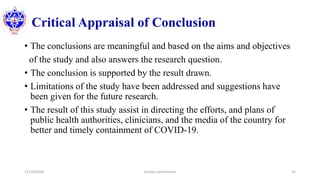
Critical Appraisal of Conclusion
• The conclusions are meaningful and based on the aims and objectives
of the study and also answers the research question.
• The conclusion is supported by the result drawn.
• Limitations of the study have been addressed and suggestions have
been given for the future research.
• The result of this study assist in directing the efforts, and plans of
public health authorities, clinicians, and the media of the country for
better and timely containment of COVID-19.
12/10/2020 Sundar Lamichhane 32
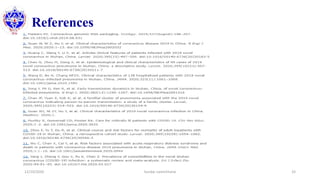
References
12/10/2020 Sundar Lamichhane 33
Critical Appraisal of References
• There are references for every citation in the article.
• References are relevant to research and are from reputed and
trustworthy journal.
• All the articles mentioned in references are open accessed and full text
is available.
• Links are not attached along with references for the data and
information extracted from websites(e.g. WHO).
• No any information or direct link about where the article can be found
like PubMed or Google Scholar or other databases.
12/10/2020 Sundar Lamichhane 34
Strengths
• This research article foregather attention to running global pandemic
COVID-19 focusing on chronic disease patients.
• All the key words are well defined.
• Training was given to the data collectors and data collection process
was performed by wearing a mask and glove at a well-ventilated room
keeping a minimum distance of 2 m from the patients
• The findings from this study are relevant and coherent and the
methods and process used to acquire these findings are appropriate,
sound and scientific.
12/10/2020 Sundar Lamichhane 35
Weakness
• Collecting data on practices
Would people tell you what they really practice?
Respondents might give socially acceptable answers.
• In addition, this study was carried out among patients with chronic diseases
and could not compare the knowledge, attitude, and practice between
patients with and without chronic disease.
• For standardization of tools to assess Knowledge Attitude and Practice,
reliability was checked by Cronbach’s alpha but it was not validated
• In my view use of consecutive sampling technique(non-random sampling)
used in this study might not be the representative of large population.
12/10/2020 Sundar Lamichhane 36
12/10/2020 Sundar Lamichhane 37
• Some grammatical errors can be seen as shown in the figure below:
• Discrete should be corrected as district.
Overall significance of the article
• Depending upon the type of research and methods used, the results are
precise and findings are believable.
• The results of this research article fits and does not contradict the existing
body of evidence
• Findings from this study can be used to help develop effective interventions,
enable program managers to establish baseline levels, set priorities and to
measure change from interventions.
• New research question generated:
What is the prevalence of COVID-19 among chronic disease patients?
Does knowledge about COVID-19 associates with preventive
practices?
12/10/2020 Sundar Lamichhane 38
Article Contribution for conduction of my research
• “Awareness and Preventive Practices of COVID-19 among senior
citizens of Kushma municipality, Parbat”
• This article will help me to review about the methods, materials, tools
and variables used which are useful and will facilitate me while
conducting my research.
• This article will assist in designing the questionnaire for my research.
• Through this article I am well acquainted with the limitations of
conducting such research.
12/10/2020 Sundar Lamichhane 39
Any Questions?
Quarries?
12/10/2020 Sundar Lamichhane 40
Thank You!
12/10/2020 Sundar Lamichhane 41

31 sundar lc-journal-club-presentation-latest

  • 1.
    Journal Club Presentation PresentedBy: Name: Sundar Lamichhane Roll No: 31 BPH, VIII Semester, SHAS, PU. 12/10/2020 Sundar Lamichhane 1
  • 2.
    Presented for thepartial fulfillment of requirement of PHA 451 Journal Club/Health Seminar of Bachelor of Public Health, VIII Semester, School of Health and Allied Sciences, Pokhara University under the cardinal supervision of Assistant Professor Dr. Hari Prasad Kaphle By Sundar Lamichhane, Symbol no: 17370208 Regd No: 2016-1-37-032 12/10/2020 Sundar Lamichhane 2
  • 3.
    Selected Article forPresentation • Authors: Yonas Akalu, Birhanu Ayelign, Meseret Derbew Molla. • Tittle of article Journal: Knowledge, Attitude and Practice Towards COVID-19 Among Chronic Disease Patients at Addis Zemen Hospital, Northwest Ethiopia • Journal name: Infection and drug Resistance • Year: 2020 • Volume:13 • Page number:1949-1960 • Received: 22 April 2020 • Accepted for Publication: 11 June 2020 • Published: 24 June 2020 12/10/2020 3Sundar Lamichhane
  • 4.
    Journal Information • Aninternational, peer-reviewed, Open Access journal that focuses on the optimal treatment of infection (bacterial, fungal and viral) and the development and institution of preventative strategies to minimize the development and spread of resistance. • DOI: https://doi.org/10.2147/IDR.S258736 • ISSN: 1178-6973 • Dove Medical press is a publisher of this journal. Its publishing house is located in New Zealand • Coverage history of journal: 2009-ongoing 12/10/2020 Sundar Lamichhane 4
  • 5.
    Indexed online: • PubMedand PubMed Central • Science Citation Index Expanded(also known as SciSearch) • Journal Citation Report/Science Edition • Embase, from 2009 • Scopus, from 2009 • Directory of Open Access Journal(DOAJ) • OAIster: The open acess initiative 12/10/2020 Sundar Lamichhane 5
  • 6.
    • Editor-in-Chief: ProfessorSuresh Antony (Department of Internal Medicine, Texas Tech University School of Medicine, United States) • Associate editor in chief: Dr Sahil Khanna (Division of Gastroenterology and Hepatology, Mayo Clinic, United States) • Editorial board has altogether 12 members. • Peer review process: Single-anonymous (previously referred to as single-blind): authors’ identities are known to reviewers, but reviewers are anonymous http://dovepress.com/getfile.php?fileID=22979 12/10/2020 Sundar Lamichhane 6
  • 7.
    Profile of editor-in-chief(Suresh Antony) • Current Institution: Texas Tech University Health Sciences Center Department of Medicine • Current Position: Clinical Professor of medicine 127 research items 9435 reads 1157 citations https://www.researchgate.net/profile/Suresh_Antony2 12/10/2020 Sundar Lamichhane 7
  • 8.
    Article Publishing Charge •For the Authors living in developing countries a range of discounts or waivers are offered who have difficulty in paying the article publishing charges which depends on current availability of funds for fee waivers. • Low income countries. Contact authors whose primary affiliation is in these countries will be eligible for up to a 100% waiver of the standard article publishing charge. • Lower middle income. Contact authors whose primary affiliation is in these countries will be eligible for a 50% waiver of the standard article publishing charge. 12/10/2020 Sundar Lamichhane 8 USA/Canada/ Rest-of-World UK Eurozone US$2500.00 £1940.00 €2270.00
  • 9.
    Journal Metrics According toSJR (SCImago Journal Rank): • 2-year impact factor in 2019: 3.206 • h-index: 32 SCImago Journal Rank (SJR) 2018: 1.354 12/10/2020 Sundar Lamichhane 9
  • 10.
    Critical Appraisal ofJournal • It is Peer-reviewed scientific journal. • It is a paid journal and has open access. • High visibility as it is indexed online by well known databases like PubMed, PubMed central, Embase, Scopus and others. • Manuscript submission is done online. • Rejection rate: 61% (this percentage of manuscripts have been rejected in the last 12 months.) 12/10/2020 Sundar Lamichhane 10
  • 11.
    Tittle of Article 12/10/2020Sundar Lamichhane 11
  • 12.
    Tittle of Article Tittle:Knowledge, Attitude and Practice Towards COVID-19 Among Chronic Disease Patients at Addis Zemen Hospital, Northwest Ethiopia Objective: To assess knowledge, attitude, and practice towards COVID- 19 among patients with chronic disease. 12/10/2020 Sundar Lamichhane 12
  • 13.
    Critical Appraisal ofTittle • The tittle of article is simple and specific. • Tittle reflects the aim and objectives of the study. • It clearly defines the study population and study area i.e. The Chronic disease patients at Addis Zemen Hospital, Northwest Ethiopia • Study design is not mentioned in the article. 12/10/2020 Sundar Lamichhane 13
  • 14.
  • 15.
    Authors • Yonas Akalu(Department of Physiology, School of Medicine, College of Medicine and Health Sciences, University of Gondar, Gondar, Ethiopia) • Birhanu Ayelign (Department of Immunology and Molecular Biology, School of Biomedical and Laboratory Sciences, College of Medicine and Health Sciences, University of Gondar, Gondar, Ethiopia) • Meseret Derbew Molla (Department of Biochemistry, School of Medicine, College of Medicine and Health Sciences, University of Gondar, Gondar, Ethiopia) 12/10/2020 Sundar Lamichhane 15
  • 16.
    Authors Profile • YonasAkalu 13 publications,1066 reads, 17 citations https://www.researchgate.net/profile/Yonas_Akalu • Birhanu Ayelign 23 Publications, 3929 reads, 97 citations https://www.researchgate.net/profile/Birhanu_Ayelign • Meseret Derbew Molla 21 publications, 1465 reads, 36 citations https://www.researchgate.net/profile/Meseret_Derbew_Moll 12/10/2020 Sundar Lamichhane 16
  • 17.
    Critical Appraisal ofAuthors • Authors names, correspondence author along with their academic background is mentioned. • To clear any doubts and to know more about the article every detail information of correspondence author is mentioned (address, contact number, e-mail) • Detail author credentials is not mentioned. 12/10/2020 Sundar Lamichhane 17
  • 18.
  • 19.
    Critical Appraisal ofAbstract • The abstract provides concise summary of the entire contents of article. • Abstract is short and informative • Article is well structured as per Journal guidelines. • Use of applicable keywords(6 keywords are mentioned as per journal guidelines i.e. 4-6 keywords can be used) 12/10/2020 Sundar Lamichhane 19
  • 20.
    Introduction 12/10/2020 Sundar Lamichhane20 • Coronavirus disease 2019 (COVID -19) is a global public health threat and has evolved to become a pandemic crisis around the world, which is caused by the severe acute respiratory syndrome, coronavirus 2 (SARS-CoV-2 • A systematic review on COVID-19 patients showed that individuals with hypertension, diabetes, cardiovascular and respiratory system diseases were the most vulnerable groups. • So far, no successful anti-viral treatment or vaccine has been reported. Therefore, applying the preventive measure to control COVID-19 infection is the utmost critical intervention
  • 21.
    • Successfully controllingand minimizing of morbidity and mortality due to COVID-19 require changing the behaviour, which is influenced by people’s knowledge and perceptions, especially the high-risk groups i.e. chronic disease patients • This study aimed to determine the KAP towards COVID-19 and associated factors of poor knowledge and practice among chronic disease patients at Addis Zemen district hospital 12/10/2020 Sundar Lamichhane 21
  • 22.
    Critical Appraisal ofIntroduction • There is proper development of the background of the study clearly stating the purpose and rational of research. • The background of the study is logically presented which is meaningful and easy to understand. • It presents the rational of the study and clearly state the objectives of study. • The citations are followed with correct references in the list of references. 12/10/2020 Sundar Lamichhane 22
  • 23.
    Materials and methods •Study design: Cross sectional study(Institution based) • Study area: Addis Zemen District Hospital in Addis Zemen town, Northwest Ethiopia • Study population: All patients with chronic diseases who attended the chronic disease follow-up clinics at Addis Zemen District Hospital • Exclusion criteria: chronic disease patients who were severely ill, less than 18 years, and health professionals • Sample size: 404 (single population formula is used) • Sampling Technique: Consecutive sampling method 12/10/2020 Sundar Lamichhane 23
  • 24.
    Materials and methodscontd.. • Data collection procedure: The data were collected using a pre-tested, structured interviewer-administered questionnaire. The questionnaire includes sociodemographic characteristics, awareness, and KAP towards COVID-19. • Participants overall knowledge and practice was categorized using modified Bloom's cut-off point. • 5-point Likert scale ranging from strongly agree to strongly disagree for assessing attitude and perceptions. • Data Processing and Analysis Software used: Epi Data-V.4.6 and STATA version 14 Data were analysed using appropriate descriptive statistics, and summarized by frequency, percentage, and mean. Both binary and multivariable logistic regression analyses were performed to identify associated factors of poor knowledge and poor practice. 12/10/2020 Sundar Lamichhane 24
  • 25.
    Critical Appraisal ofMaterials and Methods • The methods and materials used in the research process were useful to answer the research problem. • The participants for the study were selected properly using appropriate sampling method. • The Ethical approval for the study obtained from the Ethical committee of the school of Medicine, college of medicine and health sciences, university of Gondar is only mentioned in the article. • 50% of prevalence was used to get the maximum sample size as there were no previous studies related to COVID-19 pandemic. • Inclusion and exclusion criteria is properly mentioned. 12/10/2020 Sundar Lamichhane 25
  • 26.
    Results • Almost allpatients (99.2%) heard about the pandemic COVID-19. Only 151 (37.4%) study participants had good knowledge while the remaining 116 (28.7%) had poor knowledge. • 146 (36.1%) of the participants perceived that they have a moderate risk of infection with COVID-19. • The prevalence of poor practice among chronic disease patients was 47.3% and only 105 (25.9%) of study participants had a good practice • Practicing physical distancing was the least 121 (29.9%) practiced preventive measure. 12/10/2020 Sundar Lamichhane 26
  • 27.
    Critical Appraisal ofResults • The results are clearly interpreted and later discussed on. • The results are based on aim and objective of the study presented in a logical manner. • Detailed information is not added to some of the findings presented in graph.(figure in next slide) 12/10/2020 Sundar Lamichhane 27
  • 28.
  • 29.
  • 30.
    Critical Appraisal ofDiscussion • It lightens the major findings of the study in a meaningful way. • The findings of the study are compared to various studies that are conducted on similar topic of COVID-19 in a logical and reasoned way • Authors have acknowledged their limitations and presented their reliability and validity measures. 12/10/2020 Sundar Lamichhane 30
  • 31.
    Conclusion and Recommendations •The study revealed that nearly half of the chronic disease patients in Addis Zemen Hospital, Northwest Ethiopia had poor knowledge about COVID-19. • In addition, the study also delineate about the poor practices of chronic disease patients. • Low educational status, rural residence, and low monthly income were significantly associated with poor knowledge and poor practice. • Health education programs aimed at mobilizing and improving COVID-19-related knowledge, attitude and practice are urgently needed, especially for those chronic disease patients from rural areas, with low monthly income, who are old, and with low educational status. 12/10/2020 Sundar Lamichhane 31
  • 32.
    Critical Appraisal ofConclusion • The conclusions are meaningful and based on the aims and objectives of the study and also answers the research question. • The conclusion is supported by the result drawn. • Limitations of the study have been addressed and suggestions have been given for the future research. • The result of this study assist in directing the efforts, and plans of public health authorities, clinicians, and the media of the country for better and timely containment of COVID-19. 12/10/2020 Sundar Lamichhane 32
  • 33.
  • 34.
    Critical Appraisal ofReferences • There are references for every citation in the article. • References are relevant to research and are from reputed and trustworthy journal. • All the articles mentioned in references are open accessed and full text is available. • Links are not attached along with references for the data and information extracted from websites(e.g. WHO). • No any information or direct link about where the article can be found like PubMed or Google Scholar or other databases. 12/10/2020 Sundar Lamichhane 34
  • 35.
    Strengths • This researcharticle foregather attention to running global pandemic COVID-19 focusing on chronic disease patients. • All the key words are well defined. • Training was given to the data collectors and data collection process was performed by wearing a mask and glove at a well-ventilated room keeping a minimum distance of 2 m from the patients • The findings from this study are relevant and coherent and the methods and process used to acquire these findings are appropriate, sound and scientific. 12/10/2020 Sundar Lamichhane 35
  • 36.
    Weakness • Collecting dataon practices Would people tell you what they really practice? Respondents might give socially acceptable answers. • In addition, this study was carried out among patients with chronic diseases and could not compare the knowledge, attitude, and practice between patients with and without chronic disease. • For standardization of tools to assess Knowledge Attitude and Practice, reliability was checked by Cronbach’s alpha but it was not validated • In my view use of consecutive sampling technique(non-random sampling) used in this study might not be the representative of large population. 12/10/2020 Sundar Lamichhane 36
  • 37.
    12/10/2020 Sundar Lamichhane37 • Some grammatical errors can be seen as shown in the figure below: • Discrete should be corrected as district.
  • 38.
    Overall significance ofthe article • Depending upon the type of research and methods used, the results are precise and findings are believable. • The results of this research article fits and does not contradict the existing body of evidence • Findings from this study can be used to help develop effective interventions, enable program managers to establish baseline levels, set priorities and to measure change from interventions. • New research question generated: What is the prevalence of COVID-19 among chronic disease patients? Does knowledge about COVID-19 associates with preventive practices? 12/10/2020 Sundar Lamichhane 38
  • 39.
    Article Contribution forconduction of my research • “Awareness and Preventive Practices of COVID-19 among senior citizens of Kushma municipality, Parbat” • This article will help me to review about the methods, materials, tools and variables used which are useful and will facilitate me while conducting my research. • This article will assist in designing the questionnaire for my research. • Through this article I am well acquainted with the limitations of conducting such research. 12/10/2020 Sundar Lamichhane 39
  • 40.
  • 41.

Editor's Notes

  • #11 Well-known databases
  • #24 A sampling technique in which every subject meeting the criteria of inclusion is selected until the required sample size is achieved non probability sampling
  • #25  Five BSc nurses working in the chronic disease follow up clinics and one MSc supervisor performed the data collection process by wearing a mask and glove at a well-ventilated room keeping a minimum distance of 2 m from the patients.
  • #37 Cause effect relationship consecutive sampling not generalizable not representative