ANTIMICROBIAL PACKAGING IN
FOOD APPLICATIONS
1
Sajad ahmad sofi
Research scholar
PhD Food science and technology
SKUAST Jammu
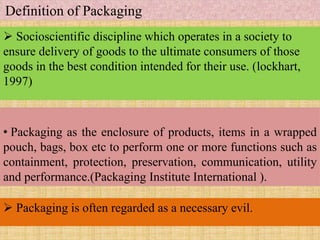
Definition of Packaging
• Packaging as the enclosure of products, items in a wrapped
pouch, bags, box etc to perform one or more functions such as
containment, protection, preservation, communication, utility
and performance.(Packaging Institute International ).
 Socioscientific discipline which operates in a society to
ensure delivery of goods to the ultimate consumers of those
goods in the best condition intended for their use. (lockhart,
1997)
 Packaging is often regarded as a necessary evil.
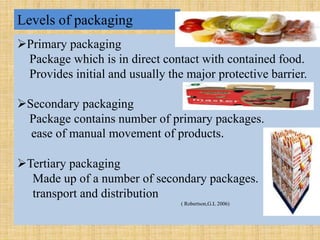
Levels of packaging
Primary packaging
Package which is in direct contact with contained food.
Provides initial and usually the major protective barrier.
Secondary packaging
Package contains number of primary packages.
ease of manual movement of products.
Tertiary packaging
Made up of a number of secondary packages.
transport and distribution
( Robertson,G.L 2006)
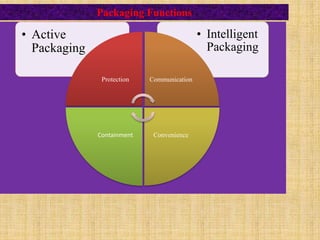
• Intelligent
Packaging
• Active
Packaging
Protection Communication
ConvenienceContainment
Packaging Functions
Active Packaging
Inclusion of subsidiary constituents into the packaging material
or the packaging head space with the intent of enhancing the
performance of the packaging system. (Hernandez and Giacin
1998)
Active packaging senses environment changes and responds
by changing its properties ( Brody, A.L 2001)
Subsidiary constituents used in active packaging
• Sachets and pads (Oxygen absorbers,carbon dioxide
absorbers/emitters, Ethylene Adsorbers moisture adsorbers
and Ethanol emitters)
• Active packaging materials (Oxygen and ethylene adsorbers,
Antioxidant release, Antimicrobial release, Microwave
suspectors and self cooling and self heating packaging)
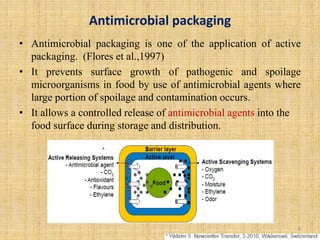
Antimicrobial packaging
• Antimicrobial packaging is one of the application of active
packaging. (Flores et al.,1997)
• It prevents surface growth of pathogenic and spoilage
microorganisms in food by use of antimicrobial agents where
large portion of spoilage and contamination occurs.
• It allows a controlled release of antimicrobial agents into the
food surface during storage and distribution.
6
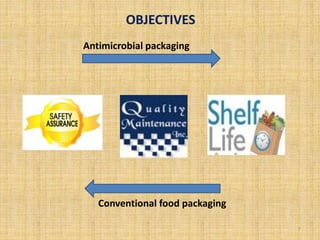
OBJECTIVES
7
Antimicrobial packaging
Conventional food packaging
Contd.
• Antimicrobial packaging is multifunctional by
reducing harmful microbial activity in food.
• Antimicrobial packaging helps to increase
food safety.
• Antimicrobial packaging reduces food wastage
and improves food shelf life.
• Bio-based antimicrobial agents in packaging
provide extra safety for health
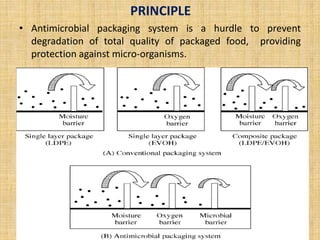
PRINCIPLE
• Antimicrobial packaging system is a hurdle to prevent
degradation of total quality of packaged food, providing
protection against micro-organisms.
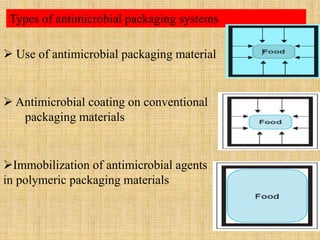
Types of antimicrobial packaging systems
 Use of antimicrobial packaging material
 Antimicrobial coating on conventional
packaging materials
Immobilization of antimicrobial agents
in polymeric packaging materials
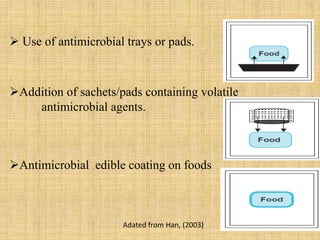
 Use of antimicrobial trays or pads.
Addition of sachets/pads containing volatile
antimicrobial agents.
Antimicrobial edible coating on foods
Adated from Han, (2003)
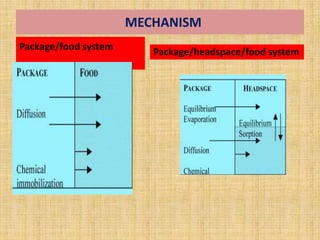
MECHANISM
Package/food system Package/headspace/food system
.
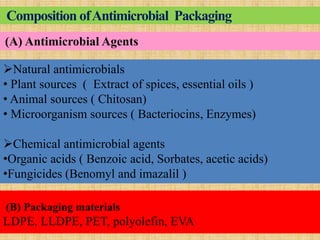
Composition ofAntimicrobial Packaging
(B) Packaging materials
LDPE, LLDPE, PET, polyolefin, EVA
Natural antimicrobials
• Plant sources ( Extract of spices, essential oils )
• Animal sources ( Chitosan)
• Microorganism sources ( Bacteriocins, Enzymes)
Chemical antimicrobial agents
•Organic acids ( Benzoic acid, Sorbates, acetic acids)
•Fungicides (Benomyl and imazalil )
(A) Antimicrobial Agents
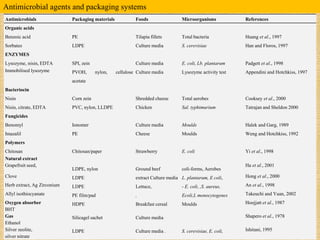
Antimicrobials Packaging materials Foods Microorganisms References
Organic acids
Benzoic acid PE Tilapia fillets Total bacteria Huang et al., 1997
Sorbates LDPE Culture media S. cerevisiae Han and Floros, 1997
ENZYMES
Lysozyme, nisin, EDTA SPI, zein Culture media E. coli, Lb. plantarum Padgett et al., 1998
Immobilised lysozyme PVOH, nylon, cellulose
acetate
Culture media Lysozyme activity test Appendini and Hotchkiss, 1997
Bacteriocin
Nisin Corn zein Shredded cheese Total aerobes Cooksey et al., 2000
Nisin, citrate, EDTA PVC, nylon, LLDPE Chicken Sal. typhimurium Tatrajan and Sheldon 2000
Fungicides
Benomyl Ionomer Culture media Moulds Halek and Garg, 1989
Imazalil PE Cheese Moulds Weng and Hotchkiss, 1992
Polymers
Chitosan Chitosan/paper Strawberry E. coli Yi et al., 1998
Natural extract
Grapefruit seed,
LDPE, nylon Ground beef coli-forms, Aerobes
Ha et al., 2001
Clove LDPE extract Culture media L. plantarum, E coli, Hong et al., 2000
Herb extract, Ag Zirconium LDPE Lettuce, - E. coli, ,S. aureus, An et al., 1998
Allyl isothiocyanate PE film/pad , Ecoli,L monocytogenes Takeuchi and Yuan, 2002
Oxygen absorber
BHT
HDPE Breakfast cereal Moulds Hoojjatt et al., 1987
Gas
Ethanol
Silicagel sachet Culture media Shapero et al., 1978
Silver zeolite,
silver nitrate
LDPE Culture media . S. cerevisiae, E. coli, Ishitani, 1995
Antimicrobial agents and packaging systems
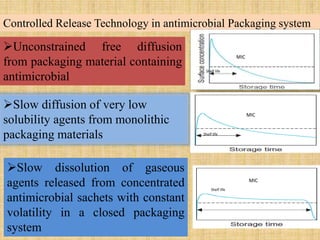
Controlled Release Technology in antimicrobial Packaging system
Unconstrained free diffusion
from packaging material containing
antimicrobial
Slow diffusion of very low
solubility agents from monolithic
packaging materials
Slow dissolution of gaseous
agents released from concentrated
antimicrobial sachets with constant
volatility in a closed packaging
system
MIC
Shelf life
Shelf life
Shelf life
MIC
MIC
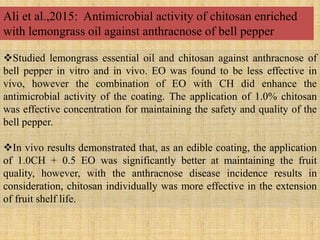
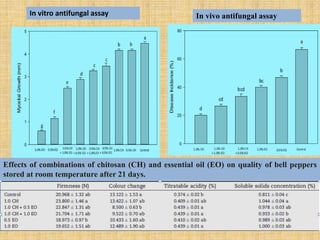
Studied lemongrass essential oil and chitosan against anthracnose of
bell pepper in vitro and in vivo. EO was found to be less effective in
vivo, however the combination of EO with CH did enhance the
antimicrobial activity of the coating. The application of 1.0% chitosan
was effective concentration for maintaining the safety and quality of the
bell pepper.
In vivo results demonstrated that, as an edible coating, the application
of 1.0CH + 0.5 EO was significantly better at maintaining the fruit
quality, however, with the anthracnose disease incidence results in
consideration, chitosan individually was more effective in the extension
of fruit shelf life.
Ali et al.,2015: Antimicrobial activity of chitosan enriched
with lemongrass oil against anthracnose of bell pepper
In vitro antifungal assay In vivo antifungal assay
Effects of combinations of chitosan (CH) and essential oil (EO) on quality of bell peppers
stored at room temperature after 21 days.
Barbiroli et al .,2012 Antimicrobial activity of lysozyme and lactoferrin incorporated
in cellulose-based food packaging
lysozyme and lactoferrin incorporated into carboxymethyl Cellulose paper
retained their structural and functional features, indicating that the paper making
process did not affect their structure.
The antimicrobial activity between the two proteins was evident in tests
carried out with paper against Listeria and E coli.
Tests on thin meat slices laid on paper sheets containing either or both
antimicrobial proteins indicated that lysozyme was most effective in preventing
growth of Total aerobic population .
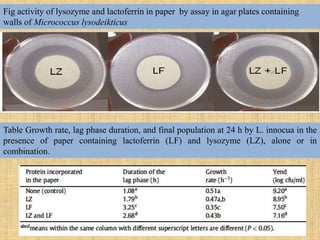
Fig activity of lysozyme and lactoferrin in paper by assay in agar plates containing
walls of Micrococcus lysodeikticus
Table Growth rate, lag phase duration, and final population at 24 h by L. innocua in the
presence of paper containing lactoferrin (LF) and lysozyme (LZ), alone or in
combination.
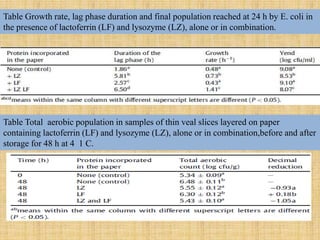
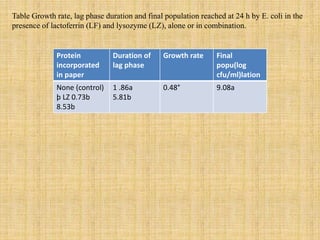
Table Growth rate, lag phase duration and final population reached at 24 h by E. coli in
the presence of lactoferrin (LF) and lysozyme (LZ), alone or in combination.
Table Total aerobic population in samples of thin veal slices layered on paper
containing lactoferrin (LF) and lysozyme (LZ), alone or in combination,before and after
storage for 48 h at 4 1 C.
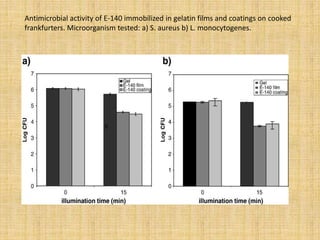
Antimicrobial activity of E-140 immobilized in gelatin films and coatings on cooked
frankfurters. Microorganism tested: a) S. aureus b) L. monocytogenes.
Table Growth rate, lag phase duration and final population reached at 24 h by E. coli in the
presence of lactoferrin (LF) and lysozyme (LZ), alone or in combination.
Protein
incorporated
in paper
Duration of
lag phase
Growth rate Final
popu(log
cfu/ml)lation
None (control)
þ LZ 0.73b
8.53b
1 .86a
5.81b
0.48° 9.08a
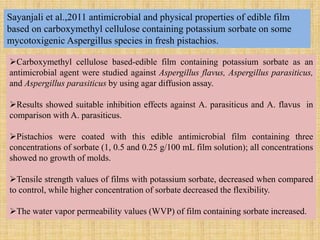
Sayanjali et al.,2011 antimicrobial and physical properties of edible film
based on carboxymethyl cellulose containing potassium sorbate on some
mycotoxigenic Aspergillus species in fresh pistachios.
Carboxymethyl cellulose based-edible film containing potassium sorbate as an
antimicrobial agent were studied against Aspergillus flavus, Aspergillus parasiticus,
and Aspergillus parasiticus by using agar diffusion assay.
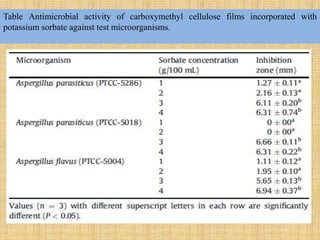
Results showed suitable inhibition effects against A. parasiticus and A. flavus in
comparison with A. parasiticus.
Pistachios were coated with this edible antimicrobial film containing three
concentrations of sorbate (1, 0.5 and 0.25 g/100 mL film solution); all concentrations
showed no growth of molds.
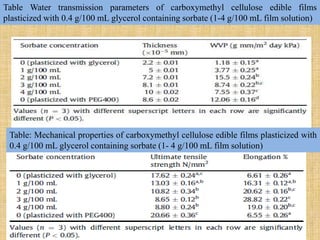
Tensile strength values of films with potassium sorbate, decreased when compared
to control, while higher concentration of sorbate decreased the flexibility.
The water vapor permeability values (WVP) of film containing sorbate increased.
Table: Mechanical properties of carboxymethyl cellulose edible films plasticized with
0.4 g/100 mL glycerol containing sorbate (1- 4 g/100 mL film solution)
Table Water transmission parameters of carboxymethyl cellulose edible films
plasticized with 0.4 g/100 mL glycerol containing sorbate (1-4 g/100 mL film solution)
Table Antimicrobial activity of carboxymethyl cellulose films incorporated with
potassium sorbate against test microorganisms.
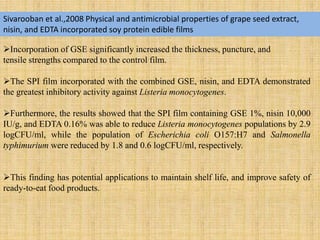
Sivarooban et al.,2008 Physical and antimicrobial properties of grape seed extract,
nisin, and EDTA incorporated soy protein edible films
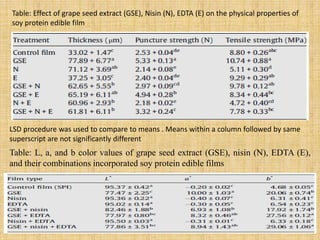
Incorporation of GSE significantly increased the thickness, puncture, and
tensile strengths compared to the control film.
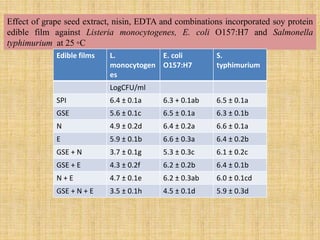
The SPI film incorporated with the combined GSE, nisin, and EDTA demonstrated
the greatest inhibitory activity against Listeria monocytogenes.
Furthermore, the results showed that the SPI film containing GSE 1%, nisin 10,000
IU/g, and EDTA 0.16% was able to reduce Listeria monocytogenes populations by 2.9
logCFU/ml, while the population of Escherichia coli O157:H7 and Salmonella
typhimurium were reduced by 1.8 and 0.6 logCFU/ml, respectively.
This finding has potential applications to maintain shelf life, and improve safety of
ready-to-eat food products.
Table: Effect of grape seed extract (GSE), Nisin (N), EDTA (E) on the physical properties of
soy protein edible film
LSD procedure was used to compare to means . Means within a column followed by same
superscript are not significantly different
Table: L, a, and b color values of grape seed extract (GSE), nisin (N), EDTA (E),
and their combinations incorporated soy protein edible films
Effect of grape seed extract, nisin, EDTA and combinations incorporated soy protein
edible film against Listeria monocytogenes, E. coli O157:H7 and Salmonella
typhimurium at 25 ◦C
Edible films L.
monocytogen
es
E. coli
O157:H7
S.
typhimurium
LogCFU/ml
SPI 6.4 ± 0.1a 6.3 + 0.1ab 6.5 ± 0.1a
GSE 5.6 ± 0.1c 6.5 ± 0.1a 6.3 ± 0.1b
N 4.9 ± 0.2d 6.4 ± 0.2a 6.6 ± 0.1a
E 5.9 ± 0.1b 6.6 ± 0.3a 6.4 ± 0.2b
GSE + N 3.7 ± 0.1g 5.3 ± 0.3c 6.1 ± 0.2c
GSE + E 4.3 ± 0.2f 6.2 ± 0.2b 6.4 ± 0.1b
N + E 4.7 ± 0.1e 6.2 ± 0.3ab 6.0 ± 0.1cd
GSE + N + E 3.5 ± 0.1h 4.5 ± 0.1d 5.9 ± 0.3d
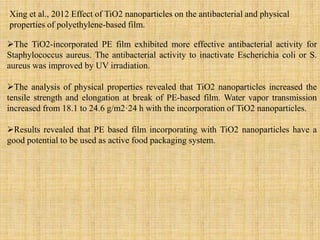
Xing et al., 2012 Effect of TiO2 nanoparticles on the antibacterial and physical
properties of polyethylene-based film.
The TiO2-incorporated PE film exhibited more effective antibacterial activity for
Staphylococcus aureus. The antibacterial activity to inactivate Escherichia coli or S.
aureus was improved by UV irradiation.
The analysis of physical properties revealed that TiO2 nanoparticles increased the
tensile strength and elongation at break of PE-based film. Water vapor transmission
increased from 18.1 to 24.6 g/m2·24 h with the incorporation of TiO2 nanoparticles.
Results revealed that PE based film incorporating with TiO2 nanoparticles have a
good potential to be used as active food packaging system.
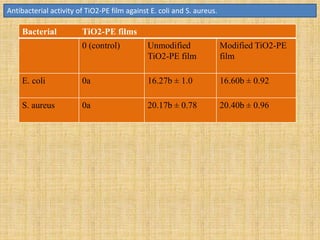
Antibacterial activity of TiO2-PE film against E. coli and S. aureus.
Bacterial TiO2-PE films
0 (control) Unmodified
TiO2-PE film
Modified TiO2-PE
film
E. coli 0a 16.27b ± 1.0 16.60b ± 0.92
S. aureus 0a 20.17b ± 0.78 20.40b ± 0.96
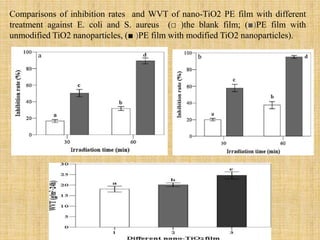
Comparisons of inhibition rates and WVT of nano-TiO2 PE film with different
treatment against E. coli and S. aureus (□ )the blank film; (■)PE film with
unmodified TiO2 nanoparticles, (■ )PE film with modified TiO2 nanoparticles).
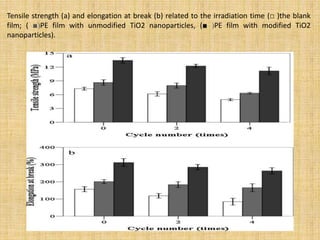
Tensile strength (a) and elongation at break (b) related to the irradiation time (□ )the blank
film; ( ■)PE film with unmodified TiO2 nanoparticles, (■ )PE film with modified TiO2
nanoparticles).
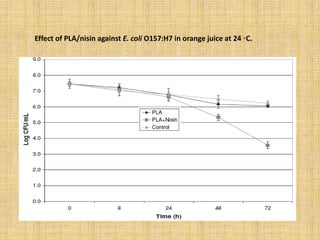
Effect of PLA/nisin against E. coli O157:H7 in orange juice at 24 ◦C.
 Polylactic acid (PLA) polymer films were incorporated with nisin to control of
Escherichia coli O157:H7 in orange juice. PLA/nisin reduced the cell population
of E. coli O157:H7 in orange juice from 7.5 to 3.5 log at 72 h whereas the control
remained at about 6 log CFU/mL.
 E. coli O157:H7 in orange juice was more sensitive to PLA/nisin treatments.
The results of this research demonstrated the retention of nisin activity when
incorporated into the PLA polymer and its antimicrobial effectiveness against food
borne pathogens.
The combination of a biopolymer and natural bacteriocin has potential for use in
antimicrobial food packaging.
Jin and Zhang, 2008 Biodegradable Polylactic Acid Polymer with Nisin for Use in
Antimicrobial Food Packaging
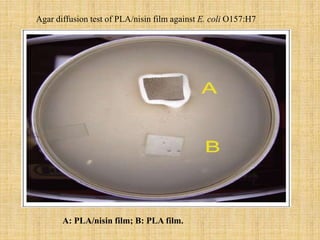
Agar diffusion test of PLA/nisin film against E. coli O157:H7
A: PLA/nisin film; B: PLA film.
Pranoto et al.,2005 Antimicrobial effect of chitosan edible film incorporating garlic oil
(GO) was compared with conventional food preservative potassium sorbate (PS) and
bacteriocin nisin (N) at various concentrations
Activity was tested against food pathogenic bacteria namely Escherichia coli,
Staphylococcus aureus, Salmonella typhimurium, Listeria monocytogenes and
Bacillus cereus.
Incorporation of GO up to levels at least 100 ml/g, PS at 100 mg/g or N at
51,000 IU/g of chitosan were found to have antimicrobial activity against S.
aureus, L. monocytogenes, and B. cereus.
At these levels, the films were physically acceptable in term of appearance,
mechanical and physical properties.
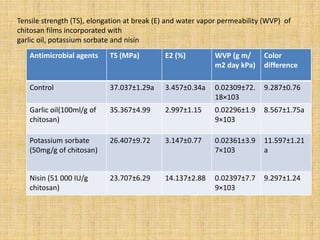
Antimicrobial agents TS (MPa) E2 (%) WVP (g m/
m2 day kPa)
Color
difference
Control 37.037±1.29a 3.457±0.34a 0.02309±72.
18×103
9.287±0.76
Garlic oil(100ml/g of
chitosan)
35.367±4.99 2.997±1.15 0.02296±1.9
9×10³
8.567±1.75a
Potassium sorbate
(50mg/g of chitosan)
26.407±9.72 3.147±0.77 0.02361±3.9
7×10³
11.597±1.21
a
Nisin (51 000 IU/g
chitosan)
23.707±6.29 14.137±2.88 0.02397±7.7
9×10³
9.297±1.24
Tensile strength (TS), elongation at break (E) and water vapor permeability (WVP) of
chitosan films incorporated with
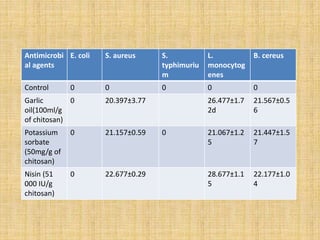
garlic oil, potassium sorbate and nisin
Antimicrobi
al agents
E. coli S. aureus S.
typhimuriu
m
L.
monocytog
enes
B. cereus
Control 0 0 0 0 0
Garlic
oil(100ml/g
of chitosan)
0 20.397±3.77 26.477±1.7
2d
21.567±0.5
6
Potassium
sorbate
(50mg/g of
chitosan)
0 21.157±0.59 0 21.067±1.2
5
21.447±1.5
7
Nisin (51
000 IU/g
chitosan)
0 22.677±0.29 28.677±1.1
5
22.177±1.0
4
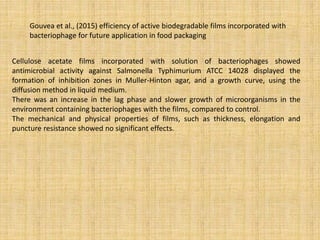
Gouvea et al., (2015) efficiency of active biodegradable films incorporated with
bacteriophage for future application in food packaging
Cellulose acetate films incorporated with solution of bacteriophages showed
antimicrobial activity against Salmonella Typhimurium ATCC 14028 displayed the
formation of inhibition zones in Muller-Hinton agar, and a growth curve, using the
diffusion method in liquid medium.
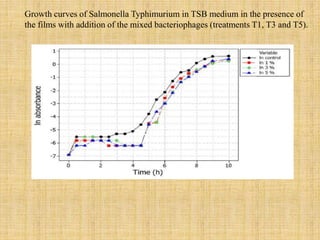
There was an increase in the lag phase and slower growth of microorganisms in the
environment containing bacteriophages with the films, compared to control.
The mechanical and physical properties of films, such as thickness, elongation and
puncture resistance showed no significant effects.
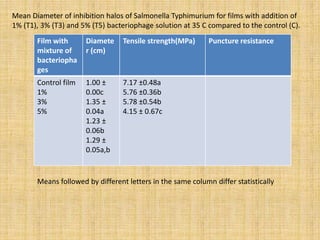
Mean Diameter of inhibition halos of Salmonella Typhimurium for films with addition of
1% (T1), 3% (T3) and 5% (T5) bacteriophage solution at 35 C compared to the control (C).
Film with
mixture of
bacteriopha
ges
Diamete
r (cm)
Tensile strength(MPa) Puncture resistance
Control film
1%
3%
5%
1.00 ±
0.00c
1.35 ±
0.04a
1.23 ±
0.06b
1.29 ±
0.05a,b
7.17 ±0.48a
5.76 ±0.36b
5.78 ±0.54b
4.15 ± 0.67c
Means followed by different letters in the same column differ statistically
Growth curves of Salmonella Typhimurium in TSB medium in the presence of
the films with addition of the mixed bacteriophages (treatments T1, T3 and T5).
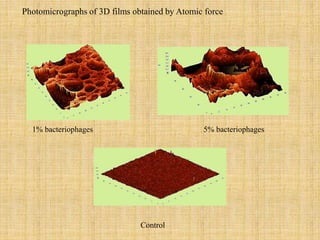
Photomicrographs of 3D films obtained by Atomic force
1% bacteriophages 5% bacteriophages
Control
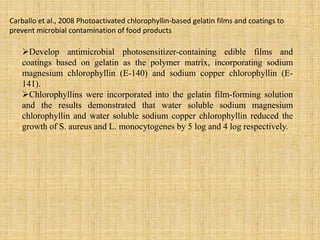
Develop antimicrobial photosensitizer-containing edible films and
coatings based on gelatin as the polymer matrix, incorporating sodium
magnesium chlorophyllin (E-140) and sodium copper chlorophyllin (E-
141).
Chlorophyllins were incorporated into the gelatin film-forming solution
and the results demonstrated that water soluble sodium magnesium
chlorophyllin and water soluble sodium copper chlorophyllin reduced the
growth of S. aureus and L. monocytogenes by 5 log and 4 log respectively.
Carballo et al., 2008 Photoactivated chlorophyllin-based gelatin films and coatings to
prevent microbial contamination of food products
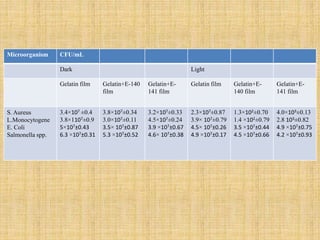
Microorganism CFU/mL
Dark Light
Gelatin film Gelatin+E-140
film
Gelatin+E-
141 film
Gelatin film Gelatin+E-
140 film
Gelatin+E-
141 film
S. Aureus
L.Monocytogene
E. Coli
Salmonella spp.
3.4×10⁷ ±0.4
3.8×1107±0.9
5×10⁷±0.43
6.3 ×10⁷±0.31
3.8×10⁷±0.34
3.0×10⁷±0.11
3.5× 10⁷±0.87
5.3 ×10⁷±0.52
3.2×10⁷±0.33
4.5×10⁷±0.24
3.9 ×10⁷±0.67
4.6× 10⁷±0.38
2.3×10⁷±0.87
3.9× 10⁷±0.79
4.5× 10⁷±0.26
4.9 ×10⁷±0.17
1.3×10²±0.70
1.4 ×10²±0.79
3.5 ×10⁷±0.44
4.5 ×10⁷±0.66
4.0×10³±0.13
2.8 103±0.82
4.9 ×10⁷±0.75
4.2 ×10⁷±0.93
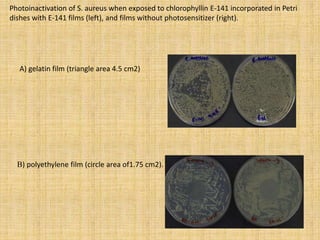
Photoinactivation of S. aureus when exposed to chlorophyllin E-141 incorporated in Petri
dishes with E-141 films (left), and films without photosensitizer (right).
A) gelatin film (triangle area 4.5 cm2)
B) polyethylene film (circle area of1.75 cm2).

Antimicrobial packaging in food

  • 1.
    ANTIMICROBIAL PACKAGING IN FOODAPPLICATIONS 1 Sajad ahmad sofi Research scholar PhD Food science and technology SKUAST Jammu
  • 2.
    Definition of Packaging •Packaging as the enclosure of products, items in a wrapped pouch, bags, box etc to perform one or more functions such as containment, protection, preservation, communication, utility and performance.(Packaging Institute International ).  Socioscientific discipline which operates in a society to ensure delivery of goods to the ultimate consumers of those goods in the best condition intended for their use. (lockhart, 1997)  Packaging is often regarded as a necessary evil.
  • 3.
    Levels of packaging Primarypackaging Package which is in direct contact with contained food. Provides initial and usually the major protective barrier. Secondary packaging Package contains number of primary packages. ease of manual movement of products. Tertiary packaging Made up of a number of secondary packages. transport and distribution ( Robertson,G.L 2006)
  • 4.
    • Intelligent Packaging • Active Packaging ProtectionCommunication ConvenienceContainment Packaging Functions
  • 5.
    Active Packaging Inclusion ofsubsidiary constituents into the packaging material or the packaging head space with the intent of enhancing the performance of the packaging system. (Hernandez and Giacin 1998) Active packaging senses environment changes and responds by changing its properties ( Brody, A.L 2001) Subsidiary constituents used in active packaging • Sachets and pads (Oxygen absorbers,carbon dioxide absorbers/emitters, Ethylene Adsorbers moisture adsorbers and Ethanol emitters) • Active packaging materials (Oxygen and ethylene adsorbers, Antioxidant release, Antimicrobial release, Microwave suspectors and self cooling and self heating packaging)
  • 6.
    Antimicrobial packaging • Antimicrobialpackaging is one of the application of active packaging. (Flores et al.,1997) • It prevents surface growth of pathogenic and spoilage microorganisms in food by use of antimicrobial agents where large portion of spoilage and contamination occurs. • It allows a controlled release of antimicrobial agents into the food surface during storage and distribution. 6
  • 7.
  • 8.
    Contd. • Antimicrobial packagingis multifunctional by reducing harmful microbial activity in food. • Antimicrobial packaging helps to increase food safety. • Antimicrobial packaging reduces food wastage and improves food shelf life. • Bio-based antimicrobial agents in packaging provide extra safety for health
  • 9.
    PRINCIPLE • Antimicrobial packagingsystem is a hurdle to prevent degradation of total quality of packaged food, providing protection against micro-organisms.
  • 10.
    Types of antimicrobialpackaging systems  Use of antimicrobial packaging material  Antimicrobial coating on conventional packaging materials Immobilization of antimicrobial agents in polymeric packaging materials
  • 11.
     Use ofantimicrobial trays or pads. Addition of sachets/pads containing volatile antimicrobial agents. Antimicrobial edible coating on foods Adated from Han, (2003)
  • 12.
  • 13.
    Composition ofAntimicrobial Packaging (B)Packaging materials LDPE, LLDPE, PET, polyolefin, EVA Natural antimicrobials • Plant sources ( Extract of spices, essential oils ) • Animal sources ( Chitosan) • Microorganism sources ( Bacteriocins, Enzymes) Chemical antimicrobial agents •Organic acids ( Benzoic acid, Sorbates, acetic acids) •Fungicides (Benomyl and imazalil ) (A) Antimicrobial Agents
  • 14.
    Antimicrobials Packaging materialsFoods Microorganisms References Organic acids Benzoic acid PE Tilapia fillets Total bacteria Huang et al., 1997 Sorbates LDPE Culture media S. cerevisiae Han and Floros, 1997 ENZYMES Lysozyme, nisin, EDTA SPI, zein Culture media E. coli, Lb. plantarum Padgett et al., 1998 Immobilised lysozyme PVOH, nylon, cellulose acetate Culture media Lysozyme activity test Appendini and Hotchkiss, 1997 Bacteriocin Nisin Corn zein Shredded cheese Total aerobes Cooksey et al., 2000 Nisin, citrate, EDTA PVC, nylon, LLDPE Chicken Sal. typhimurium Tatrajan and Sheldon 2000 Fungicides Benomyl Ionomer Culture media Moulds Halek and Garg, 1989 Imazalil PE Cheese Moulds Weng and Hotchkiss, 1992 Polymers Chitosan Chitosan/paper Strawberry E. coli Yi et al., 1998 Natural extract Grapefruit seed, LDPE, nylon Ground beef coli-forms, Aerobes Ha et al., 2001 Clove LDPE extract Culture media L. plantarum, E coli, Hong et al., 2000 Herb extract, Ag Zirconium LDPE Lettuce, - E. coli, ,S. aureus, An et al., 1998 Allyl isothiocyanate PE film/pad , Ecoli,L monocytogenes Takeuchi and Yuan, 2002 Oxygen absorber BHT HDPE Breakfast cereal Moulds Hoojjatt et al., 1987 Gas Ethanol Silicagel sachet Culture media Shapero et al., 1978 Silver zeolite, silver nitrate LDPE Culture media . S. cerevisiae, E. coli, Ishitani, 1995 Antimicrobial agents and packaging systems
  • 15.
    Controlled Release Technologyin antimicrobial Packaging system Unconstrained free diffusion from packaging material containing antimicrobial Slow diffusion of very low solubility agents from monolithic packaging materials Slow dissolution of gaseous agents released from concentrated antimicrobial sachets with constant volatility in a closed packaging system MIC Shelf life Shelf life Shelf life MIC MIC
  • 16.
    Studied lemongrass essentialoil and chitosan against anthracnose of bell pepper in vitro and in vivo. EO was found to be less effective in vivo, however the combination of EO with CH did enhance the antimicrobial activity of the coating. The application of 1.0% chitosan was effective concentration for maintaining the safety and quality of the bell pepper. In vivo results demonstrated that, as an edible coating, the application of 1.0CH + 0.5 EO was significantly better at maintaining the fruit quality, however, with the anthracnose disease incidence results in consideration, chitosan individually was more effective in the extension of fruit shelf life. Ali et al.,2015: Antimicrobial activity of chitosan enriched with lemongrass oil against anthracnose of bell pepper
  • 17.
    In vitro antifungalassay In vivo antifungal assay Effects of combinations of chitosan (CH) and essential oil (EO) on quality of bell peppers stored at room temperature after 21 days.
  • 18.
    Barbiroli et al.,2012 Antimicrobial activity of lysozyme and lactoferrin incorporated in cellulose-based food packaging lysozyme and lactoferrin incorporated into carboxymethyl Cellulose paper retained their structural and functional features, indicating that the paper making process did not affect their structure. The antimicrobial activity between the two proteins was evident in tests carried out with paper against Listeria and E coli. Tests on thin meat slices laid on paper sheets containing either or both antimicrobial proteins indicated that lysozyme was most effective in preventing growth of Total aerobic population .
  • 19.
    Fig activity oflysozyme and lactoferrin in paper by assay in agar plates containing walls of Micrococcus lysodeikticus Table Growth rate, lag phase duration, and final population at 24 h by L. innocua in the presence of paper containing lactoferrin (LF) and lysozyme (LZ), alone or in combination.
  • 20.
    Table Growth rate,lag phase duration and final population reached at 24 h by E. coli in the presence of lactoferrin (LF) and lysozyme (LZ), alone or in combination. Table Total aerobic population in samples of thin veal slices layered on paper containing lactoferrin (LF) and lysozyme (LZ), alone or in combination,before and after storage for 48 h at 4 1 C.
  • 21.
    Antimicrobial activity ofE-140 immobilized in gelatin films and coatings on cooked frankfurters. Microorganism tested: a) S. aureus b) L. monocytogenes.
  • 22.
    Table Growth rate,lag phase duration and final population reached at 24 h by E. coli in the presence of lactoferrin (LF) and lysozyme (LZ), alone or in combination. Protein incorporated in paper Duration of lag phase Growth rate Final popu(log cfu/ml)lation None (control) þ LZ 0.73b 8.53b 1 .86a 5.81b 0.48° 9.08a
  • 23.
    Sayanjali et al.,2011antimicrobial and physical properties of edible film based on carboxymethyl cellulose containing potassium sorbate on some mycotoxigenic Aspergillus species in fresh pistachios. Carboxymethyl cellulose based-edible film containing potassium sorbate as an antimicrobial agent were studied against Aspergillus flavus, Aspergillus parasiticus, and Aspergillus parasiticus by using agar diffusion assay. Results showed suitable inhibition effects against A. parasiticus and A. flavus in comparison with A. parasiticus. Pistachios were coated with this edible antimicrobial film containing three concentrations of sorbate (1, 0.5 and 0.25 g/100 mL film solution); all concentrations showed no growth of molds. Tensile strength values of films with potassium sorbate, decreased when compared to control, while higher concentration of sorbate decreased the flexibility. The water vapor permeability values (WVP) of film containing sorbate increased.
  • 24.
    Table: Mechanical propertiesof carboxymethyl cellulose edible films plasticized with 0.4 g/100 mL glycerol containing sorbate (1- 4 g/100 mL film solution) Table Water transmission parameters of carboxymethyl cellulose edible films plasticized with 0.4 g/100 mL glycerol containing sorbate (1-4 g/100 mL film solution)
  • 25.
    Table Antimicrobial activityof carboxymethyl cellulose films incorporated with potassium sorbate against test microorganisms.
  • 26.
    Sivarooban et al.,2008Physical and antimicrobial properties of grape seed extract, nisin, and EDTA incorporated soy protein edible films Incorporation of GSE significantly increased the thickness, puncture, and tensile strengths compared to the control film. The SPI film incorporated with the combined GSE, nisin, and EDTA demonstrated the greatest inhibitory activity against Listeria monocytogenes. Furthermore, the results showed that the SPI film containing GSE 1%, nisin 10,000 IU/g, and EDTA 0.16% was able to reduce Listeria monocytogenes populations by 2.9 logCFU/ml, while the population of Escherichia coli O157:H7 and Salmonella typhimurium were reduced by 1.8 and 0.6 logCFU/ml, respectively. This finding has potential applications to maintain shelf life, and improve safety of ready-to-eat food products.
  • 27.
    Table: Effect ofgrape seed extract (GSE), Nisin (N), EDTA (E) on the physical properties of soy protein edible film LSD procedure was used to compare to means . Means within a column followed by same superscript are not significantly different Table: L, a, and b color values of grape seed extract (GSE), nisin (N), EDTA (E), and their combinations incorporated soy protein edible films
  • 28.
    Effect of grapeseed extract, nisin, EDTA and combinations incorporated soy protein edible film against Listeria monocytogenes, E. coli O157:H7 and Salmonella typhimurium at 25 ◦C Edible films L. monocytogen es E. coli O157:H7 S. typhimurium LogCFU/ml SPI 6.4 ± 0.1a 6.3 + 0.1ab 6.5 ± 0.1a GSE 5.6 ± 0.1c 6.5 ± 0.1a 6.3 ± 0.1b N 4.9 ± 0.2d 6.4 ± 0.2a 6.6 ± 0.1a E 5.9 ± 0.1b 6.6 ± 0.3a 6.4 ± 0.2b GSE + N 3.7 ± 0.1g 5.3 ± 0.3c 6.1 ± 0.2c GSE + E 4.3 ± 0.2f 6.2 ± 0.2b 6.4 ± 0.1b N + E 4.7 ± 0.1e 6.2 ± 0.3ab 6.0 ± 0.1cd GSE + N + E 3.5 ± 0.1h 4.5 ± 0.1d 5.9 ± 0.3d
  • 29.
    Xing et al.,2012 Effect of TiO2 nanoparticles on the antibacterial and physical properties of polyethylene-based film. The TiO2-incorporated PE film exhibited more effective antibacterial activity for Staphylococcus aureus. The antibacterial activity to inactivate Escherichia coli or S. aureus was improved by UV irradiation. The analysis of physical properties revealed that TiO2 nanoparticles increased the tensile strength and elongation at break of PE-based film. Water vapor transmission increased from 18.1 to 24.6 g/m2·24 h with the incorporation of TiO2 nanoparticles. Results revealed that PE based film incorporating with TiO2 nanoparticles have a good potential to be used as active food packaging system.
  • 30.
    Antibacterial activity ofTiO2-PE film against E. coli and S. aureus. Bacterial TiO2-PE films 0 (control) Unmodified TiO2-PE film Modified TiO2-PE film E. coli 0a 16.27b ± 1.0 16.60b ± 0.92 S. aureus 0a 20.17b ± 0.78 20.40b ± 0.96
  • 31.
    Comparisons of inhibitionrates and WVT of nano-TiO2 PE film with different treatment against E. coli and S. aureus (□ )the blank film; (■)PE film with unmodified TiO2 nanoparticles, (■ )PE film with modified TiO2 nanoparticles).
  • 32.
    Tensile strength (a)and elongation at break (b) related to the irradiation time (□ )the blank film; ( ■)PE film with unmodified TiO2 nanoparticles, (■ )PE film with modified TiO2 nanoparticles).
  • 33.
    Effect of PLA/nisinagainst E. coli O157:H7 in orange juice at 24 ◦C.
  • 34.
     Polylactic acid(PLA) polymer films were incorporated with nisin to control of Escherichia coli O157:H7 in orange juice. PLA/nisin reduced the cell population of E. coli O157:H7 in orange juice from 7.5 to 3.5 log at 72 h whereas the control remained at about 6 log CFU/mL.  E. coli O157:H7 in orange juice was more sensitive to PLA/nisin treatments. The results of this research demonstrated the retention of nisin activity when incorporated into the PLA polymer and its antimicrobial effectiveness against food borne pathogens. The combination of a biopolymer and natural bacteriocin has potential for use in antimicrobial food packaging. Jin and Zhang, 2008 Biodegradable Polylactic Acid Polymer with Nisin for Use in Antimicrobial Food Packaging
  • 35.
    Agar diffusion testof PLA/nisin film against E. coli O157:H7 A: PLA/nisin film; B: PLA film.
  • 36.
    Pranoto et al.,2005Antimicrobial effect of chitosan edible film incorporating garlic oil (GO) was compared with conventional food preservative potassium sorbate (PS) and bacteriocin nisin (N) at various concentrations Activity was tested against food pathogenic bacteria namely Escherichia coli, Staphylococcus aureus, Salmonella typhimurium, Listeria monocytogenes and Bacillus cereus. Incorporation of GO up to levels at least 100 ml/g, PS at 100 mg/g or N at 51,000 IU/g of chitosan were found to have antimicrobial activity against S. aureus, L. monocytogenes, and B. cereus. At these levels, the films were physically acceptable in term of appearance, mechanical and physical properties.
  • 37.
    Antimicrobial agents TS(MPa) E2 (%) WVP (g m/ m2 day kPa) Color difference Control 37.037±1.29a 3.457±0.34a 0.02309±72. 18×103 9.287±0.76 Garlic oil(100ml/g of chitosan) 35.367±4.99 2.997±1.15 0.02296±1.9 9×10³ 8.567±1.75a Potassium sorbate (50mg/g of chitosan) 26.407±9.72 3.147±0.77 0.02361±3.9 7×10³ 11.597±1.21 a Nisin (51 000 IU/g chitosan) 23.707±6.29 14.137±2.88 0.02397±7.7 9×10³ 9.297±1.24 Tensile strength (TS), elongation at break (E) and water vapor permeability (WVP) of chitosan films incorporated with garlic oil, potassium sorbate and nisin
  • 38.
    Antimicrobi al agents E. coliS. aureus S. typhimuriu m L. monocytog enes B. cereus Control 0 0 0 0 0 Garlic oil(100ml/g of chitosan) 0 20.397±3.77 26.477±1.7 2d 21.567±0.5 6 Potassium sorbate (50mg/g of chitosan) 0 21.157±0.59 0 21.067±1.2 5 21.447±1.5 7 Nisin (51 000 IU/g chitosan) 0 22.677±0.29 28.677±1.1 5 22.177±1.0 4
  • 39.
    Gouvea et al.,(2015) efficiency of active biodegradable films incorporated with bacteriophage for future application in food packaging Cellulose acetate films incorporated with solution of bacteriophages showed antimicrobial activity against Salmonella Typhimurium ATCC 14028 displayed the formation of inhibition zones in Muller-Hinton agar, and a growth curve, using the diffusion method in liquid medium. There was an increase in the lag phase and slower growth of microorganisms in the environment containing bacteriophages with the films, compared to control. The mechanical and physical properties of films, such as thickness, elongation and puncture resistance showed no significant effects.
  • 40.
    Mean Diameter ofinhibition halos of Salmonella Typhimurium for films with addition of 1% (T1), 3% (T3) and 5% (T5) bacteriophage solution at 35 C compared to the control (C). Film with mixture of bacteriopha ges Diamete r (cm) Tensile strength(MPa) Puncture resistance Control film 1% 3% 5% 1.00 ± 0.00c 1.35 ± 0.04a 1.23 ± 0.06b 1.29 ± 0.05a,b 7.17 ±0.48a 5.76 ±0.36b 5.78 ±0.54b 4.15 ± 0.67c Means followed by different letters in the same column differ statistically
  • 41.
    Growth curves ofSalmonella Typhimurium in TSB medium in the presence of the films with addition of the mixed bacteriophages (treatments T1, T3 and T5).
  • 42.
    Photomicrographs of 3Dfilms obtained by Atomic force 1% bacteriophages 5% bacteriophages Control
  • 43.
    Develop antimicrobial photosensitizer-containingedible films and coatings based on gelatin as the polymer matrix, incorporating sodium magnesium chlorophyllin (E-140) and sodium copper chlorophyllin (E- 141). Chlorophyllins were incorporated into the gelatin film-forming solution and the results demonstrated that water soluble sodium magnesium chlorophyllin and water soluble sodium copper chlorophyllin reduced the growth of S. aureus and L. monocytogenes by 5 log and 4 log respectively. Carballo et al., 2008 Photoactivated chlorophyllin-based gelatin films and coatings to prevent microbial contamination of food products
  • 44.
    Microorganism CFU/mL Dark Light Gelatinfilm Gelatin+E-140 film Gelatin+E- 141 film Gelatin film Gelatin+E- 140 film Gelatin+E- 141 film S. Aureus L.Monocytogene E. Coli Salmonella spp. 3.4×10⁷ ±0.4 3.8×1107±0.9 5×10⁷±0.43 6.3 ×10⁷±0.31 3.8×10⁷±0.34 3.0×10⁷±0.11 3.5× 10⁷±0.87 5.3 ×10⁷±0.52 3.2×10⁷±0.33 4.5×10⁷±0.24 3.9 ×10⁷±0.67 4.6× 10⁷±0.38 2.3×10⁷±0.87 3.9× 10⁷±0.79 4.5× 10⁷±0.26 4.9 ×10⁷±0.17 1.3×10²±0.70 1.4 ×10²±0.79 3.5 ×10⁷±0.44 4.5 ×10⁷±0.66 4.0×10³±0.13 2.8 103±0.82 4.9 ×10⁷±0.75 4.2 ×10⁷±0.93
  • 45.
    Photoinactivation of S.aureus when exposed to chlorophyllin E-141 incorporated in Petri dishes with E-141 films (left), and films without photosensitizer (right). A) gelatin film (triangle area 4.5 cm2) B) polyethylene film (circle area of1.75 cm2).