Theoretical Models
Cell Culture))
By:A.Haghbin
Model:The set is the experiment or effect on which to measure
๏ถInvivo models
Animal models
๏ถInvitro models:
Cell culture
- 2D Cell culture
- 3D Cell culture
Invivo models
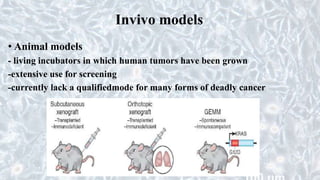
โ€ข Animal models
- living incubators in which human tumors have been grown
-extensive use for screening
-currently lack a qualifiedmode for many forms of deadly cancer
Why is cell culture used for?
โ€ข Model systems
โ€ข Toxicity testing
โ€ข Cancer research
โ€ข Virology
โ€ข Genetic Engineering
Types of cells
โ€ข Primary cells
โ€ข Semi-continuous cells
โ€ข Continuous cells
Types of culture
โ€ข 2D Cell culture
- Monolayer
โ€ข 3D Cell culture
-Scaffold-base
- Scaffold-free : spheroid
2D Cell Culture
โ€ข flat monolayers submerged in media
โ€ข itโ€™s simplicity
โ€ข this model canโ€™t accurately depict and simulate the rich environment and
complex processes observed in vivo:cell signaling, chemistry or geometry
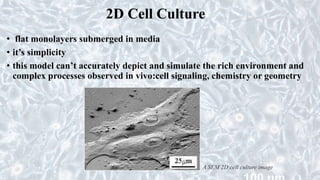
A SEM 2D cell culture image
3D Cell Culture
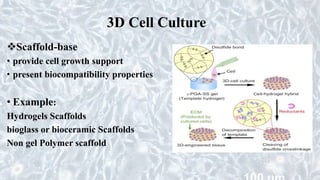
๏ถScaffold-base
โ€ข provide cell growth support
โ€ข present biocompatibility properties
โ€ข Example:
Hydrogels Scaffolds
bioglass or bioceramic Scaffolds
Non gel Polymer scaffold
3D Cell Culture
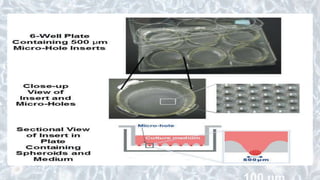
๏ถScaffold-free : spheroid
โ€ข bridge the gap between in vitro experiments used for discovery
and screening and in vivo experiments
โ€ข perfectly mimic in vivo cells behaviors and organization
โ€ข MCTS :Multicellular tumor spheroids
Scaffold-free 3D cells cultures techniques
โ€ข forced-floating method
โ€ข agitation based method
โ€ข hanging drop method
2D vs 3D Cell Culture
โ€ข Physiologic cell-to-cell contact dominates
โ€ขCells interact with extracellular matrix
(ECM)
โ€ข Diffusion gradient of drugs, oxygen,
nutrients, and waste
โ€ข Co-culture of multiple cell mimics
microenvironment
โ€ข Shows resistance to anticancer drug as in
vivo tumor
โ€ข Cell-to-cell contact only on edges
โ€ข Cell mostly in contact with plastic
โ€ข Cells contact extracellular matrix mostly on one
surface
โ€ข No gradients present
โ€ข Co-culture unable to establish
amicroenvironment
โ€ข Anticancer drug resistance is not seen
Growing Cells in 3D alters proliferation
and cell morphology
โ€ข changes in proliferation rate
ECM-dependent:changes in intracellular signaling and stromal cell
influence
โ€ข changes in cell shape that ultimately modify cellular function
apical-basal polarity
Growing cells in 3D reveals a more realistic
drug response
โ€ข increase resistance to chemotherapy
โ€ข recapitulate several mechanisms of drug resistance
Growing cells in 3D captures phenotypic
heterogeneity
โ€ข Heterogeneity
- morphological and functional changes
โ€ข Two theories exist to explain these differences
-clonal selection theory
-cancer stem cells (CSCs)
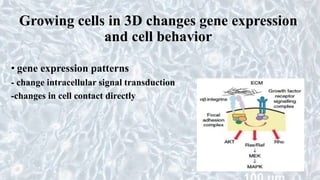
Growing cells in 3D changes gene expression
and cell behavior
โ€ข gene expression patterns
- change intracellular signal transduction
-changes in cell contact directly
โ€ข genetic changes has impacts on cell behaviors such as cell
migration and differentiation
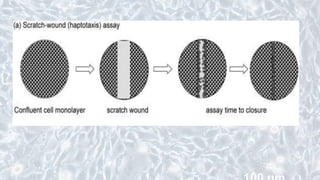
โ€ข interrogated cell migration
- Boyden chamber systems
- monolayer scratch assays
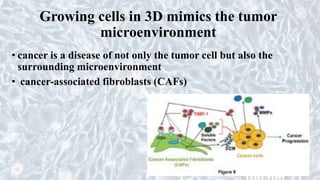
Growing cells in 3D mimics the tumor
microenvironment
โ€ข cancer is a disease of not only the tumor cell but also the
surrounding microenvironment
โ€ข cancer-associated fibroblasts (CAFs)
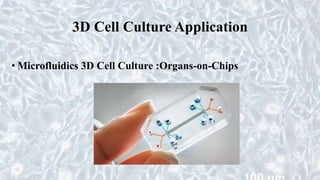
3D Cell Culture Application
โ€ข Microfluidics 3D Cell Culture :Organs-on-Chips
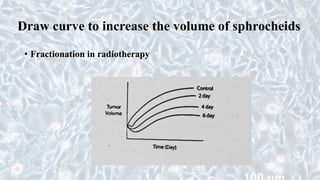
Draw curve to increase the volume of sphrocheids
โ€ข Fractionation in radiotherapy
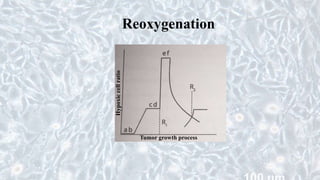
Reoxygenation
Hypoxiccellratio
Tumor growth process
Thanks for your attention

Theoretical models

  • 1.
  • 2.
    Model:The set isthe experiment or effect on which to measure ๏ถInvivo models Animal models ๏ถInvitro models: Cell culture - 2D Cell culture - 3D Cell culture
  • 3.
    Invivo models โ€ข Animalmodels - living incubators in which human tumors have been grown -extensive use for screening -currently lack a qualifiedmode for many forms of deadly cancer
  • 4.
    Why is cellculture used for? โ€ข Model systems โ€ข Toxicity testing โ€ข Cancer research โ€ข Virology โ€ข Genetic Engineering
  • 5.
    Types of cells โ€ขPrimary cells โ€ข Semi-continuous cells โ€ข Continuous cells
  • 6.
    Types of culture โ€ข2D Cell culture - Monolayer โ€ข 3D Cell culture -Scaffold-base - Scaffold-free : spheroid
  • 7.
    2D Cell Culture โ€ขflat monolayers submerged in media โ€ข itโ€™s simplicity โ€ข this model canโ€™t accurately depict and simulate the rich environment and complex processes observed in vivo:cell signaling, chemistry or geometry A SEM 2D cell culture image
  • 8.
    3D Cell Culture ๏ถScaffold-base โ€ขprovide cell growth support โ€ข present biocompatibility properties โ€ข Example: Hydrogels Scaffolds bioglass or bioceramic Scaffolds Non gel Polymer scaffold
  • 9.
    3D Cell Culture ๏ถScaffold-free: spheroid โ€ข bridge the gap between in vitro experiments used for discovery and screening and in vivo experiments โ€ข perfectly mimic in vivo cells behaviors and organization โ€ข MCTS :Multicellular tumor spheroids
  • 10.
    Scaffold-free 3D cellscultures techniques โ€ข forced-floating method โ€ข agitation based method โ€ข hanging drop method
  • 11.
    2D vs 3DCell Culture โ€ข Physiologic cell-to-cell contact dominates โ€ขCells interact with extracellular matrix (ECM) โ€ข Diffusion gradient of drugs, oxygen, nutrients, and waste โ€ข Co-culture of multiple cell mimics microenvironment โ€ข Shows resistance to anticancer drug as in vivo tumor โ€ข Cell-to-cell contact only on edges โ€ข Cell mostly in contact with plastic โ€ข Cells contact extracellular matrix mostly on one surface โ€ข No gradients present โ€ข Co-culture unable to establish amicroenvironment โ€ข Anticancer drug resistance is not seen
  • 12.
    Growing Cells in3D alters proliferation and cell morphology โ€ข changes in proliferation rate ECM-dependent:changes in intracellular signaling and stromal cell influence โ€ข changes in cell shape that ultimately modify cellular function apical-basal polarity
  • 13.
    Growing cells in3D reveals a more realistic drug response โ€ข increase resistance to chemotherapy โ€ข recapitulate several mechanisms of drug resistance
  • 14.
    Growing cells in3D captures phenotypic heterogeneity โ€ข Heterogeneity - morphological and functional changes โ€ข Two theories exist to explain these differences -clonal selection theory -cancer stem cells (CSCs)
  • 15.
    Growing cells in3D changes gene expression and cell behavior โ€ข gene expression patterns - change intracellular signal transduction -changes in cell contact directly
  • 16.
    โ€ข genetic changeshas impacts on cell behaviors such as cell migration and differentiation โ€ข interrogated cell migration - Boyden chamber systems - monolayer scratch assays
  • 17.
    Growing cells in3D mimics the tumor microenvironment โ€ข cancer is a disease of not only the tumor cell but also the surrounding microenvironment โ€ข cancer-associated fibroblasts (CAFs)
  • 18.
    3D Cell CultureApplication โ€ข Microfluidics 3D Cell Culture :Organs-on-Chips
  • 19.
    Draw curve toincrease the volume of sphrocheids โ€ข Fractionation in radiotherapy
  • 20.
  • 21.
    Thanks for yourattention