

Microfluidics and
Organ-on-a-chip
BHAWESH ANAND
Department of Electronics and Communication Engineering
University Institute of Technology
The University of Burdwan
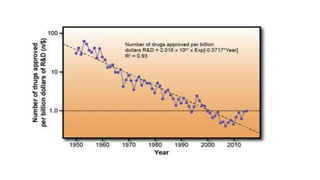
Drug Efficacy Testing
 Cells in Dishes Test
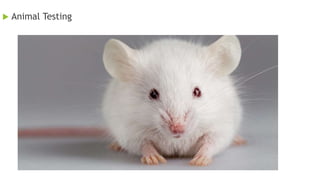
 Animal Testing
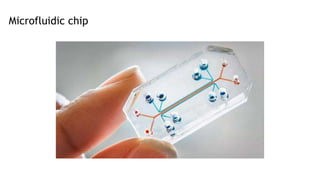
Microfluidic chip
What is microfluidics ?
 Microfluidics deals with the manipulating and controlling
fluids inside micrometer-sized channels. The volume of the
liquid is usually in the range of microliters (10^(-6)) to
picoliters (10^(-12)).
 A microfluidic chip is a set of micro-channels etched or
molded into a material, that is, glass, silicon or polymer
such as PDMS (PolyDimethylSiloxane).
 The micro-channels forming the microfluidic chip are
connected together in order to achieve the desired
features, such as, mix, pump, sort, or control the
biochemical environment.
Birth of Microfluidics (History):
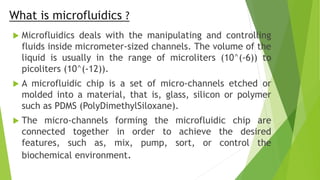
 In the 50s, the first transistors were invented and developed. They
gradually replaced the vacuum-tubes previously used in electronic
equipment.
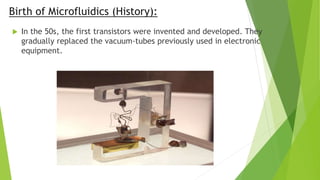
 In the 60s, the development of technologies enabled the
miniaturization and integration of thousands of transistors on
silicon wafers. This led to the production of first integrated
circuits and then the first microprocessors.
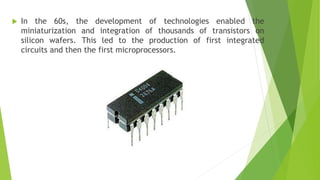
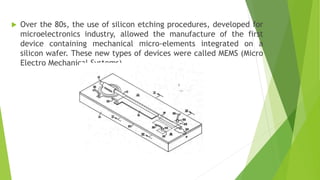
 Over the 80s, the use of silicon etching procedures, developed for
microelectronics industry, allowed the manufacture of the first
device containing mechanical micro-elements integrated on a
silicon wafer. These new types of devices were called MEMS (Micro
Electro Mechanical Systems).
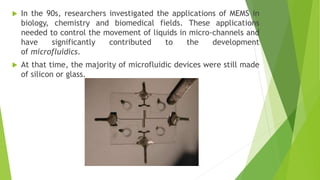
 In the 90s, researchers investigated the applications of MEMS in
biology, chemistry and biomedical fields. These applications
needed to control the movement of liquids in micro-channels and
have significantly contributed to the development
of microfluidics.
 At that time, the majority of microfluidic devices were still made
of silicon or glass.
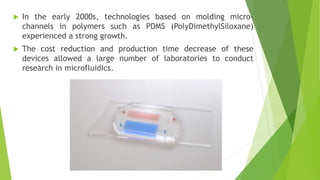
 In the early 2000s, technologies based on molding micro-
channels in polymers such as PDMS (PolyDimethylSiloxane)
experienced a strong growth.
 The cost reduction and production time decrease of these
devices allowed a large number of laboratories to conduct
research in microfluidics.
Organ-on-a-chip
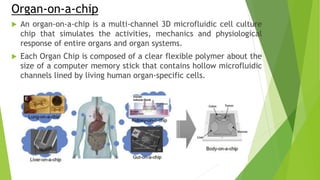
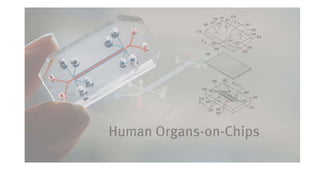
 An organ-on-a-chip is a multi-channel 3D microfluidic cell culture
chip that simulates the activities, mechanics and physiological
response of entire organs and organ systems.
 Each Organ Chip is composed of a clear flexible polymer about the
size of a computer memory stick that contains hollow microfluidic
channels lined by living human organ-specific cells.
 Organs :
 Brain-on-a-chip: Brain-on-a-chip devices create an interface
between neuroscience and microfluidics by improving culture
viability, supporting high throughput screening, modeling organ
level physiology and disease etc.
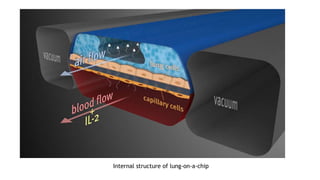
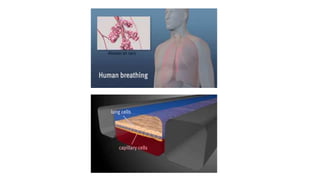
 Lung-on-a-chip: Lung-on-a-chip can be used to test the effects of
environmental toxins, absorption of aerosolized therapeutics, and
the safety and efficacy of new drugs.
 Heart-on-a-chip: Microfluidics has contributed to in vitro
experiments on cardiomyocytes, which generate the electrical
impulses that control the heart rate.
 Liver-on-a-chip: The liver-on-a-chip models are designed to mimic
the responses of the human liver when used in drug testing for
toxic side effects.
 Kidney-on-a-chip: A kidney-on-a-chip device has the potential to
accelerate research encompassing artificial replacement for
lost kidney function.
 Skin-on-a-chip: Skin-on-a-chip applications include testing of
topical pharmaceuticals and cosmetics, studying the pathology of
skin diseases and inflammation, and “creating noninvasive
automated cellular assays” to test for the presence of antigens or
antibodies that could denote the presence of a pathogen.
Working:
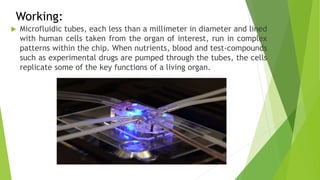
 Microfluidic tubes, each less than a millimeter in diameter and lined
with human cells taken from the organ of interest, run in complex
patterns within the chip. When nutrients, blood and test-compounds
such as experimental drugs are pumped through the tubes, the cells
replicate some of the key functions of a living organ.
Internal structure of lung-on-a-chip
Applications and The Future:
 Researchers have developed a new microfluidic device that tests
the effects of electric fields on cancer cells. They observed that a
range of low-intensity, middle-frequency electric fields effectively
stopped breast and lung cancer cells from growing and spreading,
while having no adverse effect on neighboring healthy cells.
 Organ microchips will also give a boost to companies developing
new medicines. Their ability to emulate human organs allows for
more realistic and accurate tests of drug candidates.
 Organs-on-chips could lay the foundations for the future of
personalised medicine, with the integration of patient-derived cells
into the devices.
 With continued developments, they could also hold the key to
reducing the use of animals in pharmacodynamic and
pharmacokinetic investigations, as well as toxicology studies
 Human-on-a-chip: In ongoing efforts to fuel future developments in
organ-on-a-chip technologies, will enable the further creation of
physiologically relevant models of human diseases using tissue chip
technology. The ultimate aim is to create an integrated human-on-a-
chip, which could revolutionise the drug discovery and personalised
medicine fields.
References:
 TED Talk: Geraldine Hamilton: Body parts on a chip
https://www.youtube.com/watch?v=CpkXmtJOH84&t=2s
 ELVEFLOW https://www.elveflow.com/microfluidic-tutorials/microfluidic-
reviews-and-tutorials/microfluidics-and-microfluidic-device-a-review/
 MIT News http://news.mit.edu/2016/microfluidic-device-electric-field-cancer-
therapy-0705
 WYSS INSTITUTE: Human Organs-on-chips
https://wyss.harvard.edu/technology/human-organs-on-chips/
 SCIENTIFIC AMERICAN: Organ-on-Chips Allow New Views of Human
Biology https://www.scientificamerican.com/article/organs-on-chips-allow-new-
views-of-human-biology/
 WIKIPEDIA: Organ-on-a-chip
https://en.wikipedia.org/wiki/Organ-on-a-chip
Microfluidics and organ on-a-chip

Microfluidics and organ on-a-chip

  • 1.
    Microfluidics and Organ-on-a-chip BHAWESH ANAND Departmentof Electronics and Communication Engineering University Institute of Technology The University of Burdwan
  • 3.
    Drug Efficacy Testing Cells in Dishes Test
  • 4.
  • 5.
  • 6.
    What is microfluidics?  Microfluidics deals with the manipulating and controlling fluids inside micrometer-sized channels. The volume of the liquid is usually in the range of microliters (10^(-6)) to picoliters (10^(-12)).  A microfluidic chip is a set of micro-channels etched or molded into a material, that is, glass, silicon or polymer such as PDMS (PolyDimethylSiloxane).  The micro-channels forming the microfluidic chip are connected together in order to achieve the desired features, such as, mix, pump, sort, or control the biochemical environment.
  • 7.
    Birth of Microfluidics(History):  In the 50s, the first transistors were invented and developed. They gradually replaced the vacuum-tubes previously used in electronic equipment.
  • 8.
     In the60s, the development of technologies enabled the miniaturization and integration of thousands of transistors on silicon wafers. This led to the production of first integrated circuits and then the first microprocessors.
  • 9.
     Over the80s, the use of silicon etching procedures, developed for microelectronics industry, allowed the manufacture of the first device containing mechanical micro-elements integrated on a silicon wafer. These new types of devices were called MEMS (Micro Electro Mechanical Systems).
  • 10.
     In the90s, researchers investigated the applications of MEMS in biology, chemistry and biomedical fields. These applications needed to control the movement of liquids in micro-channels and have significantly contributed to the development of microfluidics.  At that time, the majority of microfluidic devices were still made of silicon or glass.
  • 11.
     In theearly 2000s, technologies based on molding micro- channels in polymers such as PDMS (PolyDimethylSiloxane) experienced a strong growth.  The cost reduction and production time decrease of these devices allowed a large number of laboratories to conduct research in microfluidics.
  • 12.
    Organ-on-a-chip  An organ-on-a-chipis a multi-channel 3D microfluidic cell culture chip that simulates the activities, mechanics and physiological response of entire organs and organ systems.  Each Organ Chip is composed of a clear flexible polymer about the size of a computer memory stick that contains hollow microfluidic channels lined by living human organ-specific cells.
  • 13.
     Organs : Brain-on-a-chip: Brain-on-a-chip devices create an interface between neuroscience and microfluidics by improving culture viability, supporting high throughput screening, modeling organ level physiology and disease etc.  Lung-on-a-chip: Lung-on-a-chip can be used to test the effects of environmental toxins, absorption of aerosolized therapeutics, and the safety and efficacy of new drugs.  Heart-on-a-chip: Microfluidics has contributed to in vitro experiments on cardiomyocytes, which generate the electrical impulses that control the heart rate.
  • 14.
     Liver-on-a-chip: Theliver-on-a-chip models are designed to mimic the responses of the human liver when used in drug testing for toxic side effects.  Kidney-on-a-chip: A kidney-on-a-chip device has the potential to accelerate research encompassing artificial replacement for lost kidney function.  Skin-on-a-chip: Skin-on-a-chip applications include testing of topical pharmaceuticals and cosmetics, studying the pathology of skin diseases and inflammation, and “creating noninvasive automated cellular assays” to test for the presence of antigens or antibodies that could denote the presence of a pathogen.
  • 15.
    Working:  Microfluidic tubes,each less than a millimeter in diameter and lined with human cells taken from the organ of interest, run in complex patterns within the chip. When nutrients, blood and test-compounds such as experimental drugs are pumped through the tubes, the cells replicate some of the key functions of a living organ.
  • 16.
    Internal structure oflung-on-a-chip
  • 19.
    Applications and TheFuture:  Researchers have developed a new microfluidic device that tests the effects of electric fields on cancer cells. They observed that a range of low-intensity, middle-frequency electric fields effectively stopped breast and lung cancer cells from growing and spreading, while having no adverse effect on neighboring healthy cells.  Organ microchips will also give a boost to companies developing new medicines. Their ability to emulate human organs allows for more realistic and accurate tests of drug candidates.  Organs-on-chips could lay the foundations for the future of personalised medicine, with the integration of patient-derived cells into the devices.
  • 20.
     With continueddevelopments, they could also hold the key to reducing the use of animals in pharmacodynamic and pharmacokinetic investigations, as well as toxicology studies  Human-on-a-chip: In ongoing efforts to fuel future developments in organ-on-a-chip technologies, will enable the further creation of physiologically relevant models of human diseases using tissue chip technology. The ultimate aim is to create an integrated human-on-a- chip, which could revolutionise the drug discovery and personalised medicine fields.
  • 21.
    References:  TED Talk:Geraldine Hamilton: Body parts on a chip https://www.youtube.com/watch?v=CpkXmtJOH84&t=2s  ELVEFLOW https://www.elveflow.com/microfluidic-tutorials/microfluidic- reviews-and-tutorials/microfluidics-and-microfluidic-device-a-review/  MIT News http://news.mit.edu/2016/microfluidic-device-electric-field-cancer- therapy-0705  WYSS INSTITUTE: Human Organs-on-chips https://wyss.harvard.edu/technology/human-organs-on-chips/  SCIENTIFIC AMERICAN: Organ-on-Chips Allow New Views of Human Biology https://www.scientificamerican.com/article/organs-on-chips-allow-new- views-of-human-biology/  WIKIPEDIA: Organ-on-a-chip https://en.wikipedia.org/wiki/Organ-on-a-chip