Antianginal Drugs
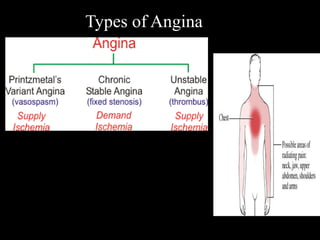
Types of Angina
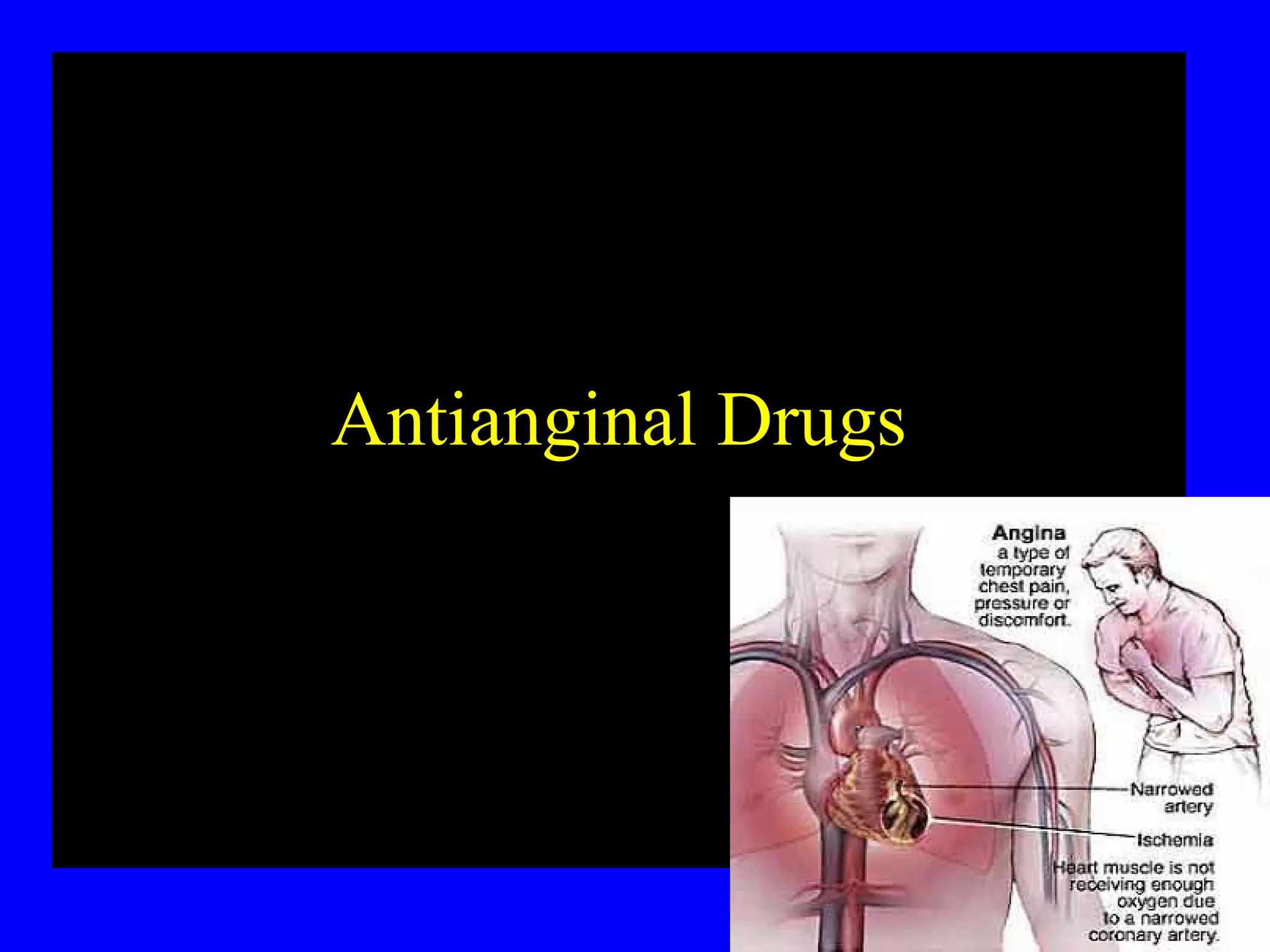
Stable Angina
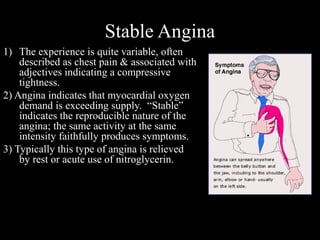
1) The experience is quite variable, often
described as chest pain & associated with
adjectives indicating a compressive
tightness.
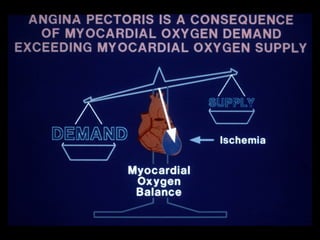
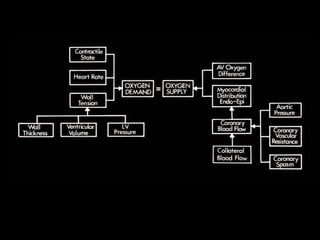
2) Angina indicates that myocardial oxygen
demand is exceeding supply. “Stable”
indicates the reproducible nature of the
angina; the same activity at the same
intensity faithfully produces symptoms.
3) Typically this type of angina is relieved
by rest or acute use of nitroglycerin.
Unstable Angina
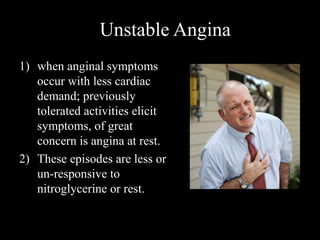
1) when anginal symptoms
occur with less cardiac
demand; previously
tolerated activities elicit
symptoms, of great
concern is angina at rest.
2) These episodes are less or
un-responsive to
nitroglycerine or rest.
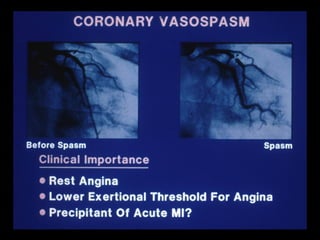
Prinzmetal (Variant) Angina
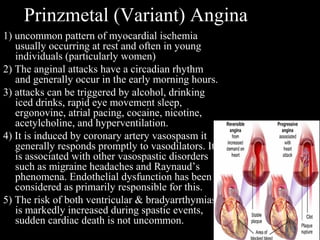
1) uncommon pattern of myocardial ischemia
usually occurring at rest and often in young
individuals (particularly women)
2) The anginal attacks have a circadian rhythm
and generally occur in the early morning hours.
3) attacks can be triggered by alcohol, drinking
iced drinks, rapid eye movement sleep,
ergonovine, atrial pacing, cocaine, nicotine,
acetylcholine, and hyperventilation.
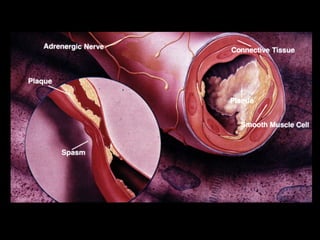
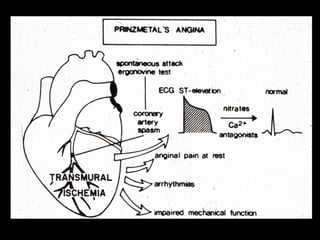
4) It is induced by coronary artery vasospasm it
generally responds promptly to vasodilators. It
is associated with other vasospastic disorders
such as migraine headaches and Raynaud’s
phenomena. Endothelial dysfunction has been
considered as primarily responsible for this.
5) The risk of both ventricular & bradyarrthymias
is markedly increased during spastic events,
sudden cardiac death is not uncommon.
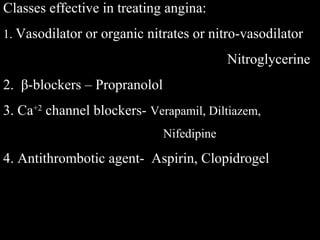
Classes effective in treating angina:
1. Vasodilator or organic nitrates or nitro-vasodilator
Nitroglycerine
2. β-blockers – Propranolol
3. Ca+2
channel blockers- Verapamil, Diltiazem,
Nifedipine
4. Antithrombotic agent- Aspirin, Clopidrogel
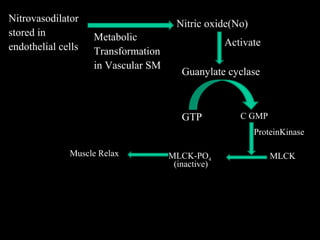
Nitrovasodilator
stored in
endothelial cells
Metabolic
Transformation
in Vascular SM
Nitric oxide(No)
Guanylate cyclase
Activate
GTP C GMP
ProteinKinase
MLCKMLCK-PO4
(inactive)
Muscle Relax
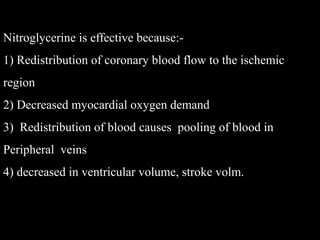
Nitroglycerine is effective because:-
1) Redistribution of coronary blood flow to the ischemic
region
2) Decreased myocardial oxygen demand
3) Redistribution of blood causes pooling of blood in
Peripheral veins
4) decreased in ventricular volume, stroke volm.
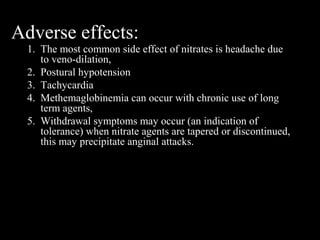
Adverse effects:
1. The most common side effect of nitrates is headache due
to veno-dilation,
2. Postural hypotension
3. Tachycardia
4. Methemaglobinemia can occur with chronic use of long
term agents,
5. Withdrawal symptoms may occur (an indication of
tolerance) when nitrate agents are tapered or discontinued,
this may precipitate anginal attacks.
1) Glyceryl Trinitrate (Nitroglycerin):- Trinitrin,Nitroglyn
PP:- 1) Clear colourless oily volatile liquid
2) Odourless but sweet in taste
3) Soluble in water , glycerol and freely
soluble in alcohol
Use’s:- 1) For treatment of Angina Pectoris
2) For unstable angina
3) To treat CHF
4) Post operative hypertension
Stability :- 1) Volatile in Nature & affected by
light.
Storage:- In a glass container with tightly fitting
metal screw cap
PPn:- 1) N.tablet-USP
2) N. Ointment-BPC
Reasons for Using Nitrates and Beta Blockers
in Combination in Angina
• Beta Blockers prevent reflex tachycardia and contractility
produced by nitrate-induced hypotension.
• Nitrates prevent any coronary vasospasm produced by
Beta Blockers.
• Nitrates prevent increases in left ventricular filling
pressure or preload resulting from the negative inotropic
effects produced by Beta Blockers.
• Nitrates and Beta Blockers both reduce myocardial oxygen
consumption by different mechanisms.
• Nitrates and Beta Blockers both increase subendocardial
blood flow by different mechanisms

Antianginal lecture

  • 1.
  • 7.
  • 8.
    Stable Angina 1) Theexperience is quite variable, often described as chest pain & associated with adjectives indicating a compressive tightness. 2) Angina indicates that myocardial oxygen demand is exceeding supply. “Stable” indicates the reproducible nature of the angina; the same activity at the same intensity faithfully produces symptoms. 3) Typically this type of angina is relieved by rest or acute use of nitroglycerin.
  • 9.
    Unstable Angina 1) whenanginal symptoms occur with less cardiac demand; previously tolerated activities elicit symptoms, of great concern is angina at rest. 2) These episodes are less or un-responsive to nitroglycerine or rest.
  • 10.
    Prinzmetal (Variant) Angina 1)uncommon pattern of myocardial ischemia usually occurring at rest and often in young individuals (particularly women) 2) The anginal attacks have a circadian rhythm and generally occur in the early morning hours. 3) attacks can be triggered by alcohol, drinking iced drinks, rapid eye movement sleep, ergonovine, atrial pacing, cocaine, nicotine, acetylcholine, and hyperventilation. 4) It is induced by coronary artery vasospasm it generally responds promptly to vasodilators. It is associated with other vasospastic disorders such as migraine headaches and Raynaud’s phenomena. Endothelial dysfunction has been considered as primarily responsible for this. 5) The risk of both ventricular & bradyarrthymias is markedly increased during spastic events, sudden cardiac death is not uncommon.
  • 12.
    Classes effective intreating angina: 1. Vasodilator or organic nitrates or nitro-vasodilator Nitroglycerine 2. β-blockers – Propranolol 3. Ca+2 channel blockers- Verapamil, Diltiazem, Nifedipine 4. Antithrombotic agent- Aspirin, Clopidrogel
  • 13.
    Nitrovasodilator stored in endothelial cells Metabolic Transformation inVascular SM Nitric oxide(No) Guanylate cyclase Activate GTP C GMP ProteinKinase MLCKMLCK-PO4 (inactive) Muscle Relax
  • 14.
    Nitroglycerine is effectivebecause:- 1) Redistribution of coronary blood flow to the ischemic region 2) Decreased myocardial oxygen demand 3) Redistribution of blood causes pooling of blood in Peripheral veins 4) decreased in ventricular volume, stroke volm.
  • 15.
    Adverse effects: 1. Themost common side effect of nitrates is headache due to veno-dilation, 2. Postural hypotension 3. Tachycardia 4. Methemaglobinemia can occur with chronic use of long term agents, 5. Withdrawal symptoms may occur (an indication of tolerance) when nitrate agents are tapered or discontinued, this may precipitate anginal attacks.
  • 16.
    1) Glyceryl Trinitrate(Nitroglycerin):- Trinitrin,Nitroglyn PP:- 1) Clear colourless oily volatile liquid 2) Odourless but sweet in taste 3) Soluble in water , glycerol and freely soluble in alcohol Use’s:- 1) For treatment of Angina Pectoris 2) For unstable angina 3) To treat CHF 4) Post operative hypertension Stability :- 1) Volatile in Nature & affected by light. Storage:- In a glass container with tightly fitting metal screw cap PPn:- 1) N.tablet-USP 2) N. Ointment-BPC
  • 17.
    Reasons for UsingNitrates and Beta Blockers in Combination in Angina • Beta Blockers prevent reflex tachycardia and contractility produced by nitrate-induced hypotension. • Nitrates prevent any coronary vasospasm produced by Beta Blockers. • Nitrates prevent increases in left ventricular filling pressure or preload resulting from the negative inotropic effects produced by Beta Blockers. • Nitrates and Beta Blockers both reduce myocardial oxygen consumption by different mechanisms. • Nitrates and Beta Blockers both increase subendocardial blood flow by different mechanisms