ANIMAL BEHAVIOR
What is Behavior?
Anything an animal does in response to
a stimulus
Stimulus: environmental change that
directly influences an organism
Example: change in day length, heat
Innate behavior: Inherited
Natural selection favors certain behaviors
Behavior that helps survival is passed on
to offspring
Examples: fixed action responses:
unchangeable behavior that once begun,
won’t stop till it is finished (toad sees
prey, flips out tongue)
Reflexes: Automatic Responses
Simplest form of behavior
Simple automatic response to a
stimulus that involves no conscious
control
Example: jerking hand from hot stove
Fight or flight response
Instinctive Behavior
Complex pattern
of innate behavior
Longer than a
reflex
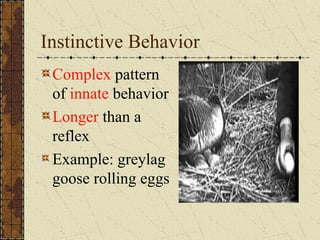
Example: greylag
goose rolling eggs
Internal and external cues
A. Circadian rhythm: 24-hour wake-sleep
cycle regulated by light (some nocturnal)
B. Migration: instinctive seasonal
movement by animals (birds, whales)
C. Hibernation: inactivity during cold
weather
D. Estivation: state of reduced metabolism
during periods of extreme heat
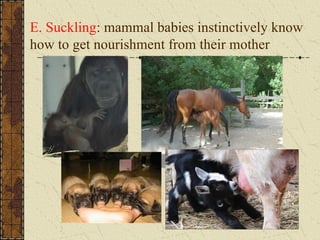
E. Suckling: mammal babies instinctively know
how to get nourishment from their mother
F. Taxis:
responsive movement of a free-moving
organism or cell toward or away from an
external stimulus, such as light.
Positive phototaxis: movement toward light
Negative phototaxis: movement away from
light
Social Behavior:
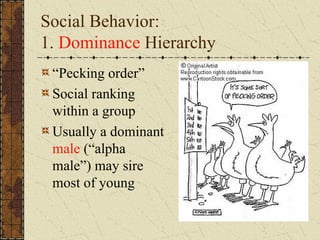
1. Dominance Hierarchy
“Pecking order”
Social ranking
within a group
Usually a dominant
male (“alpha
male”) may sire
most of young
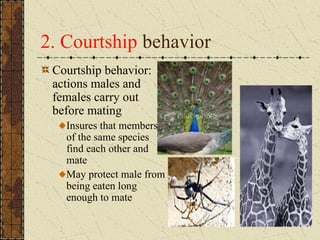
2. Courtship behavior
Courtship behavior:
actions males and
females carry out
before mating
Insures that members
of the same species
find each other and
mate
May protect male from
being eaten long
enough to mate
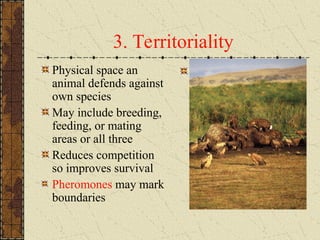
3. Territoriality
Physical space an
animal defends against
own species
May include breeding,
feeding, or mating
areas or all three
Reduces competition
so improves survival
Pheromones may mark
boundaries
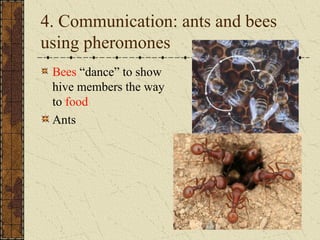
4. Communication: ants and bees
using pheromones
Bees “dance” to show
hive members the way
to food
Ants
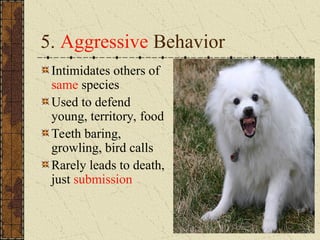
5. Aggressive Behavior
Intimidates others of
same species
Used to defend
young, territory, food
Teeth baring,
growling, bird calls
Rarely leads to death,
just submission
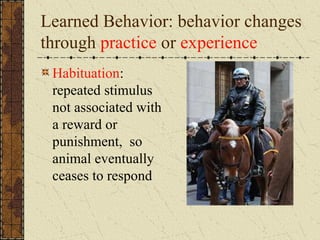
Learned Behavior: behavior changes
through practice or experience
Habituation:
repeated stimulus
not associated with
a reward or
punishment, so
animal eventually
ceases to respond
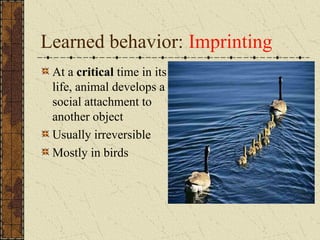
Learned behavior: Imprinting
At a critical time in its
life, animal develops a
social attachment to
another object
Usually irreversible
Mostly in birds
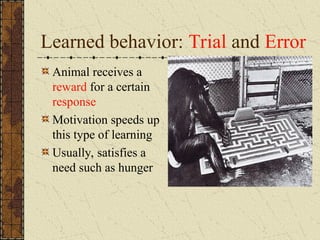
Learned behavior: Trial and Error
Animal receives a
reward for a certain
response
Motivation speeds up
this type of learning
Usually, satisfies a
need such as hunger
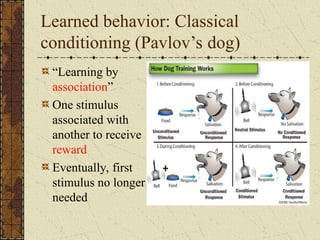
Learned behavior: Classical
conditioning (Pavlov’s dog)
“Learning by
association”
One stimulus
associated with
another to receive
reward
Eventually, first
stimulus no longer
needed
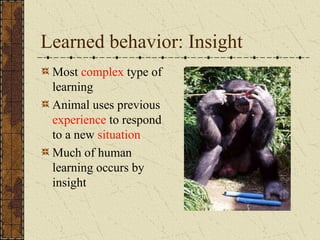
Learned behavior: Insight
Most complex type of
learning
Animal uses previous
experience to respond
to a new situation
Much of human
learning occurs by
insight
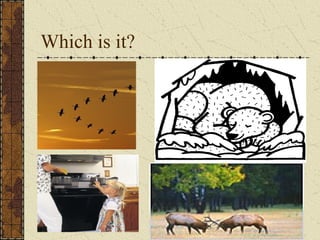
Which is it?

PPT 1 ANIMAL BEHAVIOR PPT LM 605.ppresent

  • 1.
  • 2.
    What is Behavior? Anythingan animal does in response to a stimulus Stimulus: environmental change that directly influences an organism Example: change in day length, heat
  • 3.
    Innate behavior: Inherited Naturalselection favors certain behaviors Behavior that helps survival is passed on to offspring Examples: fixed action responses: unchangeable behavior that once begun, won’t stop till it is finished (toad sees prey, flips out tongue)
  • 4.
    Reflexes: Automatic Responses Simplestform of behavior Simple automatic response to a stimulus that involves no conscious control Example: jerking hand from hot stove Fight or flight response
  • 5.
    Instinctive Behavior Complex pattern ofinnate behavior Longer than a reflex Example: greylag goose rolling eggs
  • 6.
    Internal and externalcues A. Circadian rhythm: 24-hour wake-sleep cycle regulated by light (some nocturnal) B. Migration: instinctive seasonal movement by animals (birds, whales) C. Hibernation: inactivity during cold weather D. Estivation: state of reduced metabolism during periods of extreme heat
  • 7.
    E. Suckling: mammalbabies instinctively know how to get nourishment from their mother
  • 8.
    F. Taxis: responsive movementof a free-moving organism or cell toward or away from an external stimulus, such as light. Positive phototaxis: movement toward light Negative phototaxis: movement away from light
  • 9.
    Social Behavior: 1. DominanceHierarchy “Pecking order” Social ranking within a group Usually a dominant male (“alpha male”) may sire most of young
  • 10.
    2. Courtship behavior Courtshipbehavior: actions males and females carry out before mating Insures that members of the same species find each other and mate May protect male from being eaten long enough to mate
  • 11.
    3. Territoriality Physical spacean animal defends against own species May include breeding, feeding, or mating areas or all three Reduces competition so improves survival Pheromones may mark boundaries
  • 12.
    4. Communication: antsand bees using pheromones Bees “dance” to show hive members the way to food Ants
  • 13.
    5. Aggressive Behavior Intimidatesothers of same species Used to defend young, territory, food Teeth baring, growling, bird calls Rarely leads to death, just submission
  • 14.
    Learned Behavior: behaviorchanges through practice or experience Habituation: repeated stimulus not associated with a reward or punishment, so animal eventually ceases to respond
  • 15.
    Learned behavior: Imprinting Ata critical time in its life, animal develops a social attachment to another object Usually irreversible Mostly in birds
  • 16.
    Learned behavior: Trialand Error Animal receives a reward for a certain response Motivation speeds up this type of learning Usually, satisfies a need such as hunger
  • 17.
    Learned behavior: Classical conditioning(Pavlov’s dog) “Learning by association” One stimulus associated with another to receive reward Eventually, first stimulus no longer needed
  • 18.
    Learned behavior: Insight Mostcomplex type of learning Animal uses previous experience to respond to a new situation Much of human learning occurs by insight
  • 19.