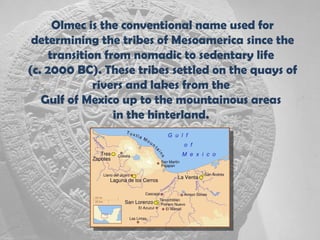
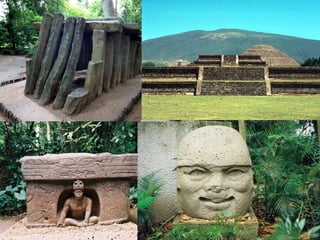
Olmec is the conventional name used for
 determining the tribes of Mesoamerica since the
     transition from nomadic to sedentary life
(c. 2000 BC). These tribes settled on the quays of
              rivers and lakes from the
   Gulf of Mexico up to the mountainous areas
                  in the hinterland.
Olmecs settled down in wooded areas, cutting
  down and adapting them for cultivation and
 breeding. They were also engaged in gathering,
hunting and fishing, but agriculture and animal
 husbandry were the most important - the basis
was corn (The importance was the high content of
    the proteins, particularly when there were
difficulties in obtaining meat). Its growing origins
 date back to about 1000 BC. Initially they used
primitive: of flour grated on the stones they done
            simple cakes or eaten it raw.
       They also grew beans and pumpkins.
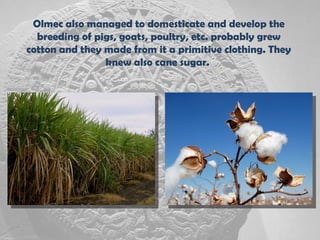
Olmec also managed to domesticate and develop the
  breeding of pigs, goats, poultry, etc. probably grew
cotton and they made from it a primitive clothing. They
                knew also cane sugar.
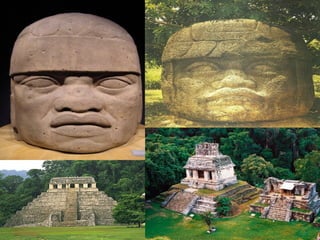
Olmecs were the pioneers erected in the city-
states of Mexican stepped pyramids, taken as a
   symbol of the vault of heaven. Their peak
    housed the temple - the seat of the gods.

  In art, sculpture and ceramic delights Olmec
    momentum and reflected details, precise
     drawing and originality of symbolism.

Next to the altar there are large, reaching up to
   3 m in height and up to 18 tons of weight
sculptures of human heads made of solid stone
            worth paying attention.
Olmec beliefs - are associated with
 shamanistic cult. Olmecs believed that every
person, every animal has a soul. A man in his
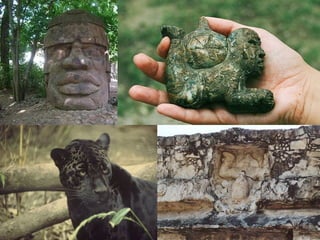
     soul, has an animal spirit. The most
   important animal for the Olmec was the
jaguar. He personified the supernatural, god,
  ancestor of the Olmecs, was the second „I”
shaman. It is also encountered as a cult figure
   half-man, half-jaguar. Another god was
  olmeckim Feathered Serpent, guardian of
                   good luck,
               to ensure success.
Ancient civilizations Olmecs by group1

Ancient civilizations Olmecs by group1

  • 2.
    Olmec is theconventional name used for determining the tribes of Mesoamerica since the transition from nomadic to sedentary life (c. 2000 BC). These tribes settled on the quays of rivers and lakes from the Gulf of Mexico up to the mountainous areas in the hinterland.
  • 3.
    Olmecs settled downin wooded areas, cutting down and adapting them for cultivation and breeding. They were also engaged in gathering, hunting and fishing, but agriculture and animal husbandry were the most important - the basis was corn (The importance was the high content of the proteins, particularly when there were difficulties in obtaining meat). Its growing origins date back to about 1000 BC. Initially they used primitive: of flour grated on the stones they done simple cakes or eaten it raw. They also grew beans and pumpkins.
  • 5.
    Olmec also managedto domesticate and develop the breeding of pigs, goats, poultry, etc. probably grew cotton and they made from it a primitive clothing. They knew also cane sugar.
  • 6.
    Olmecs were thepioneers erected in the city- states of Mexican stepped pyramids, taken as a symbol of the vault of heaven. Their peak housed the temple - the seat of the gods. In art, sculpture and ceramic delights Olmec momentum and reflected details, precise drawing and originality of symbolism. Next to the altar there are large, reaching up to 3 m in height and up to 18 tons of weight sculptures of human heads made of solid stone worth paying attention.
  • 8.
    Olmec beliefs -are associated with shamanistic cult. Olmecs believed that every person, every animal has a soul. A man in his soul, has an animal spirit. The most important animal for the Olmec was the jaguar. He personified the supernatural, god, ancestor of the Olmecs, was the second „I” shaman. It is also encountered as a cult figure half-man, half-jaguar. Another god was olmeckim Feathered Serpent, guardian of good luck, to ensure success.