Methods for saving water
Group 6
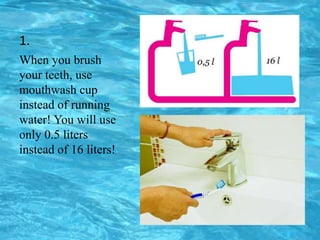
1.
When you brush
your teeth, use
mouthwash cup
instead of running
water! You will use
only 0.5 liters
instead of 16 liters!
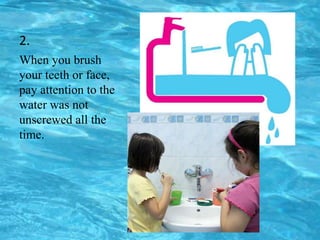
2.
When you brush
your teeth or face,
pay attention to the
water was not
unscrewed all the
time.
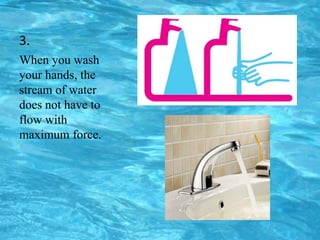
3.
When you wash
your hands, the
stream of water
does not have to
flow with
maximum force.
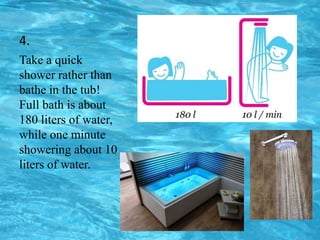
4.
Take a quick
shower rather than
bathe in the tub!
Full bath is about
180 liters of water,
while one minute
showering about 10
liters of water.
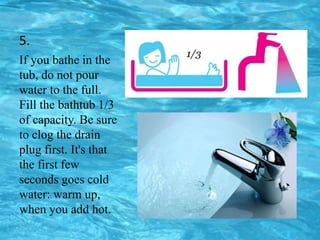
5.
If you bathe in the
tub, do not pour
water to the full.
Fill the bathtub 1/3
of capacity. Be sure
to clog the drain
plug first. It's that
the first few
seconds goes cold
water: warm up,
when you add hot.
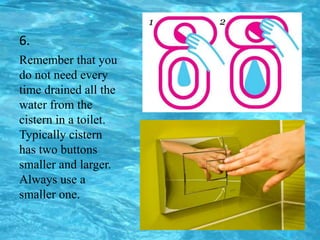
6.
Remember that you
do not need every
time drained all the
water from the
cistern in a toilet.
Typically cistern
has two buttons
smaller and larger.
Always use a
smaller one.
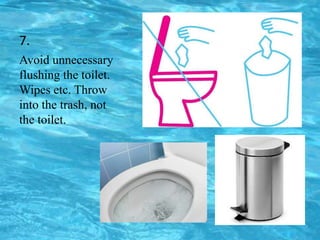
7.
Avoid unnecessary
flushing the toilet.
Wipes etc. Throw
into the trash, not
the toilet.
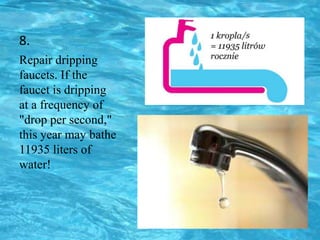
8.
Repair dripping
faucets. If the
faucet is dripping
at a frequency of
"drop per second,"
this year may bathe
11935 liters of
water!
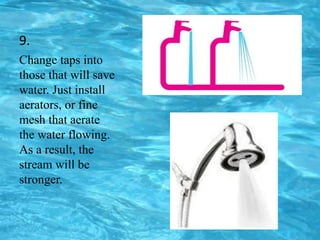
9.
Change taps into
those that will save
water. Just install
aerators, or fine
mesh that aerate
the water flowing.
As a result, the
stream will be
stronger.
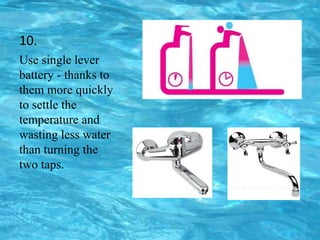
10.
Use single lever
battery - thanks to
them more quickly
to settle the
temperature and
wasting less water
than turning the
two taps.
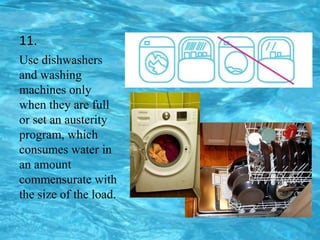
11.
Use dishwashers
and washing
machines only
when they are full
or set an austerity
program, which
consumes water in
an amount
commensurate with
the size of the load.
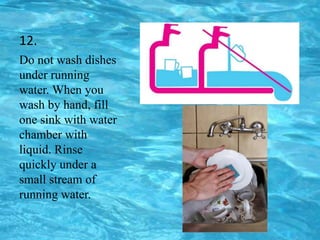
12.
Do not wash dishes
under running
water. When you
wash by hand, fill
one sink with water
chamber with
liquid. Rinse
quickly under a
small stream of
running water.
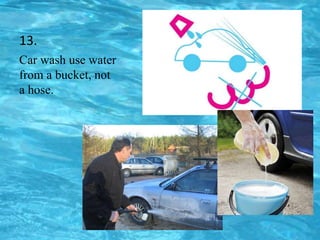
13.
Car wash use water
from a bucket, not
a hose.
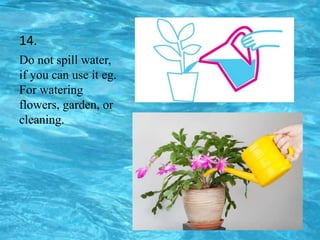
14.
Do not spill water,
if you can use it eg.
For watering
flowers, garden, or
cleaning.
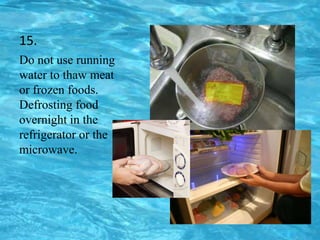
15.
Do not use running
water to thaw meat
or frozen foods.
Defrosting food
overnight in the
refrigerator or the
microwave.
Thank you for watching OUR
presentation

How to save water by Group 6

  • 1.
    Methods for savingwater Group 6
  • 2.
    1. When you brush yourteeth, use mouthwash cup instead of running water! You will use only 0.5 liters instead of 16 liters!
  • 3.
    2. When you brush yourteeth or face, pay attention to the water was not unscrewed all the time.
  • 4.
    3. When you wash yourhands, the stream of water does not have to flow with maximum force.
  • 5.
    4. Take a quick showerrather than bathe in the tub! Full bath is about 180 liters of water, while one minute showering about 10 liters of water.
  • 6.
    5. If you bathein the tub, do not pour water to the full. Fill the bathtub 1/3 of capacity. Be sure to clog the drain plug first. It's that the first few seconds goes cold water: warm up, when you add hot.
  • 7.
    6. Remember that you donot need every time drained all the water from the cistern in a toilet. Typically cistern has two buttons smaller and larger. Always use a smaller one.
  • 8.
    7. Avoid unnecessary flushing thetoilet. Wipes etc. Throw into the trash, not the toilet.
  • 9.
    8. Repair dripping faucets. Ifthe faucet is dripping at a frequency of "drop per second," this year may bathe 11935 liters of water!
  • 10.
    9. Change taps into thosethat will save water. Just install aerators, or fine mesh that aerate the water flowing. As a result, the stream will be stronger.
  • 11.
    10. Use single lever battery- thanks to them more quickly to settle the temperature and wasting less water than turning the two taps.
  • 12.
    11. Use dishwashers and washing machinesonly when they are full or set an austerity program, which consumes water in an amount commensurate with the size of the load.
  • 13.
    12. Do not washdishes under running water. When you wash by hand, fill one sink with water chamber with liquid. Rinse quickly under a small stream of running water.
  • 14.
    13. Car wash usewater from a bucket, not a hose.
  • 15.
    14. Do not spillwater, if you can use it eg. For watering flowers, garden, or cleaning.
  • 16.
    15. Do not userunning water to thaw meat or frozen foods. Defrosting food overnight in the refrigerator or the microwave.
  • 17.
    Thank you forwatching OUR presentation