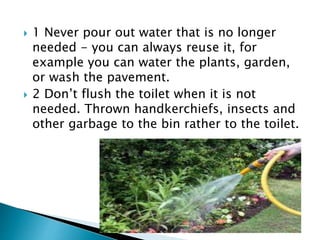
 1 Never pour out water that is no longer
needed - you can always reuse it, for
example you can water the plants, garden,
or wash the pavement.
 2 Don’t flush the toilet when it is not
needed. Thrown handkerchiefs, insects and
other garbage to the bin rather to the toilet.
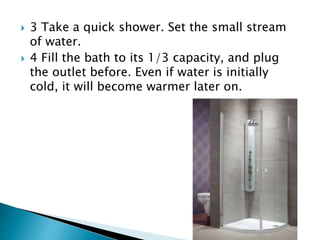
 3 Take a quick shower. Set the small stream
of water.
 4 Fill the bath to its 1/3 capacity, and plug
the outlet before. Even if water is initially
cold, it will become warmer later on.
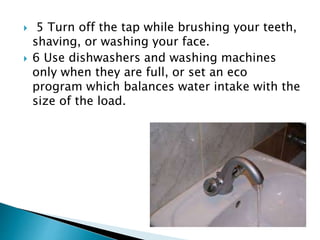
 5 Turn off the tap while brushing your teeth,
shaving, or washing your face.
 6 Use dishwashers and washing machines
only when they are full, or set an eco
program which balances water intake with the
size of the load.
 7 When you are washing the dishes by hand,
fill one chamber of the sink with water, then
rinse the washed dishes quickly under a small
stream of running water.
 8 Do not use running water to thaw meat or
frozen foods. Defrost food overnight in the
refrigerator or in the microwave oven.
 9 Consider installing a water heater in the
kitchen, not in the bathroom. In this way, you
won’t have to wait until water is warm
enough.
 10 Insulate pipes. Water will become warmer
faster, and you avoid wasting it when it is
heated.
 11 Try adjusting the temperature of hot
water, instead of increasing the flow of it.
 12 When replacing an old toilet with a new
one, consider installing a cistern with the
flushing system that enables to control the
amount of water to be flushed.
 13 Replace the old faucets with the single-
lever ones. Adjusting the right temperature
with the use of two knobs is a waste of time
and water. The single-lever faucet regulates
the temperature immediately.
Group 4

How to save water by Group 4

  • 2.
     1 Neverpour out water that is no longer needed - you can always reuse it, for example you can water the plants, garden, or wash the pavement.  2 Don’t flush the toilet when it is not needed. Thrown handkerchiefs, insects and other garbage to the bin rather to the toilet.
  • 3.
     3 Takea quick shower. Set the small stream of water.  4 Fill the bath to its 1/3 capacity, and plug the outlet before. Even if water is initially cold, it will become warmer later on.
  • 4.
     5 Turnoff the tap while brushing your teeth, shaving, or washing your face.  6 Use dishwashers and washing machines only when they are full, or set an eco program which balances water intake with the size of the load.
  • 5.
     7 Whenyou are washing the dishes by hand, fill one chamber of the sink with water, then rinse the washed dishes quickly under a small stream of running water.  8 Do not use running water to thaw meat or frozen foods. Defrost food overnight in the refrigerator or in the microwave oven.
  • 6.
     9 Considerinstalling a water heater in the kitchen, not in the bathroom. In this way, you won’t have to wait until water is warm enough.  10 Insulate pipes. Water will become warmer faster, and you avoid wasting it when it is heated.
  • 7.
     11 Tryadjusting the temperature of hot water, instead of increasing the flow of it.  12 When replacing an old toilet with a new one, consider installing a cistern with the flushing system that enables to control the amount of water to be flushed.  13 Replace the old faucets with the single- lever ones. Adjusting the right temperature with the use of two knobs is a waste of time and water. The single-lever faucet regulates the temperature immediately.
  • 8.