ANALYTICAL STUDY
DESIGNS
- Dr. ARYASREE L.
Overview
1. Cohort study
2. Case control study
Observational Studies
•Non-experimental
•Observational because there is no individual
intervention
•Treatment and exposures occur in a “non-
controlled” environment
•Individuals can be observed prospectively or
retrospectively
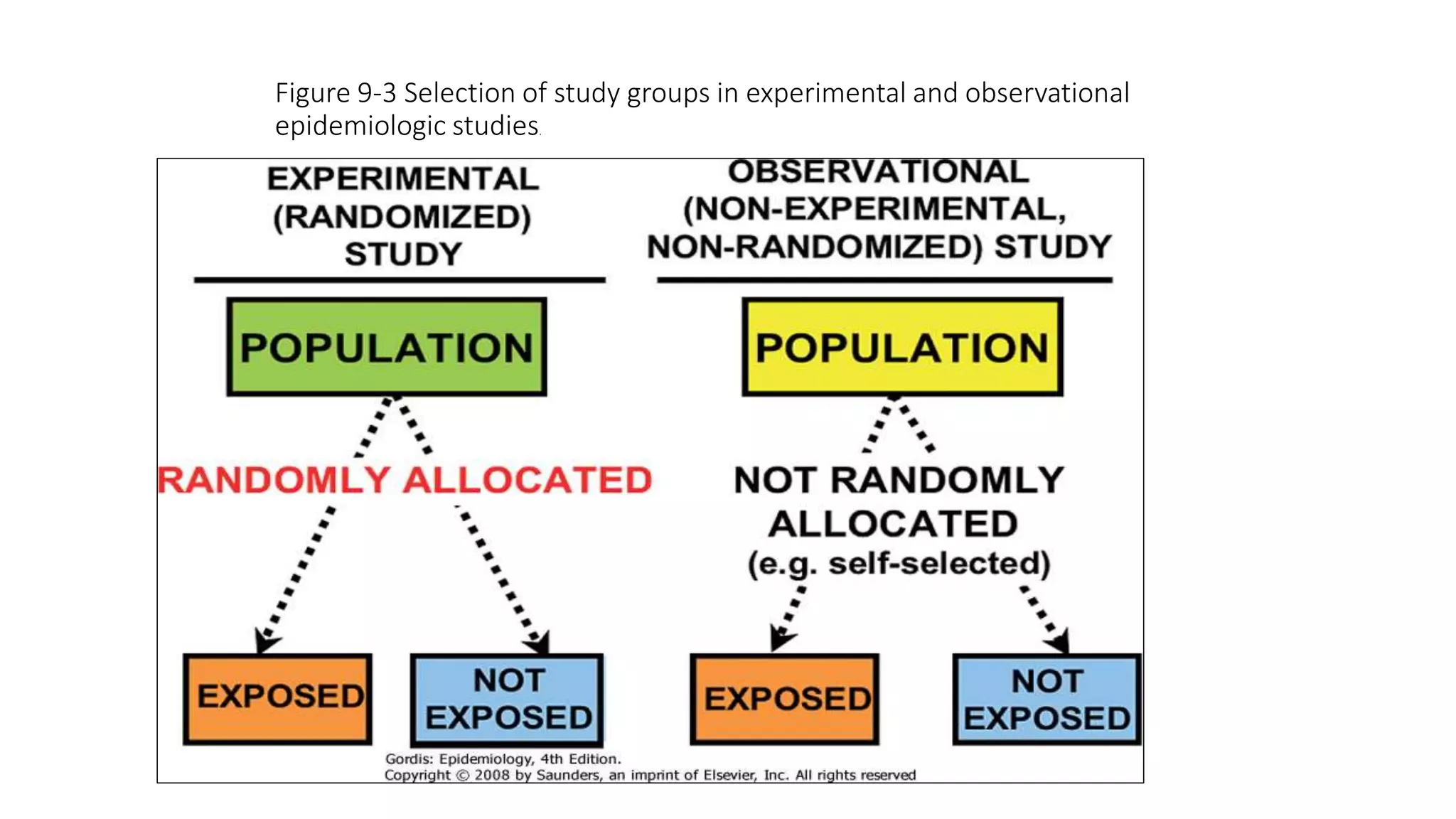
Figure 9-3 Selection of study groups in experimental and observational
epidemiologic studies.
Basic Questions in Analytic Epidemiology
Look to link exposure and disease
1. What is the exposure?
2. Who are the exposed?
3. What are the potential health effects?
4. What approach will you take to study
the relationship between exposure and
effect?
COHORT STUDY
Cohort Studies
 an “observational” design comparing
individuals with a known risk factor or exposure
with others without the risk factor or exposure.
looking for a difference in the risk (incidence)
of a disease over time.
best observational design
data usually collected prospectively (some
retrospective)
Figure 9-4 Design of a cohort study beginning with exposed and nonexposed groups.
Downloaded from: StudentConsult (on 26 February 2013 06:04 AM)
© 2005 Elsevier
Design of cohort study
Figure 9-5 Design of a cohort study beginning with a defined population.
Downloaded from: StudentConsult (on 26 February 2013 06:04 AM)
© 2005 Elsevier
Time
Study begins here
Study
Population
Free of
Disease
Factor
Present
Factor
Absent
Disease
No disease
Disease
No disease
Present
Future
•Prospective Study - looks forward, looks
to the future, examines future events,
follows a condition, concern or disease
into the future
time
Study begins here
•Retrospective Study - “to look back”,
looks back in time to study events that
have already occurred
time
Study begins here
Figure 9-7 Time frame for a hypothetical retrospective cohort study begun in 2008.
Downloaded from: StudentConsult (on 26 February 2013 06:04 AM)
© 2005 Elsevier
Figure 9-8 Time frames for a hypothetical prospective cohort study and a hypothetical retrospective cohort study begun in 2008.
Downloaded from: StudentConsult (on 26 February 2013 06:04 AM)
© 2005 Elsevier
The Framingham study
Aniline dyes and urinary bladder cancer
Elements of cohort study
1. Selection of study populations
2. Gathering baseline information
3. Follow up
4. Analysis
1. Selection of study population
• General population
• Special exposure cohorts
2. Gathering baseline information
• Valid assessment of exposure status
• Exclude who are having disease of interest
• Data on other risk factors
3. Choice of comparison group
• Internal comparison group
• External comparison group
4. Follow up
• Uniform and complete follow up
• Complete assessment of exposures and outcomes
• Standardized diagnosis of outcomes
Presentation of the data in a cohort study in a 2x2
table
Relative Risk
• The relative risk can be defined as the probability of an
event (developing a disease) occurring in exposed people
compared with the probability of the event in unexposed
people, or as the ratio of these two probabilities.
• RR= Risk in exposed
• Risk in unexposed
Interpreting relative risk of a disease
If RR =1 Risk in exposed equal to risk in
unexposed(no association)
If RR >1 Risk in exposed greater than risk in
unexposed(positive association;possibly
causal)
If RR < 1 Risk in exposed less than risk in
unexposed (negative association;
possibly protective)
Cohort study strengths and weaknesses
Strengths weaknesses
Allows calculation of incidence Long calendar time
Examine multiple outcomes for a given
exposure
Not good for rare diseases
Clarity of temporal sequence Not good for diseases with a long latency
Good for investigating rare exposures Differential loss to follow up can
introduce bias
Case control
Elements of case control study
1. Selection of cases
2. Selection of controls
3. Information on exposure
4. Analysis
1. Selection of cases
• All people in source population who develop the disease of
interest
• Clear definition of outcome studied
• Prevalent vs incident cases
Sources of cases
• Hospital /clinic based cases
• Population based
2. Selection of controls
• Population based
• Health care facility based
• Case based
3. Collecting good data on exposure
• Objectively – reproducibility of exposure measurement
• Accurately – information reflecting as closely as possible the
effect of exposure
• Precisely – Quality management in exposure measurement
Presentation of the data of a case control study in
a 2x2 table
Odds ratio
• An odds ratio (OR) is a measure of association between an
exposure and an outcome.
• The OR represents the odds that an outcome will occur given
a particular exposure, compared to the odds of the outcome
occurring in the absence of that exposure.
Interpreting odds ratio
• OR=1
• Odds of exposure among cases and controls are same
• Exposure is not associated with disease
• OR>1
• Odds of exposure among cases are higher than controls
• Exposure is positively associated with disease
• OR<1
• Odds of exposure among cases are lower than controls
• Exposure is negatively associated with disease
Case control study strengths and weaknesses
STRENGTHS WEAKNESSES
Good for rare outcomes Susceptible to recall bias
Relatively quick to conduct Selection of an appropriate comparison
group may be difficult
Requires comparatively few subjects Rates of disease in exposed and
unexposed individuals cannot be
determined
Multiple exposures or risk factors can be
examined
Example 1
Thyroid hormones, namely triiodothyronine (Free T3), thyroxine (Free
T4) and thyroid stimulating hormone (TSH) were evaluated at the time
of diagnosis of preeclampsia in 82 pregnant women and equal number
of matched controls. (Kumar et al.)
Case Control
Example 2
46,112 never users of oral contraception and women 819,175 ever users
were followed for 39 years to ascertain mortality risk. (Hannaford et al.)
Cohort
Example 3
275 women attending the antenatal clinic at Kilifi district hospital,
Kenya, were recruited in November 1993 and tested for malaria in order
to calculate the prevalence. (Shulman et al.)
Cross-Sectional
Example 4
270 wards randomised to 3 groups of 90 each for women to receive
weekly a single oral supplement of placebo, vitamin A or â carotene for
over 3.5 years and followed to determine pregnancy-related mortality.
(West et al.)
Clinical Trial
Example 5
A survey among second trimester pregnant women 18-44 took place
between April 2003 and November 2003 to determine the prevalence of
anemia and hookworm. (Larocque et al.)
Cross-Sectional
Example 6
431 women were enrolled in a study within 21 days of conception and
monitored throughout pregnancy to determine caffeine exposure and
pregnancy outcome. (Mills et al.)
Cohort
References
1. BCBR lecture 6
2. Gordis epidemiology Edition 6
3. National library of medicine
THANKYOU

Analytical study designs.pptx

  • 1.
  • 2.
    Overview 1. Cohort study 2.Case control study
  • 4.
    Observational Studies •Non-experimental •Observational becausethere is no individual intervention •Treatment and exposures occur in a “non- controlled” environment •Individuals can be observed prospectively or retrospectively
  • 5.
    Figure 9-3 Selectionof study groups in experimental and observational epidemiologic studies.
  • 6.
    Basic Questions inAnalytic Epidemiology Look to link exposure and disease 1. What is the exposure? 2. Who are the exposed? 3. What are the potential health effects? 4. What approach will you take to study the relationship between exposure and effect?
  • 7.
  • 8.
    Cohort Studies  an“observational” design comparing individuals with a known risk factor or exposure with others without the risk factor or exposure. looking for a difference in the risk (incidence) of a disease over time. best observational design data usually collected prospectively (some retrospective)
  • 9.
    Figure 9-4 Designof a cohort study beginning with exposed and nonexposed groups. Downloaded from: StudentConsult (on 26 February 2013 06:04 AM) © 2005 Elsevier Design of cohort study
  • 10.
    Figure 9-5 Designof a cohort study beginning with a defined population. Downloaded from: StudentConsult (on 26 February 2013 06:04 AM) © 2005 Elsevier
  • 11.
    Time Study begins here Study Population Freeof Disease Factor Present Factor Absent Disease No disease Disease No disease Present Future
  • 12.
    •Prospective Study -looks forward, looks to the future, examines future events, follows a condition, concern or disease into the future time Study begins here
  • 13.
    •Retrospective Study -“to look back”, looks back in time to study events that have already occurred time Study begins here
  • 14.
    Figure 9-7 Timeframe for a hypothetical retrospective cohort study begun in 2008. Downloaded from: StudentConsult (on 26 February 2013 06:04 AM) © 2005 Elsevier
  • 15.
    Figure 9-8 Timeframes for a hypothetical prospective cohort study and a hypothetical retrospective cohort study begun in 2008. Downloaded from: StudentConsult (on 26 February 2013 06:04 AM) © 2005 Elsevier
  • 16.
  • 17.
    Aniline dyes andurinary bladder cancer
  • 18.
    Elements of cohortstudy 1. Selection of study populations 2. Gathering baseline information 3. Follow up 4. Analysis
  • 19.
    1. Selection ofstudy population • General population • Special exposure cohorts
  • 20.
    2. Gathering baselineinformation • Valid assessment of exposure status • Exclude who are having disease of interest • Data on other risk factors
  • 21.
    3. Choice ofcomparison group • Internal comparison group • External comparison group
  • 22.
    4. Follow up •Uniform and complete follow up • Complete assessment of exposures and outcomes • Standardized diagnosis of outcomes
  • 23.
    Presentation of thedata in a cohort study in a 2x2 table
  • 24.
    Relative Risk • Therelative risk can be defined as the probability of an event (developing a disease) occurring in exposed people compared with the probability of the event in unexposed people, or as the ratio of these two probabilities. • RR= Risk in exposed • Risk in unexposed
  • 26.
    Interpreting relative riskof a disease If RR =1 Risk in exposed equal to risk in unexposed(no association) If RR >1 Risk in exposed greater than risk in unexposed(positive association;possibly causal) If RR < 1 Risk in exposed less than risk in unexposed (negative association; possibly protective)
  • 27.
    Cohort study strengthsand weaknesses Strengths weaknesses Allows calculation of incidence Long calendar time Examine multiple outcomes for a given exposure Not good for rare diseases Clarity of temporal sequence Not good for diseases with a long latency Good for investigating rare exposures Differential loss to follow up can introduce bias
  • 28.
  • 29.
    Elements of casecontrol study 1. Selection of cases 2. Selection of controls 3. Information on exposure 4. Analysis
  • 30.
    1. Selection ofcases • All people in source population who develop the disease of interest • Clear definition of outcome studied • Prevalent vs incident cases
  • 31.
    Sources of cases •Hospital /clinic based cases • Population based
  • 32.
    2. Selection ofcontrols • Population based • Health care facility based • Case based
  • 33.
    3. Collecting gooddata on exposure • Objectively – reproducibility of exposure measurement • Accurately – information reflecting as closely as possible the effect of exposure • Precisely – Quality management in exposure measurement
  • 34.
    Presentation of thedata of a case control study in a 2x2 table
  • 35.
    Odds ratio • Anodds ratio (OR) is a measure of association between an exposure and an outcome. • The OR represents the odds that an outcome will occur given a particular exposure, compared to the odds of the outcome occurring in the absence of that exposure.
  • 37.
    Interpreting odds ratio •OR=1 • Odds of exposure among cases and controls are same • Exposure is not associated with disease • OR>1 • Odds of exposure among cases are higher than controls • Exposure is positively associated with disease • OR<1 • Odds of exposure among cases are lower than controls • Exposure is negatively associated with disease
  • 38.
    Case control studystrengths and weaknesses STRENGTHS WEAKNESSES Good for rare outcomes Susceptible to recall bias Relatively quick to conduct Selection of an appropriate comparison group may be difficult Requires comparatively few subjects Rates of disease in exposed and unexposed individuals cannot be determined Multiple exposures or risk factors can be examined
  • 39.
    Example 1 Thyroid hormones,namely triiodothyronine (Free T3), thyroxine (Free T4) and thyroid stimulating hormone (TSH) were evaluated at the time of diagnosis of preeclampsia in 82 pregnant women and equal number of matched controls. (Kumar et al.) Case Control
  • 40.
    Example 2 46,112 neverusers of oral contraception and women 819,175 ever users were followed for 39 years to ascertain mortality risk. (Hannaford et al.) Cohort
  • 41.
    Example 3 275 womenattending the antenatal clinic at Kilifi district hospital, Kenya, were recruited in November 1993 and tested for malaria in order to calculate the prevalence. (Shulman et al.) Cross-Sectional
  • 42.
    Example 4 270 wardsrandomised to 3 groups of 90 each for women to receive weekly a single oral supplement of placebo, vitamin A or â carotene for over 3.5 years and followed to determine pregnancy-related mortality. (West et al.) Clinical Trial
  • 43.
    Example 5 A surveyamong second trimester pregnant women 18-44 took place between April 2003 and November 2003 to determine the prevalence of anemia and hookworm. (Larocque et al.) Cross-Sectional
  • 44.
    Example 6 431 womenwere enrolled in a study within 21 days of conception and monitored throughout pregnancy to determine caffeine exposure and pregnancy outcome. (Mills et al.) Cohort
  • 45.
    References 1. BCBR lecture6 2. Gordis epidemiology Edition 6 3. National library of medicine
  • 46.