Analysis: Taking Stock of What you Know Academic Impressions Conference December 2-4, 2007, Austin, TX Patricia McGee [email_address]
 
the case 2
What do you know? What more do you need to know?
What is analysis? Identifying a need Articulating goals Analyzing tasks Describing the learning context Understanding the learner 1
determining a need
What is the need? needs assessment identifies… Normative need Felt need Expressed or demanded need Comparative need Anticipated or future need 3
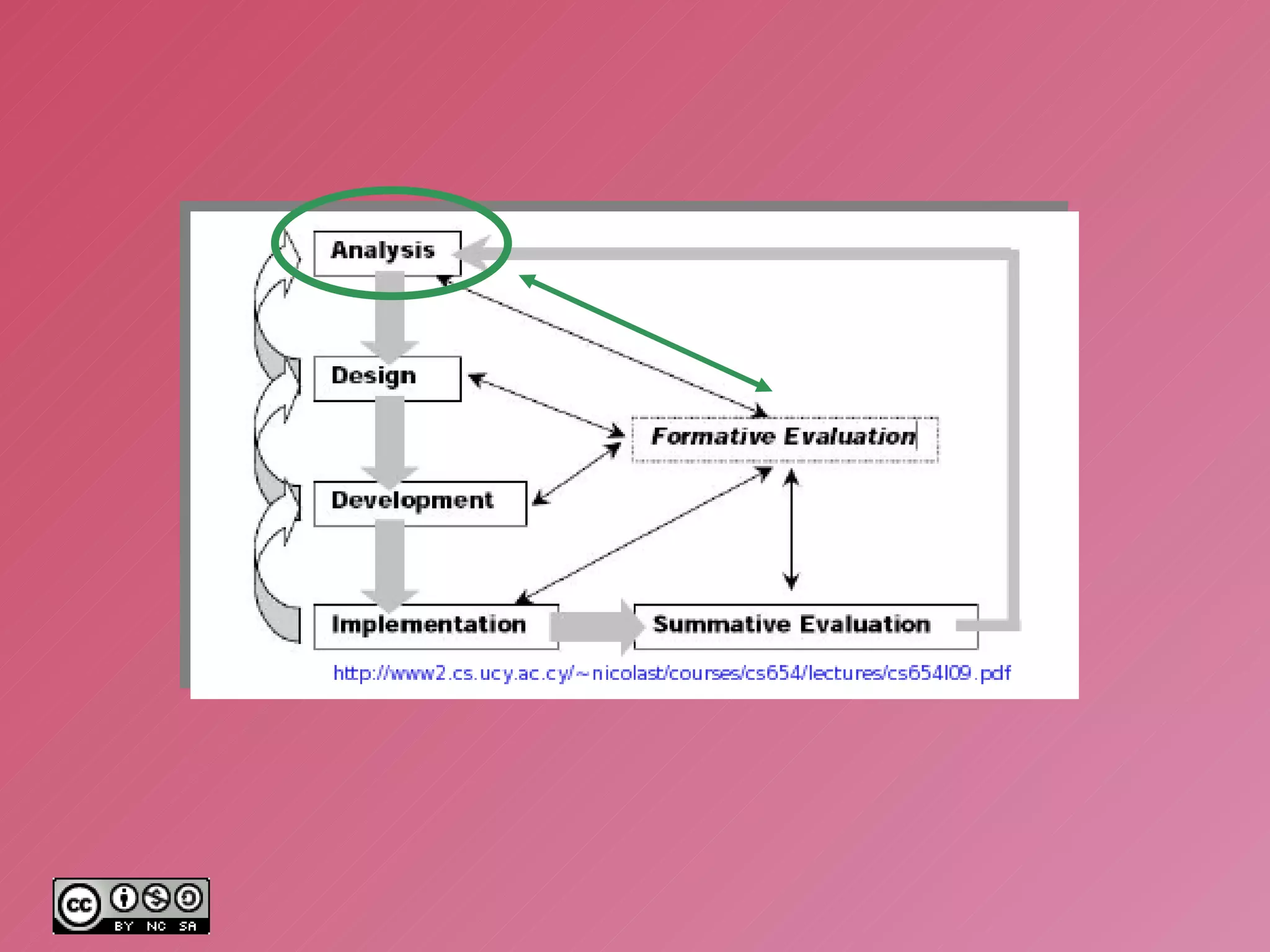
Needs analysis to task analysis Identify learning   goal (s) through a  front end  needs analysis. Identify  tasks associated  with the goals through a task analysis. 4
Identifying instructional goals Higher education - goals come from? In other venues goals come from: Subject matter expertise (SME) Performance indicators 6
Who are the learners?  Students What is the high level knowledge, skill or ability that they will learn?  Specific facts, procedures, concepts, principles Learners will interpret the impact of domestic economic policies on environmental issues Goals answer…
Determining goals Review case Consider case outcomes (handout) Group outcomes by related topics Write a goal for each group of outcomes and record for use in the Design Phase
task analysis
Goals = what tasks? Analyze by… Hierarchical Task Analysis  IF and THEN Analysis  Model Based Analysis Cognitive Task Analysis Information Processing Analysis
the good news
the context
What should you consider? Discuss case context cards one at a time. Make a list for each of the 7 areas. noted in the Case Context cards. Post to  wiki  under  Considering the Context. w i k i
the learner
Generations at Work 1922-1943  1944-1960  1961-1980  1981-2000 Nexters or Millennials Veterans or Traditionalists Baby Boomers Gen Xers Retiring from the work force 63-84 years old Middle to end work force 46-62 years old Beginning to mid work force 26-45 years old In K-20 education system 6-25 years old Sara McNeil, 2005
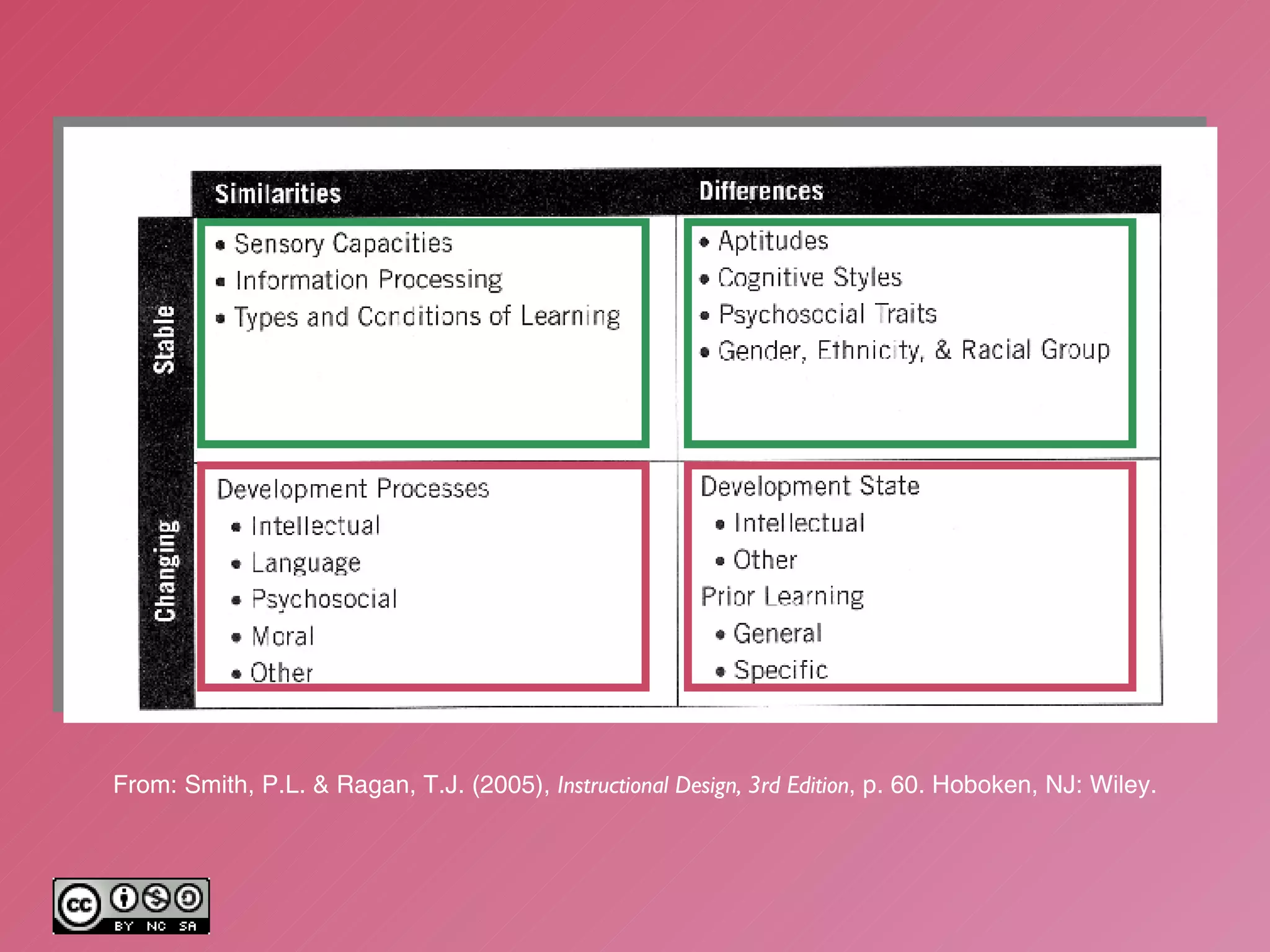
From: Smith, P.L. & Ragan, T.J. (2005),  Instructional Design, 3rd Edition , p. 60. Hoboken, NJ: Wiley.
Learner avatars What are the characteristics of the learners? What more might we need to know about the learners? Can the learners be grouped into difference categories? If so, how can we label these? What are the top five instructional  needs of these learners? Save in Word Doc. 7 w i k i
Summing up… What are most important factors that will impact development? Who needs to be involved throughout process?
questions?
LUNCH!
 

Analysis

  • 1.
    Analysis: Taking Stockof What you Know Academic Impressions Conference December 2-4, 2007, Austin, TX Patricia McGee [email_address]
  • 2.
  • 3.
  • 4.
    What do youknow? What more do you need to know?
  • 5.
    What is analysis?Identifying a need Articulating goals Analyzing tasks Describing the learning context Understanding the learner 1
  • 6.
  • 7.
    What is theneed? needs assessment identifies… Normative need Felt need Expressed or demanded need Comparative need Anticipated or future need 3
  • 8.
    Needs analysis totask analysis Identify learning goal (s) through a front end needs analysis. Identify tasks associated with the goals through a task analysis. 4
  • 9.
    Identifying instructional goalsHigher education - goals come from? In other venues goals come from: Subject matter expertise (SME) Performance indicators 6
  • 10.
    Who are thelearners? Students What is the high level knowledge, skill or ability that they will learn? Specific facts, procedures, concepts, principles Learners will interpret the impact of domestic economic policies on environmental issues Goals answer…
  • 11.
    Determining goals Reviewcase Consider case outcomes (handout) Group outcomes by related topics Write a goal for each group of outcomes and record for use in the Design Phase
  • 12.
  • 13.
    Goals = whattasks? Analyze by… Hierarchical Task Analysis IF and THEN Analysis Model Based Analysis Cognitive Task Analysis Information Processing Analysis
  • 14.
  • 15.
  • 16.
    What should youconsider? Discuss case context cards one at a time. Make a list for each of the 7 areas. noted in the Case Context cards. Post to wiki under Considering the Context. w i k i
  • 17.
  • 18.
    Generations at Work1922-1943 1944-1960 1961-1980 1981-2000 Nexters or Millennials Veterans or Traditionalists Baby Boomers Gen Xers Retiring from the work force 63-84 years old Middle to end work force 46-62 years old Beginning to mid work force 26-45 years old In K-20 education system 6-25 years old Sara McNeil, 2005
  • 19.
    From: Smith, P.L.& Ragan, T.J. (2005), Instructional Design, 3rd Edition , p. 60. Hoboken, NJ: Wiley.
  • 20.
    Learner avatars Whatare the characteristics of the learners? What more might we need to know about the learners? Can the learners be grouped into difference categories? If so, how can we label these? What are the top five instructional needs of these learners? Save in Word Doc. 7 w i k i
  • 21.
    Summing up… Whatare most important factors that will impact development? Who needs to be involved throughout process?
  • 22.
  • 23.
  • 24.