NON-STEROIDAL
ANTI-INFLAMMATORY
DRUGS (NSAIDs)
PREPARED BY : VISHAL GOHIL (21)
FINAL YR BDS
GUIDED BY : DR. VEENA PATEL
DR. JIGAR JOSHI
DR. NIMESH PATEL
CONTENTS
• INTRODUCTION
• MECHANISM OF ACTION
• CLASSIFICATION
• THERAPEUTIC USES
• DOSES OF FEW DRUGS
• ADVERSE EFFECTS
• DENTAL CONSIDERATIONS
VISHAL GOHIL
NSAIDs
• Non-steroidal anti-inflammatory drugs
• Large & chemically diverse group of drugs
with the following properties :
- Analgesic
- Anti-inflammatory
- Antipyretic
VISHAL GOHIL
• It inhibits cyclooxygenase ( COX )
enzymes, which is responsible for the
formation of prostaglandins that
promote pain & inflammation.
NSAIDs : Mechanism of Action
VISHAL GOHIL
NSAIDs : Mechanism of Action
• Analgesic effect : Blocks the undesirable effects
of prostaglandin which causes pain.
• Anti-inflammatory effect : Inhibit the leukotriene
pathway or the prostaglandin pathway or both.
• Antipyretic effect : Inhibit prostaglandin E2
( dinoprostone ) within the area of the brain that
controls temperature
VISHAL GOHIL
CLASSIFICATION
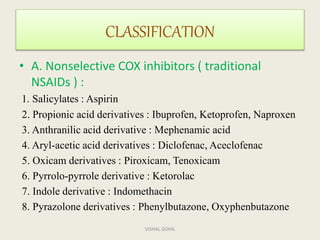
• A. Nonselective COX inhibitors ( traditional
NSAIDs ) :
1. Salicylates : Aspirin
2. Propionic acid derivatives : Ibuprofen, Ketoprofen, Naproxen
3. Anthranilic acid derivative : Mephenamic acid
4. Aryl-acetic acid derivatives : Diclofenac, Aceclofenac
5. Oxicam derivatives : Piroxicam, Tenoxicam
6. Pyrrolo-pyrrole derivative : Ketorolac
7. Indole derivative : Indomethacin
8. Pyrazolone derivatives : Phenylbutazone, Oxyphenbutazone
VISHAL GOHIL
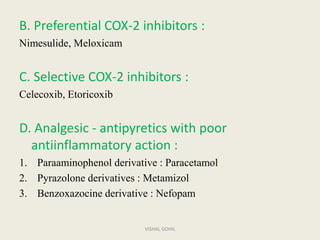
B. Preferential COX-2 inhibitors :
Nimesulide, Meloxicam
C. Selective COX-2 inhibitors :
Celecoxib, Etoricoxib
D. Analgesic - antipyretics with poor
antiinflammatory action :
1. Paraaminophenol derivative : Paracetamol
2. Pyrazolone derivatives : Metamizol
3. Benzoxazocine derivative : Nefopam
VISHAL GOHIL
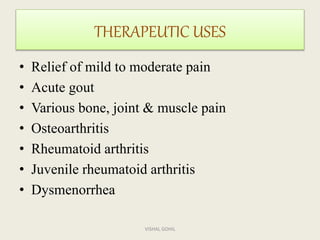
THERAPEUTIC USES
• Relief of mild to moderate pain
• Acute gout
• Various bone, joint & muscle pain
• Osteoarthritis
• Rheumatoid arthritis
• Juvenile rheumatoid arthritis
• Dysmenorrhea
VISHAL GOHIL
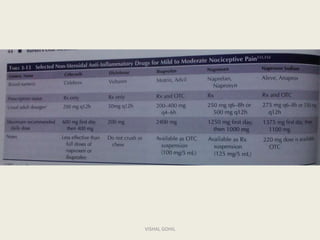
VISHAL GOHIL
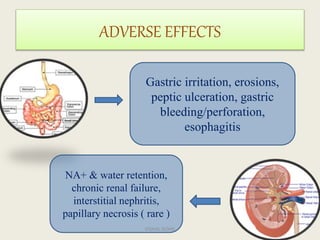
ADVERSE EFFECTS
Gastric irritation, erosions,
peptic ulceration, gastric
bleeding/perforation,
esophagitis
NA+ & water retention,
chronic renal failure,
interstitial nephritis,
papillary necrosis ( rare )
VISHAL GOHIL
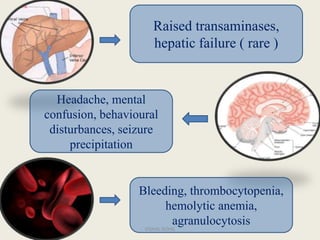
Raised transaminases,
hepatic failure ( rare )
Headache, mental
confusion, behavioural
disturbances, seizure
precipitation
Bleeding, thrombocytopenia,
hemolytic anemia,
agranulocytosisVISHAL GOHIL
OTHERS
• Asthma exacerbation
• Nasal polyposis : Soft, painless,
noncancerous growths on the lining of nasal
passages or sinuses.
• Skin rashes
• Pruritus : Severe itching of the skin
• Angioedema : Rapid swelling of the dermis,
subcutaneous tissue, mucosa & submucosal
tissues.
VISHAL GOHIL
DENTAL CONSIDERATIONS
• If patient is allergic to any NSAID, you will have to
avoid them.
• Paracetamol is the safest NSAID.
• Ibuprofen is contraindicated in asthma patients as it causes
bronchoconstriction.
- It is not recommended for pregnant or nursing women.
• If the patient is taking aspirin, then no surgery or even simple
extraction should be done.
- As it can lead to profuse bleeding because of its antiplatlet-
action. Aspirin should be stopped before 7-10 days of any
surgical procedure till 2-3 days after procedure.
- Young children are highly susceptible to aspirin
poisoning (therapeutic overdose).
VISHAL GOHIL
REFERENCE
• ESSENTIALS OF PHARMACOLOGY FOR
DENTISREY BY K D TRIPATHI 2ND
EDITION
• BURKET’S ORAL MEDICINE 12TH
EDITION
• TEXTBOOK OF ORAL &
MAXILLOFACIAL SURGERY BY S M
BALAJI 2ND EDITION
• WIKIPEDIA
VISHAL GOHIL
VISHAL GOHIL

NSAIDs IN DENTISTRY

  • 1.
    NON-STEROIDAL ANTI-INFLAMMATORY DRUGS (NSAIDs) PREPARED BY: VISHAL GOHIL (21) FINAL YR BDS GUIDED BY : DR. VEENA PATEL DR. JIGAR JOSHI DR. NIMESH PATEL
  • 2.
    CONTENTS • INTRODUCTION • MECHANISMOF ACTION • CLASSIFICATION • THERAPEUTIC USES • DOSES OF FEW DRUGS • ADVERSE EFFECTS • DENTAL CONSIDERATIONS VISHAL GOHIL
  • 3.
    NSAIDs • Non-steroidal anti-inflammatorydrugs • Large & chemically diverse group of drugs with the following properties : - Analgesic - Anti-inflammatory - Antipyretic VISHAL GOHIL
  • 4.
    • It inhibitscyclooxygenase ( COX ) enzymes, which is responsible for the formation of prostaglandins that promote pain & inflammation. NSAIDs : Mechanism of Action VISHAL GOHIL
  • 5.
    NSAIDs : Mechanismof Action • Analgesic effect : Blocks the undesirable effects of prostaglandin which causes pain. • Anti-inflammatory effect : Inhibit the leukotriene pathway or the prostaglandin pathway or both. • Antipyretic effect : Inhibit prostaglandin E2 ( dinoprostone ) within the area of the brain that controls temperature VISHAL GOHIL
  • 6.
    CLASSIFICATION • A. NonselectiveCOX inhibitors ( traditional NSAIDs ) : 1. Salicylates : Aspirin 2. Propionic acid derivatives : Ibuprofen, Ketoprofen, Naproxen 3. Anthranilic acid derivative : Mephenamic acid 4. Aryl-acetic acid derivatives : Diclofenac, Aceclofenac 5. Oxicam derivatives : Piroxicam, Tenoxicam 6. Pyrrolo-pyrrole derivative : Ketorolac 7. Indole derivative : Indomethacin 8. Pyrazolone derivatives : Phenylbutazone, Oxyphenbutazone VISHAL GOHIL
  • 7.
    B. Preferential COX-2inhibitors : Nimesulide, Meloxicam C. Selective COX-2 inhibitors : Celecoxib, Etoricoxib D. Analgesic - antipyretics with poor antiinflammatory action : 1. Paraaminophenol derivative : Paracetamol 2. Pyrazolone derivatives : Metamizol 3. Benzoxazocine derivative : Nefopam VISHAL GOHIL
  • 8.
    THERAPEUTIC USES • Reliefof mild to moderate pain • Acute gout • Various bone, joint & muscle pain • Osteoarthritis • Rheumatoid arthritis • Juvenile rheumatoid arthritis • Dysmenorrhea VISHAL GOHIL
  • 9.
  • 10.
    ADVERSE EFFECTS Gastric irritation,erosions, peptic ulceration, gastric bleeding/perforation, esophagitis NA+ & water retention, chronic renal failure, interstitial nephritis, papillary necrosis ( rare ) VISHAL GOHIL
  • 11.
    Raised transaminases, hepatic failure( rare ) Headache, mental confusion, behavioural disturbances, seizure precipitation Bleeding, thrombocytopenia, hemolytic anemia, agranulocytosisVISHAL GOHIL
  • 12.
    OTHERS • Asthma exacerbation •Nasal polyposis : Soft, painless, noncancerous growths on the lining of nasal passages or sinuses. • Skin rashes • Pruritus : Severe itching of the skin • Angioedema : Rapid swelling of the dermis, subcutaneous tissue, mucosa & submucosal tissues. VISHAL GOHIL
  • 13.
    DENTAL CONSIDERATIONS • Ifpatient is allergic to any NSAID, you will have to avoid them. • Paracetamol is the safest NSAID. • Ibuprofen is contraindicated in asthma patients as it causes bronchoconstriction. - It is not recommended for pregnant or nursing women. • If the patient is taking aspirin, then no surgery or even simple extraction should be done. - As it can lead to profuse bleeding because of its antiplatlet- action. Aspirin should be stopped before 7-10 days of any surgical procedure till 2-3 days after procedure. - Young children are highly susceptible to aspirin poisoning (therapeutic overdose). VISHAL GOHIL
  • 14.
    REFERENCE • ESSENTIALS OFPHARMACOLOGY FOR DENTISREY BY K D TRIPATHI 2ND EDITION • BURKET’S ORAL MEDICINE 12TH EDITION • TEXTBOOK OF ORAL & MAXILLOFACIAL SURGERY BY S M BALAJI 2ND EDITION • WIKIPEDIA VISHAL GOHIL
  • 15.