

PRINCIPLES OF
PHARMACOLOGY AND
OVERVIEW OF ANALGESICS
COMMONLY USED IN
DENTISTRY
KARISHMA S
II MDS
 Introduction
 Channels of drug administration
 Factors governing choice of drug
administration
 Pharmacokinetics
 Pharmacodynamics
 Pain
 Adjustment of dosages in pediatric patients
 Opioid analgesics
 NSAIDS
 Conclusion
CONTENTS
PHARMACOLOGY
• Science of drugs
• Deals with the interaction of exogenously administered
chemical molecules with the living systems.
PHARMACOTHERAPEUTICS
Application of pharmacological information together with
knowledge of the disease for its mitigation, prevention and cure.
DRUG
Any substance or product that is used or intended to be used, to
modify or explore physiological systems or pathological states for
the benefit of the recipient.
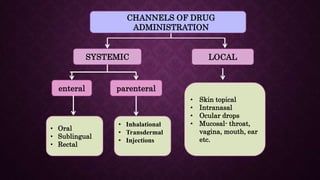
CHANNELS OF DRUG
ADMINISTRATION
SYSTEMIC LOCAL
enteral parenteral
• Oral
• Sublingual
• Rectal
• Inhalational
• Transdermal
• Injections
• Skin topical
• Intranasal
• Ocular drops
• Mucosal- throat,
vagina, mouth, ear
etc.
FACTORS GOVERNING THE
CHOICE OF ROUTE
• Physical and chemical properties of drug
• Site of desired action
• Rate and extent of absorption from various routes
• Effect of digestive juices and first pass effect
• Rapidity of the desired response
• Accuracy of dosage
• Condition of the patient
ORAL ROUTE
• The most common route of drug administration
• Drug is given through oral cavity
ADVANTAGES
• Safe
• Convenient, self administered, pain free, non-invasive
and easy to take.
• economical- compared to other parenteral routes
• Usually good absorption- takes place along the whole
length of GIT
• No need for sterilization
DISADVANTAGES
• Slow absorption and action. Can not be used in
emergencies
• Irritable and unpalatable drugs- nausea and vomiting
• Can not b used in un-cooperative and unconscious
patients
• Some drugs are destroyed
• Inefficient drug absorption
• First pass effect- due to bio-transformation
• Food-drug interactions and drug-drug interactions
DOSAGE FORMS
Capsules, powders, tablets, syrup, emulsion, suspension
and elixirs
SUBLINGUAL/BUCCAL ROUTE
Tablet or pellet containig the drug is placed under tongue
or crushed in mouth and spread over the buccal mnucosa.
Eg. Buprenorphine, Desaminooxytocin
ADVANTAGES
• Drug absorption is quick
• Quick termination
• First pass is avoided
• Can be self administered
• Economical
DISADVANTAGES
• Unpalatable and bitter
drugs
• Irritation of oral mucosa
• Large quantities not
given
• Few drugs are absorbed
RECTAL ROUTE
• Drugs are administered rectally as a suppository.
• In this form, the drug is mixed with a waxy substance
that dissolves or liquefies after it is inserted into the
rectum.
• Eg. Diazepam, indomethacin, paraldehyde, ergotamine
ADVANATGES
• Used in children
• ‘little or no first pass
effect
• Used in vomiting and
unconsciousness
• Higher concentration
rapidly achieved
DISADVANTAGES
• Inconvenient
• Absorption is slow and
erratic
• Irritation or
inflammation of the
rectal mucosa can
occur
PARENTERAL ROUTES
Direct delivery of drug into systemic circulation without
intestinal mucosa.
• Intradermal – into the skin
• Subcutaneous – into subcutaneous tissue
• Intramuscular – into skeletal muscle
• Intravenous – into veins
• Intra-arterial – into arteries
• Intrathecal – cerebrospinal fluids
• Intraperitoneal – peritoneal cavity
• Intra- articular – synovial fluids
ADVANTAGES
• High bioavailability
• Rapid action
• No first pass metabolism
SUITABLE FOR
• Vomiting and
unconsciousness
• Irritant and bad taste drugs
• No gastric irritation
• No food-drug interaction
DISADVANTAGES
• Infection
• Sterilization
• Invasive
• Assistance required
• Pain
• Needs skill
• expensive
INTRAVENOUS ROUTE
It is the most common parenteral route for drugs that are not absorbed
orally
ADVANTAGES
• Avoids first pass metabolism by liver
• Intravenous delivery permits a rapid effect and a maximum degree of
control over the circulating levels of the drug. Titration of the dose
with response.
• Large quantities can be given, fairly pain free
• Absorption phase is bypassed. 100% bioavailablility.
DISADVANTAGES
• Can not be recalled by strategies such as emesis or by
binding to activated charcoal
• IV injections may also induce hemolysis or cause other
adverse reactions by the too rapid delivery of high
concentrations of drug to the plasma and tissues, and
vital organs like heart, brain etc.
• Thrombophlebitis of vein and necrosis of adjoining
tissue if extravasation occurs
INTRAMUSCULAR ROUTES
 Large muscles- deltoid, triceps, gluteus maximus, rectrus
femoris.(diffusion,vascularity,uniformity)
 Deltiod > Gluteal
 Infants – rectus femoris
ADVANTAGES:
• Absorption reasonably
uniform
• Rapid onset of action
• Mild irritants can be
given
• First pass is avoided
• Gastric factors can be
avoided
DISADVANTAGES:
• Only upto 10ml drug
given
• Local pain and abscess
• Infection
• Nerve damage
• Local hematoma can occur
in anticoagulant treated
patients
SUBCUTANEOUS ROUTE
 Drug is deposited in loose subcutaneous tissue- rich nerve supply.
 Less vascular,slow absorption,uniform
CONSIDERATIONS:
• Irritant drugs can not be injected
• Slow absorption than IM route
• Avoid in shock patients- vasoconstriction
• Depot preparation can be injected- dermojet, pellet implantation,
sialistic and biodegradable implants.
SC injections minimize the risks associated with intravascular
injection.
INTRADERMAL
 Injected into layers of skin raising a bleb- BCG vaccines,
sensitivity test
 Small quantity
 Painful
INTRATHECAL
 Drugs introduced directly into the CSF.
Eg: amphotericin B in treating cryptococcal meningitis
 Strict asepsis
TRANSDERMAL
• Achieves systemic effect by application of drugs to the skin,
usually via a transdermal medicated adhesive patch.
• Slow effect and prolonegd drug action
• Most often used for sustained delivery of drugs such as the
anti-anginal drug (nitroglycerine) or antiemetic (scopalamine)
• Site- upper arm, chest, abdomen, mastoid region
• First pass is avoided.
• Absorption- increases by oily base, occlusive dressing, rubbing
preparation.
TOPICAL APPLICATION
• Produce local effect
• Skin- percutaneous (allergy testing, topical
anaesthesia)
• Mucous membrane of respiratory tract- inhalation
(asthma)
• Eye drops (conjunctivitis)
• Ear drops (otitis externa)
• Intranasal (decongestant nasal spray)
INHALATION
ADVANTAGES
• Mucous membrane of
respiratory system
• Rapid absorption-large
surface area
• Provide local action
• Minor systemic effect
• Low bioavailability
• Less side effects
• No first pass effect.
DISADVANTAGES
Only few drugs can be
used
DOSAGE FORM
• Aerosol
• nebulizer
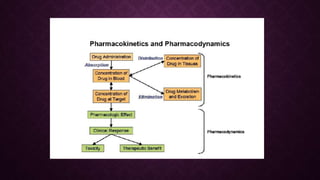
PHARMACOKINETICS
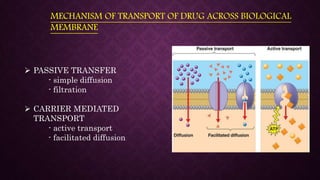
MECHANISM OF TRANSPORT OF DRUG ACROSS BIOLOGICAL
MEMBRANE
 PASSIVE TRANSFER
- simple diffusion
- filtration
 CARRIER MEDIATED
TRANSPORT
- active transport
- facilitated diffusion
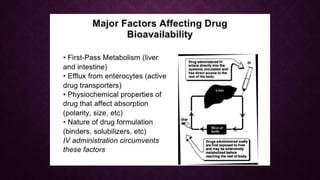
The four cornerstones of pharmacokinetics are:
• Absorption
• Distribution
• Metabolism
• Elimination
BIOAVAILABILITY
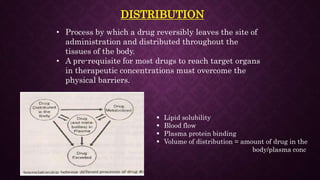
DISTRIBUTION
• Process by which a drug reversibly leaves the site of
administration and distributed throughout the
tissues of the body.
• A pre-requisite for most drugs to reach target organs
in therapeutic concentrations must overcome the
physical barriers.
 Lipid solubility
 Blood flow
 Plasma protein binding
 Volume of distribution = amount of drug in the
body/plasma conc
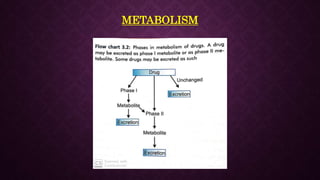
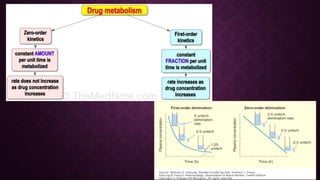
METABOLISM
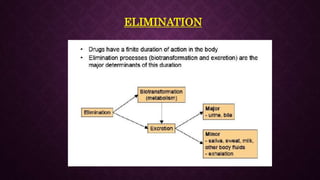
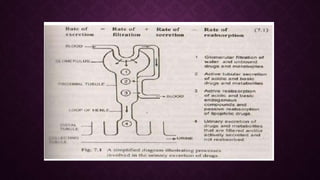
ELIMINATION
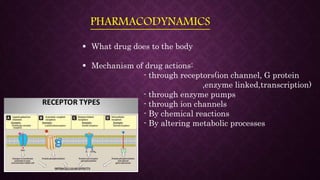
PHARMACODYNAMICS
 What drug does to the body
 Mechanism of drug actions:
- through receptors(ion channel, G protein
,enzyme linked,transcription)
- through enzyme pumps
- through ion channels
- By chemical reactions
- By altering metabolic processes
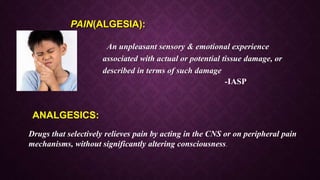
PAIN(ALGESIA):
An unpleasant sensory & emotional experience
associated with actual or potential tissue damage, or
described in terms of such damage
-IASP
Drugs that selectively relieves pain by acting in the CNS or on peripheral pain
mechanisms, without significantly altering consciousness.
ANALGESICS:
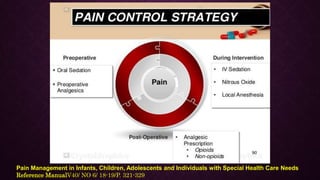
Pain Management in Infants, Children, Adolescents and Individuals with Special Health Care Needs
Reference ManualV40/ NO 6/ 18-19/P. 321-329
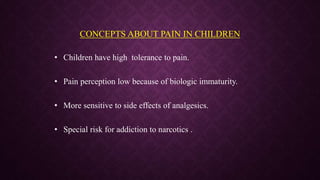
CONCEPTS ABOUT PAIN IN CHILDREN
• Children have high tolerance to pain.
• Pain perception low because of biologic immaturity.
• More sensitive to side effects of analgesics.
• Special risk for addiction to narcotics .
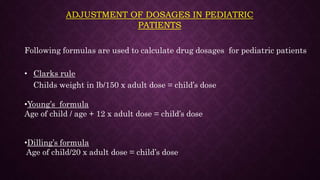
ADJUSTMENT OF DOSAGES IN PEDIATRIC
PATIENTS
Following formulas are used to calculate drug dosages for pediatric patients
• Clarks rule
Childs weight in lb/150 x adult dose = child’s dose
•Young’s formula
Age of child / age + 12 x adult dose = child’s dose
•Dilling’s formula
Age of child/20 x adult dose = child’s dose
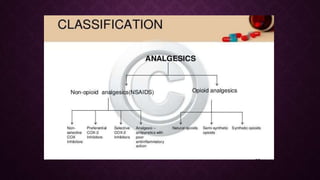
OPIOIDS ANALGESICS
• OPIUM: A dark brown, resinous material obtained
from Papaver somniferum capsule
• OPIOID: Drugs in a generic sense, natural or
synthetic, with morphine- like actions
CLASSIFICATION
1. Natural opium alkaloids:
- Morphine, Codeine
2. Semi synthetic opiates:
- Diacetylmorphine (Heroin)
- oxymorphone.
3. Synthetic opioids:
- Pethidine (Meperidine),
- Fentanyl, Methadone,
- Ethoheptazine,
- Tramadol.
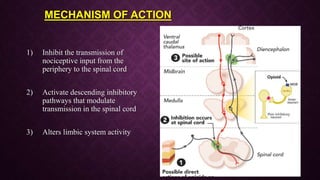
MECHANISM OF ACTION
1) Inhibit the transmission of
nociceptive input from the
periphery to the spinal cord
2) Activate descending inhibitory
pathways that modulate
transmission in the spinal cord
3) Alters limbic system activity
MORPHINE ANALGESIA
• Alkaloid of opium
• Relieves all types of pain, but most effective against continuous dull aching pain
• Sharp, stabbing, shooting pain also relieved by morphine
• Sedation effect, but no loss of consciousness, drowsiness & without motor in-
coordination
• Morphine euphoria ,sense of well being (Drug abuse)
Action Of Morphine:
•Analgesia
•Sedation
•Euphoria
•Mood change
•Mental cloudiness
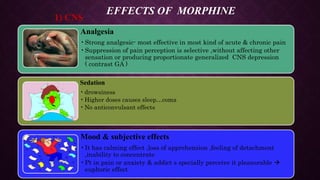
Analgesia
•Strong analgesic- most effective in most kind of acute & chronic pain
•Suppression of pain perception is selective ,without affecting other
sensation or producing proportionate generalized CNS depression
( contrast GA )
Sedation
•drowsiness
•Higher doses causes sleep…coma
•No anticonvulsant effects
Mood & subjective effects
•It has calming effect ,loss of apprehension ,feeling of detachment
,inability to concentrate
•Pt in pain or anxiety & addict s specially perceive it pleasurable 
euphoric effect
1) CNS
EFFECTS OF MORPHINE
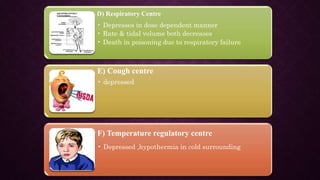
D) Respiratory Centre
• Depresses in dose dependent manner
• Rate & tidal volume both decreases
• Death in poisoning due to respiratory failure
E) Cough centre
• depressed
F) Temperature regulatory centre
• Depressed ,hypothermia in cold surrounding
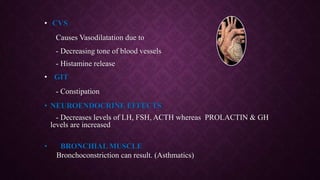
• CVS
Causes Vasodilatation due to
- Decreasing tone of blood vessels
- Histamine release
• GIT
- Constipation
• NEUROENDOCRINE EFFECTS
- Decreases levels of LH, FSH, ACTH whereas PROLACTIN & GH
levels are increased
• BRONCHIAL MUSCLE
Bronchoconstriction can result. (Asthmatics)
PHARMACOKINETICS
• Oral absorption-Unreliable (High First pass Metabolism)
• Primarily metabolised in liver
• Freely crosses the placenta & can effect the foetus
Side effects
•Idiosyncrasy and allergy
•Apnoea
•Acute moprhine poisoning
•Tolerance and dependence
•Withdrawal in new born-0.2ml /kg/3-4 hr of tincture of opium
ACUTE MORPHINE POISONING
• Lethal dose-250 mg (in non addicts )
• Resp depression - shallow breathing, cyanosis, fall in BP and shock; convulsions,
coma &death
Treatment
• Positive pressure respiration
• Maintenance of BP
• Gastric lavage
• Specific antidote: naloxone :0.4-0.8mg iv every 10-15 min
PRECAUTIONS AND CONTRA INDICATIONS
• Infants and the elderly are more susceptible to the respiratory depressant action of morphine.
• It is dangerous in patients with respiratory insufficiency.
• Bronchial asthma
• Head injury: (a) By retaining C02, it increases intracranial tension
(b) Even therapeutic doses can cause marked respiratory depression in these
patients.
(c) Vomiting, miosis and mental clouding
• Hypotensive and hypovolaemia : fall in BP.
CODEINE
• One tenth the potency (analgesic) of morphine
• More selective COUGH SUPPRESSANT
• Good activity by oral route
AVAILABLE : COREX , COMTUS syp. (10 mg / 5 ml)
Children:
 ≤12 years: 0.5-1 mg codeine/kg/dose every 4-6 hours as needed;
 > 12 years: 15 mL elixir every 4 hours as needed
Codeine is a pro-drug that relies on conversion by the enzyme CYP2D6
to morphine, the active metabolite, to provide analgesic relief.. the
analgesic effect of this medicine relies on the amount and speed at
which this conversion occurs, which is individually variable.
Codeine metabolism is even less predictable in children. It has been
demonstrated that CYP2D6 activity in foetuses is approximately 1% of
the adult rate. From birth this slowly increases; by age five years,
enzyme activity is approximately 25% of the adult rate. Because of this,
codeine will generally be under-converted in children, resulting in
insufficient analgesic effect.
Managing pain in children aged under12 years– BPJ 59March2014
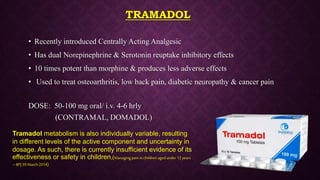
TRAMADOL
• Recently introduced Centrally Acting Analgesic
• Has dual Norepinephrine & Serotonin reuptake inhibitory effects
• 10 times potent than morphine & produces less adverse effects
• Used to treat osteoarthritis, low back pain, diabetic neuropathy & cancer pain
DOSE: 50-100 mg oral/ i.v. 4-6 hrly
(CONTRAMAL, DOMADOL)
Tramadol metabolism is also individually variable, resulting
in different levels of the active component and uncertainty in
dosage. As such, there is currently insufficient evidence of its
effectiveness or safety in children,(Managingpain in children agedunder 12 years
–BPJ 59 March2014)
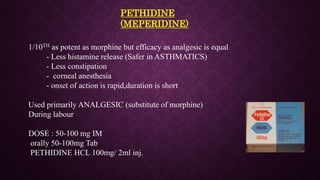
PETHIDINE
(MEPERIDINE)
1/10TH as potent as morphine but efficacy as analgesic is equal
- Less histamine release (Safer in ASTHMATICS)
- Less constipation
- corneal anesthesia
- onset of action is rapid,duration is short
Used primarily ANALGESIC (substitute of morphine)
During labour
DOSE : 50-100 mg IM
orally 50-100mg Tab
PETHIDINE HCL 100mg/ 2ml inj.
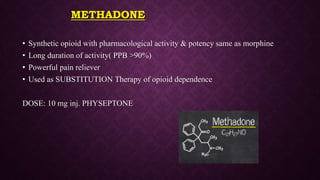
• Synthetic opioid with pharmacological activity & potency same as morphine
• Long duration of activity( PPB >90%)
• Powerful pain reliever
• Used as SUBSTITUTION Therapy of opioid dependence
DOSE: 10 mg inj. PHYSEPTONE
METHADONE
NON-STEROIDAL ANTI-
INFLAMMATORY DRUGS
- Analgesic, Antipyretic & Anti-inflammatory actions.
- Act primarily on Peripheral Pain Receptors
& CNS to raise the pain threshold
- Compared to Morphine
- Weaker analgesics
- Do not depress CNS
- Do not produce physical dependence
& have no abuse liability
INTRODUCTION
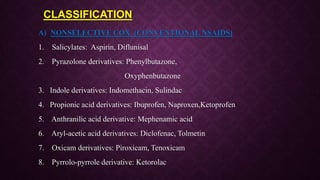
CLASSIFICATION
A) NONSELECTIVE COX (CONVENTIONAL NSAIDS)
1. Salicylates: Aspirin, Diflunisal
2. Pyrazolone derivatives: Phenylbutazone,
Oxyphenbutazone
3. Indole derivatives: Indomethacin, Sulindac
4. Propionic acid derivatives: Ibuprofen, Naproxen,Ketoprofen
5. Anthranilic acid derivative: Mephenamic acid
6. Aryl-acetic acid derivatives: Diclofenac, Tolmetin
7. Oxicam derivatives: Piroxicam, Tenoxicam
8. Pyrrolo-pyrrole derivative: Ketorolac
B) PREFERENTIAL COX-2 INHIBITORS –
Nimesulide, Meloxicam, Nabumetone
C) SELECTIVE COX-2 INHIBITORS -
Celecoxib,etoricoxib
D) ANALGESIC-ANTIPYRETICS WITH
POOR ANTI-INFLAMMATORY ACTION -
1. Para-aminophenol derivative: Paracetamol
(Acetaminophen)
2. Pyrazolone derivatives: Metamizol, Propiphenazone
3. Benzoxazocine derivatives: Nefopam
MECHANISM OF ACTION
- Cyclooxygenase catalyses the formation of
PGs & TBX 2 from arachidonic acid
- Lipoxygenase catalyses formation of
leukotrienes
- Act as Non-selective Inhibitors of the
enzyme cyclooxygenase, inhibiting both,
COX-1 & COX-2 isoenzymes
COX-1
- Present as part of everyday physiological function.
- Protects the stomach by limiting acid secretion
- Helps platelets limit bleeding by increasing their adhesiveness
COX-2
- Its expression is induced by various stimuli such as the inflammation or
at the site of the injury
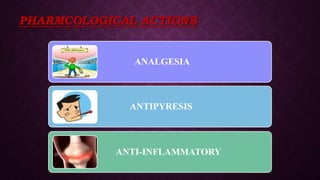
PHARMCOLOGICAL ACTIONS
ANALGESIA
ANTIPYRESIS
ANTI-INFLAMMATORY
GASTRIC MUCOSAL DAMAGE
ANTI PLATELET AGGREGATION
DUCTUS ARTERIOSUS CLOSURE
RESPIRATION
ASPIRIN
• Analgesic, Antipyretic & Anti-inflammatory Effects.
RESPIRATORY SYSTEM
-Increases rate & depth.
GIT
- Irritates the gastric mucosa  causes epigastric distress, nausea & vomiting
- Promotes the local back diffusion of the acid  acute ulcers, erosive gastritis,
microscopic haemorrhages
SALICYLATES
• CVS
- No direct effect
- Larger doses increase cardiac output to meet increased
peripheral O2 demand caused by direct vasodilation
• BLOOD
- Inhibits TXA2 synthesis by platelets
- Interferes with Platelet aggregation (BT)
• METABOLIC EFFECTS
- Increased utilization of Glucose leading to hypoglycemia.
Pharmacokinetics
- Poor Absorption- Stomach & Small Intestine
- Metabolism- Gut wall, Liver, Plasma & other tissues
to release salicylic acid.
- Excretion- Urine
Adverse effects
- Nausea,Vomiting, Epigastric distress & occult blood in stools, rashes, urticaria, asthma, angioedema
- Anti-inflammatory doses – syndrome Salicylism – dizziness, tinitus, reversible impairment of hearing
& vision, excitement
-Reye’s syndrome
-Pregnancy DOSE: 300-900 mg every 4 hrs (Max 3.6 gm)
( ASA, ASCAD, ECOSPRIN 50mg,75mg Tab.)
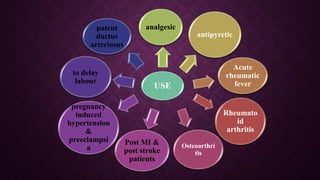
USE
analgesic
antipyretic
Acute
rheumatic
fever
Rheumato
id
arthritis
Osteoarthri
tis
Post MI &
post stroke
patients
pregnancy
induced
hypertension
&
preeclampsi
a
to delay
labour
patent
ductus
arteriosus
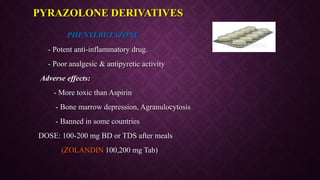
PHENYLBUTAZONE
- Potent anti-inflammatory drug.
- Poor analgesic & antipyretic activity
Adverse effects:
- More toxic than Aspirin
- Bone marrow depression, Agranulocytosis
- Banned in some countries
DOSE: 100-200 mg BD or TDS after meals
(ZOLANDIN 100,200 mg Tab)
PYRAZOLONE DERIVATIVES
INDOMETHACIN
- Potent anti-inflammatory, antipyretic & good analgesic
- Analgesic action better than PBZ
Adverse effects:
- High incidence of GI & CNS side effects - hypersensitivity rxns
- peptic ulcers - Decrease platelet aggregation
Uses:
- Rheumatoid Arthritis not controlled by aspirin
- Acts rapidly in Acute Gout
DOSE: 25-50 mg BD /TDS (INDOCAP, IDICIN)
INDOLE DERIVATIVES
IBUPROFEN-1969
- Analgesic, Antipyretic & Anti-inflammatory activity is lower than aspirin
- Inhibit platelet aggregation & prolong bleeding time
Adverse effects:
- Better tolerated than aspirin (Incidence is lower)
- Gastric discomfort, nausea & vomiting are most common side effects
- Headache, dizziness, blurring of vision, tinnitus
PROPIONIC ACID DERIVATIVES
- As Analgesic & Antipyretic
- In Rheumatoid Arthritis, Osteoarthritis & other Musculoskeletal Disorders, specially
where pain is more prominent than inflammation
- Indicated in soft tissue injuries, fractures, tooth extraction, supppress swelling &
inflammation
DOSE: 400-800 mg TDS
(BRUFEN, EMFLAM, IBUGESIC - 200, 400, 600 mg Tab)
USES
Pharmacokinetics:
- Absorbed orally, highly bound to plasma proteins (90-99%)
- Metabolized in liver & excreted in urine & bile
- Enter brain, synovial fluid & cross placenta
MEPHENAMIC ACID
- An Analgesic, Antipyretic & Anti-inflammatory drug,
- Contraindicated in children,due to toxicity
- Exerts Peripheral as well as Central Analgesic Action
Adverse effects :
- Diarrhoea
- Epigastric distress is complained, but gut bleeding is not significant
ANTHRANILIC ACID DERIVATIVE
Pharmacokinetics:
- Oral absorption is slow but almost complete
- Partly metabolized & excreted in urine & in bile
Uses:
- Analgesic in muscle, joint & soft tissue pain where strong anti-inflammatory action is not
needed (MPDS)
-- moderate pain and menstrual pain
- Useful in rheumatoid & osteoarthritis
DOSE: 250-500 mg TDS
(MEFTAL, PONSTAN, MEDOL 250, 500 mg cap)
DICLOFENAC SODIUM
- Analgesic, Antipyretic, Anti-inflammatory action
- Inhibits PG synthesis & has short lasting antiplatelet action
Pharmacokinetics:
- Well absorbed orally, metabolized & excreted both in urine & bile
- Has good tissue penetrability & conc. in synovial fluid is maintained longer period,
exerting extended therapeutic action in joints
ARYL-ACETICACID DERIVATIVE
Adverse effects
- Are generally mild: Epigastric pain, nausea, headache, dizziness, rashes
- Gastric ulceration & bleeding -less common
Uses:
- Most extensively used NSAID
- Rheumatoid & Osteoarthris, post-traumatic inflammatory conditions - affords quick
relief of pain & wound edema (Dental Extractions)
DOSE: 50 mg TDS, 75 mg i.m
(VOVERAN, DICLONAC, DICLOMAX
(25, 50 mg Tab., 75 mg /3ml inj)
PIROXICAM
- Long acting potent NSAID with good anti- inflammatory, analgesic & antiplatelet action
- Reversible inhibitor of COX; lowers PG conc. in synovial fluid & inhibits platelet
aggregation-prolonging bleeding time
- In addition, it decreases the production of IgM rheumatoid factor
OXICAM DERIVATIVES
Pharmacokinetics:
- Rapidly & completed absorbed
- Metabolized in liver & excreted in urine
- Plasma t1/2 is 2 days. So, single daily administration is sufficient
Adverse effects:
- Heart burn, nausea & anorexia, but it is tolerated & less ulcerogenic than
Phenylbutazone; causes less faecal blood loss than aspirin
Uses:
- Suitable for use as short term analgesic as well as long term anti-inflammatory action in –
Rheumatoid & Osteo-arthritis, Ankylosing spondylitis, acute gout, musculoskeletal
injuries, dental pain
DOSE: 20 mg BD for 2 days followed by 20 mg OD
(DOLONEX, PIROX) 10, 20 mg cap)
KETOROLAC
- Potent analgesic & modest anti-inflammatory activity.
- In postoperative pain it has equalled the efficacy of morphine
- Inhibits PG synthesis & is believed to relieve pain by a peripheral mechanism
- Rapidly absorbed after oral & I.M. administration & excreted unchanged in urine
PYRROLO-PYRROLE DERIVATIVE
- Nausea, abdominal pain, dyspepsia, ulceration, loose stools, drowsiness, headache,
dizziness, nervousness, pruritus, pain at injection site.
- Rise in serum transaminases & fluid retention have been noted
Adverse effects:
The pharmacokinetics of intravenous ketorolac in children aged 2 months to 16 years: A population analysis. 21 December 2017
Uses:
- In post-operative & acute musculoskeletal pain: 15-30 mg every 4-6 hours (max. 90 mg/
day)
- Also for renal colic, migraine & pain due to due to bony metastasis
- Used in a dose of 10-20 mg 6 hourly short term management of moderate pain
- The recommended intravenous dosage of ketorolac in children is 0.5 mg/kg, followed either
by bolus injections of 1.0 mg/kg every 6 hours or an intravenous infusion of 0.17 mg/kg/h
- The recommended oral dosage is 0.25 mg/kg to a maximum of 1.0 mg/kg/day, with a
maximum duration of 7 days. Older children may require somewhat lower dosages, while
infants and young children may require slightly higher dosages to achieve the same level of
pain relief.
AVAILABLE : KETOROL, KETANOV (10 mg Tab)
Contra-indications:
- Should not be given to patients on the anti-coagulants
- age < 1yr
Ketorolac for postoperative pain
management in children.
Forrest JB1, Heitlinger EL, Revell S.
PARACETAMOL (ACETAMINOPHEN)
- Central Analgesic action is like aspirin, i.e. it raises pain threshold, but has weak Anti-
inflammatory action
-Paracetamol is a good & promptly acting Antipyretic
Uses:
-Most commonly used analgesic for Headache, Musculoskeletal pain
- Best drug to be used as Antipyretic
- Can be used in All Age groups(infants to elderly), pregnant/lactating women, & in
patients in whom aspirin is contraindicated
PARA-AMINO PHENOL DERIVATIVES
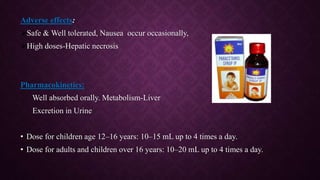
Adverse effects:
Safe & Well tolerated, Nausea occur occasionally,
High doses-Hepatic necrosis
Pharmacokinetics:
Well absorbed orally. Metabolism-Liver
Excretion in Urine
• Dose for children age 12–16 years: 10–15 mL up to 4 times a day.
• Dose for adults and children over 16 years: 10–20 mL up to 4 times a day.
 Allergy to Asprin or any NSAID
 Peptic Ulcers
 Anticoagulant Therapy
 Suffering from blood clotting system disorders
 Chronic liver diseases
CONTRAINDICATIONS
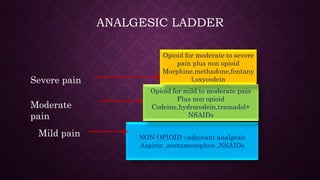
ANALGESIC LADDER
NON OPIOID ±adjuvant analgesic
Aspirin ,acetamenophen ,NSAIDs
Opioid for mild to moderate pain
Plus non opioid
Codeine,hydrocodein,tramadol+
NSAIDs
Opioid for moderate to severe
pain plus non opioid
Morphine,methadone,fentany
l,oxycodein
Mild pain
Moderate
pain
Severe pain
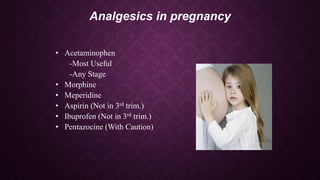
Analgesics in pregnancy
• Acetaminophen
-Most Useful
-Any Stage
• Morphine
• Meperidine
• Aspirin (Not in 3rd trim.)
• Ibuprofen (Not in 3rd trim.)
• Pentazocine (With Caution)
AAPD GUIDE LINES
(2012)
1. Recognize and assess pain, documenting in the patient’s chart;
2. Use non-pharmacologic and pharmacologic strategies to reduce pain experience pre-operatively;
3. Be familiar with the patient’s medical history to avoid prescribing a drug that would be otherwise
contraindicated;
4. Comprehend the consequences, morbidities, and toxicities associated with the use of specific therapeutics;
5. Consider non-opioid analgesics as first line agents for post-operative pain management
6. Utilize drug formularies in order to accurately prescribe medications for the management of post-operative
pain;
7. Consider combining nsaids with acetaminophen to provide a greater analgesic effect than the single agent
alone; and
8. Combine opioid analgesics with nsaids for post- operative treatment of moderate to severe pain in children
and adolescents.
Novel Approaches for Treating Pain in Children
William Splinter1,2,3,Current Oncology Reports (2019) 21:11
Purpose of Review : Good pain management in children, especially those at end of life, is a crucial
component of palliative medicine. The current review assesses some of the new and/or innovative
ways to manage pain in children. The article focuses on some recent medications/pharmaceutical
options such as cannabinoids and also innovative ways to administer medication to children, such
as intranasal and inhalation.
Recent Findings: Current approaches to pain management now include
(1) new uses of old drugs such as ketamine and lidocaine,
(2) use of new drugs/medications such as cannabinoids, and
(3) creative use of old technology such as atomizers, intranasal drops, and
inhalation.
Summary: Typically, novel approaches to care rarely start in pediatrics or palliative care. The
current review has presented some new and old drugs being utilized in new and old ways.
Lidocaine is a rather special medication used to manage pain in children. It is a sodium
channel blocker that is utilized for intractable pain, for pain that is refractory to
opioids or among those for whom there is opioid toxicity or at high risk of opioid
toxicity. Lidocaine has a very narrow therapeutic index not unlike many intravenous
and inhalation anesthetic agents
Clonidine and similar drugs, such as dexmedetomidine, are increasingly aiding in pain
management in children . Such drugs have potent and very effective opioid-sparing
effect. Initial doses of clonidine are 1 mcg/kg orally, but can be titrated up to 4 mcg/kg
q4h. It can also be administered intranasally and rectally
Gabapentin and similar medications (e.g., pregabalin) are transitioning from the novel
to becoming a common if not standard component of analgesia. Initial doses of 3–5
mg/kg are rapidly titrated up to 15 mg/kg qid orally of gabapentin in an attempt to
minimize opioid use, if not fully replace it, within many pediatric pain management
situations.
Ketamine is used both for analgesia and co-analgesia. In addition to its analgesic
properties, it can provide sedation, amnesia, and dissociation. Subsequently, it has been
observed to have a special role in pain management. It is often added to help in the
management of intractable pain or, when high-dose opioid therapy is being utilized, to
decrease the dose of opioids and with the decrease in opioids, the risk of an adverse event
due to the opioids
Cannabis, cannabinoids, and medical marijuana have had a major impact on pain
management. There are over 1000 different strains of cannabis and they produce over 100
active agents, phytocannabinoids. The two main phytocannabinoids are THC (delta-9-
tetrahydrocannabinol) and CBD (cannabidiol). Cannabinoid receptors, such as CB1 and
CB2, are G protein receptors and are present all over the body. CB2 receptors are mostly
peripheral and in the immune system. CB2 agonists are anti-inflammatory and decrease
pain.
Another special co-analgesic is intravenous magnesium. . Intravenous magnesium is
typically 50 mg/kg load over 30 min of the sulfate salt. Magnesium typically has a co-
analgesic effect, i.e., decreases the need for opioids and other analgesics.
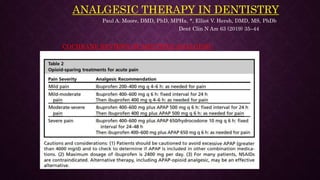
ANALGESIC THERAPY IN DENTISTRY
Paul A. Moore, DMD, PhD, MPHa, *, Elliot V. Hersh, DMD, MS, PhDb
Dent Clin N Am 63 (2019) 35–44
COCHRANE REVIEWS OF MULTIPLE ANALGESIC
AGENTS
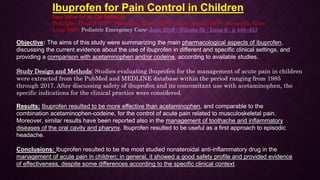
Ibuprofen for Pain Control in Children
New Value for an Old Molecule
Poddighe, Dimitri MD*†; Brambilla, Ilaria MD†‡; Licari, Amelia MD†‡; Marseglia, Gian
Luigi MD†‡ Pediatric Emergency Care: June 2019 - Volume 35 - Issue 6 - p 448–453
Objective: The aims of this study were summarizing the main pharmacological aspects of ibuprofen,
discussing the current evidence about the use of ibuprofen in different and specific clinical settings, and
providing a comparison with acetaminophen and/or codeine, according to available studies.
Study Design and Methods: Studies evaluating ibuprofen for the management of acute pain in children
were extracted from the PubMed and MEDLINE database within the period ranging from 1985
through 2017. After discussing safety of ibuprofen and its concomitant use with acetaminophen, the
specific indications for the clinical practice were considered.
Results: Ibuprofen resulted to be more effective than acetaminophen, and comparable to the
combination acetaminophen-codeine, for the control of acute pain related to musculoskeletal pain.
Moreover, similar results have been reported also in the management of toothache and inflammatory
diseases of the oral cavity and pharynx. Ibuprofen resulted to be useful as a first approach to episodic
headache.
Conclusions: Ibuprofen resulted to be the most studied nonsteroidal anti-inflammatory drug in the
management of acute pain in children; in general, it showed a good safety profile and provided evidence
of effectiveness, despite some differences according to the specific clinical context.
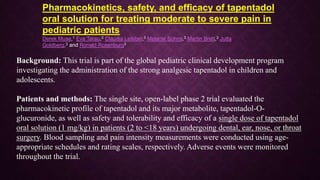
Pharmacokinetics, safety, and efficacy of tapentadol
oral solution for treating moderate to severe pain in
pediatric patients
Derek Muse,1 Eva Tarau,2 Claudia Lefeber,3 Melanie Sohns,3 Martin Brett,3 Jutta
Goldberg,3 and Ronald Rosenburg3
Background: This trial is part of the global pediatric clinical development program
investigating the administration of the strong analgesic tapentadol in children and
adolescents.
Patients and methods: The single site, open-label phase 2 trial evaluated the
pharmacokinetic profile of tapentadol and its major metabolite, tapentadol-O-
glucuronide, as well as safety and tolerability and efficacy of a single dose of tapentadol
oral solution (1 mg/kg) in patients (2 to <18 years) undergoing dental, ear, nose, or throat
surgery. Blood sampling and pain intensity measurements were conducted using age-
appropriate schedules and rating scales, respectively. Adverse events were monitored
throughout the trial.
Results: Sixty-six patients were treated. They were stratified by age: Group 1 (12 to
<18 years), n=21; Group 2 (6 to <12 years), n=28; and Groups 3 (3 to <6 years) and Group 4
(2 to <3 years), n=17. Serum tapentadol concentrations observed in these pediatric patients
were within the range observed in adults after administration of a single tapentadol
immediate-release dose (50–100 mg), whereas those of the metabolite tapentadol-O-
glucuronide were within the same range or lower than in adults who received comparable
single doses of tapentadol. Pain intensity improved over time across all age groups. The most
common treatment-emergent adverse events were nausea (24.2%), vomiting (16.7%),
dizziness (9.1%), and headache (6.1%).
Conclusion: A single dose of tapentadol oral solution (1 mg/kg) administered to pediatric
patients (2 to <18 years) resulted in serum tapentadol concentrations within the targeted range
shown to be safe and efficacious in adults. Tapentadol demonstrated good tolerability and
safety; within the limitations of the trial design, improvements in postsurgical pain intensity
were observed across the age groups. Tapentadol may provide a new treatment option in the
management of moderate to severe pediatric pain.
CONCLUSION

Analgesics used in dentistry

  • 1.
    PRINCIPLES OF PHARMACOLOGY AND OVERVIEWOF ANALGESICS COMMONLY USED IN DENTISTRY KARISHMA S II MDS
  • 2.
     Introduction  Channelsof drug administration  Factors governing choice of drug administration  Pharmacokinetics  Pharmacodynamics  Pain  Adjustment of dosages in pediatric patients  Opioid analgesics  NSAIDS  Conclusion CONTENTS
  • 3.
    PHARMACOLOGY • Science ofdrugs • Deals with the interaction of exogenously administered chemical molecules with the living systems. PHARMACOTHERAPEUTICS Application of pharmacological information together with knowledge of the disease for its mitigation, prevention and cure. DRUG Any substance or product that is used or intended to be used, to modify or explore physiological systems or pathological states for the benefit of the recipient.
  • 4.
    CHANNELS OF DRUG ADMINISTRATION SYSTEMICLOCAL enteral parenteral • Oral • Sublingual • Rectal • Inhalational • Transdermal • Injections • Skin topical • Intranasal • Ocular drops • Mucosal- throat, vagina, mouth, ear etc.
  • 5.
    FACTORS GOVERNING THE CHOICEOF ROUTE • Physical and chemical properties of drug • Site of desired action • Rate and extent of absorption from various routes • Effect of digestive juices and first pass effect • Rapidity of the desired response • Accuracy of dosage • Condition of the patient
  • 6.
    ORAL ROUTE • Themost common route of drug administration • Drug is given through oral cavity ADVANTAGES • Safe • Convenient, self administered, pain free, non-invasive and easy to take. • economical- compared to other parenteral routes • Usually good absorption- takes place along the whole length of GIT • No need for sterilization
  • 7.
    DISADVANTAGES • Slow absorptionand action. Can not be used in emergencies • Irritable and unpalatable drugs- nausea and vomiting • Can not b used in un-cooperative and unconscious patients • Some drugs are destroyed • Inefficient drug absorption • First pass effect- due to bio-transformation • Food-drug interactions and drug-drug interactions DOSAGE FORMS Capsules, powders, tablets, syrup, emulsion, suspension and elixirs
  • 8.
    SUBLINGUAL/BUCCAL ROUTE Tablet orpellet containig the drug is placed under tongue or crushed in mouth and spread over the buccal mnucosa. Eg. Buprenorphine, Desaminooxytocin ADVANTAGES • Drug absorption is quick • Quick termination • First pass is avoided • Can be self administered • Economical DISADVANTAGES • Unpalatable and bitter drugs • Irritation of oral mucosa • Large quantities not given • Few drugs are absorbed
  • 9.
    RECTAL ROUTE • Drugsare administered rectally as a suppository. • In this form, the drug is mixed with a waxy substance that dissolves or liquefies after it is inserted into the rectum. • Eg. Diazepam, indomethacin, paraldehyde, ergotamine ADVANATGES • Used in children • ‘little or no first pass effect • Used in vomiting and unconsciousness • Higher concentration rapidly achieved DISADVANTAGES • Inconvenient • Absorption is slow and erratic • Irritation or inflammation of the rectal mucosa can occur
  • 10.
    PARENTERAL ROUTES Direct deliveryof drug into systemic circulation without intestinal mucosa. • Intradermal – into the skin • Subcutaneous – into subcutaneous tissue • Intramuscular – into skeletal muscle • Intravenous – into veins • Intra-arterial – into arteries • Intrathecal – cerebrospinal fluids • Intraperitoneal – peritoneal cavity • Intra- articular – synovial fluids
  • 11.
    ADVANTAGES • High bioavailability •Rapid action • No first pass metabolism SUITABLE FOR • Vomiting and unconsciousness • Irritant and bad taste drugs • No gastric irritation • No food-drug interaction DISADVANTAGES • Infection • Sterilization • Invasive • Assistance required • Pain • Needs skill • expensive
  • 12.
    INTRAVENOUS ROUTE It isthe most common parenteral route for drugs that are not absorbed orally ADVANTAGES • Avoids first pass metabolism by liver • Intravenous delivery permits a rapid effect and a maximum degree of control over the circulating levels of the drug. Titration of the dose with response. • Large quantities can be given, fairly pain free • Absorption phase is bypassed. 100% bioavailablility.
  • 13.
    DISADVANTAGES • Can notbe recalled by strategies such as emesis or by binding to activated charcoal • IV injections may also induce hemolysis or cause other adverse reactions by the too rapid delivery of high concentrations of drug to the plasma and tissues, and vital organs like heart, brain etc. • Thrombophlebitis of vein and necrosis of adjoining tissue if extravasation occurs
  • 14.
    INTRAMUSCULAR ROUTES  Largemuscles- deltoid, triceps, gluteus maximus, rectrus femoris.(diffusion,vascularity,uniformity)  Deltiod > Gluteal  Infants – rectus femoris ADVANTAGES: • Absorption reasonably uniform • Rapid onset of action • Mild irritants can be given • First pass is avoided • Gastric factors can be avoided DISADVANTAGES: • Only upto 10ml drug given • Local pain and abscess • Infection • Nerve damage • Local hematoma can occur in anticoagulant treated patients
  • 15.
    SUBCUTANEOUS ROUTE  Drugis deposited in loose subcutaneous tissue- rich nerve supply.  Less vascular,slow absorption,uniform CONSIDERATIONS: • Irritant drugs can not be injected • Slow absorption than IM route • Avoid in shock patients- vasoconstriction • Depot preparation can be injected- dermojet, pellet implantation, sialistic and biodegradable implants. SC injections minimize the risks associated with intravascular injection.
  • 16.
    INTRADERMAL  Injected intolayers of skin raising a bleb- BCG vaccines, sensitivity test  Small quantity  Painful INTRATHECAL  Drugs introduced directly into the CSF. Eg: amphotericin B in treating cryptococcal meningitis  Strict asepsis
  • 17.
    TRANSDERMAL • Achieves systemiceffect by application of drugs to the skin, usually via a transdermal medicated adhesive patch. • Slow effect and prolonegd drug action • Most often used for sustained delivery of drugs such as the anti-anginal drug (nitroglycerine) or antiemetic (scopalamine) • Site- upper arm, chest, abdomen, mastoid region • First pass is avoided. • Absorption- increases by oily base, occlusive dressing, rubbing preparation.
  • 18.
    TOPICAL APPLICATION • Producelocal effect • Skin- percutaneous (allergy testing, topical anaesthesia) • Mucous membrane of respiratory tract- inhalation (asthma) • Eye drops (conjunctivitis) • Ear drops (otitis externa) • Intranasal (decongestant nasal spray)
  • 19.
    INHALATION ADVANTAGES • Mucous membraneof respiratory system • Rapid absorption-large surface area • Provide local action • Minor systemic effect • Low bioavailability • Less side effects • No first pass effect. DISADVANTAGES Only few drugs can be used DOSAGE FORM • Aerosol • nebulizer
  • 20.
  • 22.
    MECHANISM OF TRANSPORTOF DRUG ACROSS BIOLOGICAL MEMBRANE  PASSIVE TRANSFER - simple diffusion - filtration  CARRIER MEDIATED TRANSPORT - active transport - facilitated diffusion
  • 23.
    The four cornerstonesof pharmacokinetics are: • Absorption • Distribution • Metabolism • Elimination
  • 26.
  • 28.
    DISTRIBUTION • Process bywhich a drug reversibly leaves the site of administration and distributed throughout the tissues of the body. • A pre-requisite for most drugs to reach target organs in therapeutic concentrations must overcome the physical barriers.  Lipid solubility  Blood flow  Plasma protein binding  Volume of distribution = amount of drug in the body/plasma conc
  • 29.
  • 30.
  • 33.
    PHARMACODYNAMICS  What drugdoes to the body  Mechanism of drug actions: - through receptors(ion channel, G protein ,enzyme linked,transcription) - through enzyme pumps - through ion channels - By chemical reactions - By altering metabolic processes
  • 34.
    PAIN(ALGESIA): An unpleasant sensory& emotional experience associated with actual or potential tissue damage, or described in terms of such damage -IASP Drugs that selectively relieves pain by acting in the CNS or on peripheral pain mechanisms, without significantly altering consciousness. ANALGESICS:
  • 35.
    Pain Management inInfants, Children, Adolescents and Individuals with Special Health Care Needs Reference ManualV40/ NO 6/ 18-19/P. 321-329
  • 37.
    CONCEPTS ABOUT PAININ CHILDREN • Children have high tolerance to pain. • Pain perception low because of biologic immaturity. • More sensitive to side effects of analgesics. • Special risk for addiction to narcotics .
  • 38.
    ADJUSTMENT OF DOSAGESIN PEDIATRIC PATIENTS Following formulas are used to calculate drug dosages for pediatric patients • Clarks rule Childs weight in lb/150 x adult dose = child’s dose •Young’s formula Age of child / age + 12 x adult dose = child’s dose •Dilling’s formula Age of child/20 x adult dose = child’s dose
  • 39.
    OPIOIDS ANALGESICS • OPIUM:A dark brown, resinous material obtained from Papaver somniferum capsule • OPIOID: Drugs in a generic sense, natural or synthetic, with morphine- like actions
  • 40.
    CLASSIFICATION 1. Natural opiumalkaloids: - Morphine, Codeine 2. Semi synthetic opiates: - Diacetylmorphine (Heroin) - oxymorphone. 3. Synthetic opioids: - Pethidine (Meperidine), - Fentanyl, Methadone, - Ethoheptazine, - Tramadol.
  • 41.
    MECHANISM OF ACTION 1)Inhibit the transmission of nociceptive input from the periphery to the spinal cord 2) Activate descending inhibitory pathways that modulate transmission in the spinal cord 3) Alters limbic system activity
  • 42.
    MORPHINE ANALGESIA • Alkaloidof opium • Relieves all types of pain, but most effective against continuous dull aching pain • Sharp, stabbing, shooting pain also relieved by morphine • Sedation effect, but no loss of consciousness, drowsiness & without motor in- coordination • Morphine euphoria ,sense of well being (Drug abuse) Action Of Morphine: •Analgesia •Sedation •Euphoria •Mood change •Mental cloudiness
  • 43.
    Analgesia •Strong analgesic- mosteffective in most kind of acute & chronic pain •Suppression of pain perception is selective ,without affecting other sensation or producing proportionate generalized CNS depression ( contrast GA ) Sedation •drowsiness •Higher doses causes sleep…coma •No anticonvulsant effects Mood & subjective effects •It has calming effect ,loss of apprehension ,feeling of detachment ,inability to concentrate •Pt in pain or anxiety & addict s specially perceive it pleasurable  euphoric effect 1) CNS EFFECTS OF MORPHINE
  • 44.
    D) Respiratory Centre •Depresses in dose dependent manner • Rate & tidal volume both decreases • Death in poisoning due to respiratory failure E) Cough centre • depressed F) Temperature regulatory centre • Depressed ,hypothermia in cold surrounding
  • 45.
    • CVS Causes Vasodilatationdue to - Decreasing tone of blood vessels - Histamine release • GIT - Constipation • NEUROENDOCRINE EFFECTS - Decreases levels of LH, FSH, ACTH whereas PROLACTIN & GH levels are increased • BRONCHIAL MUSCLE Bronchoconstriction can result. (Asthmatics)
  • 46.
    PHARMACOKINETICS • Oral absorption-Unreliable(High First pass Metabolism) • Primarily metabolised in liver • Freely crosses the placenta & can effect the foetus Side effects •Idiosyncrasy and allergy •Apnoea •Acute moprhine poisoning •Tolerance and dependence •Withdrawal in new born-0.2ml /kg/3-4 hr of tincture of opium
  • 47.
    ACUTE MORPHINE POISONING •Lethal dose-250 mg (in non addicts ) • Resp depression - shallow breathing, cyanosis, fall in BP and shock; convulsions, coma &death Treatment • Positive pressure respiration • Maintenance of BP • Gastric lavage • Specific antidote: naloxone :0.4-0.8mg iv every 10-15 min
  • 48.
    PRECAUTIONS AND CONTRAINDICATIONS • Infants and the elderly are more susceptible to the respiratory depressant action of morphine. • It is dangerous in patients with respiratory insufficiency. • Bronchial asthma • Head injury: (a) By retaining C02, it increases intracranial tension (b) Even therapeutic doses can cause marked respiratory depression in these patients. (c) Vomiting, miosis and mental clouding • Hypotensive and hypovolaemia : fall in BP.
  • 49.
    CODEINE • One tenththe potency (analgesic) of morphine • More selective COUGH SUPPRESSANT • Good activity by oral route AVAILABLE : COREX , COMTUS syp. (10 mg / 5 ml) Children:  ≤12 years: 0.5-1 mg codeine/kg/dose every 4-6 hours as needed;  > 12 years: 15 mL elixir every 4 hours as needed
  • 50.
    Codeine is apro-drug that relies on conversion by the enzyme CYP2D6 to morphine, the active metabolite, to provide analgesic relief.. the analgesic effect of this medicine relies on the amount and speed at which this conversion occurs, which is individually variable. Codeine metabolism is even less predictable in children. It has been demonstrated that CYP2D6 activity in foetuses is approximately 1% of the adult rate. From birth this slowly increases; by age five years, enzyme activity is approximately 25% of the adult rate. Because of this, codeine will generally be under-converted in children, resulting in insufficient analgesic effect. Managing pain in children aged under12 years– BPJ 59March2014
  • 51.
    TRAMADOL • Recently introducedCentrally Acting Analgesic • Has dual Norepinephrine & Serotonin reuptake inhibitory effects • 10 times potent than morphine & produces less adverse effects • Used to treat osteoarthritis, low back pain, diabetic neuropathy & cancer pain DOSE: 50-100 mg oral/ i.v. 4-6 hrly (CONTRAMAL, DOMADOL) Tramadol metabolism is also individually variable, resulting in different levels of the active component and uncertainty in dosage. As such, there is currently insufficient evidence of its effectiveness or safety in children,(Managingpain in children agedunder 12 years –BPJ 59 March2014)
  • 52.
    PETHIDINE (MEPERIDINE) 1/10TH as potentas morphine but efficacy as analgesic is equal - Less histamine release (Safer in ASTHMATICS) - Less constipation - corneal anesthesia - onset of action is rapid,duration is short Used primarily ANALGESIC (substitute of morphine) During labour DOSE : 50-100 mg IM orally 50-100mg Tab PETHIDINE HCL 100mg/ 2ml inj.
  • 53.
    • Synthetic opioidwith pharmacological activity & potency same as morphine • Long duration of activity( PPB >90%) • Powerful pain reliever • Used as SUBSTITUTION Therapy of opioid dependence DOSE: 10 mg inj. PHYSEPTONE METHADONE
  • 54.
  • 55.
    - Analgesic, Antipyretic& Anti-inflammatory actions. - Act primarily on Peripheral Pain Receptors & CNS to raise the pain threshold - Compared to Morphine - Weaker analgesics - Do not depress CNS - Do not produce physical dependence & have no abuse liability INTRODUCTION
  • 56.
    CLASSIFICATION A) NONSELECTIVE COX(CONVENTIONAL NSAIDS) 1. Salicylates: Aspirin, Diflunisal 2. Pyrazolone derivatives: Phenylbutazone, Oxyphenbutazone 3. Indole derivatives: Indomethacin, Sulindac 4. Propionic acid derivatives: Ibuprofen, Naproxen,Ketoprofen 5. Anthranilic acid derivative: Mephenamic acid 6. Aryl-acetic acid derivatives: Diclofenac, Tolmetin 7. Oxicam derivatives: Piroxicam, Tenoxicam 8. Pyrrolo-pyrrole derivative: Ketorolac
  • 57.
    B) PREFERENTIAL COX-2INHIBITORS – Nimesulide, Meloxicam, Nabumetone C) SELECTIVE COX-2 INHIBITORS - Celecoxib,etoricoxib D) ANALGESIC-ANTIPYRETICS WITH POOR ANTI-INFLAMMATORY ACTION - 1. Para-aminophenol derivative: Paracetamol (Acetaminophen) 2. Pyrazolone derivatives: Metamizol, Propiphenazone 3. Benzoxazocine derivatives: Nefopam
  • 58.
    MECHANISM OF ACTION -Cyclooxygenase catalyses the formation of PGs & TBX 2 from arachidonic acid - Lipoxygenase catalyses formation of leukotrienes - Act as Non-selective Inhibitors of the enzyme cyclooxygenase, inhibiting both, COX-1 & COX-2 isoenzymes
  • 59.
    COX-1 - Present aspart of everyday physiological function. - Protects the stomach by limiting acid secretion - Helps platelets limit bleeding by increasing their adhesiveness COX-2 - Its expression is induced by various stimuli such as the inflammation or at the site of the injury
  • 60.
  • 61.
    GASTRIC MUCOSAL DAMAGE ANTIPLATELET AGGREGATION DUCTUS ARTERIOSUS CLOSURE RESPIRATION
  • 62.
    ASPIRIN • Analgesic, Antipyretic& Anti-inflammatory Effects. RESPIRATORY SYSTEM -Increases rate & depth. GIT - Irritates the gastric mucosa  causes epigastric distress, nausea & vomiting - Promotes the local back diffusion of the acid  acute ulcers, erosive gastritis, microscopic haemorrhages SALICYLATES
  • 63.
    • CVS - Nodirect effect - Larger doses increase cardiac output to meet increased peripheral O2 demand caused by direct vasodilation • BLOOD - Inhibits TXA2 synthesis by platelets - Interferes with Platelet aggregation (BT) • METABOLIC EFFECTS - Increased utilization of Glucose leading to hypoglycemia.
  • 64.
    Pharmacokinetics - Poor Absorption-Stomach & Small Intestine - Metabolism- Gut wall, Liver, Plasma & other tissues to release salicylic acid. - Excretion- Urine Adverse effects - Nausea,Vomiting, Epigastric distress & occult blood in stools, rashes, urticaria, asthma, angioedema - Anti-inflammatory doses – syndrome Salicylism – dizziness, tinitus, reversible impairment of hearing & vision, excitement -Reye’s syndrome -Pregnancy DOSE: 300-900 mg every 4 hrs (Max 3.6 gm) ( ASA, ASCAD, ECOSPRIN 50mg,75mg Tab.)
  • 65.
    USE analgesic antipyretic Acute rheumatic fever Rheumato id arthritis Osteoarthri tis Post MI & poststroke patients pregnancy induced hypertension & preeclampsi a to delay labour patent ductus arteriosus
  • 66.
    PHENYLBUTAZONE - Potent anti-inflammatorydrug. - Poor analgesic & antipyretic activity Adverse effects: - More toxic than Aspirin - Bone marrow depression, Agranulocytosis - Banned in some countries DOSE: 100-200 mg BD or TDS after meals (ZOLANDIN 100,200 mg Tab) PYRAZOLONE DERIVATIVES
  • 67.
    INDOMETHACIN - Potent anti-inflammatory,antipyretic & good analgesic - Analgesic action better than PBZ Adverse effects: - High incidence of GI & CNS side effects - hypersensitivity rxns - peptic ulcers - Decrease platelet aggregation Uses: - Rheumatoid Arthritis not controlled by aspirin - Acts rapidly in Acute Gout DOSE: 25-50 mg BD /TDS (INDOCAP, IDICIN) INDOLE DERIVATIVES
  • 68.
    IBUPROFEN-1969 - Analgesic, Antipyretic& Anti-inflammatory activity is lower than aspirin - Inhibit platelet aggregation & prolong bleeding time Adverse effects: - Better tolerated than aspirin (Incidence is lower) - Gastric discomfort, nausea & vomiting are most common side effects - Headache, dizziness, blurring of vision, tinnitus PROPIONIC ACID DERIVATIVES
  • 69.
    - As Analgesic& Antipyretic - In Rheumatoid Arthritis, Osteoarthritis & other Musculoskeletal Disorders, specially where pain is more prominent than inflammation - Indicated in soft tissue injuries, fractures, tooth extraction, supppress swelling & inflammation DOSE: 400-800 mg TDS (BRUFEN, EMFLAM, IBUGESIC - 200, 400, 600 mg Tab) USES Pharmacokinetics: - Absorbed orally, highly bound to plasma proteins (90-99%) - Metabolized in liver & excreted in urine & bile - Enter brain, synovial fluid & cross placenta
  • 70.
    MEPHENAMIC ACID - AnAnalgesic, Antipyretic & Anti-inflammatory drug, - Contraindicated in children,due to toxicity - Exerts Peripheral as well as Central Analgesic Action Adverse effects : - Diarrhoea - Epigastric distress is complained, but gut bleeding is not significant ANTHRANILIC ACID DERIVATIVE
  • 71.
    Pharmacokinetics: - Oral absorptionis slow but almost complete - Partly metabolized & excreted in urine & in bile Uses: - Analgesic in muscle, joint & soft tissue pain where strong anti-inflammatory action is not needed (MPDS) -- moderate pain and menstrual pain - Useful in rheumatoid & osteoarthritis DOSE: 250-500 mg TDS (MEFTAL, PONSTAN, MEDOL 250, 500 mg cap)
  • 72.
    DICLOFENAC SODIUM - Analgesic,Antipyretic, Anti-inflammatory action - Inhibits PG synthesis & has short lasting antiplatelet action Pharmacokinetics: - Well absorbed orally, metabolized & excreted both in urine & bile - Has good tissue penetrability & conc. in synovial fluid is maintained longer period, exerting extended therapeutic action in joints ARYL-ACETICACID DERIVATIVE
  • 73.
    Adverse effects - Aregenerally mild: Epigastric pain, nausea, headache, dizziness, rashes - Gastric ulceration & bleeding -less common Uses: - Most extensively used NSAID - Rheumatoid & Osteoarthris, post-traumatic inflammatory conditions - affords quick relief of pain & wound edema (Dental Extractions) DOSE: 50 mg TDS, 75 mg i.m (VOVERAN, DICLONAC, DICLOMAX (25, 50 mg Tab., 75 mg /3ml inj)
  • 74.
    PIROXICAM - Long actingpotent NSAID with good anti- inflammatory, analgesic & antiplatelet action - Reversible inhibitor of COX; lowers PG conc. in synovial fluid & inhibits platelet aggregation-prolonging bleeding time - In addition, it decreases the production of IgM rheumatoid factor OXICAM DERIVATIVES
  • 75.
    Pharmacokinetics: - Rapidly &completed absorbed - Metabolized in liver & excreted in urine - Plasma t1/2 is 2 days. So, single daily administration is sufficient Adverse effects: - Heart burn, nausea & anorexia, but it is tolerated & less ulcerogenic than Phenylbutazone; causes less faecal blood loss than aspirin
  • 76.
    Uses: - Suitable foruse as short term analgesic as well as long term anti-inflammatory action in – Rheumatoid & Osteo-arthritis, Ankylosing spondylitis, acute gout, musculoskeletal injuries, dental pain DOSE: 20 mg BD for 2 days followed by 20 mg OD (DOLONEX, PIROX) 10, 20 mg cap)
  • 77.
    KETOROLAC - Potent analgesic& modest anti-inflammatory activity. - In postoperative pain it has equalled the efficacy of morphine - Inhibits PG synthesis & is believed to relieve pain by a peripheral mechanism - Rapidly absorbed after oral & I.M. administration & excreted unchanged in urine PYRROLO-PYRROLE DERIVATIVE - Nausea, abdominal pain, dyspepsia, ulceration, loose stools, drowsiness, headache, dizziness, nervousness, pruritus, pain at injection site. - Rise in serum transaminases & fluid retention have been noted Adverse effects: The pharmacokinetics of intravenous ketorolac in children aged 2 months to 16 years: A population analysis. 21 December 2017
  • 78.
    Uses: - In post-operative& acute musculoskeletal pain: 15-30 mg every 4-6 hours (max. 90 mg/ day) - Also for renal colic, migraine & pain due to due to bony metastasis - Used in a dose of 10-20 mg 6 hourly short term management of moderate pain - The recommended intravenous dosage of ketorolac in children is 0.5 mg/kg, followed either by bolus injections of 1.0 mg/kg every 6 hours or an intravenous infusion of 0.17 mg/kg/h - The recommended oral dosage is 0.25 mg/kg to a maximum of 1.0 mg/kg/day, with a maximum duration of 7 days. Older children may require somewhat lower dosages, while infants and young children may require slightly higher dosages to achieve the same level of pain relief. AVAILABLE : KETOROL, KETANOV (10 mg Tab) Contra-indications: - Should not be given to patients on the anti-coagulants - age < 1yr Ketorolac for postoperative pain management in children. Forrest JB1, Heitlinger EL, Revell S.
  • 79.
    PARACETAMOL (ACETAMINOPHEN) - CentralAnalgesic action is like aspirin, i.e. it raises pain threshold, but has weak Anti- inflammatory action -Paracetamol is a good & promptly acting Antipyretic Uses: -Most commonly used analgesic for Headache, Musculoskeletal pain - Best drug to be used as Antipyretic - Can be used in All Age groups(infants to elderly), pregnant/lactating women, & in patients in whom aspirin is contraindicated PARA-AMINO PHENOL DERIVATIVES
  • 80.
    Adverse effects: Safe &Well tolerated, Nausea occur occasionally, High doses-Hepatic necrosis Pharmacokinetics: Well absorbed orally. Metabolism-Liver Excretion in Urine • Dose for children age 12–16 years: 10–15 mL up to 4 times a day. • Dose for adults and children over 16 years: 10–20 mL up to 4 times a day.
  • 81.
     Allergy toAsprin or any NSAID  Peptic Ulcers  Anticoagulant Therapy  Suffering from blood clotting system disorders  Chronic liver diseases CONTRAINDICATIONS
  • 82.
    ANALGESIC LADDER NON OPIOID±adjuvant analgesic Aspirin ,acetamenophen ,NSAIDs Opioid for mild to moderate pain Plus non opioid Codeine,hydrocodein,tramadol+ NSAIDs Opioid for moderate to severe pain plus non opioid Morphine,methadone,fentany l,oxycodein Mild pain Moderate pain Severe pain
  • 83.
    Analgesics in pregnancy •Acetaminophen -Most Useful -Any Stage • Morphine • Meperidine • Aspirin (Not in 3rd trim.) • Ibuprofen (Not in 3rd trim.) • Pentazocine (With Caution)
  • 84.
    AAPD GUIDE LINES (2012) 1.Recognize and assess pain, documenting in the patient’s chart; 2. Use non-pharmacologic and pharmacologic strategies to reduce pain experience pre-operatively; 3. Be familiar with the patient’s medical history to avoid prescribing a drug that would be otherwise contraindicated; 4. Comprehend the consequences, morbidities, and toxicities associated with the use of specific therapeutics; 5. Consider non-opioid analgesics as first line agents for post-operative pain management 6. Utilize drug formularies in order to accurately prescribe medications for the management of post-operative pain; 7. Consider combining nsaids with acetaminophen to provide a greater analgesic effect than the single agent alone; and 8. Combine opioid analgesics with nsaids for post- operative treatment of moderate to severe pain in children and adolescents.
  • 85.
    Novel Approaches forTreating Pain in Children William Splinter1,2,3,Current Oncology Reports (2019) 21:11 Purpose of Review : Good pain management in children, especially those at end of life, is a crucial component of palliative medicine. The current review assesses some of the new and/or innovative ways to manage pain in children. The article focuses on some recent medications/pharmaceutical options such as cannabinoids and also innovative ways to administer medication to children, such as intranasal and inhalation. Recent Findings: Current approaches to pain management now include (1) new uses of old drugs such as ketamine and lidocaine, (2) use of new drugs/medications such as cannabinoids, and (3) creative use of old technology such as atomizers, intranasal drops, and inhalation. Summary: Typically, novel approaches to care rarely start in pediatrics or palliative care. The current review has presented some new and old drugs being utilized in new and old ways.
  • 86.
    Lidocaine is arather special medication used to manage pain in children. It is a sodium channel blocker that is utilized for intractable pain, for pain that is refractory to opioids or among those for whom there is opioid toxicity or at high risk of opioid toxicity. Lidocaine has a very narrow therapeutic index not unlike many intravenous and inhalation anesthetic agents Clonidine and similar drugs, such as dexmedetomidine, are increasingly aiding in pain management in children . Such drugs have potent and very effective opioid-sparing effect. Initial doses of clonidine are 1 mcg/kg orally, but can be titrated up to 4 mcg/kg q4h. It can also be administered intranasally and rectally Gabapentin and similar medications (e.g., pregabalin) are transitioning from the novel to becoming a common if not standard component of analgesia. Initial doses of 3–5 mg/kg are rapidly titrated up to 15 mg/kg qid orally of gabapentin in an attempt to minimize opioid use, if not fully replace it, within many pediatric pain management situations.
  • 87.
    Ketamine is usedboth for analgesia and co-analgesia. In addition to its analgesic properties, it can provide sedation, amnesia, and dissociation. Subsequently, it has been observed to have a special role in pain management. It is often added to help in the management of intractable pain or, when high-dose opioid therapy is being utilized, to decrease the dose of opioids and with the decrease in opioids, the risk of an adverse event due to the opioids Cannabis, cannabinoids, and medical marijuana have had a major impact on pain management. There are over 1000 different strains of cannabis and they produce over 100 active agents, phytocannabinoids. The two main phytocannabinoids are THC (delta-9- tetrahydrocannabinol) and CBD (cannabidiol). Cannabinoid receptors, such as CB1 and CB2, are G protein receptors and are present all over the body. CB2 receptors are mostly peripheral and in the immune system. CB2 agonists are anti-inflammatory and decrease pain. Another special co-analgesic is intravenous magnesium. . Intravenous magnesium is typically 50 mg/kg load over 30 min of the sulfate salt. Magnesium typically has a co- analgesic effect, i.e., decreases the need for opioids and other analgesics.
  • 88.
    ANALGESIC THERAPY INDENTISTRY Paul A. Moore, DMD, PhD, MPHa, *, Elliot V. Hersh, DMD, MS, PhDb Dent Clin N Am 63 (2019) 35–44 COCHRANE REVIEWS OF MULTIPLE ANALGESIC AGENTS
  • 89.
    Ibuprofen for PainControl in Children New Value for an Old Molecule Poddighe, Dimitri MD*†; Brambilla, Ilaria MD†‡; Licari, Amelia MD†‡; Marseglia, Gian Luigi MD†‡ Pediatric Emergency Care: June 2019 - Volume 35 - Issue 6 - p 448–453 Objective: The aims of this study were summarizing the main pharmacological aspects of ibuprofen, discussing the current evidence about the use of ibuprofen in different and specific clinical settings, and providing a comparison with acetaminophen and/or codeine, according to available studies. Study Design and Methods: Studies evaluating ibuprofen for the management of acute pain in children were extracted from the PubMed and MEDLINE database within the period ranging from 1985 through 2017. After discussing safety of ibuprofen and its concomitant use with acetaminophen, the specific indications for the clinical practice were considered. Results: Ibuprofen resulted to be more effective than acetaminophen, and comparable to the combination acetaminophen-codeine, for the control of acute pain related to musculoskeletal pain. Moreover, similar results have been reported also in the management of toothache and inflammatory diseases of the oral cavity and pharynx. Ibuprofen resulted to be useful as a first approach to episodic headache. Conclusions: Ibuprofen resulted to be the most studied nonsteroidal anti-inflammatory drug in the management of acute pain in children; in general, it showed a good safety profile and provided evidence of effectiveness, despite some differences according to the specific clinical context.
  • 90.
    Pharmacokinetics, safety, andefficacy of tapentadol oral solution for treating moderate to severe pain in pediatric patients Derek Muse,1 Eva Tarau,2 Claudia Lefeber,3 Melanie Sohns,3 Martin Brett,3 Jutta Goldberg,3 and Ronald Rosenburg3 Background: This trial is part of the global pediatric clinical development program investigating the administration of the strong analgesic tapentadol in children and adolescents. Patients and methods: The single site, open-label phase 2 trial evaluated the pharmacokinetic profile of tapentadol and its major metabolite, tapentadol-O- glucuronide, as well as safety and tolerability and efficacy of a single dose of tapentadol oral solution (1 mg/kg) in patients (2 to <18 years) undergoing dental, ear, nose, or throat surgery. Blood sampling and pain intensity measurements were conducted using age- appropriate schedules and rating scales, respectively. Adverse events were monitored throughout the trial.
  • 91.
    Results: Sixty-six patientswere treated. They were stratified by age: Group 1 (12 to <18 years), n=21; Group 2 (6 to <12 years), n=28; and Groups 3 (3 to <6 years) and Group 4 (2 to <3 years), n=17. Serum tapentadol concentrations observed in these pediatric patients were within the range observed in adults after administration of a single tapentadol immediate-release dose (50–100 mg), whereas those of the metabolite tapentadol-O- glucuronide were within the same range or lower than in adults who received comparable single doses of tapentadol. Pain intensity improved over time across all age groups. The most common treatment-emergent adverse events were nausea (24.2%), vomiting (16.7%), dizziness (9.1%), and headache (6.1%). Conclusion: A single dose of tapentadol oral solution (1 mg/kg) administered to pediatric patients (2 to <18 years) resulted in serum tapentadol concentrations within the targeted range shown to be safe and efficacious in adults. Tapentadol demonstrated good tolerability and safety; within the limitations of the trial design, improvements in postsurgical pain intensity were observed across the age groups. Tapentadol may provide a new treatment option in the management of moderate to severe pediatric pain.
  • 93.