2.2 Water Jet Machining
2.2.1 Introduction
The key element in water jet machining (WJM) is a water jet, which travels at velocities as high as
900 m/s (approximately Mach 3). When the stream strikes a workpiece surface, the erosive force of
water removes the material rapidly. The water, in this case, acts like a saw and cuts a narrow groove
in the workpiece material.
2.2.2 The machining system
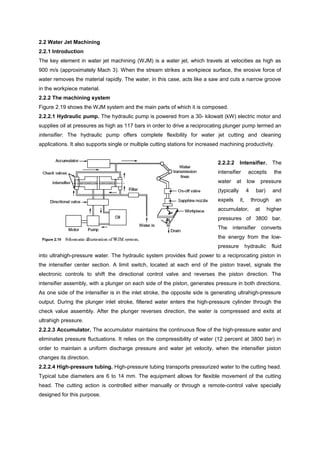
Figure 2.19 shows the WJM system and the main parts of which it is composed.
2.2.2.1 Hydraulic pump. The hydraulic pump is powered from a 30- kilowatt (kW) electric motor and
supplies oil at pressures as high as 117 bars in order to drive a reciprocating plunger pump termed an
intensifier. The hydraulic pump offers complete flexibility for water jet cutting and cleaning
applications. It also supports single or multiple cutting stations for increased machining productivity.
2.2.2.2 Intensifier. The
intensifier accepts the
water at low pressure
(typically 4 bar) and
expels it, through an
accumulator, at higher
pressures of 3800 bar.
The intensifier converts
the energy from the low-
pressure hydraulic fluid
into ultrahigh-pressure water. The hydraulic system provides fluid power to a reciprocating piston in
the intensifier center section. A limit switch, located at each end of the piston travel, signals the
electronic controls to shift the directional control valve and reverses the piston direction. The
intensifier assembly, with a plunger on each side of the piston, generates pressure in both directions.
As one side of the intensifier is in the inlet stroke, the opposite side is generating ultrahigh-pressure
output. During the plunger inlet stroke, filtered water enters the high-pressure cylinder through the
check value assembly. After the plunger reverses direction, the water is compressed and exits at
ultrahigh pressure.
2.2.2.3 Accumulator. The accumulator maintains the continuous flow of the high-pressure water and
eliminates pressure fluctuations. It relies on the compressibility of water (12 percent at 3800 bar) in
order to maintain a uniform discharge pressure and water jet velocity, when the intensifier piston
changes its direction.
2.2.2.4 High-pressure tubing. High-pressure tubing transports pressurized water to the cutting head.
Typical tube diameters are 6 to 14 mm. The equipment allows for flexible movement of the cutting
head. The cutting action is controlled either manually or through a remote-control valve specially
designed for this purpose.
2.2.2.5 Jet cutting nozzle. The nozzle provides a coherent water jet stream for optimum cutting of
low-density, soft material that is considered unmachinable by conventional methods. Nozzles are
normally made from synthetic sapphire. About 200 h of operation are expected from a nozzle, which
becomes damaged by particles of dirt and the accumulation of mineral deposits on the orifice due to
erosive water hardness. A longer nozzle life can be obtained through multistage filtration, which
removes undesired solids of size greater than 0.45 µm. The compact design of the water jet cutting
head promotes integration with motion control systems ranging from two-axis (XY) tables to
sophisticated multiaxis robotic installations.
2.2.2.6 Catcher. The catcher acts as a reservoir for collecting the machining debris entrained in the
water jet. Moreover, it reduces the noise levels [105 decibels (dB)] associated with the reduction in the
velocity of the water jet from Mach 3 to subsonic levels.
2.2.3 Process parameters
Jet nozzle. The standoff distance, shown in Fig. 2.20, is the gap between the jet nozzle (0.1–0.3 mm
diameter) and the workpiece (2.5–6 mm). However for materials used in printed circuit boards, it may
be increased to 13 to 19 mm. For a nozzle of 0.12-mm diameter and cutting rate of 1.1 millimeters per
second (mm/s), McGeough (1988) reported the decrease of the depth of cut at a larger standoff
distance. When cutting fiber-reinforced plastics, reports showed that the increase in machining rate
and use of the small nozzle diameter increased the width of the damaged layer.
Jet fluid. Typical pressures reported by McGeough (1988) are 150 to 1000 MPa, which provide 8 to
80 kW of power. For a given nozzle diameter, the increase in pressure allows more power to be used
in the machining process, which in turn increases the depth of the cut. Jet velocities range between
540 to 1400 m/s. The quality of cutting improves at higher pressures by widening the diameter of the
jet and by lowering the traverse speed. Under such conditions, materials of greater thicknesses and
densities can be cut. Moreover, the larger the pump pressure, the greater will be the depth of the cut.
The fluid used must possess low viscosity to minimize the energy losses and be noncorrosive,
nontoxic, common, and inexpensive. Water is commonly used for cutting alloy steels. Alcohol is used
for cutting meat, while cooking oils are recommended for cutting frozen foods. Figure 2.21
summarizes different parameters affecting the performance of WJM.
Target material. Brittle materials will fracture, while
ductile ones will cut well. Material thicknesses range from
0.8 to 25 mm or more. Table 2.4 shows the cutting rates
for different material thicknesses.
2.2.4 Applications
WJM is used on metals, paper, cloth, leather, rubber, plastics, food, and ceramics. It is a versatile and
cost-effective cutting process that can be used as an alternative to traditional machining methods. It
completely eliminates heat-affected zones, toxic fumes, recast layers, work hardening, and thermal
stresses. It is the most flexible and effective cleaning solution available for a variety of industrial
needs. In general the cut surface has a sandblast appearance. Moreover, harder materials exhibit a
better edge finish. Typical surface finishes ranges from 1.6 μm root mean square (RMS) to very
coarse depending on the application. Tolerances are in the range of ± 25 μm on thin material. Both
the produced surface roughness and tolerance depend on the machining speed.
2.2.4.1 Cutting. WJM is limited to fiberglass and corrugated wood. Figure 2.22 shows a typical
example of water jet cutting of marble, while Fig. 2.23 shows a typical application in the food industry.
2.2.4.2 Drilling. The process drills precision-angled and -shaped holes in a variety of materials for
which other processes such as EDM or EBM are too expensive or too slow.
2.2.4.3 Machining of fiber-reinforced plastics. In this case the thermal material damage is
negligible. The tool, being effectively pointed, accurately cuts contours. The main drawback is the
deflection of the water The feed rate attainable depends on the surface quality required. Table 2.5
shows the limiting feed rates for water jet cutting of fiber-reinforced plastics.
2.2.4.4 Cutting of rocks. Water jet cutting of a 51-mm-deep slot in granite using two oscillating jets at
275 MPa during 14 passes at a 25.4-mm/s feed rate has been reported by McGeough (1988).
Moreover an oscillating nozzle system operating at the same feed rate and pressure of 172 MPa, with
the standoff distance adjusted every pass was used to cut a 178-mm-deep slot in sandstone.
2.2.4.5 Deburring. The method uses large pressures to remove large burrs (3 mm height) in 12-mm-
diameter drilled holes in a hollow molybdenum-chromium steel shaft at 15 s using 700-bar pressure
and a flow rate of 27 L/min. In this method burrs are broken off by the impact of water. A higher
pressure (4000 bar) and a lower flow rate (2.5 L/min) are used to remove burrs from nonmetallic
materials.
2.2.4.6 Cutting of printed circuit boards. Using a small-diameter water jet mounted near to the part
edge, a printed circuit board (PCB) can be cut at a speed that exceeds 8 m/min, to the accuracy of
± 0.13 mm. Boards of various shapes for use in portable radios and cassette players can be cut using
computer numerical control (CNC) technology.
2.2.4.7 Surface treatment. The process finds many applications including:
* Removing deposits and residues without toxic chemicals, which eliminates costly cleanup and
disposal problems
* Surface cleaning of pipes and castings, decorative finishing, nuclear decontamination, food utensil
cleaning, degreasing, polishing, preparation for precise inspection, and surface texturing
* Economical surface preparation and coating removal
* Removing corrosion, spray residue, soluble salts, chemicals, and surface damage prior to recoating
or painting
2.2.4.8 Wire stripping. The process can remove the wire insulating material without damaging the
metal or removing the tinning on the copper wire. The processing time can be decreased to about 20
percent of the manual stripping method (Metals Handbook, 1989).
2.2.5 Advantages and disadvantages of WJM
Advantages
* It has multidirectional cutting capacity.
* No heat is produced.
* Cuts can be started at any location without the need for predrilled holes.
* Wetting of the workpiece material is minimal.
* There is no deflection to the rest of the workpiece.
* The burr produced is minimal.
* The tool does not wear and, therefore, does not need sharpening.
* The process is environmentally safe.
* Hazardous airborne dust contamination and waste disposal problems that are common when using
other cleaning methods are eliminated.
* There is multiple head processing.
* Simple fixturing eliminates costly and complicated tooling, which reduces turnaround time and
lowers the cost.
* Grinding and polishing are eliminated, reducing secondary operation costs.
* The narrow kerf allows tight nesting when multiple parts are cut from a single blank.
* It is ideal for roughing out material for near net shape.
* It is ideal for laser reflective materials such as copper and aluminum.
* It allows for more accurate cutting of soft material.
* It cuts through very thick material such as 383 mm in titanium and 307 mm in Inconel.
Disadvantages
* Hourly rates are relatively high.
* It is not suitable for mass production because of high maintenance requirements.
2.3 Abrasive Jet Machining
2.3.1 Introduction
In abrasive jet machining (AJM) a focused stream of abrasive grains of Al2O3 or SiC carried by high-
pressure gas or air at a high velocity is made to impinge on the work surface through a nozzle of
0.3- to 0.5-mm diameter. The process differs from sandblasting (SB) in that AJM has smaller diameter
abrasives and a more finely controlled delivery system. The workpiece material is removed by the
mechanical abrasion (MA) action of the high-velocity abrasive particles. AJM machining is best suited
for machining holes in superhard materials. It is typically used to cut, clean, peen, deburr, deflash, and
etch glass, ceramics, or hard metals.
2.3.2 Machining system
In the machining system shown in Fig. 2.24, a gas (nitrogen, CO2, or air) is supplied under a pressure
of 2 to 8 kg/cm2
. Oxygen should never be used because it causes a violent chemical reaction with
workpiece chips or abrasives. After filtration and regulation, the gas is passed through a mixing
chamber that contains abrasive particles and vibrates at 50 Hz. From the mixing chamber, the gas,
along with the entrained abrasive particles (10–40 μm), passes through a 0.45-mm-diameter tungsten
carbide nozzle at a speed of 150 to 300 m/s. Aluminum oxide (Al2O3) and silicon carbide powders are
used for heavy cleaning, cutting, and deburring. Magnesium carbonate is recommended for use in
light cleaning and etching, while sodium
bicarbonate is used for fine cleaning and
the cutting of soft materials. Commercial-
grade powders are not suitable because
their sizes are not well classified. They
may contain silica dust, which can be a
health hazard. It is not practical to reuse
the abrasive powder because
contaminations and worn grit will cause a
decline of the machining rate. The abrasive powder feed rate is controlled by the amplitude of
vibrations in the mixing chamber. The nozzle standoff distance is 0.81 mm. The relative motion
between the workpiece and the nozzle is manually or automatically controlled using cam drives,
pantographs, tracer mechanisms, or using computer control according to the cut geometry required.
Masks of copper, glass, or rubber may be used to concentrate the jet stream of abrasive particles to a
confined location on the workpiece. Intricate and precise shapes can be produced by using masks
with corresponding contours. Dust removal equipment is incorporated to protect the environment.
2.3.3 Material removal rate
As shown in Fig. 2.25, the abrasive particles from the nozzle follow parallel paths for a short distance
and then the abrasive jet flares outward like a narrow cone. When the sharp-edged abrasive particles
of Al2O3 or SiC hit a brittle and fragile material at high speed, tiny brittle fractures are created from
which small particles dislodge. The lodged out particles are carried away by the air or gas. The
material removal rate VRR, is given by
The material removal rate, cut accuracy, surface roughness, and nozzle wear are influenced
by the size and istance of the nozzle; composition, strength, size, and shape of abrasives; flow rate;
and composition, pressure, and velocity of the carrier gas. The material removal rate is mainly
dependent on the flow rate and size of brasives. Larger grain sizes produce greater removal rates. At
a particular pressure, the volumetric removal rate increases with the abrasive flow rate up to an
optimum value and then decreases with any further increase in flow rate. This is due to the fact that
the mass flow rate of the gas decreases with an increase in the abrasive flow rate and hence the
mixing ratio increases causing a decrease in the removal rate because of the decreasing energy
available for material removal.
The typical material removal rate is 16.4 mm3
/min when cutting glass. Cutting rates for metals
vary from 1.6 to 4.1mm3
/min. For harder ceramics, cutting rates are about 50 percent higher than
those for glass. The minimum width of cut can be 0.13 mm. Tolerances are typically ± 0.13 mm with
± 0.05 mm possible using good fixation and motion control. The produced surface has a random or
matte texture. Surface rough nesses of 0.2 to 1.5 µm using 10 and 50 µm particles, respectively, can
be attained. Taper is present in deep cuts. High nozzle pressures result in a greater removal rate, but
the nozzle life is decreased. Table 2.6 summarizes the overall process characteristics.
2.3.4 Applications
1. Drilling holes, cutting slots, cleaning hard surfaces, deburring, polishing, and radiusing
2. Deburring of cross holes, slots, and threads in small precision parts that require a burr-free finish,
such as hydraulic valves, aircraft fuel systems, and medical appliances
3. Machining intricate shapes or holes in sensitive, brittle, thin, or difficult-to-machine materials
4. Insulation stripping and wire cleaning without affecting the conductor
5. Micro-deburring of hypodermic needles
6. Frosting glass and trimming of circuit boards, hybrid circuit resistors, capacitors, silicon, and gallium
7. Removal of films and delicate cleaning of irregular surfaces because the abrasive stream is able to
follow contours
2.3.5 Advantages and limitations of AJM
Advantages
* Because AJM is a cool machining process, it is best suited for machining brittle and heat-sensitive
materials like glass, quartz, sapphire, and ceramics.
* The process is used for machining superalloys and refractory materials.
* It is not reactive with any workpiece material.
* No tool changes are required.
* Intricate parts of sharp corners can be machined.
* The machined materials do not experience hardening.
* No initial hole is required for starting the operation as required by wire EDM.
* Material utilization is high.
* It can machine thin materials.
Limitations
* The removal rate is slow.
* Stray cutting can’t be avoided (low accuracy of ア0.1 mm).
* The tapering effect may occur especially when drilling in metals.
* The abrasive may get impeded in the work surface.
* Suitable dust-collecting systems should be provided.
* Soft materials can’t be machined by the process.
* Silica dust may be a health hazard.
* Ordinary shop air should be filtered to remove moisture and oil.
2.1 Ultrasonic Machining
2.1.1 Introduction
Ultrasonic machining (USM) is the removal of hard and brittle materials using an axially oscillating tool
at ultrasonic frequencies [18–20 kilohertz (kHz)]. During that oscillation, the abrasive slurry of B4C or
SiC is continuously fed into the machining zone between a soft tool (brass or steel) and the
workpiece. The abrasive particles are, therefore, hammered into the workpiece surface and cause
chipping of fine particles from it. The oscillating tool, at amplitudes ranging from 10 to 40 μm, imposes
a static pressure on the abrasive grains and feeds down as the material is removed to form the
required tool shape (Fig. 2.1). Balamuth first discovered USM in 1945 during ultrasonic grinding of
abrasive powders. The industrial applications began in the 1950s when the new machine tools
appeared. USM is characterized by the absence of any deleterious effect on the metallic structure of
the workpiece material.
2.1.2 The machining system
The machining system, shown in Figs. 2.2 and 2.3, is composed mainly from the magnetostrictor,
concentrator, tool, and slurry feeding arrangement. The magnetostrictor is energized at the ultrasonic
frequency and produces small-amplitude vibrations. Such a small vibration is amplified using the
constrictor (mechanical amplifier) that holds the tool. The abrasive slurry is pumped between the
oscillating tool and the brittle workpiece. Astatic pressure is applied in the tool-workpiece interface that
maintains the abrasive slurry.
2.1.2.1 The magnetostrictor. The magnetostrictor used in USM, shown in Fig. 2.4, has a high-
frequency winding wound on a magnetostrictor core and a special polarizing winding around an
armature. The magnetostriction effect was first discovered by Joule at Manchester in 1874.
Accordingly, a magnetic field undergoing ultrasonic frequencies causes corresponding changes in a
ferromagnetic object placed within its region of influence. This effect is used to oscillate the USM tool,
which is mounted at the end of a magnetostrictor, at ultrasonic frequencies (18 to 20 kHz). The
method of operation of a magnetostrictor can be explained as follows. The coefficient of
magnetostriction elongation Em is
Amt
Amt

Amt

  • 1.
    2.2 Water JetMachining 2.2.1 Introduction The key element in water jet machining (WJM) is a water jet, which travels at velocities as high as 900 m/s (approximately Mach 3). When the stream strikes a workpiece surface, the erosive force of water removes the material rapidly. The water, in this case, acts like a saw and cuts a narrow groove in the workpiece material. 2.2.2 The machining system Figure 2.19 shows the WJM system and the main parts of which it is composed. 2.2.2.1 Hydraulic pump. The hydraulic pump is powered from a 30- kilowatt (kW) electric motor and supplies oil at pressures as high as 117 bars in order to drive a reciprocating plunger pump termed an intensifier. The hydraulic pump offers complete flexibility for water jet cutting and cleaning applications. It also supports single or multiple cutting stations for increased machining productivity. 2.2.2.2 Intensifier. The intensifier accepts the water at low pressure (typically 4 bar) and expels it, through an accumulator, at higher pressures of 3800 bar. The intensifier converts the energy from the low- pressure hydraulic fluid into ultrahigh-pressure water. The hydraulic system provides fluid power to a reciprocating piston in the intensifier center section. A limit switch, located at each end of the piston travel, signals the electronic controls to shift the directional control valve and reverses the piston direction. The intensifier assembly, with a plunger on each side of the piston, generates pressure in both directions. As one side of the intensifier is in the inlet stroke, the opposite side is generating ultrahigh-pressure output. During the plunger inlet stroke, filtered water enters the high-pressure cylinder through the check value assembly. After the plunger reverses direction, the water is compressed and exits at ultrahigh pressure. 2.2.2.3 Accumulator. The accumulator maintains the continuous flow of the high-pressure water and eliminates pressure fluctuations. It relies on the compressibility of water (12 percent at 3800 bar) in order to maintain a uniform discharge pressure and water jet velocity, when the intensifier piston changes its direction. 2.2.2.4 High-pressure tubing. High-pressure tubing transports pressurized water to the cutting head. Typical tube diameters are 6 to 14 mm. The equipment allows for flexible movement of the cutting head. The cutting action is controlled either manually or through a remote-control valve specially designed for this purpose.
  • 2.
    2.2.2.5 Jet cuttingnozzle. The nozzle provides a coherent water jet stream for optimum cutting of low-density, soft material that is considered unmachinable by conventional methods. Nozzles are normally made from synthetic sapphire. About 200 h of operation are expected from a nozzle, which becomes damaged by particles of dirt and the accumulation of mineral deposits on the orifice due to erosive water hardness. A longer nozzle life can be obtained through multistage filtration, which removes undesired solids of size greater than 0.45 µm. The compact design of the water jet cutting head promotes integration with motion control systems ranging from two-axis (XY) tables to sophisticated multiaxis robotic installations. 2.2.2.6 Catcher. The catcher acts as a reservoir for collecting the machining debris entrained in the water jet. Moreover, it reduces the noise levels [105 decibels (dB)] associated with the reduction in the velocity of the water jet from Mach 3 to subsonic levels. 2.2.3 Process parameters Jet nozzle. The standoff distance, shown in Fig. 2.20, is the gap between the jet nozzle (0.1–0.3 mm diameter) and the workpiece (2.5–6 mm). However for materials used in printed circuit boards, it may be increased to 13 to 19 mm. For a nozzle of 0.12-mm diameter and cutting rate of 1.1 millimeters per second (mm/s), McGeough (1988) reported the decrease of the depth of cut at a larger standoff distance. When cutting fiber-reinforced plastics, reports showed that the increase in machining rate and use of the small nozzle diameter increased the width of the damaged layer. Jet fluid. Typical pressures reported by McGeough (1988) are 150 to 1000 MPa, which provide 8 to 80 kW of power. For a given nozzle diameter, the increase in pressure allows more power to be used in the machining process, which in turn increases the depth of the cut. Jet velocities range between 540 to 1400 m/s. The quality of cutting improves at higher pressures by widening the diameter of the jet and by lowering the traverse speed. Under such conditions, materials of greater thicknesses and densities can be cut. Moreover, the larger the pump pressure, the greater will be the depth of the cut. The fluid used must possess low viscosity to minimize the energy losses and be noncorrosive, nontoxic, common, and inexpensive. Water is commonly used for cutting alloy steels. Alcohol is used for cutting meat, while cooking oils are recommended for cutting frozen foods. Figure 2.21 summarizes different parameters affecting the performance of WJM. Target material. Brittle materials will fracture, while ductile ones will cut well. Material thicknesses range from 0.8 to 25 mm or more. Table 2.4 shows the cutting rates for different material thicknesses. 2.2.4 Applications
  • 3.
    WJM is usedon metals, paper, cloth, leather, rubber, plastics, food, and ceramics. It is a versatile and cost-effective cutting process that can be used as an alternative to traditional machining methods. It completely eliminates heat-affected zones, toxic fumes, recast layers, work hardening, and thermal stresses. It is the most flexible and effective cleaning solution available for a variety of industrial needs. In general the cut surface has a sandblast appearance. Moreover, harder materials exhibit a better edge finish. Typical surface finishes ranges from 1.6 μm root mean square (RMS) to very coarse depending on the application. Tolerances are in the range of ± 25 μm on thin material. Both the produced surface roughness and tolerance depend on the machining speed. 2.2.4.1 Cutting. WJM is limited to fiberglass and corrugated wood. Figure 2.22 shows a typical example of water jet cutting of marble, while Fig. 2.23 shows a typical application in the food industry. 2.2.4.2 Drilling. The process drills precision-angled and -shaped holes in a variety of materials for which other processes such as EDM or EBM are too expensive or too slow. 2.2.4.3 Machining of fiber-reinforced plastics. In this case the thermal material damage is negligible. The tool, being effectively pointed, accurately cuts contours. The main drawback is the deflection of the water The feed rate attainable depends on the surface quality required. Table 2.5 shows the limiting feed rates for water jet cutting of fiber-reinforced plastics. 2.2.4.4 Cutting of rocks. Water jet cutting of a 51-mm-deep slot in granite using two oscillating jets at 275 MPa during 14 passes at a 25.4-mm/s feed rate has been reported by McGeough (1988). Moreover an oscillating nozzle system operating at the same feed rate and pressure of 172 MPa, with the standoff distance adjusted every pass was used to cut a 178-mm-deep slot in sandstone. 2.2.4.5 Deburring. The method uses large pressures to remove large burrs (3 mm height) in 12-mm- diameter drilled holes in a hollow molybdenum-chromium steel shaft at 15 s using 700-bar pressure and a flow rate of 27 L/min. In this method burrs are broken off by the impact of water. A higher pressure (4000 bar) and a lower flow rate (2.5 L/min) are used to remove burrs from nonmetallic materials.
  • 4.
    2.2.4.6 Cutting ofprinted circuit boards. Using a small-diameter water jet mounted near to the part edge, a printed circuit board (PCB) can be cut at a speed that exceeds 8 m/min, to the accuracy of ± 0.13 mm. Boards of various shapes for use in portable radios and cassette players can be cut using computer numerical control (CNC) technology. 2.2.4.7 Surface treatment. The process finds many applications including: * Removing deposits and residues without toxic chemicals, which eliminates costly cleanup and disposal problems * Surface cleaning of pipes and castings, decorative finishing, nuclear decontamination, food utensil cleaning, degreasing, polishing, preparation for precise inspection, and surface texturing * Economical surface preparation and coating removal * Removing corrosion, spray residue, soluble salts, chemicals, and surface damage prior to recoating or painting 2.2.4.8 Wire stripping. The process can remove the wire insulating material without damaging the metal or removing the tinning on the copper wire. The processing time can be decreased to about 20 percent of the manual stripping method (Metals Handbook, 1989). 2.2.5 Advantages and disadvantages of WJM Advantages * It has multidirectional cutting capacity. * No heat is produced. * Cuts can be started at any location without the need for predrilled holes. * Wetting of the workpiece material is minimal. * There is no deflection to the rest of the workpiece. * The burr produced is minimal. * The tool does not wear and, therefore, does not need sharpening. * The process is environmentally safe. * Hazardous airborne dust contamination and waste disposal problems that are common when using other cleaning methods are eliminated. * There is multiple head processing. * Simple fixturing eliminates costly and complicated tooling, which reduces turnaround time and lowers the cost. * Grinding and polishing are eliminated, reducing secondary operation costs. * The narrow kerf allows tight nesting when multiple parts are cut from a single blank. * It is ideal for roughing out material for near net shape. * It is ideal for laser reflective materials such as copper and aluminum. * It allows for more accurate cutting of soft material. * It cuts through very thick material such as 383 mm in titanium and 307 mm in Inconel. Disadvantages * Hourly rates are relatively high. * It is not suitable for mass production because of high maintenance requirements.
  • 5.
    2.3 Abrasive JetMachining 2.3.1 Introduction In abrasive jet machining (AJM) a focused stream of abrasive grains of Al2O3 or SiC carried by high- pressure gas or air at a high velocity is made to impinge on the work surface through a nozzle of 0.3- to 0.5-mm diameter. The process differs from sandblasting (SB) in that AJM has smaller diameter abrasives and a more finely controlled delivery system. The workpiece material is removed by the mechanical abrasion (MA) action of the high-velocity abrasive particles. AJM machining is best suited for machining holes in superhard materials. It is typically used to cut, clean, peen, deburr, deflash, and etch glass, ceramics, or hard metals. 2.3.2 Machining system In the machining system shown in Fig. 2.24, a gas (nitrogen, CO2, or air) is supplied under a pressure of 2 to 8 kg/cm2 . Oxygen should never be used because it causes a violent chemical reaction with workpiece chips or abrasives. After filtration and regulation, the gas is passed through a mixing chamber that contains abrasive particles and vibrates at 50 Hz. From the mixing chamber, the gas, along with the entrained abrasive particles (10–40 μm), passes through a 0.45-mm-diameter tungsten carbide nozzle at a speed of 150 to 300 m/s. Aluminum oxide (Al2O3) and silicon carbide powders are used for heavy cleaning, cutting, and deburring. Magnesium carbonate is recommended for use in light cleaning and etching, while sodium bicarbonate is used for fine cleaning and the cutting of soft materials. Commercial- grade powders are not suitable because their sizes are not well classified. They may contain silica dust, which can be a health hazard. It is not practical to reuse the abrasive powder because contaminations and worn grit will cause a decline of the machining rate. The abrasive powder feed rate is controlled by the amplitude of vibrations in the mixing chamber. The nozzle standoff distance is 0.81 mm. The relative motion between the workpiece and the nozzle is manually or automatically controlled using cam drives, pantographs, tracer mechanisms, or using computer control according to the cut geometry required. Masks of copper, glass, or rubber may be used to concentrate the jet stream of abrasive particles to a confined location on the workpiece. Intricate and precise shapes can be produced by using masks with corresponding contours. Dust removal equipment is incorporated to protect the environment. 2.3.3 Material removal rate As shown in Fig. 2.25, the abrasive particles from the nozzle follow parallel paths for a short distance and then the abrasive jet flares outward like a narrow cone. When the sharp-edged abrasive particles of Al2O3 or SiC hit a brittle and fragile material at high speed, tiny brittle fractures are created from which small particles dislodge. The lodged out particles are carried away by the air or gas. The material removal rate VRR, is given by
  • 6.
    The material removalrate, cut accuracy, surface roughness, and nozzle wear are influenced by the size and istance of the nozzle; composition, strength, size, and shape of abrasives; flow rate; and composition, pressure, and velocity of the carrier gas. The material removal rate is mainly dependent on the flow rate and size of brasives. Larger grain sizes produce greater removal rates. At a particular pressure, the volumetric removal rate increases with the abrasive flow rate up to an optimum value and then decreases with any further increase in flow rate. This is due to the fact that the mass flow rate of the gas decreases with an increase in the abrasive flow rate and hence the mixing ratio increases causing a decrease in the removal rate because of the decreasing energy available for material removal. The typical material removal rate is 16.4 mm3 /min when cutting glass. Cutting rates for metals vary from 1.6 to 4.1mm3 /min. For harder ceramics, cutting rates are about 50 percent higher than those for glass. The minimum width of cut can be 0.13 mm. Tolerances are typically ± 0.13 mm with ± 0.05 mm possible using good fixation and motion control. The produced surface has a random or matte texture. Surface rough nesses of 0.2 to 1.5 µm using 10 and 50 µm particles, respectively, can be attained. Taper is present in deep cuts. High nozzle pressures result in a greater removal rate, but the nozzle life is decreased. Table 2.6 summarizes the overall process characteristics.
  • 7.
    2.3.4 Applications 1. Drillingholes, cutting slots, cleaning hard surfaces, deburring, polishing, and radiusing 2. Deburring of cross holes, slots, and threads in small precision parts that require a burr-free finish, such as hydraulic valves, aircraft fuel systems, and medical appliances 3. Machining intricate shapes or holes in sensitive, brittle, thin, or difficult-to-machine materials 4. Insulation stripping and wire cleaning without affecting the conductor 5. Micro-deburring of hypodermic needles 6. Frosting glass and trimming of circuit boards, hybrid circuit resistors, capacitors, silicon, and gallium 7. Removal of films and delicate cleaning of irregular surfaces because the abrasive stream is able to follow contours 2.3.5 Advantages and limitations of AJM Advantages * Because AJM is a cool machining process, it is best suited for machining brittle and heat-sensitive materials like glass, quartz, sapphire, and ceramics. * The process is used for machining superalloys and refractory materials. * It is not reactive with any workpiece material. * No tool changes are required. * Intricate parts of sharp corners can be machined. * The machined materials do not experience hardening. * No initial hole is required for starting the operation as required by wire EDM. * Material utilization is high. * It can machine thin materials. Limitations * The removal rate is slow. * Stray cutting can’t be avoided (low accuracy of ア0.1 mm). * The tapering effect may occur especially when drilling in metals. * The abrasive may get impeded in the work surface. * Suitable dust-collecting systems should be provided. * Soft materials can’t be machined by the process. * Silica dust may be a health hazard. * Ordinary shop air should be filtered to remove moisture and oil.
  • 8.
    2.1 Ultrasonic Machining 2.1.1Introduction Ultrasonic machining (USM) is the removal of hard and brittle materials using an axially oscillating tool at ultrasonic frequencies [18–20 kilohertz (kHz)]. During that oscillation, the abrasive slurry of B4C or SiC is continuously fed into the machining zone between a soft tool (brass or steel) and the workpiece. The abrasive particles are, therefore, hammered into the workpiece surface and cause chipping of fine particles from it. The oscillating tool, at amplitudes ranging from 10 to 40 μm, imposes a static pressure on the abrasive grains and feeds down as the material is removed to form the required tool shape (Fig. 2.1). Balamuth first discovered USM in 1945 during ultrasonic grinding of abrasive powders. The industrial applications began in the 1950s when the new machine tools appeared. USM is characterized by the absence of any deleterious effect on the metallic structure of the workpiece material. 2.1.2 The machining system The machining system, shown in Figs. 2.2 and 2.3, is composed mainly from the magnetostrictor, concentrator, tool, and slurry feeding arrangement. The magnetostrictor is energized at the ultrasonic frequency and produces small-amplitude vibrations. Such a small vibration is amplified using the constrictor (mechanical amplifier) that holds the tool. The abrasive slurry is pumped between the oscillating tool and the brittle workpiece. Astatic pressure is applied in the tool-workpiece interface that maintains the abrasive slurry. 2.1.2.1 The magnetostrictor. The magnetostrictor used in USM, shown in Fig. 2.4, has a high- frequency winding wound on a magnetostrictor core and a special polarizing winding around an armature. The magnetostriction effect was first discovered by Joule at Manchester in 1874. Accordingly, a magnetic field undergoing ultrasonic frequencies causes corresponding changes in a ferromagnetic object placed within its region of influence. This effect is used to oscillate the USM tool, which is mounted at the end of a magnetostrictor, at ultrasonic frequencies (18 to 20 kHz). The method of operation of a magnetostrictor can be explained as follows. The coefficient of magnetostriction elongation Em is