UNCONVENTIONAL MACHINING PROCESS
UNIT 1
INTRODUCTION
INTRODUCTION
• Conventional machining process
– Metal is removed by means of tool which is harder
than work piece and they both are in contact with
each other
• Demerits of conventional machining process
– Disposal and recycling of the chips are difficult and
tedious process
– Large cutting forces are involved in this process
NEED FOR UCM
• Unconventional manufacturing process
– Unconventional machining process
– Unconventional forming process
• Need for unconventional machining process
– Harder and difficult to machine materials, can be
machined easily and precisely
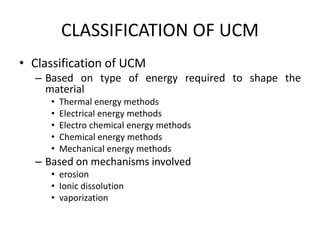
CLASSIFICATION OF UCM
• Classification of UCM
– Based on type of energy required to shape the
material
• Thermal energy methods
• Electrical energy methods
• Electro chemical energy methods
• Chemical energy methods
• Mechanical energy methods
– Based on mechanisms involved
• erosion
• Ionic dissolution
• vaporization
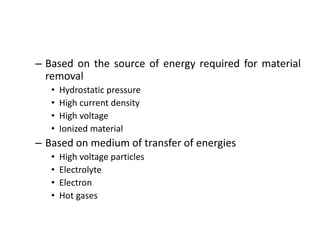
– Based on the source of energy required for material
removal
• Hydrostatic pressure
• High current density
• High voltage
• Ionized material
– Based on medium of transfer of energies
• High voltage particles
• Electrolyte
• Electron
• Hot gases
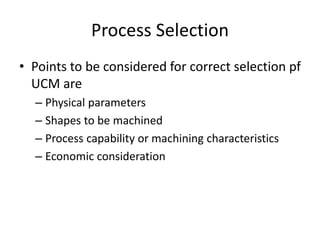
Process Selection
• Points to be considered for correct selection pf
UCM are
– Physical parameters
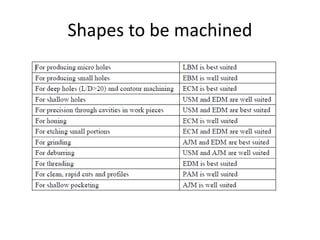
– Shapes to be machined
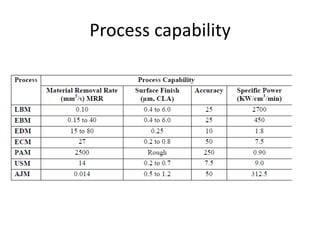
– Process capability or machining characteristics
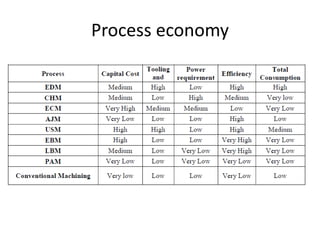
– Economic consideration
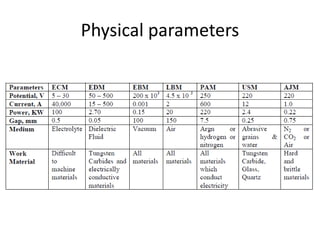
Physical parameters
Shapes to be machined
Process capability
Process economy
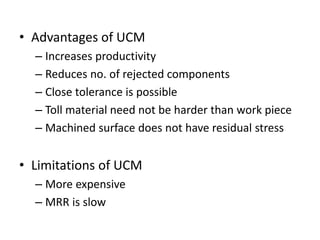
• Advantages of UCM
– Increases productivity
– Reduces no. of rejected components
– Close tolerance is possible
– Toll material need not be harder than work piece
– Machined surface does not have residual stress
• Limitations of UCM
– More expensive
– MRR is slow

Unit 1 introdction

  • 1.
  • 2.
    INTRODUCTION • Conventional machiningprocess – Metal is removed by means of tool which is harder than work piece and they both are in contact with each other • Demerits of conventional machining process – Disposal and recycling of the chips are difficult and tedious process – Large cutting forces are involved in this process
  • 3.
    NEED FOR UCM •Unconventional manufacturing process – Unconventional machining process – Unconventional forming process • Need for unconventional machining process – Harder and difficult to machine materials, can be machined easily and precisely
  • 4.
    CLASSIFICATION OF UCM •Classification of UCM – Based on type of energy required to shape the material • Thermal energy methods • Electrical energy methods • Electro chemical energy methods • Chemical energy methods • Mechanical energy methods – Based on mechanisms involved • erosion • Ionic dissolution • vaporization
  • 5.
    – Based onthe source of energy required for material removal • Hydrostatic pressure • High current density • High voltage • Ionized material – Based on medium of transfer of energies • High voltage particles • Electrolyte • Electron • Hot gases
  • 6.
    Process Selection • Pointsto be considered for correct selection pf UCM are – Physical parameters – Shapes to be machined – Process capability or machining characteristics – Economic consideration
  • 7.
  • 8.
    Shapes to bemachined
  • 9.
  • 10.
  • 11.
    • Advantages ofUCM – Increases productivity – Reduces no. of rejected components – Close tolerance is possible – Toll material need not be harder than work piece – Machined surface does not have residual stress • Limitations of UCM – More expensive – MRR is slow