Americanisms
What they are, why they
emerged and what we think
about them
What are Americanisms?
 English words or phrases-or a feature of
grammar, spelling, or pronunciation-that
originated in the United States and/or are
used primarily by Americans.
Why did they emerge? - 1
 Noah Webster’s ‘Dissertations on the English
Language’ (1789)
 Stated that an “American standard” needed to
be established
 Spelling reform – but not too radical (“No
great change should be made at once”)
Why did they emerge? - 2
 Webster’s ‘A Compendious Dictionary of the
English Language’ (1806) contained 28,000
words
 Attack on Johnson’s dictionary, e.g. on its
difficult words, vulgarisms etc.
 Some were suspicious of recommended
spellings and pronunciations, e.g. why does
actor have no “u”, but flavour does?
Why did they emerge? - 3
 Throughout America in the 19th century,
thousands of new words were being coined
 But the new words weren’t reaching a wide
public
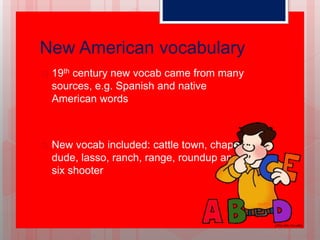
New American vocabulary
 19th century new vocab came from many
sources, e.g. Spanish and native
American words
 New vocab included: cattle town, chaps,
dude, lasso, ranch, range, roundup and
six shooter
Webster’s Blue-Backed Speller
 First published in 783 but had revisions, e.g.
in 1804 and 1806.
 1804 version contained proposals, e.g.
 Deleting ‘u’ from words ending in ‘-our’ e.g.
favor
 Deleting ‘k’ from words ending in ‘ick’ e.g.
music
 Replacing –re with –er, e.g. theater
 Replacing –ce with –se, e.g. defense
 Dropping the final ‘e’, e.g. examin, definit
 Dropping silent letters, e.g. fether
Examples today - 1
 24/7 instead of 24 hours, 7 days a week
 “We’re going to deplane soon” (i.e. getting off
an aircraft)
 “It is what it is.”
 “Transportation” – why not just transport?
 Birthdays – “turning” 21, 40 etc.
 “gotten”
 “take-out” – why not take-away?
Examples today - 2
 “my bad” after you make a mistake
 “Math” – instead of Maths
 “regular” instead of “medium”
 “Period” instead of full stop
 “Season” for a TV series
 “Issue” instead of “problem”
 “Turn that off already”
Examples today - 3
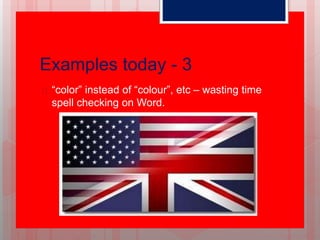
 “color” instead of “colour”, etc – wasting time
spell checking on Word.
• Are Americanisms taking over the
British language?
• Who decides what is “good” or
“correct” English when the way it
is spoken differs from country to
country?
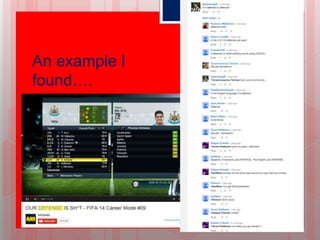
An example I
found….
Video

Americanisms

  • 1.
    Americanisms What they are,why they emerged and what we think about them
  • 2.
    What are Americanisms? English words or phrases-or a feature of grammar, spelling, or pronunciation-that originated in the United States and/or are used primarily by Americans.
  • 3.
    Why did theyemerge? - 1  Noah Webster’s ‘Dissertations on the English Language’ (1789)  Stated that an “American standard” needed to be established  Spelling reform – but not too radical (“No great change should be made at once”)
  • 4.
    Why did theyemerge? - 2  Webster’s ‘A Compendious Dictionary of the English Language’ (1806) contained 28,000 words  Attack on Johnson’s dictionary, e.g. on its difficult words, vulgarisms etc.  Some were suspicious of recommended spellings and pronunciations, e.g. why does actor have no “u”, but flavour does?
  • 5.
    Why did theyemerge? - 3  Throughout America in the 19th century, thousands of new words were being coined  But the new words weren’t reaching a wide public
  • 6.
    New American vocabulary 19th century new vocab came from many sources, e.g. Spanish and native American words  New vocab included: cattle town, chaps, dude, lasso, ranch, range, roundup and six shooter
  • 7.
    Webster’s Blue-Backed Speller First published in 783 but had revisions, e.g. in 1804 and 1806.  1804 version contained proposals, e.g.  Deleting ‘u’ from words ending in ‘-our’ e.g. favor  Deleting ‘k’ from words ending in ‘ick’ e.g. music  Replacing –re with –er, e.g. theater  Replacing –ce with –se, e.g. defense  Dropping the final ‘e’, e.g. examin, definit  Dropping silent letters, e.g. fether
  • 8.
    Examples today -1  24/7 instead of 24 hours, 7 days a week  “We’re going to deplane soon” (i.e. getting off an aircraft)  “It is what it is.”  “Transportation” – why not just transport?  Birthdays – “turning” 21, 40 etc.  “gotten”  “take-out” – why not take-away?
  • 9.
    Examples today -2  “my bad” after you make a mistake  “Math” – instead of Maths  “regular” instead of “medium”  “Period” instead of full stop  “Season” for a TV series  “Issue” instead of “problem”  “Turn that off already”
  • 10.
    Examples today -3  “color” instead of “colour”, etc – wasting time spell checking on Word.
  • 11.
    • Are Americanismstaking over the British language? • Who decides what is “good” or “correct” English when the way it is spoken differs from country to country?
  • 12.
  • 13.

Editor's Notes

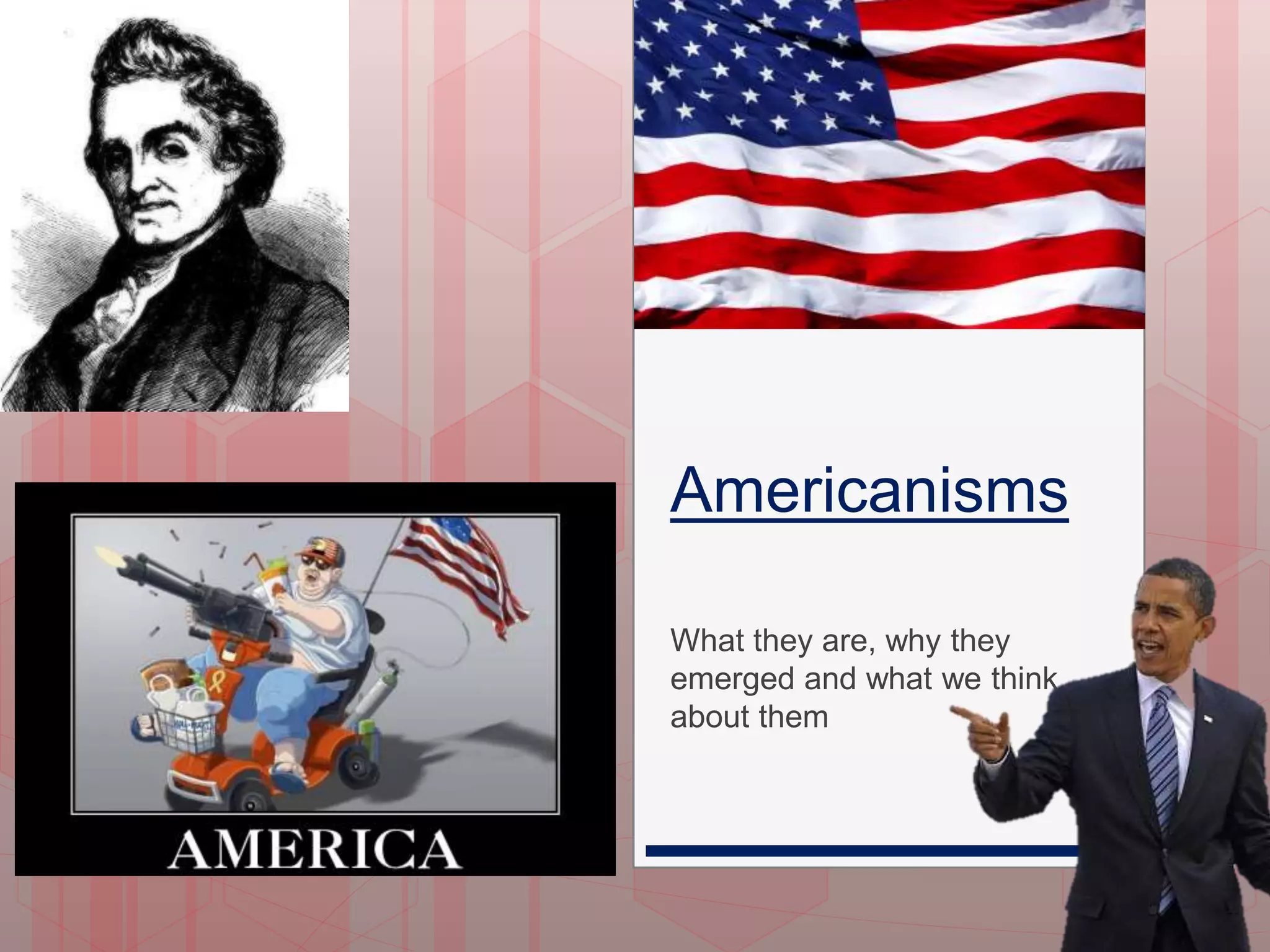
  • #3 Term first coined by John Witherspoon (1723-1794)
  • #4 “a system of our own”. Spelling reform would be a step in the right direction
  • #5 Dictionary received a mixed reception Many offended by his attack
  • #6 Not everyone used the new vocabulary because there weren’t large book sales as printing wasn’t as developed as it was in Britain (Dickens).
  • #7 Many English words came to be used with new senses or in new phrases