Stages in the
evolution / development of the
Natural Landscape
Stage One: “PRE-ANDEAN STAGE” – approx 150 million years ago
(late Jurassic)
Western Gondwanaland
– continental shield
“South America” “Africa”
Nazca Plate (Oceanic Plate) American Plate (Continental Plate)
Pacific Ocean
Water flows west into the
Pacific Ocean, depositing
sedimentary material.
Before the breakup of Western Gondwanaland
(South America / Africa); and before the Andes Mts
were formed by subduction, folding and volcanism.
There was no Amazon Basin at this stage.
• “South America” and “Africa” were joined
together as part of the Gondwanaland “super-
continent”. There was no “Atlantic Ocean”.
How do we know this?
• Matching rocks and fossils in Eastern South
America and Western Africa;
• Matching coastline shapes;
• Magnetic “stripes” on Atlantic sea-floor rocks on
either side of the Mid-Atlantic Ridge
Water ran off the continent to the west,
depositing sediments into the Pacific Ocean
Stage One
Sea-floor spreading from a Mid-Ocean Ridge
(eg the Mid-Atlantic Ridge)
Tectonic plates and their direction of movement
These fossils can now be seen in new locations
Bands of fossils in their original locations
“Glossopteris”
New crust is constantly being created,
pushing the older rocks and land masses
further away. The ocean becomes wider.
Nazca Plate American Plate
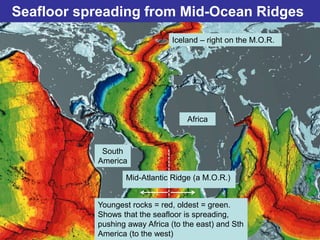
Seafloor spreading from Mid-Ocean Ridges
South
America
Africa
Iceland – right on the M.O.R.
Mid-Atlantic Ridge (a M.O.R.)
Youngest rocks = red, oldest = green.
Shows that the seafloor is spreading,
pushing away Africa (to the east) and Sth
America (to the west)
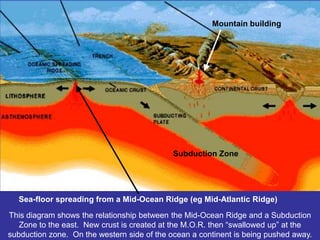
Subduction Zone
Sea-floor spreading from a Mid-Ocean Ridge (eg Mid-Atlantic Ridge)
Mountain building
This diagram shows the relationship between the Mid-Ocean Ridge and a Subduction
Zone to the east. New crust is created at the M.O.R. then “swallowed up” at the
subduction zone. On the western side of the ocean a continent is being pushed away.
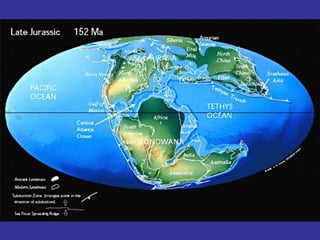
This reconstruction shows the breakup of the Gondwana and Laurasia
super-continents, as the continents move to their present positions
Gondwana
Laurasia
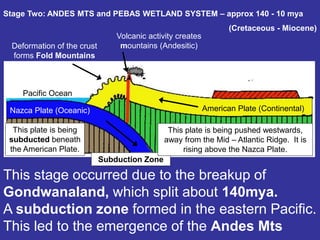
Stage Two: ANDES MTS and PEBAS WETLAND SYSTEM – approx 140 - 10 mya
(Cretaceous - Miocene)
Nazca Plate (Oceanic) American Plate (Continental)
Pacific Ocean
This stage occurred due to the breakup of
Gondwanaland, which split about 140mya.
A subduction zone formed in the eastern Pacific.
This led to the emergence of the Andes Mts
This plate is being
subducted beneath
the American Plate.
Subduction Zone
Deformation of the crust
forms Fold Mountains
Volcanic activity creates
mountains (Andesitic)
This plate is being pushed westwards,
away from the Mid – Atlantic Ridge. It is
rising above the Nazca Plate.
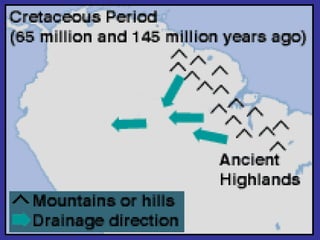
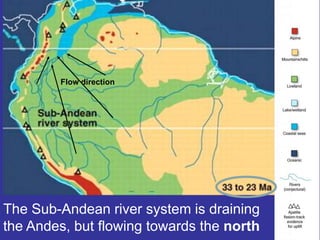
The Sub-Andean river system is draining
the Andes, but flowing towards the north
Flow direction
• 140 mya: The Atlantic Ocean began to open
due to the process of sea-floor spreading.
This caused the Gondwanaland super –
continent to break up. South America was
pushed away from Africa towards the Pacific.
• 80 mya: Nazca Plate (eastern Pacific) began
to be subducted beneath American Plate.
• 45 mya: Andes Mt range emerged – folding,
faulting and volcanism (andesite rock)
• Sub-Andean rivers flowed towards the north
Stage Two (a)
Stage Two: ANDES MTS and PEBAS WETLAND SYSTEM – approx 140 to 10 mya
(continued) (Cretaceous - Miocene)
Nazca Plate (Oceanic) American Plate (Continental)
Pacific Ocean
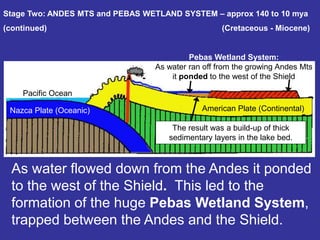
As water flowed down from the Andes it ponded
to the west of the Shield. This led to the
formation of the huge Pebas Wetland System,
trapped between the Andes and the Shield.
Pebas Wetland System:
As water ran off from the growing Andes Mts
it ponded to the west of the Shield
The result was a build-up of thick
sedimentary layers in the lake bed.
The Sub-Andean river system is draining
the Andes, but flowing towards the north
“Proto-Amazon”
river system
Flow
direction
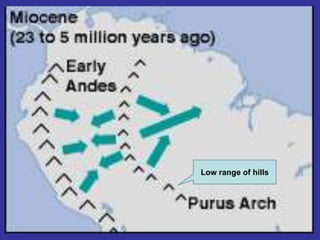
Low range of hills
Stage Two: ANDES MTS and PEBAS WETLAND SYSTEM – approx 14 mya
(continued) ( Miocene)
Pacific Ocean
The Andes continue to grow
through folding and volcanism.
Vast amounts of sediment were deposited in
the Pebas lake bed.
The Subduction Zone continues to operate
American Plate (Continental)
Rapid erosion of the Andes supplies
huge amounts of sediment.About 6000m
Growth of mountains to the north caused the
lake water to rise and spread out in the east.
• 23 to 10 mya: water draining from the Andes
and eastern plateaux collects in the huge
Pebas System wetlands (salty)
• 14mya: Andes reached their current height,
contributing huge amounts of sediment
• Growth of mountains to the north caused the
water to deepen into a huge freshwater lake
with thick sedimentary lake-bed deposits
• A smaller “proto-Amazon” drains the eastern
side of the continent to the Atlantic Ocean
Stage Two (b)
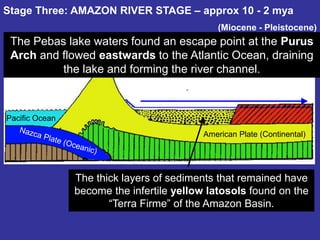
Stage Three: AMAZON RIVER STAGE – approx 10 - 2 mya
(Miocene - Pleistocene)
Pacific Ocean
American Plate (Continental)
The Pebas lake waters found an escape point at the Purus
Arch and flowed eastwards to the Atlantic Ocean, draining
the lake and forming the river channel.
The thick layers of sediments that remained have
become the infertile yellow latosols found on the
“Terra Firme” of the Amazon Basin.
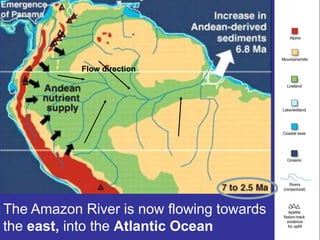
The Amazon River is now flowing towards
the east, into the Atlantic Ocean
Flow direction
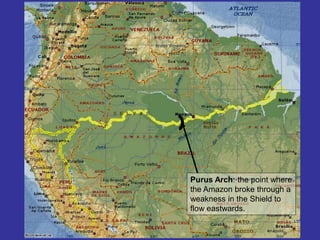
Purus Arch: the point where
the Amazon broke through a
weakness in the Shield to
flow eastwards.
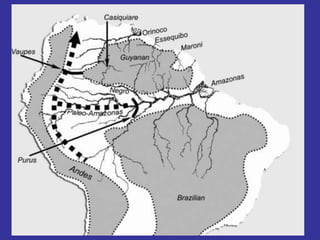
• 10 mya: The Pebas Lake overflowed at the
Purus Arch – a low range of hills.
• This is to the west of modern-day Manaus
• The Amazon river system transports vast
amounts of sediment to the Atlantic
• This has caused the development of the
Amazon Delta
• 5 mya: Pliocene ice ages – lowered sea
levels caused the rivers to become incised.
Stage Three

Amazon basin geological development

  • 1.
    Stages in the evolution/ development of the Natural Landscape
  • 2.
    Stage One: “PRE-ANDEANSTAGE” – approx 150 million years ago (late Jurassic) Western Gondwanaland – continental shield “South America” “Africa” Nazca Plate (Oceanic Plate) American Plate (Continental Plate) Pacific Ocean Water flows west into the Pacific Ocean, depositing sedimentary material. Before the breakup of Western Gondwanaland (South America / Africa); and before the Andes Mts were formed by subduction, folding and volcanism. There was no Amazon Basin at this stage.
  • 5.
    • “South America”and “Africa” were joined together as part of the Gondwanaland “super- continent”. There was no “Atlantic Ocean”. How do we know this? • Matching rocks and fossils in Eastern South America and Western Africa; • Matching coastline shapes; • Magnetic “stripes” on Atlantic sea-floor rocks on either side of the Mid-Atlantic Ridge Water ran off the continent to the west, depositing sediments into the Pacific Ocean Stage One
  • 6.
    Sea-floor spreading froma Mid-Ocean Ridge (eg the Mid-Atlantic Ridge) Tectonic plates and their direction of movement These fossils can now be seen in new locations Bands of fossils in their original locations “Glossopteris” New crust is constantly being created, pushing the older rocks and land masses further away. The ocean becomes wider. Nazca Plate American Plate
  • 7.
    Seafloor spreading fromMid-Ocean Ridges South America Africa Iceland – right on the M.O.R. Mid-Atlantic Ridge (a M.O.R.) Youngest rocks = red, oldest = green. Shows that the seafloor is spreading, pushing away Africa (to the east) and Sth America (to the west)
  • 8.
    Subduction Zone Sea-floor spreadingfrom a Mid-Ocean Ridge (eg Mid-Atlantic Ridge) Mountain building This diagram shows the relationship between the Mid-Ocean Ridge and a Subduction Zone to the east. New crust is created at the M.O.R. then “swallowed up” at the subduction zone. On the western side of the ocean a continent is being pushed away.
  • 9.
    This reconstruction showsthe breakup of the Gondwana and Laurasia super-continents, as the continents move to their present positions Gondwana Laurasia
  • 11.
    Stage Two: ANDESMTS and PEBAS WETLAND SYSTEM – approx 140 - 10 mya (Cretaceous - Miocene) Nazca Plate (Oceanic) American Plate (Continental) Pacific Ocean This stage occurred due to the breakup of Gondwanaland, which split about 140mya. A subduction zone formed in the eastern Pacific. This led to the emergence of the Andes Mts This plate is being subducted beneath the American Plate. Subduction Zone Deformation of the crust forms Fold Mountains Volcanic activity creates mountains (Andesitic) This plate is being pushed westwards, away from the Mid – Atlantic Ridge. It is rising above the Nazca Plate.
  • 13.
    The Sub-Andean riversystem is draining the Andes, but flowing towards the north Flow direction
  • 14.
    • 140 mya:The Atlantic Ocean began to open due to the process of sea-floor spreading. This caused the Gondwanaland super – continent to break up. South America was pushed away from Africa towards the Pacific. • 80 mya: Nazca Plate (eastern Pacific) began to be subducted beneath American Plate. • 45 mya: Andes Mt range emerged – folding, faulting and volcanism (andesite rock) • Sub-Andean rivers flowed towards the north Stage Two (a)
  • 15.
    Stage Two: ANDESMTS and PEBAS WETLAND SYSTEM – approx 140 to 10 mya (continued) (Cretaceous - Miocene) Nazca Plate (Oceanic) American Plate (Continental) Pacific Ocean As water flowed down from the Andes it ponded to the west of the Shield. This led to the formation of the huge Pebas Wetland System, trapped between the Andes and the Shield. Pebas Wetland System: As water ran off from the growing Andes Mts it ponded to the west of the Shield The result was a build-up of thick sedimentary layers in the lake bed.
  • 16.
    The Sub-Andean riversystem is draining the Andes, but flowing towards the north “Proto-Amazon” river system Flow direction
  • 17.
  • 18.
    Stage Two: ANDESMTS and PEBAS WETLAND SYSTEM – approx 14 mya (continued) ( Miocene) Pacific Ocean The Andes continue to grow through folding and volcanism. Vast amounts of sediment were deposited in the Pebas lake bed. The Subduction Zone continues to operate American Plate (Continental) Rapid erosion of the Andes supplies huge amounts of sediment.About 6000m Growth of mountains to the north caused the lake water to rise and spread out in the east.
  • 19.
    • 23 to10 mya: water draining from the Andes and eastern plateaux collects in the huge Pebas System wetlands (salty) • 14mya: Andes reached their current height, contributing huge amounts of sediment • Growth of mountains to the north caused the water to deepen into a huge freshwater lake with thick sedimentary lake-bed deposits • A smaller “proto-Amazon” drains the eastern side of the continent to the Atlantic Ocean Stage Two (b)
  • 21.
    Stage Three: AMAZONRIVER STAGE – approx 10 - 2 mya (Miocene - Pleistocene) Pacific Ocean American Plate (Continental) The Pebas lake waters found an escape point at the Purus Arch and flowed eastwards to the Atlantic Ocean, draining the lake and forming the river channel. The thick layers of sediments that remained have become the infertile yellow latosols found on the “Terra Firme” of the Amazon Basin.
  • 22.
    The Amazon Riveris now flowing towards the east, into the Atlantic Ocean Flow direction
  • 24.
    Purus Arch: thepoint where the Amazon broke through a weakness in the Shield to flow eastwards.
  • 26.
    • 10 mya:The Pebas Lake overflowed at the Purus Arch – a low range of hills. • This is to the west of modern-day Manaus • The Amazon river system transports vast amounts of sediment to the Atlantic • This has caused the development of the Amazon Delta • 5 mya: Pliocene ice ages – lowered sea levels caused the rivers to become incised. Stage Three