AMALGAMATION OF COMPANIES
PRESENTED BY –
SHANKAR SINGH
MBA 3RD
SEMESTER
ROLL NO -
02
TREYresearch
AboutUs
2
TREYresearch
 Amalgamation in the nature of merger
 Amalgamation in the nature of purchase
Amalgamation in the nature of merger
•All the assets and liabilities of a transferor company
become the assets of transferee , after amalgamation.
•Shareholders holding not less than 90% of the face value
of the equity shares of the transferor company become
equity shareholders of the transferee company by virtue
of amalgamation .
•The business of the transferor company is intended to
be carried on by transferee company after the
amalgamation .
3
TREYresearch
4
TREYresearch
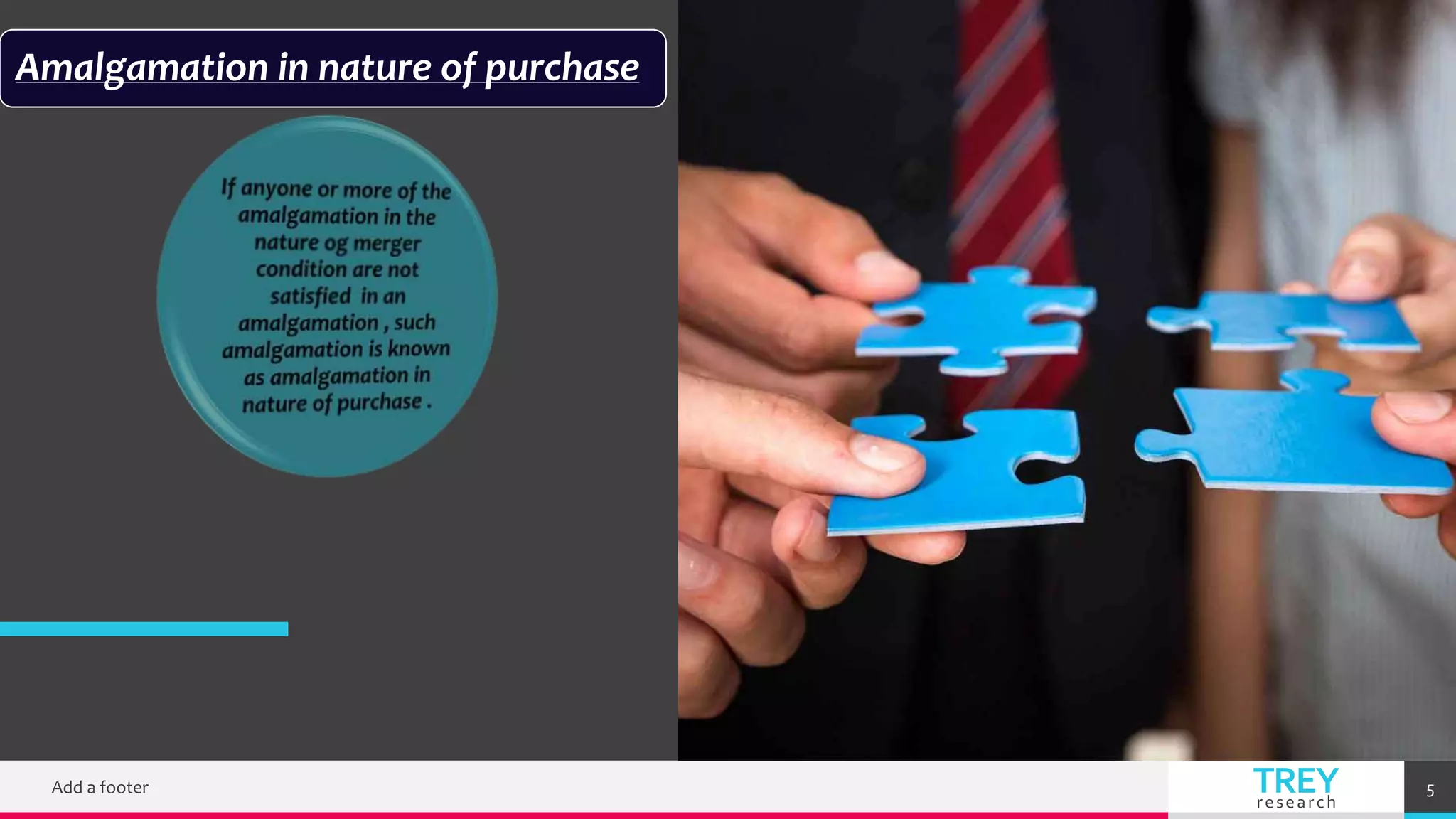
Amalgamation in nature of purchase
Add a footer 5
TREYresearch
Add a footer 6
TREYresearch
ADVANTAGES AND DISADVANTAGES AMALGAMTION
Advantages Disadvantages
7
TREYresearch
PURCHASE CONSIDERATION
8
TREYresearch
Pooling of interest method
 Where all the assets liabilities and interest of
shareholders are pooled .
• Asets liabilities and reserves of transferor company are
recorded by the transferee company at their existing
carrying amount .
• If transferor and transferee company have conflicting
accounting policies , a uniform set of accounting
policies are adopted following the amalgamation .
Purchase method
 acquisition of one company by another for a price .
• The transferee company accounts for amalgamation –
by incoprporating the assets and liabilities at their
existing carrying amount
• - by allocation the consideration to individual
identifying assets and liabilities of transferor company
on the basis of their fair value at the time of
amalgamation .
Add a footer 9
TREYresearch
ThankYou
MBA DEPARTMENT
SUBMITTED TO -
CHANDAN SIR
10

Amalgamation

  • 1.
    AMALGAMATION OF COMPANIES PRESENTEDBY – SHANKAR SINGH MBA 3RD SEMESTER ROLL NO - 02
  • 2.
  • 3.
    TREYresearch  Amalgamation inthe nature of merger  Amalgamation in the nature of purchase Amalgamation in the nature of merger •All the assets and liabilities of a transferor company become the assets of transferee , after amalgamation. •Shareholders holding not less than 90% of the face value of the equity shares of the transferor company become equity shareholders of the transferee company by virtue of amalgamation . •The business of the transferor company is intended to be carried on by transferee company after the amalgamation . 3
  • 4.
  • 5.
    TREYresearch Amalgamation in natureof purchase Add a footer 5
  • 6.
  • 7.
    TREYresearch ADVANTAGES AND DISADVANTAGESAMALGAMTION Advantages Disadvantages 7
  • 8.
  • 9.
    TREYresearch Pooling of interestmethod  Where all the assets liabilities and interest of shareholders are pooled . • Asets liabilities and reserves of transferor company are recorded by the transferee company at their existing carrying amount . • If transferor and transferee company have conflicting accounting policies , a uniform set of accounting policies are adopted following the amalgamation . Purchase method  acquisition of one company by another for a price . • The transferee company accounts for amalgamation – by incoprporating the assets and liabilities at their existing carrying amount • - by allocation the consideration to individual identifying assets and liabilities of transferor company on the basis of their fair value at the time of amalgamation . Add a footer 9
  • 10.