By: Vikram.G.B
Faculty, P.G. Dept. Of Commerce
     Vivekananda Degree College
 "Amalgamation is a union of two or more companies,
  made with an intention to form a new company."
 The term amalgamation means taking over of the
  business of two or more companies by a company
  newly formed for this purpose. The companies, whose
  business are taken over, are wound up.
 In terms of finance, the definition of amalgamation
  can be given as "Amalgamation is an agreement (deal)
  between two or more companies to consolidate
  (strengthen) their business activities by establishing
  a new company having a separate legal existence."
                                                cont…..
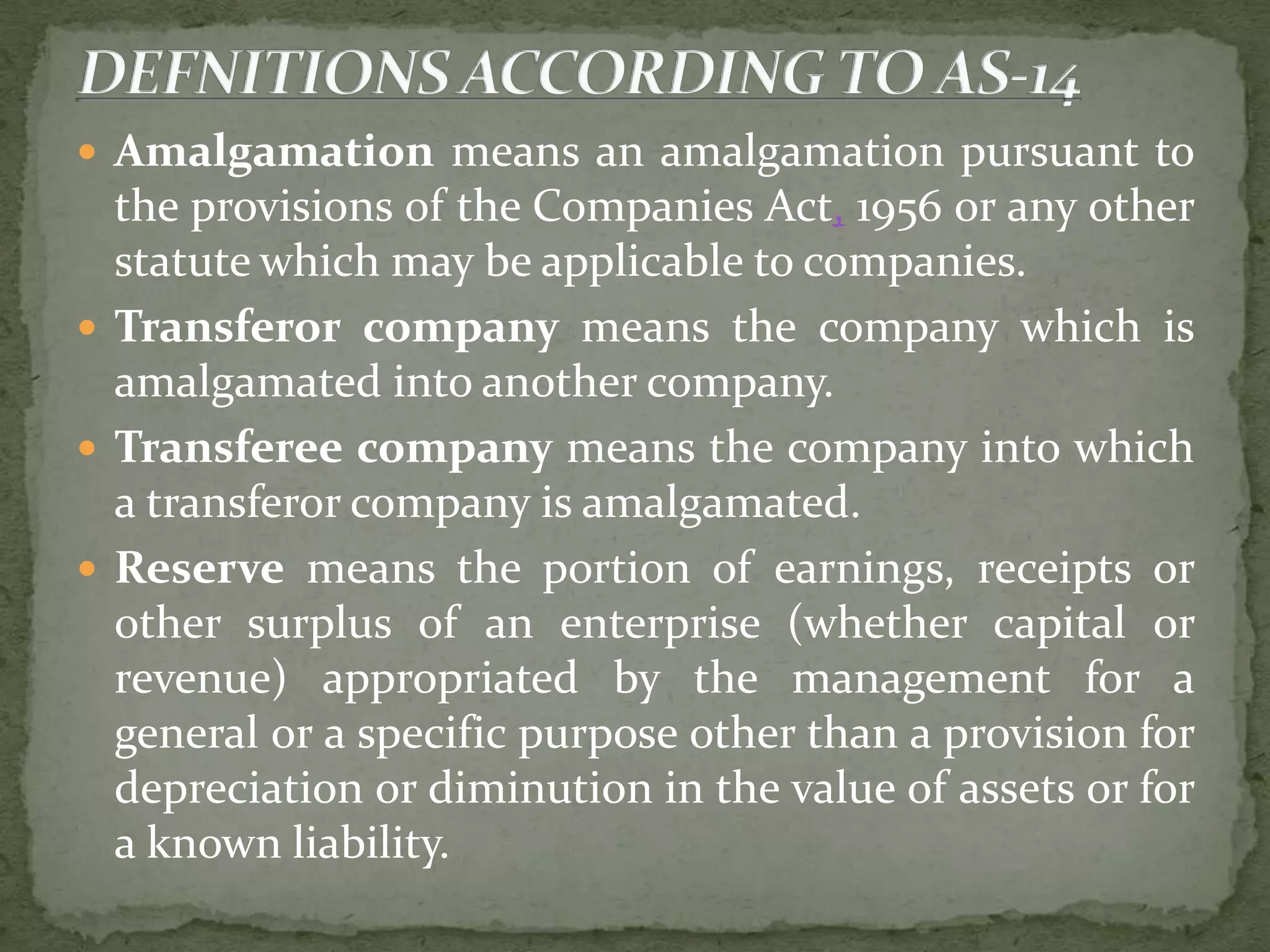
 Amalgamation means an amalgamation pursuant to
  the provisions of the Companies Act, 1956 or any other
  statute which may be applicable to companies.
 Transferor company means the company which is
  amalgamated into another company.
 Transferee company means the company into which
  a transferor company is amalgamated.
 Reserve means the portion of earnings, receipts or
  other surplus of an enterprise (whether capital or
  revenue) appropriated by the management for a
  general or a specific purpose other than a provision for
  depreciation or diminution in the value of assets or for
  a known liability.
 Amalgamation in the nature of merger
 Amalgamation in the nature of purchase is an
  amalgamation which does not satisfy any one or more
  of the conditions specified under The Nature of
  merger.
 Consideration for the amalgamation means the
  aggregate of the shares and other securities issued and
  the payment made in the form of cash or other assets
  by the transferee company to the shareholders of the
  transferor company.
 Fair value is the amount for which an asset could be
  exchanged between a knowledgeable, willing buyer
  and a knowledgeable, willing seller in an arm’s length
  transaction.
1. Amalgamation in Nature of Merger: under this type
   of amalgamations where is a genuine pooling not
   merely of the assets and liabilities of the amalgamating
   companies but also of the shareholders’ interests and of
   the businesses of these companies.

2. Amalgamation in Nature of Purchase: a mode by
   which one company acquires another company and, as
   a consequence, the shareholders of the company which
   is acquired normally do not continue to have a
   proportionate share in the equity of the combined
   company, or the business of the company which is
   acquired is not intended to be continued
 The pooling of interests method: Under the
  pooling of interests method, the assets, liabilities and
  reserves of the transferor company are recorded by the
  transferee company at their existing carrying amounts.
 The purchase method: Under the purchase method,
  the transferee company accounts for the amalgamation
  either by incorporating the assets and liabilities at
  their existing carrying amounts or by allocating the
  consideration to individual identifiable assets and
  liabilities of the transferor company on the basis of
  their fair values at the date of amalgamation.
Disclosure according to AS-14
For all amalgamations, the following disclosures should be
made in the first financial statements following the
amalgamation:
(a) names and general nature of business of the amalgamating
companies;
(b) effective date of amalgamation for accounting purposes;
(c) the method of accounting used to reflect the amalgamation;
(d) particulars of the scheme sanctioned under a statute.

For amalgamations accounted for under the pooling of interests
method, the following additional disclosures should be made in
the first financial statements following the amalgamation:
(a) description and number of shares issued, together with the
percentage of each company’s equity shares exchanged to effect
the amalgamation;
(b) the amount of any difference between the consideration and
the value of net identifiable assets acquired, and the treatment
For amalgamations accounted for under the purchase method,
the following additional disclosures should be made in the first
financial statements following the amalgamation:
(a) consideration for the amalgamation and a description of the
consideration paid or contingently payable; and
(b) the amount of any difference between the consideration and
the value of net identifiable assets acquired, and the treatment
thereof Including the period of amortization of any goodwill
arising on amalgamation.

Amalgamation of companies

  • 1.
    By: Vikram.G.B Faculty, P.G.Dept. Of Commerce Vivekananda Degree College
  • 2.
     "Amalgamation isa union of two or more companies, made with an intention to form a new company."  The term amalgamation means taking over of the business of two or more companies by a company newly formed for this purpose. The companies, whose business are taken over, are wound up.  In terms of finance, the definition of amalgamation can be given as "Amalgamation is an agreement (deal) between two or more companies to consolidate (strengthen) their business activities by establishing a new company having a separate legal existence." cont…..
  • 3.
     Amalgamation meansan amalgamation pursuant to the provisions of the Companies Act, 1956 or any other statute which may be applicable to companies.  Transferor company means the company which is amalgamated into another company.  Transferee company means the company into which a transferor company is amalgamated.  Reserve means the portion of earnings, receipts or other surplus of an enterprise (whether capital or revenue) appropriated by the management for a general or a specific purpose other than a provision for depreciation or diminution in the value of assets or for a known liability.
  • 4.
     Amalgamation inthe nature of merger  Amalgamation in the nature of purchase is an amalgamation which does not satisfy any one or more of the conditions specified under The Nature of merger.  Consideration for the amalgamation means the aggregate of the shares and other securities issued and the payment made in the form of cash or other assets by the transferee company to the shareholders of the transferor company.  Fair value is the amount for which an asset could be exchanged between a knowledgeable, willing buyer and a knowledgeable, willing seller in an arm’s length transaction.
  • 5.
    1. Amalgamation inNature of Merger: under this type of amalgamations where is a genuine pooling not merely of the assets and liabilities of the amalgamating companies but also of the shareholders’ interests and of the businesses of these companies. 2. Amalgamation in Nature of Purchase: a mode by which one company acquires another company and, as a consequence, the shareholders of the company which is acquired normally do not continue to have a proportionate share in the equity of the combined company, or the business of the company which is acquired is not intended to be continued
  • 6.
     The poolingof interests method: Under the pooling of interests method, the assets, liabilities and reserves of the transferor company are recorded by the transferee company at their existing carrying amounts.  The purchase method: Under the purchase method, the transferee company accounts for the amalgamation either by incorporating the assets and liabilities at their existing carrying amounts or by allocating the consideration to individual identifiable assets and liabilities of the transferor company on the basis of their fair values at the date of amalgamation.
  • 7.
    Disclosure according toAS-14 For all amalgamations, the following disclosures should be made in the first financial statements following the amalgamation: (a) names and general nature of business of the amalgamating companies; (b) effective date of amalgamation for accounting purposes; (c) the method of accounting used to reflect the amalgamation; (d) particulars of the scheme sanctioned under a statute. For amalgamations accounted for under the pooling of interests method, the following additional disclosures should be made in the first financial statements following the amalgamation: (a) description and number of shares issued, together with the percentage of each company’s equity shares exchanged to effect the amalgamation; (b) the amount of any difference between the consideration and the value of net identifiable assets acquired, and the treatment
  • 8.
    For amalgamations accountedfor under the purchase method, the following additional disclosures should be made in the first financial statements following the amalgamation: (a) consideration for the amalgamation and a description of the consideration paid or contingently payable; and (b) the amount of any difference between the consideration and the value of net identifiable assets acquired, and the treatment thereof Including the period of amortization of any goodwill arising on amalgamation.