Mr. Bijin Philip
Assistant Professor
Department of Management
Kristu Jayanti College
Corporate Accounting
Unit – III
Amalgamation and Absorption
Amalgamation
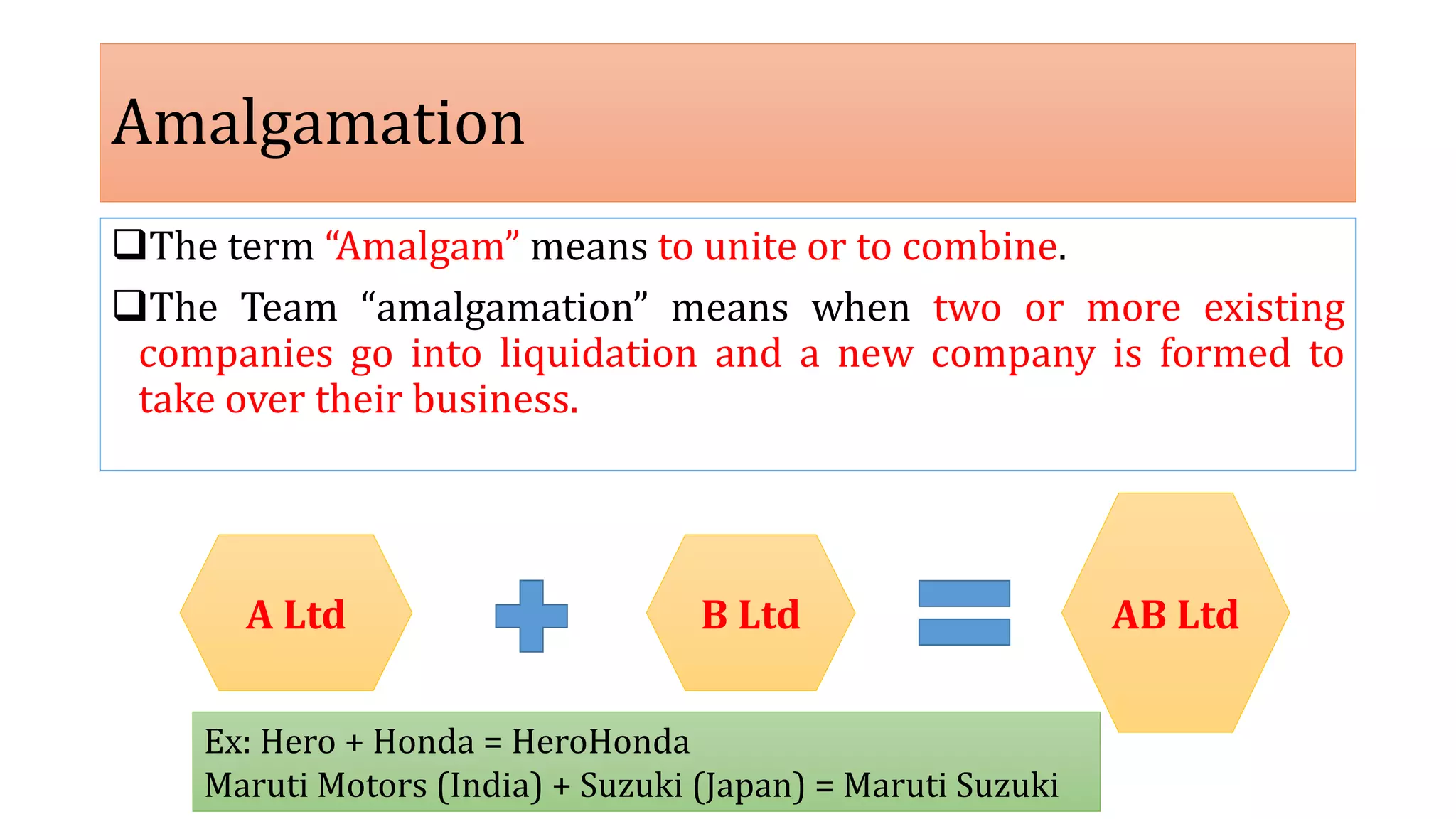
The term “Amalgam” means to unite or to combine.
The Team “amalgamation” means when two or more existing
companies go into liquidation and a new company is formed to
take over their business.
A Ltd B Ltd AB Ltd
Ex: Hero + Honda = HeroHonda
Maruti Motors (India) + Suzuki (Japan) = Maruti Suzuki
Absorption
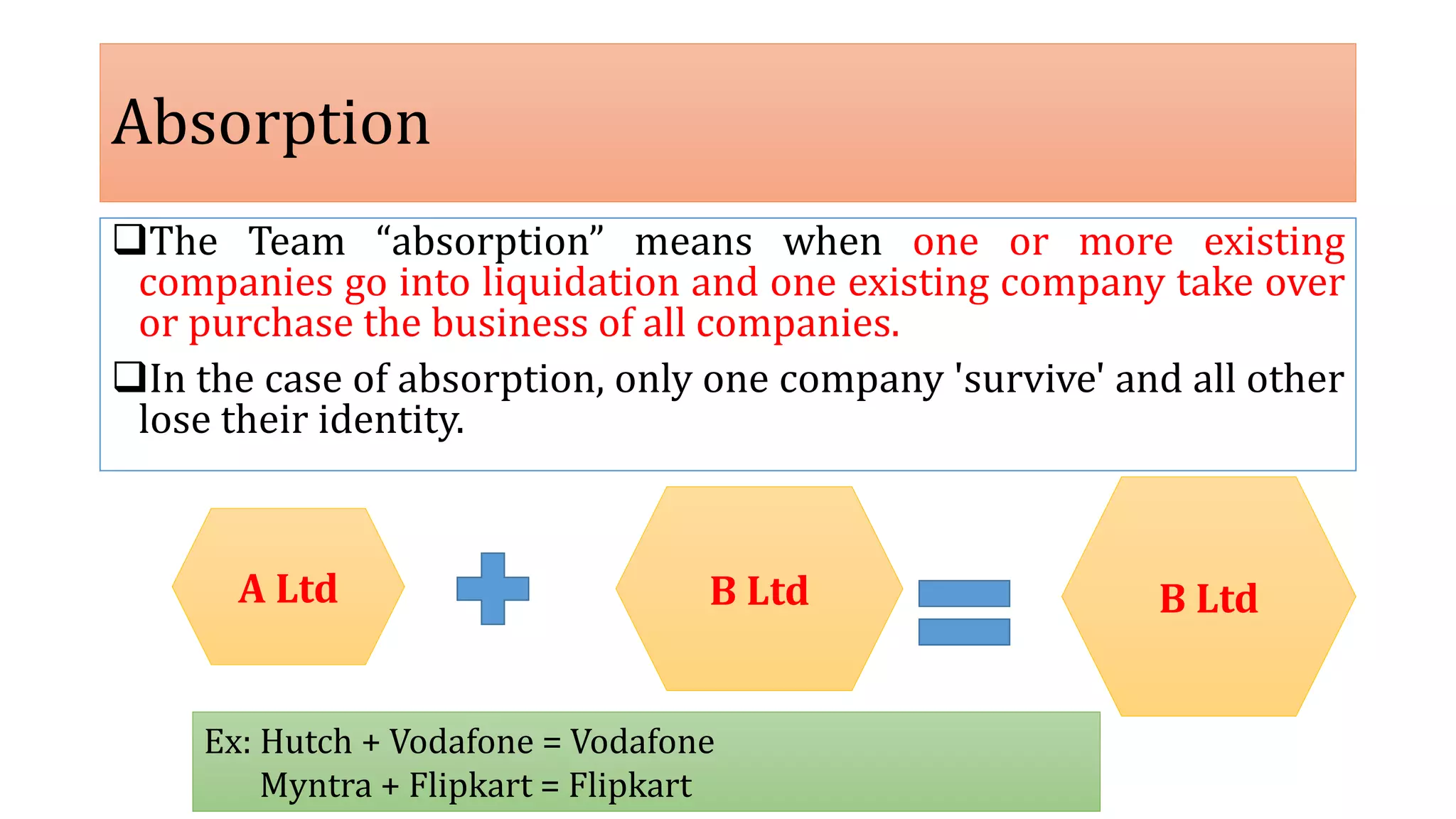
The Team “absorption” means when one or more existing
companies go into liquidation and one existing company take over
or purchase the business of all companies.
In the case of absorption, only one company 'survive' and all other
lose their identity.
A Ltd B Ltd B Ltd
Ex: Hutch + Vodafone = Vodafone
Myntra + Flipkart = Flipkart
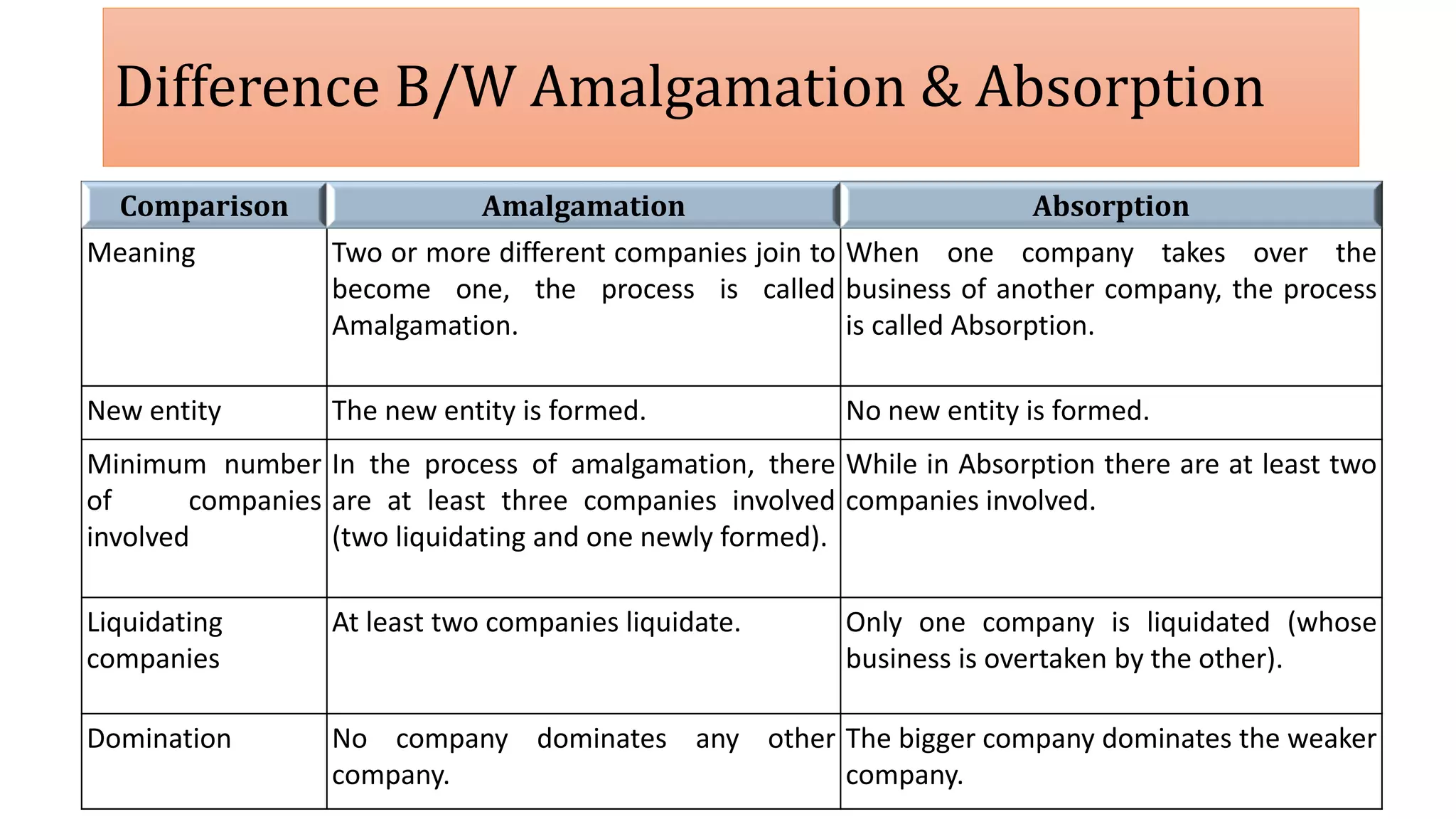
Difference B/W Amalgamation & Absorption
Comparison Amalgamation Absorption
Meaning Two or more different companies join to
become one, the process is called
Amalgamation.
When one company takes over the
business of another company, the process
is called Absorption.
New entity The new entity is formed. No new entity is formed.
Minimum number
of companies
involved
In the process of amalgamation, there
are at least three companies involved
(two liquidating and one newly formed).
While in Absorption there are at least two
companies involved.
Liquidating
companies
At least two companies liquidate. Only one company is liquidated (whose
business is overtaken by the other).
Domination No company dominates any other
company.
The bigger company dominates the weaker
company.
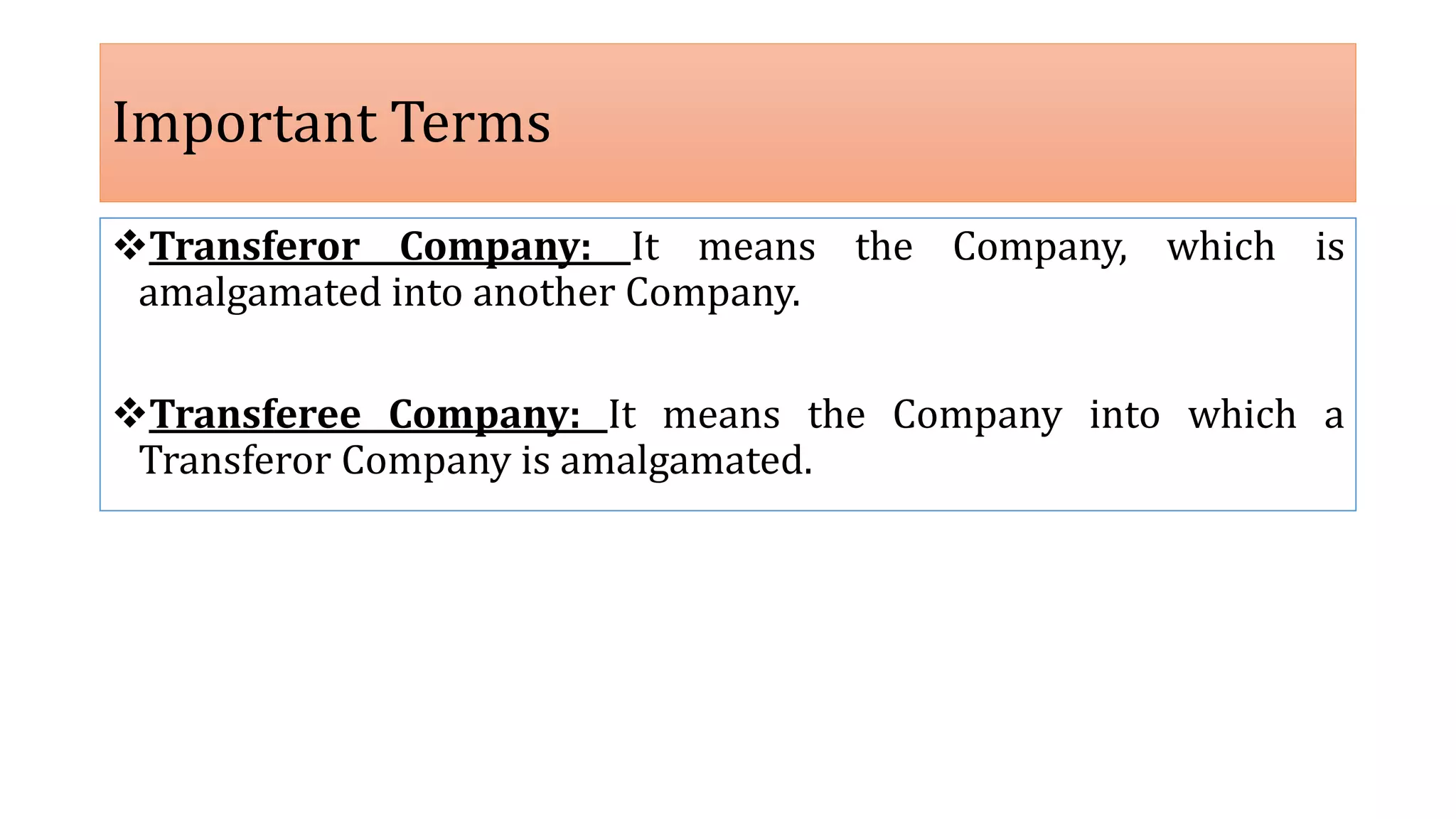
Transferor Company: It means the Company, which is
amalgamated into another Company.
Transferee Company: It means the Company into which a
Transferor Company is amalgamated.
Important Terms
Amalgamation in the nature of merger
• All the assets and liabilities of the transferor company becomes the assets and
liabilities of the transferee company
• shareholders holding not less than 90% of the face value of the equity shares of the
transferor company become the equity shareholders of the transferee company
• The business of the transferor company is intended to be carried on after the
amalgamation by the transferee company.
• Purchase consideration should be discharged only by issue of equity shares in the
transferee company except that cash may be paid in respect of any fractional
shares.
• No adjustments are required to be made in the book values of the assets and
liabilities of the transferor company
Amalgamation in the nature of purchase
• An amalgamation will be treated as “Amalgamation in the nature of purchase” if
any of the above mentioned conditions is not satisfied
Types of Amalgamation
Purchase consideration is the agreed amount which transferee
company (Purchasing company) pays to the transferor company
(Vendor company) in exchange of the ownership of the
transferor company.
It may be in form of cash, shares or any other assets as agreed
between both the companies.
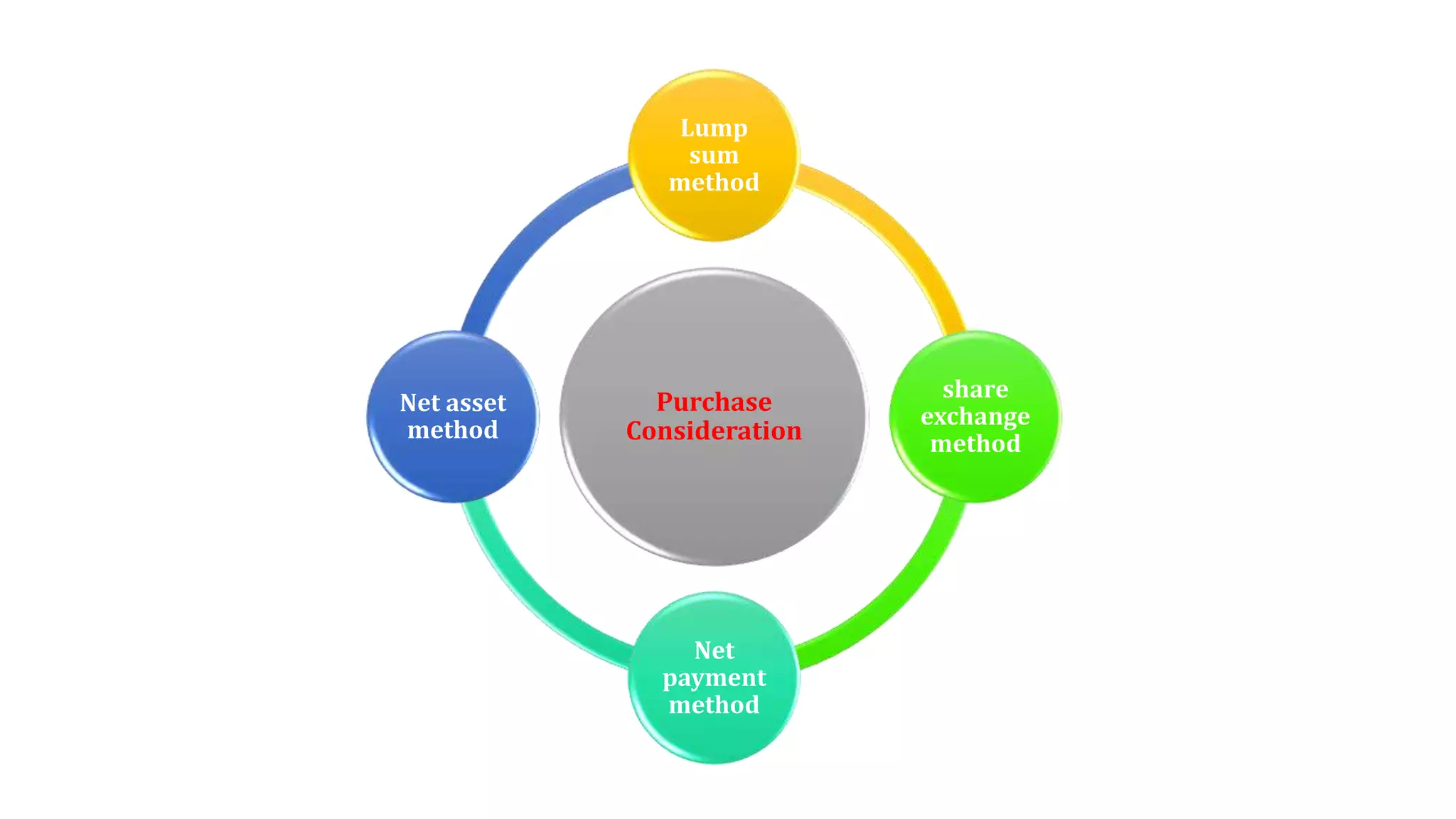
Purchase Consideration
Purchase
Consideration
Lump
sum
method
share
exchange
method
Net
payment
method
Net asset
method
In this method when Transferee Company agrees to pay
Transferor Company a fixed sum of money.
Ex: xyz limited agrees to pay abc ltd 25 lakh. This is lump sum
method.
1. Lump sum method
In this method purchase consideration is calculated by adding all the
payments made by the transferee company to the shareholders of the
transferor company. Payment can be in the form of cash, shares or
debentures.
Note:
Value of assets and liabilities taken over by the transferee company are
not to be consider
Liquidation expenses paid by the transferee company should not consider
Amount paid to third party by the transferee company should not consider
2. Net Payment Method
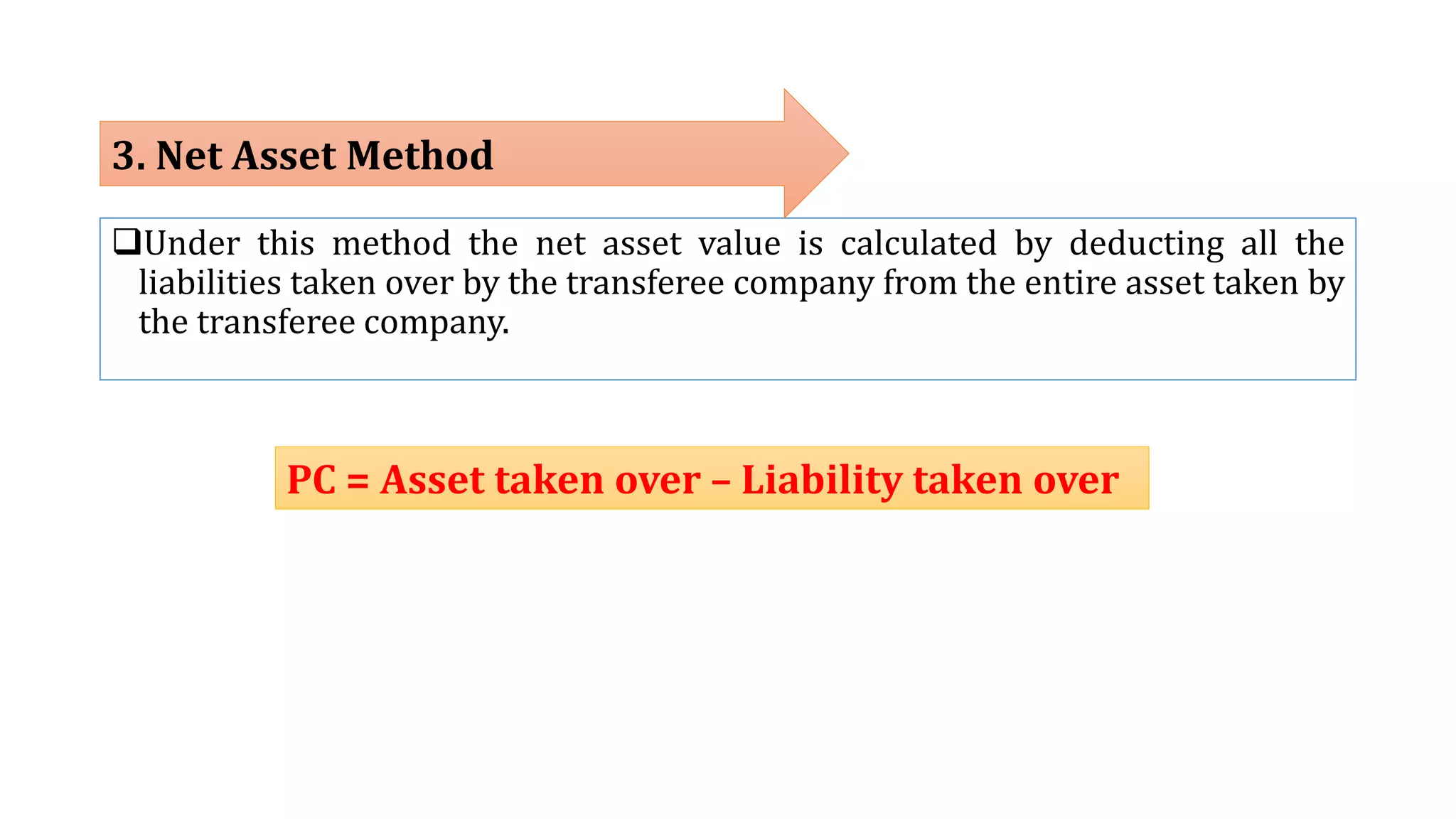
Under this method the net asset value is calculated by deducting all the
liabilities taken over by the transferee company from the entire asset taken by
the transferee company.
3. Net Asset Method
PC = Asset taken over – Liability taken over
In this method to calculate purchase consideration following
formula is used:
PC = Net asset available to the equity shareholders/
number of equity shares.
4. Intrinsic value or share exchange method

Amalgamation, absorption and purchase consideration

  • 1.
    Mr. Bijin Philip AssistantProfessor Department of Management Kristu Jayanti College Corporate Accounting Unit – III Amalgamation and Absorption
  • 2.
    Amalgamation The term “Amalgam”means to unite or to combine. The Team “amalgamation” means when two or more existing companies go into liquidation and a new company is formed to take over their business. A Ltd B Ltd AB Ltd Ex: Hero + Honda = HeroHonda Maruti Motors (India) + Suzuki (Japan) = Maruti Suzuki
  • 3.
    Absorption The Team “absorption”means when one or more existing companies go into liquidation and one existing company take over or purchase the business of all companies. In the case of absorption, only one company 'survive' and all other lose their identity. A Ltd B Ltd B Ltd Ex: Hutch + Vodafone = Vodafone Myntra + Flipkart = Flipkart
  • 4.
    Difference B/W Amalgamation& Absorption Comparison Amalgamation Absorption Meaning Two or more different companies join to become one, the process is called Amalgamation. When one company takes over the business of another company, the process is called Absorption. New entity The new entity is formed. No new entity is formed. Minimum number of companies involved In the process of amalgamation, there are at least three companies involved (two liquidating and one newly formed). While in Absorption there are at least two companies involved. Liquidating companies At least two companies liquidate. Only one company is liquidated (whose business is overtaken by the other). Domination No company dominates any other company. The bigger company dominates the weaker company.
  • 5.
    Transferor Company: Itmeans the Company, which is amalgamated into another Company. Transferee Company: It means the Company into which a Transferor Company is amalgamated. Important Terms
  • 6.
    Amalgamation in thenature of merger • All the assets and liabilities of the transferor company becomes the assets and liabilities of the transferee company • shareholders holding not less than 90% of the face value of the equity shares of the transferor company become the equity shareholders of the transferee company • The business of the transferor company is intended to be carried on after the amalgamation by the transferee company. • Purchase consideration should be discharged only by issue of equity shares in the transferee company except that cash may be paid in respect of any fractional shares. • No adjustments are required to be made in the book values of the assets and liabilities of the transferor company Amalgamation in the nature of purchase • An amalgamation will be treated as “Amalgamation in the nature of purchase” if any of the above mentioned conditions is not satisfied Types of Amalgamation
  • 7.
    Purchase consideration isthe agreed amount which transferee company (Purchasing company) pays to the transferor company (Vendor company) in exchange of the ownership of the transferor company. It may be in form of cash, shares or any other assets as agreed between both the companies. Purchase Consideration
  • 8.
  • 9.
    In this methodwhen Transferee Company agrees to pay Transferor Company a fixed sum of money. Ex: xyz limited agrees to pay abc ltd 25 lakh. This is lump sum method. 1. Lump sum method
  • 10.
    In this methodpurchase consideration is calculated by adding all the payments made by the transferee company to the shareholders of the transferor company. Payment can be in the form of cash, shares or debentures. Note: Value of assets and liabilities taken over by the transferee company are not to be consider Liquidation expenses paid by the transferee company should not consider Amount paid to third party by the transferee company should not consider 2. Net Payment Method
  • 11.
    Under this methodthe net asset value is calculated by deducting all the liabilities taken over by the transferee company from the entire asset taken by the transferee company. 3. Net Asset Method PC = Asset taken over – Liability taken over
  • 12.
    In this methodto calculate purchase consideration following formula is used: PC = Net asset available to the equity shareholders/ number of equity shares. 4. Intrinsic value or share exchange method