Presentation by:-
Sushmita Bajagain
Anxiety
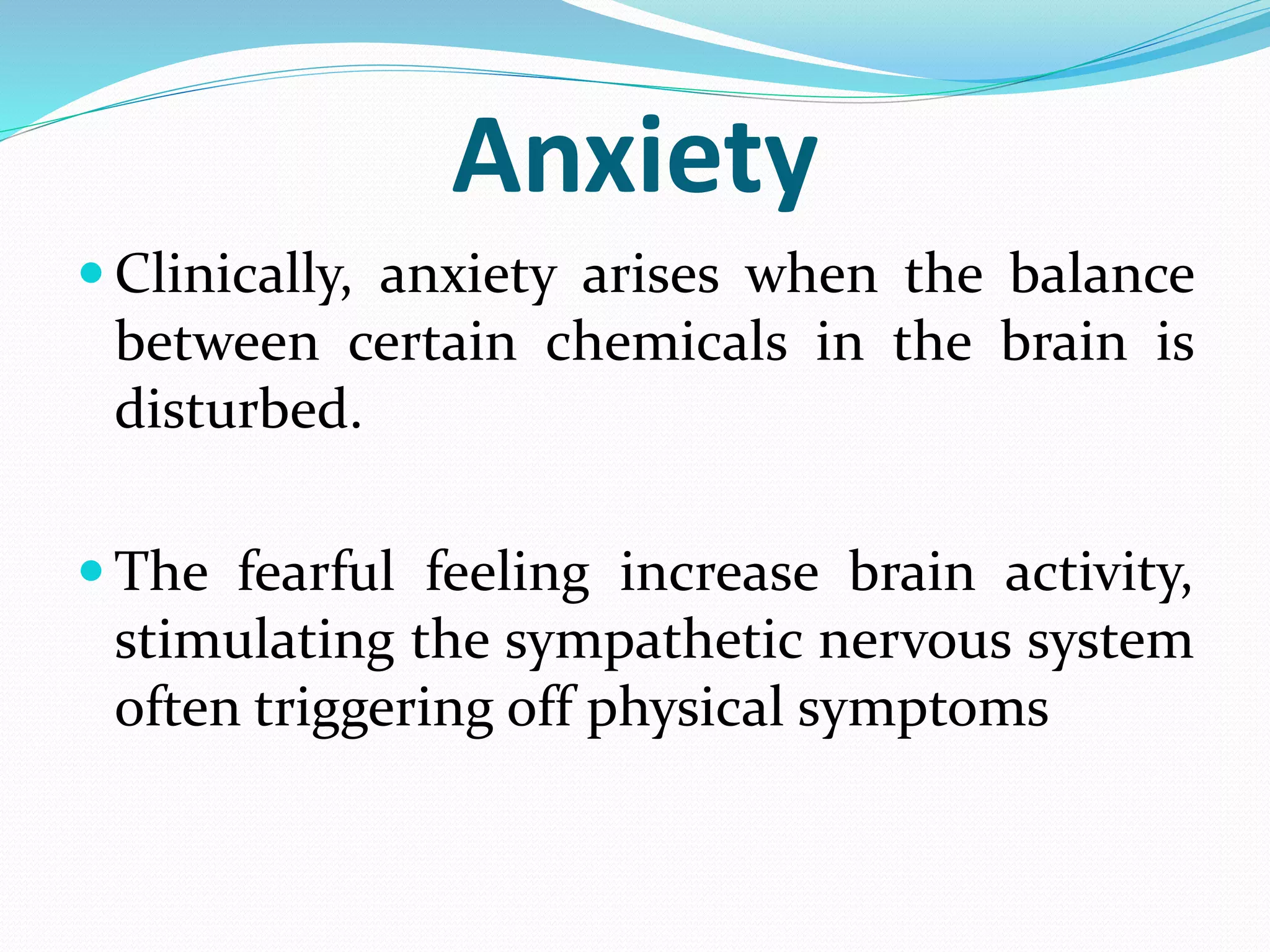
 Clinically, anxiety arises when the balance
between certain chemicals in the brain is
disturbed.
 The fearful feeling increase brain activity,
stimulating the sympathetic nervous system
often triggering off physical symptoms
Anti- anxiety drugs
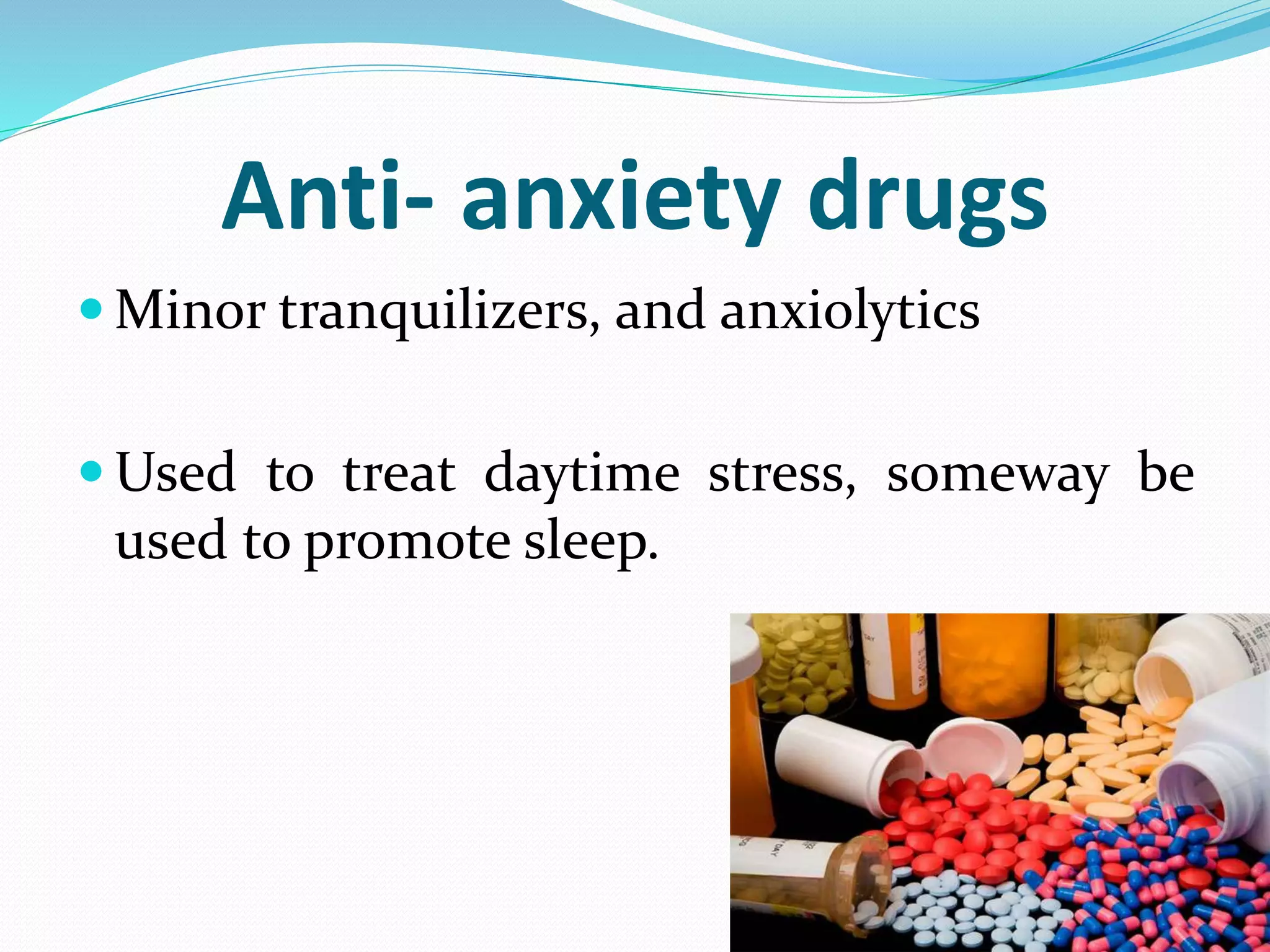
 Minor tranquilizers, and anxiolytics
 Used to treat daytime stress, someway be
used to promote sleep.
Classification
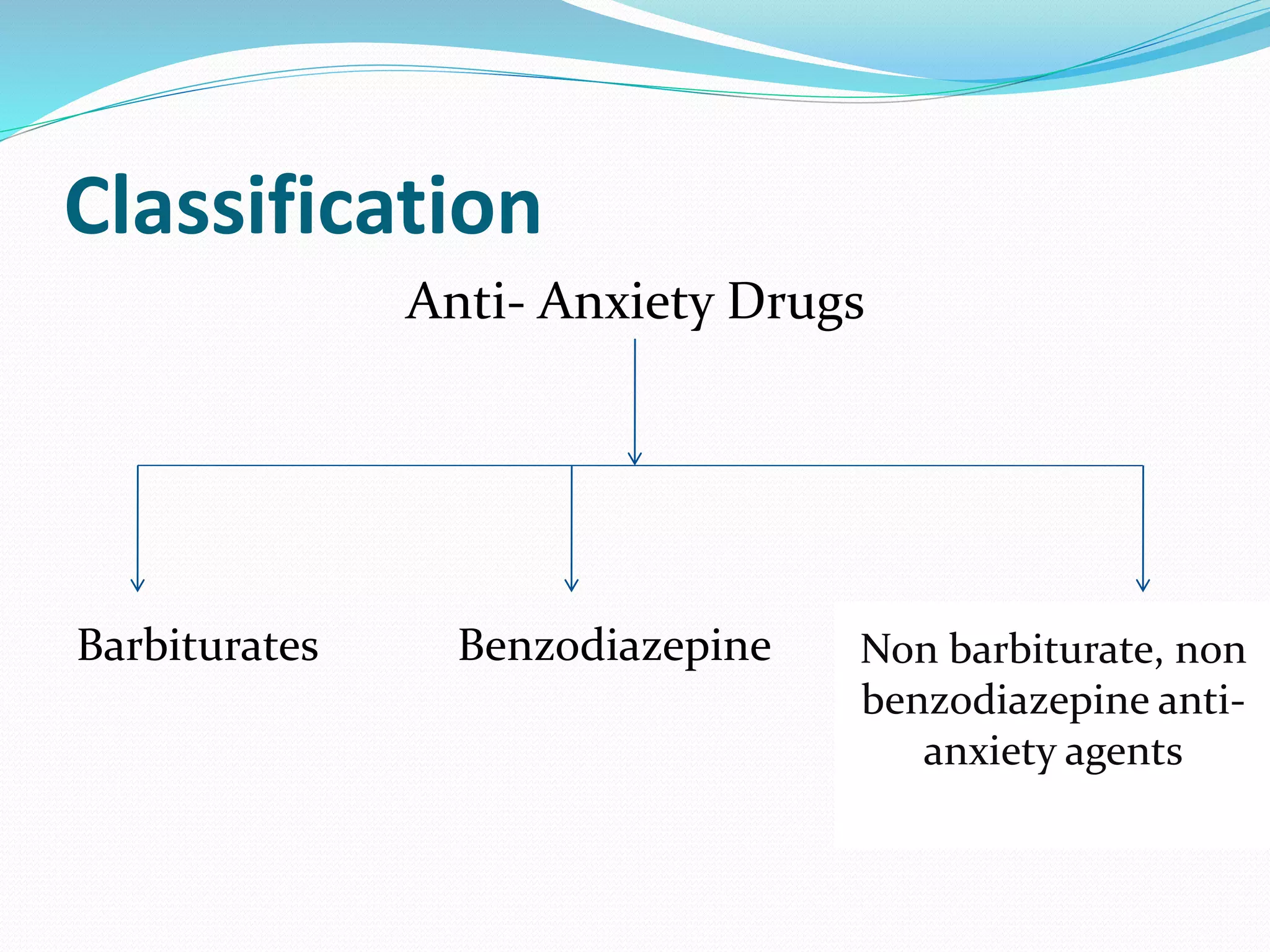
Anti- Anxiety Drugs
Barbiturates Benzodiazepine Non barbiturate, non
benzodiazepine anti-
anxiety agents
Classification
Barbiturates
 Long acting (more than 8 hrs) :-Phenobarbital
 Intermediate Acting(5-8 hrs) :-Pentobarbital, Amobarbital
 Short acting (1-5 hrs):- Secobarbitol
 Ultra acting (less than 1 hrs) :-Thiopentone, Methohexital
Classification
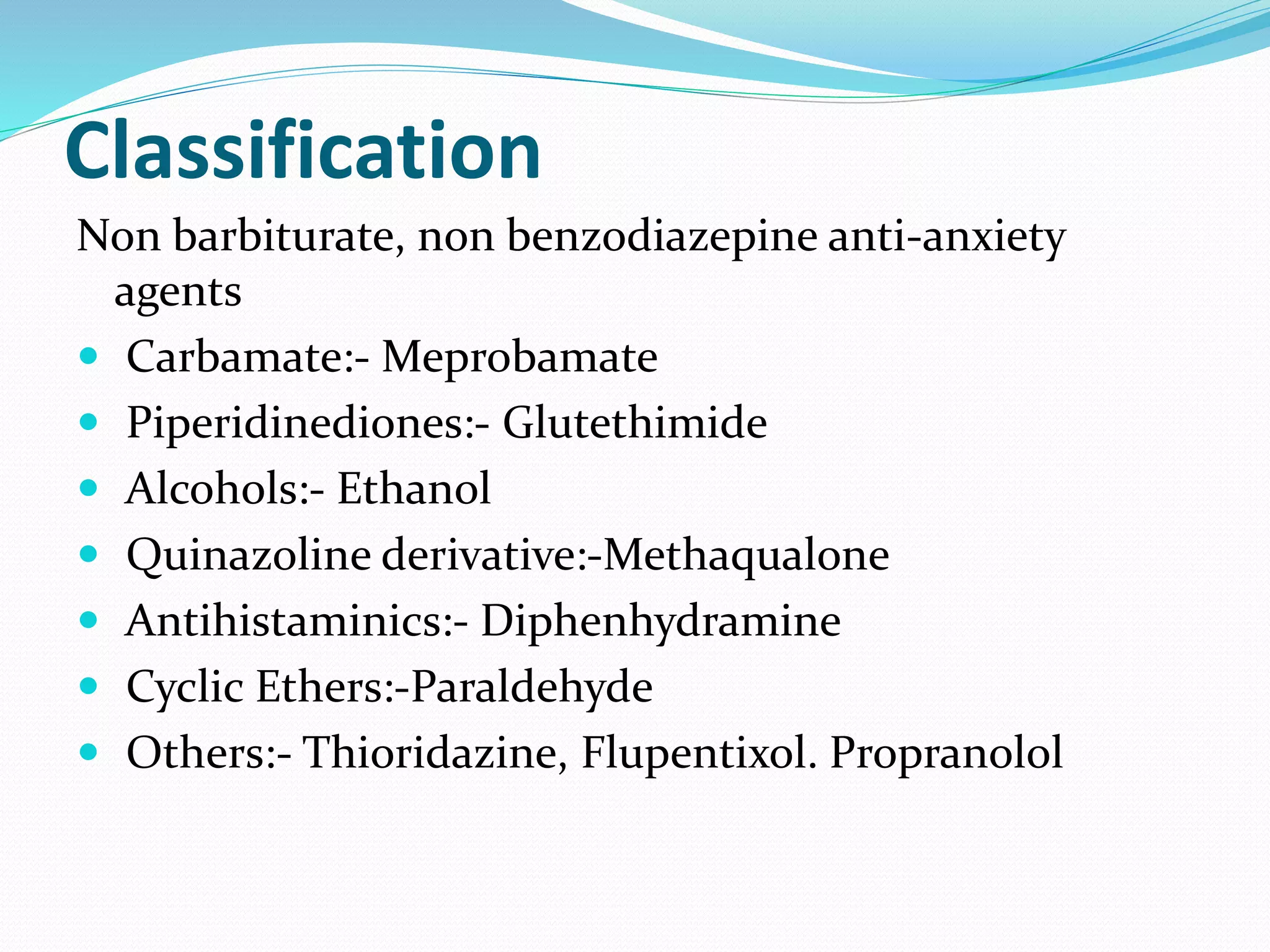
Non barbiturate, non benzodiazepine anti-anxiety
agents
 Carbamate:- Meprobamate
 Piperidinediones:- Glutethimide
 Alcohols:- Ethanol
 Quinazoline derivative:-Methaqualone
 Antihistaminics:- Diphenhydramine
 Cyclic Ethers:-Paraldehyde
 Others:- Thioridazine, Flupentixol. Propranolol
Classification
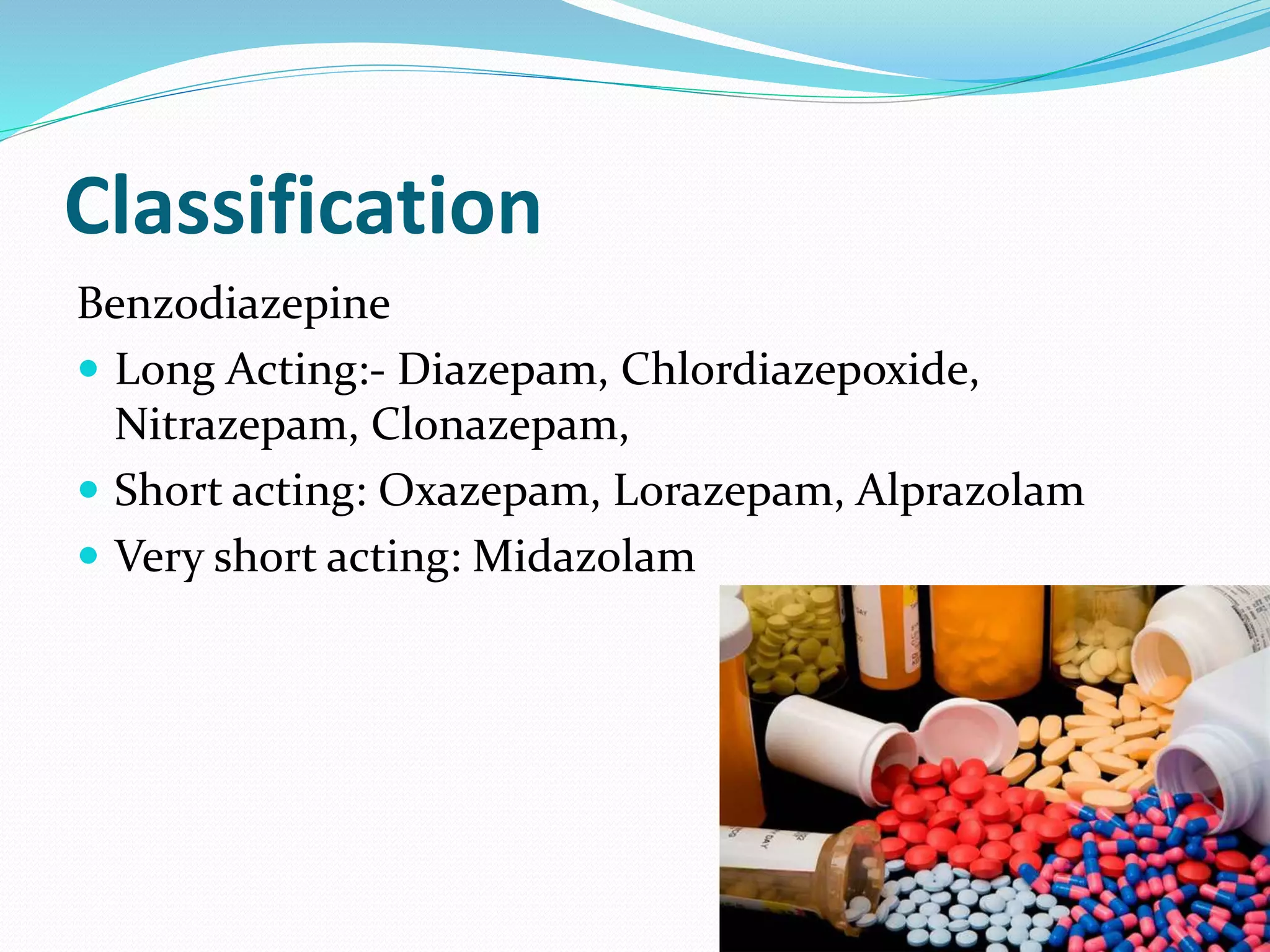
Benzodiazepine
 Long Acting:- Diazepam, Chlordiazepoxide,
Nitrazepam, Clonazepam,
 Short acting: Oxazepam, Lorazepam, Alprazolam
 Very short acting: Midazolam
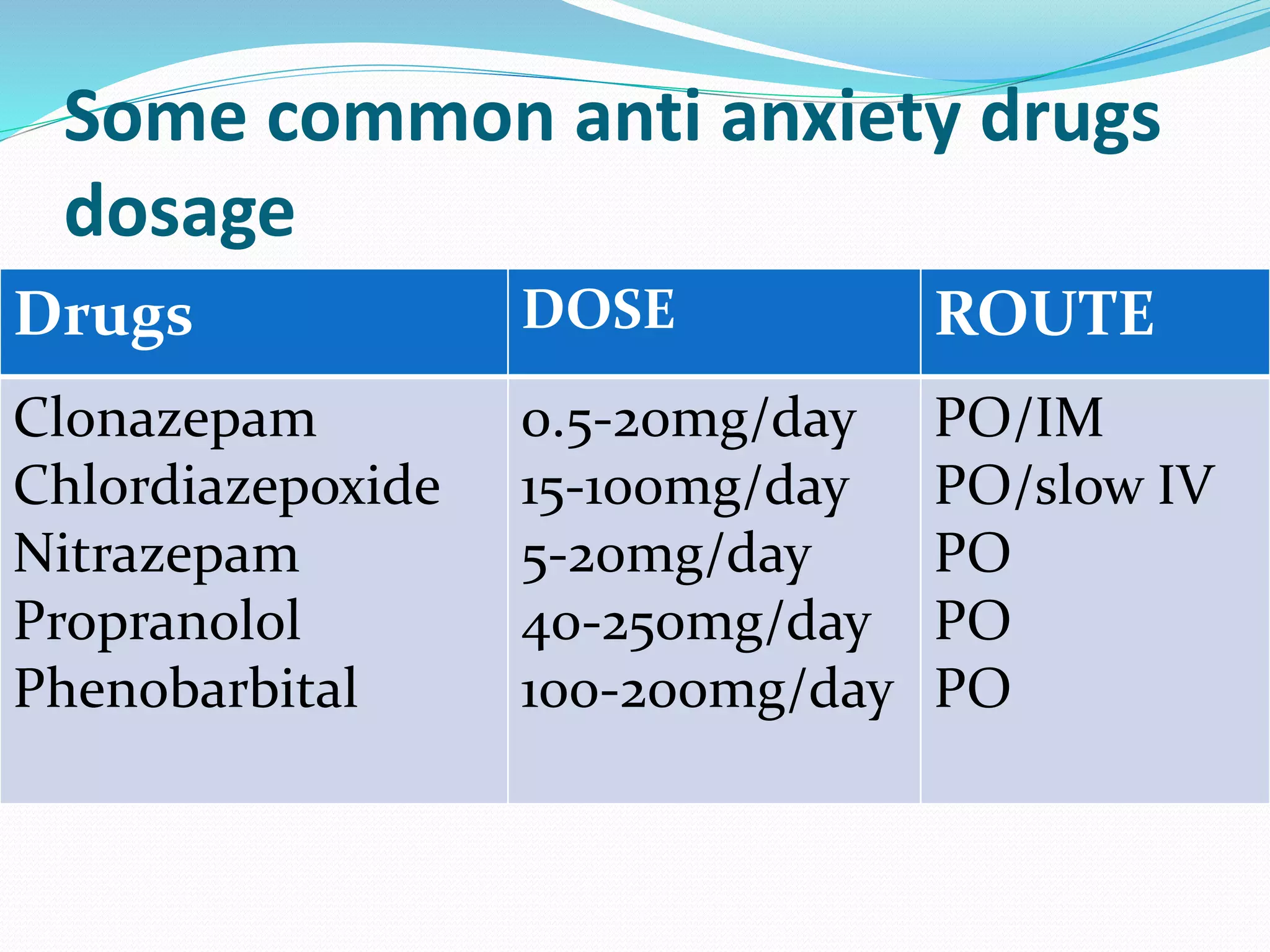
Some common anti anxiety drugs
dosage
Drugs DOSE ROUTE
Clonazepam
Chlordiazepoxide
Nitrazepam
Propranolol
Phenobarbital
0.5-20mg/day
15-100mg/day
5-20mg/day
40-250mg/day
100-200mg/day
PO/IM
PO/slow IV
PO
PO
PO
Some common anti anxiety drugs
dosage
Drugs DOSE ROUTE
Alprazolam
Oxazepam
Lorazepam
Diazepam
0.5-6mg/day
15-120mg/day
2-6mg/day
2-10mg/day
PO
PO
PO/IM/IV
PO/IM/slow
IV
Mode of action
 The exact mode of action is unknown.
 Benzodiazepine potentiates the specific site on the
GABA as a result CNS is depressed and ed the
frequency of chloride channel opening.
Mode of action
 Whereas barbiturates potentiate GABA activity by
simply increasing the time that the chloride channels
remain open.
Barbiturates
Barbiturate+GABA
Activation of GABA receptor
Opening of chloride channel
Increase the duration of GABA gated channel opening
Hyperpolarisation of cells
Depression of CNS
Diazepam
 It is a long acting benzodiazepine which is
insoluble in water, but freely soluble in organic
solvent.
 It has anticonvulsant, anxiolytics, tranquilizer,
sedative, muscle relaxant and anaesthetic
properties.
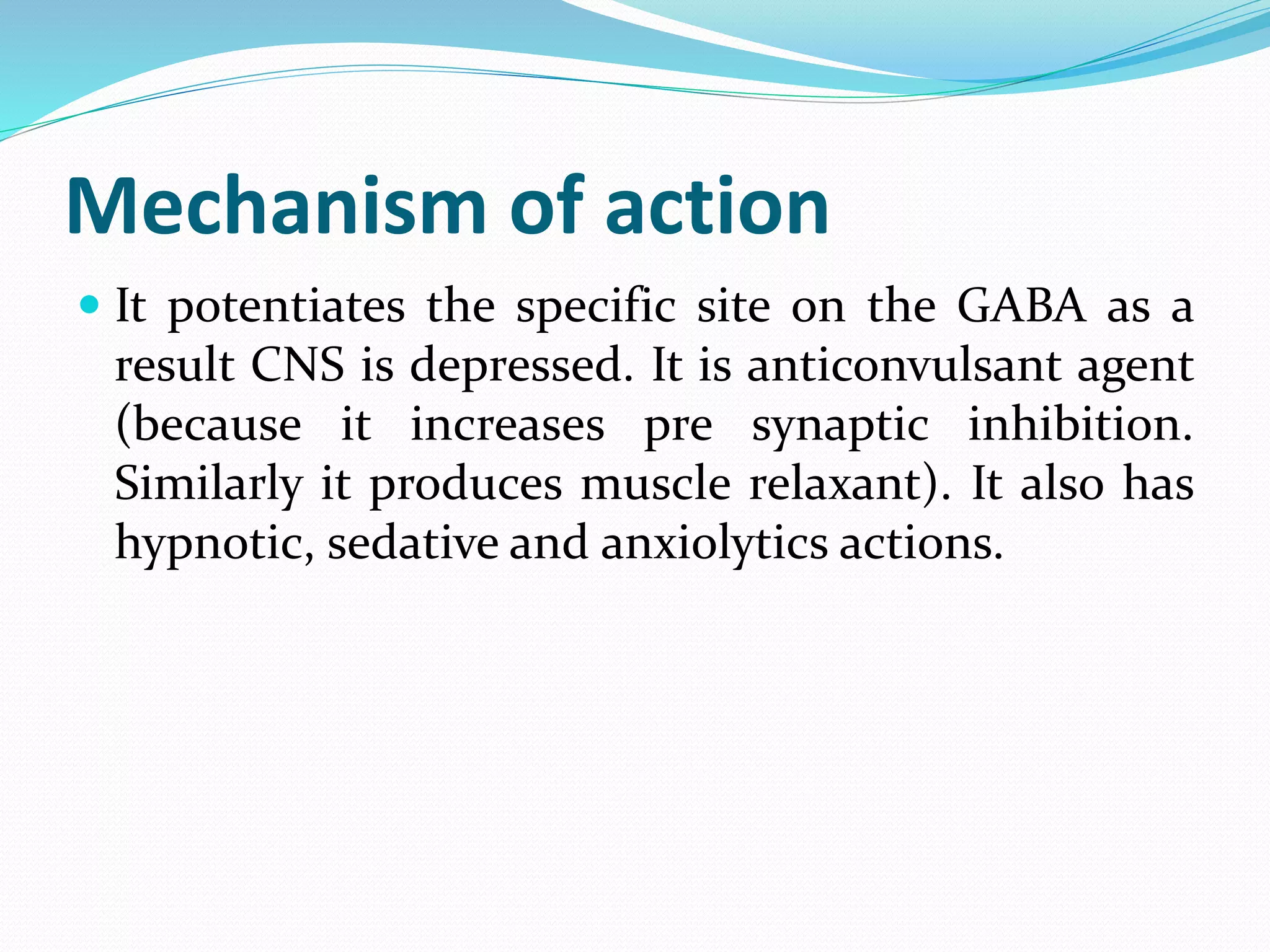
Mechanism of action
 It potentiates the specific site on the GABA as a
result CNS is depressed. It is anticonvulsant agent
(because it increases pre synaptic inhibition.
Similarly it produces muscle relaxant). It also has
hypnotic, sedative and anxiolytics actions.
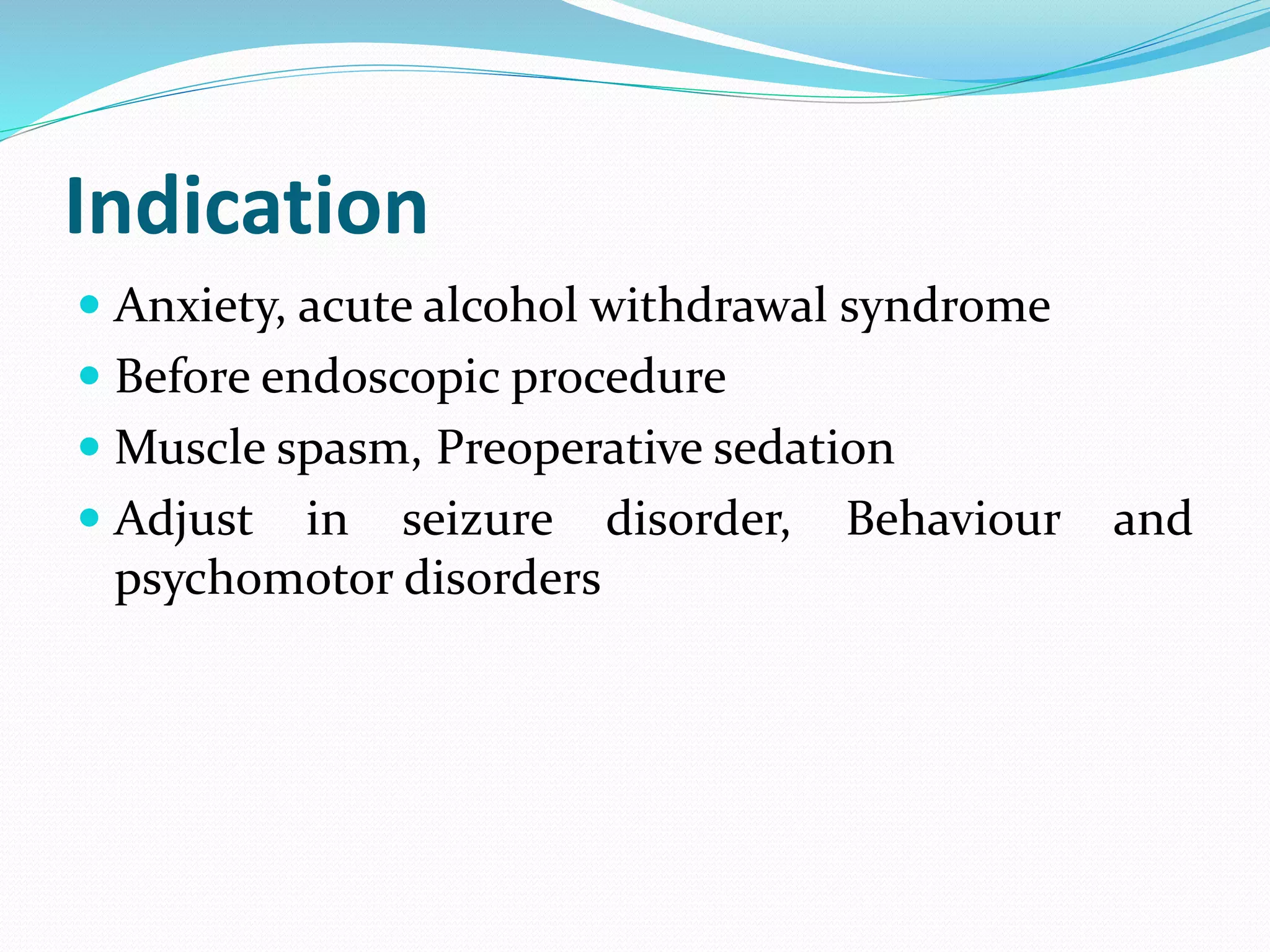
Indication
 Anxiety, acute alcohol withdrawal syndrome
 Before endoscopic procedure
 Muscle spasm, Preoperative sedation
 Adjust in seizure disorder, Behaviour and
psychomotor disorders
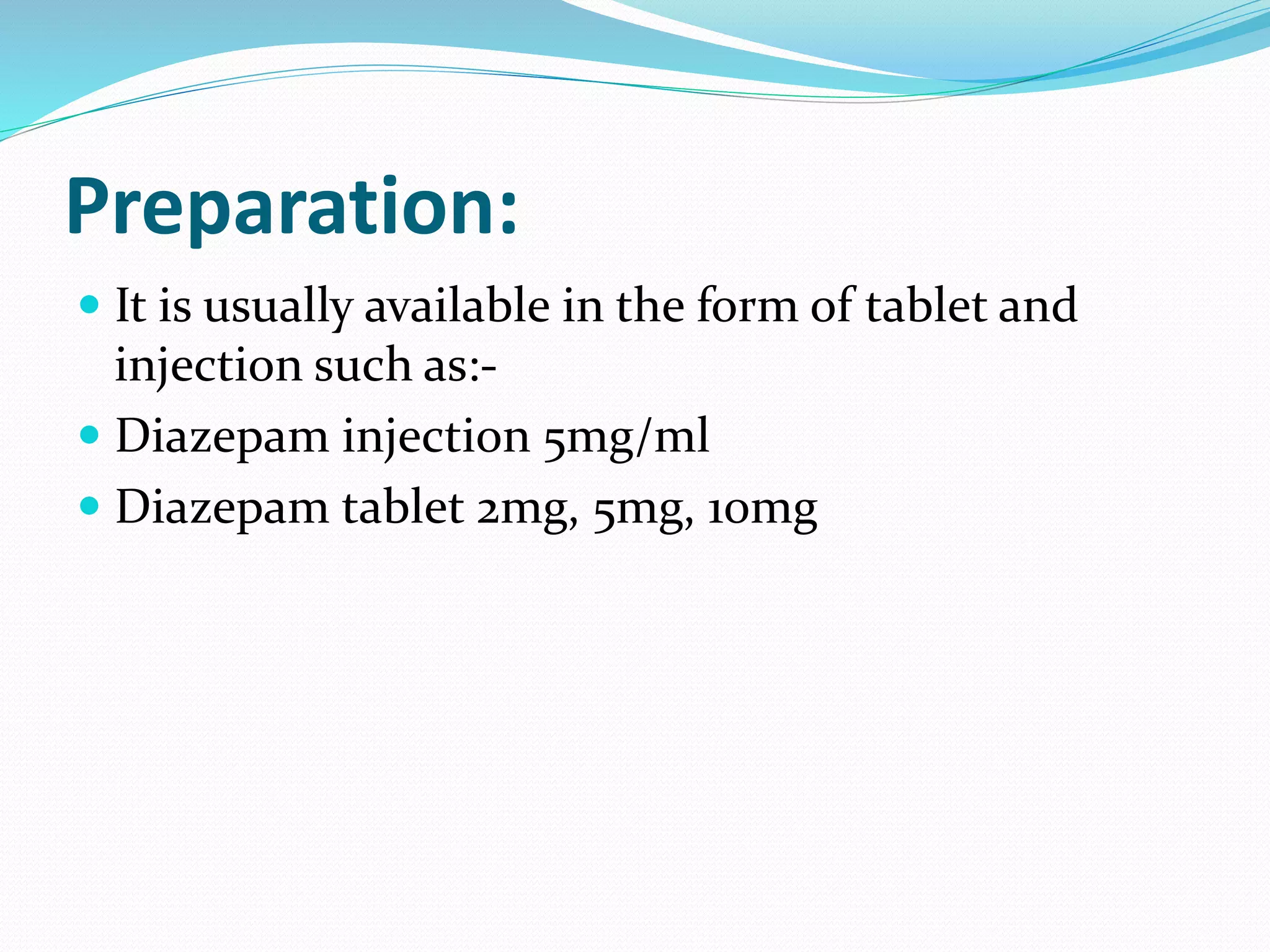
Preparation:
 It is usually available in the form of tablet and
injection such as:-
 Diazepam injection 5mg/ml
 Diazepam tablet 2mg, 5mg, 10mg
Midazolam
 It is water soluble, benzodiazepine having rapid
and short duration of action.
 It has very rapid sedative and sleep inducing
action.
 It also exerts an anxiolytics and anticonvulsant
and muscle relaxant activity.
Indication
 Preoperative sedation
 Conscious sedation before short diagnostic or
endoscopic procedure,
 Induction of general anaesthesia
 To induce sleepiness and amnesia
Preparation
 It is usually available in the form injection such as:
 Midazolam injection 5mg/ml
Phenobarbitone
 It is long acting barbiturate and anti-convulsant
used as general sedative, and in epilepsy.
 It is rapidly absorbed and widely distributed in the
body.
 It is chiefly excreted unchanged in urine.
Mechanism of action
 It produces all levels of CNS depression like
sensory cortex as well as motor activity, decreases
motor activity alters cerebellar function and
inhibits transmission in the nervous system, rises
the seizure threshold.
Indication
 Anticonvulsant in tonic clonic (grandmal), partial,
and febrile seizures
 It is used to provide an unconsciousness and is
added with the muscle relaxant
 It is ultra short acting barbiturates which act
within seconds and duration of action of about 30
minutes. So it is given to induce general
anaesthesia
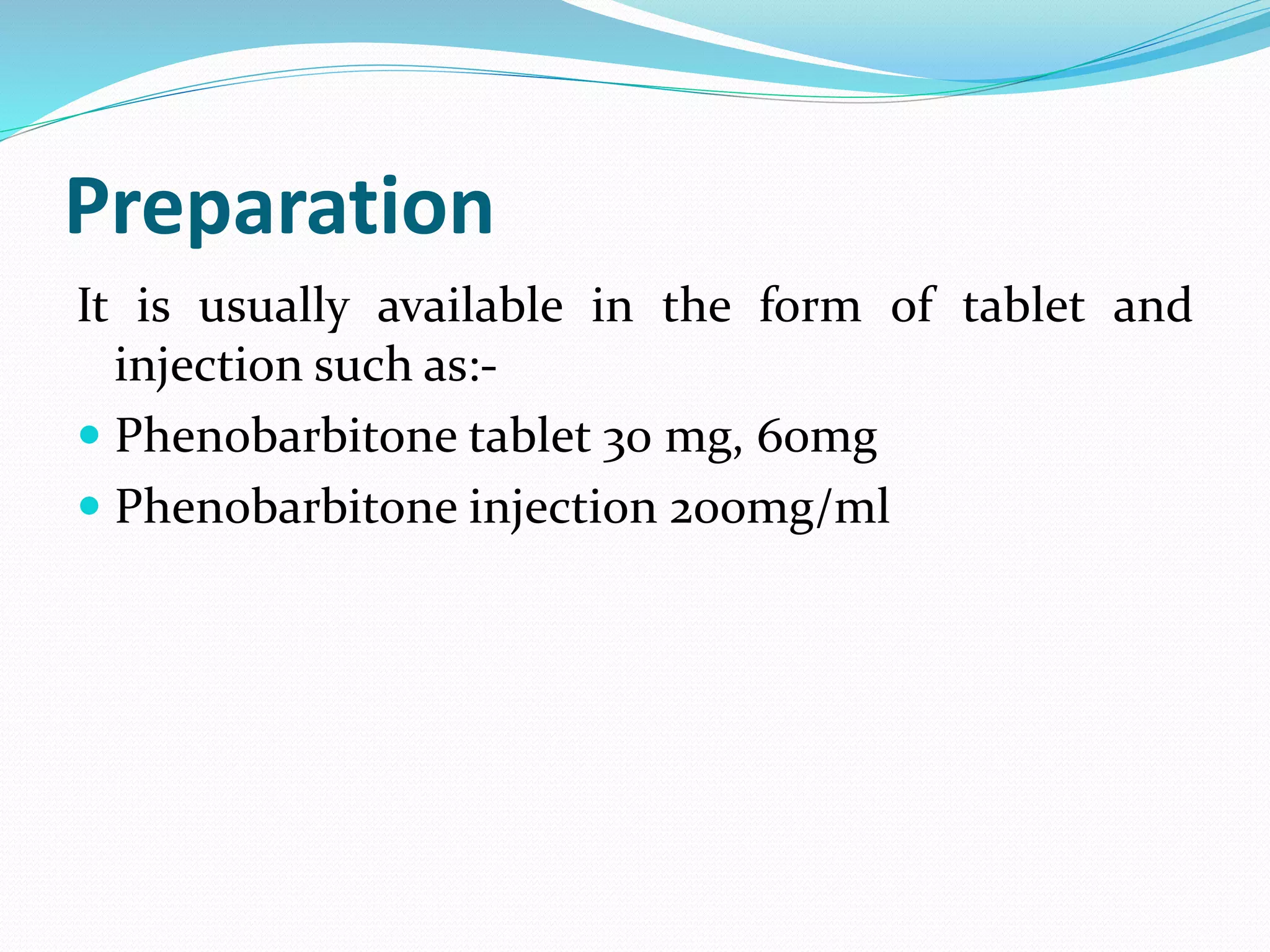
Preparation
It is usually available in the form of tablet and
injection such as:-
 Phenobarbitone tablet 30 mg, 60mg
 Phenobarbitone injection 200mg/ml
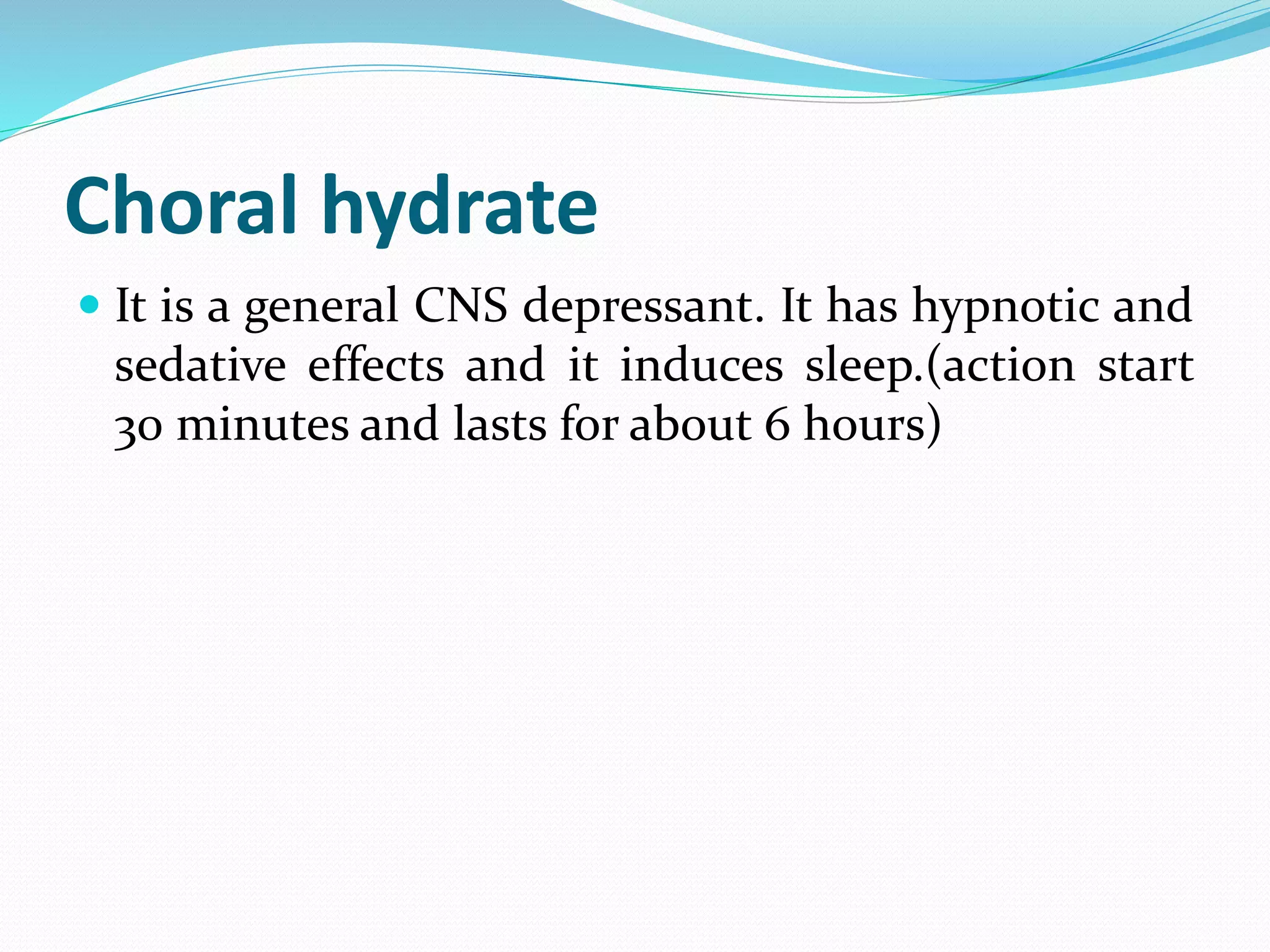
Choral hydrate
 It is a general CNS depressant. It has hypnotic and
sedative effects and it induces sleep.(action start
30 minutes and lasts for about 6 hours)
Mechanism of action
 It has hypnotic and sedative properties same as to
barbiturates.
Indication
 Insomnia (short term use),
 Sedation, Pre operatively
 Pre medication for EEG
Preparation
 It is usually available in the form of capsule and
syrup.
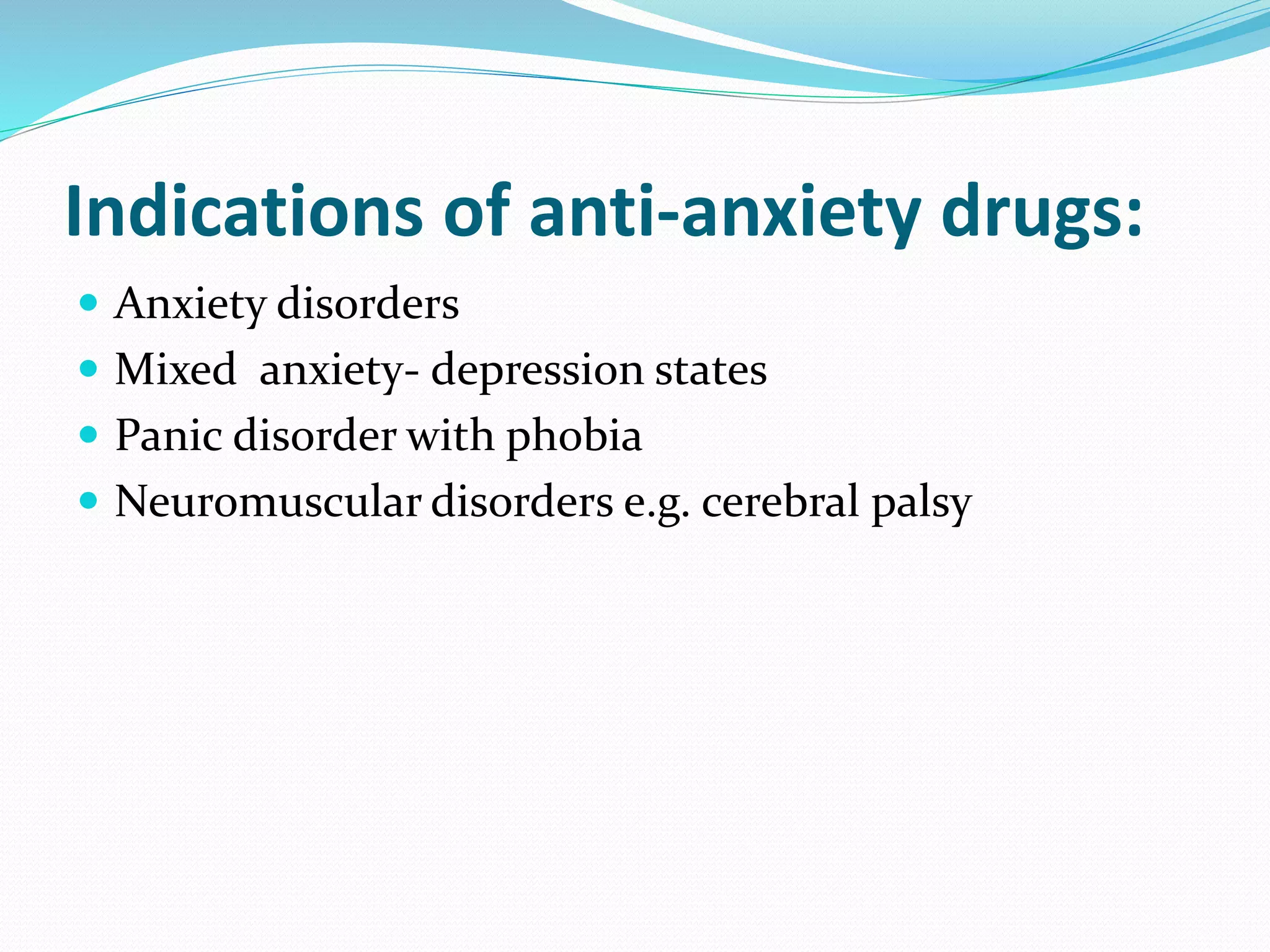
Indications of anti-anxiety drugs:
 Anxiety disorders
 Mixed anxiety- depression states
 Panic disorder with phobia
 Neuromuscular disorders e.g. cerebral palsy
Indications of anti-anxiety drugs:
 Acute alcohol withdrawal
 Skeletal muscle spasms
 Preoperative sedation
 Insomnia
Adverse effect
 CNS depression Symptoms such as Drowsiness,
sedation, dizziness, impaired of memory
 Hangover
 Neuralgic pain
 Cognitive effects with long term use
Adverse effect
 Feelings of detachment
 Excitement and restlessness
 Allergic reaction
 Increased irritability or hostility
Adverse effect
 Anemia
 Impaired psychomotor performance
 Gastric upset (nausea, vomiting, diarrhea, epigastric pain)
 Urinary incontinence
 Ataxia in high doses
Adverse effect
 Porphyria
 Rebound insomnia/anxiety
 Physical dependency, if used for long time
Contraindications and
precautions:
 Acute pulmonary insufficiency
 Renal insufficiency
 Pregnancy and lactation
 Known hypersensitivity
Contraindications and
precautions:
 Concurrent use with other CNS depressants
 Acute narrow angle glaucoma
 Coma, Shock and acute alcohol intoxication
Nursing implications:
 Assess mental and physical status before
administration
 Administer at bedtime
 Advise the patient to avoid drinking any alcoholic
beverage, even beer and drinking beverage containing
stimulants. Coffee, Coca- Cola
 Observe for therapeutic effects, side effects
Nursing implications:
 Drowsiness, slow reflexes
Do not involve in machinery work, driving. Also
caution patient not to climb ladders
 Nausea
Nursing implications:
 Dizziness
i. sit or lie down when dizzy or faint.
ii. getting up slowly from a lying down position
iii. sitting in the side of the bed for a minute or two
before starting to walk.
Nursing implications:
 advise patient not to take any other medication
without medical supervision
 to maintain fluid intake of 2 to 3 liters per day
 administer IM deeply and slowly into larger muscle
mass
Nursing implications:
 Do not administer solutions that are cloudy or
contains precipitate
 Be alert for drug-drug interaction
 Remain with the patient until medication has been
swallowed
Client education:
 It is important for clients to know that anti-anxiety
agents are aimed at relieving symptoms, such as
anxiety or insomnia, but do not treat the underlying
problems that cause the anxiety.
Client education:
 Benzodiazepines strongly potentiate the effects of
alcohol: one drink may have the effect of three drinks;
therefore, clients should not drink alcohol while
taking benzodiazepines.
Client education:
 Instruct client to report onset of any adverse effects
 Instruct to avoid alcoholic beverages and smoking,
large amounts of caffeine containing products
Client education:
 Clients should be aware of decreased response time,
slower reflexes, and possible sedative effects of these
drugs when attempting activities such as driving or
going to work.
Client education:
 Not to alter the dose on their own and avoid driving or
operating hazardous equipments
 Avoid excessive use of medicine
 Keep sleep diary
REFERENCE
 Thapa Kumar R, Pharmacy and pharmacology, taleju
prakashan publisher and distributor, fourth revised 2013
July, page no-449 to452
 Bhatia M.S, Psychiatric nursing, CBS publishers and
distributors PVT. LTD, fourth edition, page no-185 to190
 Ahuja N, A Short Textbook of Psychiatry, Jaypee Brothers
Medical Publishers (P) LTD, Seventh edition, page no- 193
to198
 Rawat T, A Textbook of Mental Health Nursing, Vidyarthi
Pustak Bhandar, Second edition, 2073, Page no:-165-167
 Sharma C, Sharma P, Essentials of Psychiatric and Mental
Health Nursing , 2nd edition, page no 415 to 417
Anti-anxiety drugs.pptx

Anti-anxiety drugs.pptx

  • 2.
  • 4.
    Anxiety  Clinically, anxietyarises when the balance between certain chemicals in the brain is disturbed.  The fearful feeling increase brain activity, stimulating the sympathetic nervous system often triggering off physical symptoms
  • 5.
    Anti- anxiety drugs Minor tranquilizers, and anxiolytics  Used to treat daytime stress, someway be used to promote sleep.
  • 6.
    Classification Anti- Anxiety Drugs BarbituratesBenzodiazepine Non barbiturate, non benzodiazepine anti- anxiety agents
  • 7.
    Classification Barbiturates  Long acting(more than 8 hrs) :-Phenobarbital  Intermediate Acting(5-8 hrs) :-Pentobarbital, Amobarbital  Short acting (1-5 hrs):- Secobarbitol  Ultra acting (less than 1 hrs) :-Thiopentone, Methohexital
  • 8.
    Classification Non barbiturate, nonbenzodiazepine anti-anxiety agents  Carbamate:- Meprobamate  Piperidinediones:- Glutethimide  Alcohols:- Ethanol  Quinazoline derivative:-Methaqualone  Antihistaminics:- Diphenhydramine  Cyclic Ethers:-Paraldehyde  Others:- Thioridazine, Flupentixol. Propranolol
  • 9.
    Classification Benzodiazepine  Long Acting:-Diazepam, Chlordiazepoxide, Nitrazepam, Clonazepam,  Short acting: Oxazepam, Lorazepam, Alprazolam  Very short acting: Midazolam
  • 10.
    Some common antianxiety drugs dosage Drugs DOSE ROUTE Clonazepam Chlordiazepoxide Nitrazepam Propranolol Phenobarbital 0.5-20mg/day 15-100mg/day 5-20mg/day 40-250mg/day 100-200mg/day PO/IM PO/slow IV PO PO PO
  • 11.
    Some common antianxiety drugs dosage Drugs DOSE ROUTE Alprazolam Oxazepam Lorazepam Diazepam 0.5-6mg/day 15-120mg/day 2-6mg/day 2-10mg/day PO PO PO/IM/IV PO/IM/slow IV
  • 12.
    Mode of action The exact mode of action is unknown.  Benzodiazepine potentiates the specific site on the GABA as a result CNS is depressed and ed the frequency of chloride channel opening.
  • 13.
    Mode of action Whereas barbiturates potentiate GABA activity by simply increasing the time that the chloride channels remain open.
  • 14.
    Barbiturates Barbiturate+GABA Activation of GABAreceptor Opening of chloride channel Increase the duration of GABA gated channel opening Hyperpolarisation of cells Depression of CNS
  • 15.
    Diazepam  It isa long acting benzodiazepine which is insoluble in water, but freely soluble in organic solvent.  It has anticonvulsant, anxiolytics, tranquilizer, sedative, muscle relaxant and anaesthetic properties.
  • 16.
    Mechanism of action It potentiates the specific site on the GABA as a result CNS is depressed. It is anticonvulsant agent (because it increases pre synaptic inhibition. Similarly it produces muscle relaxant). It also has hypnotic, sedative and anxiolytics actions.
  • 17.
    Indication  Anxiety, acutealcohol withdrawal syndrome  Before endoscopic procedure  Muscle spasm, Preoperative sedation  Adjust in seizure disorder, Behaviour and psychomotor disorders
  • 18.
    Preparation:  It isusually available in the form of tablet and injection such as:-  Diazepam injection 5mg/ml  Diazepam tablet 2mg, 5mg, 10mg
  • 19.
    Midazolam  It iswater soluble, benzodiazepine having rapid and short duration of action.  It has very rapid sedative and sleep inducing action.  It also exerts an anxiolytics and anticonvulsant and muscle relaxant activity.
  • 20.
    Indication  Preoperative sedation Conscious sedation before short diagnostic or endoscopic procedure,  Induction of general anaesthesia  To induce sleepiness and amnesia
  • 21.
    Preparation  It isusually available in the form injection such as:  Midazolam injection 5mg/ml
  • 22.
    Phenobarbitone  It islong acting barbiturate and anti-convulsant used as general sedative, and in epilepsy.  It is rapidly absorbed and widely distributed in the body.  It is chiefly excreted unchanged in urine.
  • 23.
    Mechanism of action It produces all levels of CNS depression like sensory cortex as well as motor activity, decreases motor activity alters cerebellar function and inhibits transmission in the nervous system, rises the seizure threshold.
  • 24.
    Indication  Anticonvulsant intonic clonic (grandmal), partial, and febrile seizures  It is used to provide an unconsciousness and is added with the muscle relaxant  It is ultra short acting barbiturates which act within seconds and duration of action of about 30 minutes. So it is given to induce general anaesthesia
  • 25.
    Preparation It is usuallyavailable in the form of tablet and injection such as:-  Phenobarbitone tablet 30 mg, 60mg  Phenobarbitone injection 200mg/ml
  • 26.
    Choral hydrate  Itis a general CNS depressant. It has hypnotic and sedative effects and it induces sleep.(action start 30 minutes and lasts for about 6 hours)
  • 27.
    Mechanism of action It has hypnotic and sedative properties same as to barbiturates.
  • 28.
    Indication  Insomnia (shortterm use),  Sedation, Pre operatively  Pre medication for EEG
  • 29.
    Preparation  It isusually available in the form of capsule and syrup.
  • 30.
    Indications of anti-anxietydrugs:  Anxiety disorders  Mixed anxiety- depression states  Panic disorder with phobia  Neuromuscular disorders e.g. cerebral palsy
  • 31.
    Indications of anti-anxietydrugs:  Acute alcohol withdrawal  Skeletal muscle spasms  Preoperative sedation  Insomnia
  • 32.
    Adverse effect  CNSdepression Symptoms such as Drowsiness, sedation, dizziness, impaired of memory  Hangover  Neuralgic pain  Cognitive effects with long term use
  • 33.
    Adverse effect  Feelingsof detachment  Excitement and restlessness  Allergic reaction  Increased irritability or hostility
  • 34.
    Adverse effect  Anemia Impaired psychomotor performance  Gastric upset (nausea, vomiting, diarrhea, epigastric pain)  Urinary incontinence  Ataxia in high doses
  • 35.
    Adverse effect  Porphyria Rebound insomnia/anxiety  Physical dependency, if used for long time
  • 36.
    Contraindications and precautions:  Acutepulmonary insufficiency  Renal insufficiency  Pregnancy and lactation  Known hypersensitivity
  • 37.
    Contraindications and precautions:  Concurrentuse with other CNS depressants  Acute narrow angle glaucoma  Coma, Shock and acute alcohol intoxication
  • 38.
    Nursing implications:  Assessmental and physical status before administration  Administer at bedtime  Advise the patient to avoid drinking any alcoholic beverage, even beer and drinking beverage containing stimulants. Coffee, Coca- Cola  Observe for therapeutic effects, side effects
  • 39.
    Nursing implications:  Drowsiness,slow reflexes Do not involve in machinery work, driving. Also caution patient not to climb ladders  Nausea
  • 40.
    Nursing implications:  Dizziness i.sit or lie down when dizzy or faint. ii. getting up slowly from a lying down position iii. sitting in the side of the bed for a minute or two before starting to walk.
  • 41.
    Nursing implications:  advisepatient not to take any other medication without medical supervision  to maintain fluid intake of 2 to 3 liters per day  administer IM deeply and slowly into larger muscle mass
  • 42.
    Nursing implications:  Donot administer solutions that are cloudy or contains precipitate  Be alert for drug-drug interaction  Remain with the patient until medication has been swallowed
  • 43.
    Client education:  Itis important for clients to know that anti-anxiety agents are aimed at relieving symptoms, such as anxiety or insomnia, but do not treat the underlying problems that cause the anxiety.
  • 44.
    Client education:  Benzodiazepinesstrongly potentiate the effects of alcohol: one drink may have the effect of three drinks; therefore, clients should not drink alcohol while taking benzodiazepines.
  • 45.
    Client education:  Instructclient to report onset of any adverse effects  Instruct to avoid alcoholic beverages and smoking, large amounts of caffeine containing products
  • 46.
    Client education:  Clientsshould be aware of decreased response time, slower reflexes, and possible sedative effects of these drugs when attempting activities such as driving or going to work.
  • 47.
    Client education:  Notto alter the dose on their own and avoid driving or operating hazardous equipments  Avoid excessive use of medicine  Keep sleep diary
  • 49.
    REFERENCE  Thapa KumarR, Pharmacy and pharmacology, taleju prakashan publisher and distributor, fourth revised 2013 July, page no-449 to452  Bhatia M.S, Psychiatric nursing, CBS publishers and distributors PVT. LTD, fourth edition, page no-185 to190  Ahuja N, A Short Textbook of Psychiatry, Jaypee Brothers Medical Publishers (P) LTD, Seventh edition, page no- 193 to198  Rawat T, A Textbook of Mental Health Nursing, Vidyarthi Pustak Bhandar, Second edition, 2073, Page no:-165-167  Sharma C, Sharma P, Essentials of Psychiatric and Mental Health Nursing , 2nd edition, page no 415 to 417